
Qatar's Green Urban Blueprint: How Msheireb, Lusail, and Doha Metro Are Redefining Sustainable Tourism in 2026
Qatar transforms tourism through eco-innovation: smart districts, electric transit, and sustainable infrastructure prove rapid development and environmental stewardship can coexist.

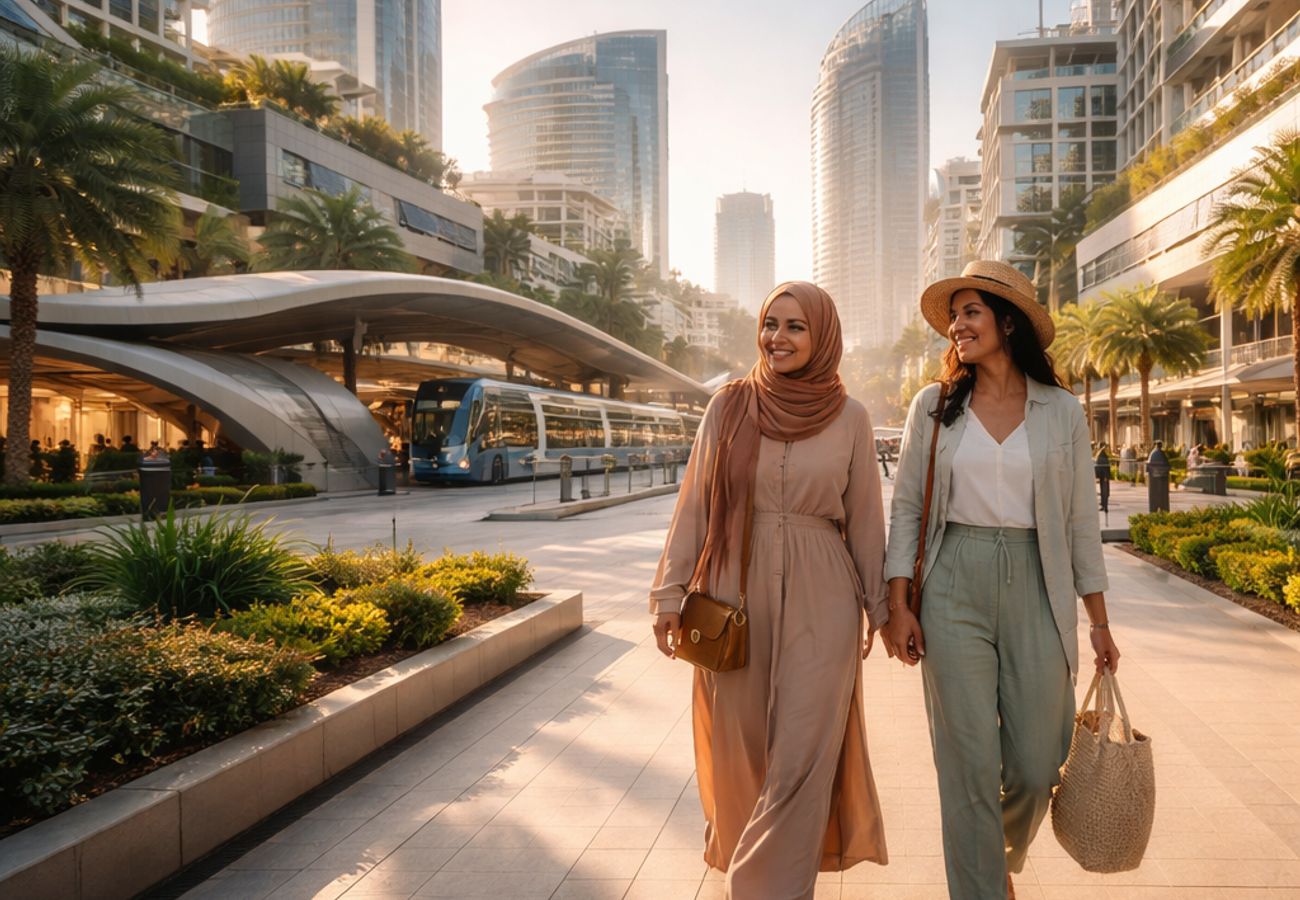
Image generated by AI
A Nation's Green Gamble: Can Rapid Development and Environmental Stewardship Coexist?
On June 5, 2026, as the world observed World Environment Day, Qatar answered with more than symbolic gestures. The nation has fundamentally reengineered its tourism infrastructure to prove that explosive modernization doesn't require ecological sacrifice.
What I discovered across Doha isn't just another development story. It's a calculated bet that the future of tourism belongs to countries willing to build smart rather than big.
Reddit: "Qatar went from desert to smart city without destroying the ecosystem. That's actually impressive." — r/travel
The Strategic Vision: National Frameworks That Actually Work
The architecture of Qatar's green transformation rests on two pillars: the Qatar National Vision 2030 and the National Tourism Strategy 2030. These aren't aspirational documents gathering dust in government offices—they're actively reshaping how the nation builds, operates, and markets itself.
Visit Qatar, the national tourism authority, has positioned sustainable experiences as core attractions rather than optional add-ons. Every initiative channels back to a single principle: deliver world-class hospitality while respecting ecological boundaries.
The strategy is deceptively simple. Rather than chase tourist volume through cost-cutting and environmental corner-cutting, Qatar targets premium experiences anchored in responsible development. Carbon footprint minimization, natural resource preservation, and eco-conscious cultural programming aren't separate initiatives—they're embedded in every project blueprint.
This approach directly challenges the conventional tourism playbook. Most destinations treat sustainability as a marketing afterthought. Qatar treats it as competitive differentiation.
Msheireb Downtown Doha: The World's First Smart and Sustainable District
Walk through Msheireb Downtown Doha, and you're navigating the planet's first fully built smart and sustainable city district. This isn't hyperbole—the designation is globally recognized by urban planning authorities.
The district sits at a geographic sweet spot: minutes from Souq Waqif, the stunning Corniche waterfront, and the historic Msheireb Museums. Yet proximity to cultural landmarks is only the opening act.
The real innovation happens in the infrastructure that tourists rarely see. Every building operates with severe energy efficiency constraints. A fully electric tram network eliminates vehicular emissions entirely within the district—a feature almost no other urban tourism hub globally has achieved. Greywater recycling and rainwater harvesting systems are woven into the civic design rather than bolted on as afterthoughts.
The result: a district that accommodates world-class hotels, acclaimed restaurants, vibrant public plazas, and cultural attractions without the usual environmental toll of urban density.
Lusail City: Scaling Sustainability Across an Entire Metropolis
If Msheireb proves sustainability works in a concentrated district, Lusail City proves it scales across entire urban regions.
This master-planned metropolis—among the region's largest—integrates residential zones, luxury hospitality, commercial towers, retail complexes, and entertainment destinations within a single engineered ecosystem. Place Vendôme mall, Lusail Marina Promenade, Maha Island, and Winter Wonderland Qatar operate as components of a cohesive green infrastructure system.
The sustainability mechanism driving Lusail: centralized district cooling systems. These operate at efficiency levels that dwarf conventional air conditioning networks. Strict water conservation protocols enforce scarcity discipline across all development sectors. The physical layout prioritizes green space abundance, dedicated pedestrian pathways, and extensive cycling routes—design choices that actively discourage private vehicle dependency.
It's urban planning that weaponizes walkability against emissions.
The Doha Metro: Electric Mobility as Tourism Infrastructure
Connecting these sustainable districts is the Doha Metro, a fast-expanding electric rail network that functions as both commuter backbone and tourism amenity.
The high-capacity electric trains are engineered to maximize efficiency during acceleration and braking cycles. By siphoning commuter and tourist traffic from highways onto an electrified network, Qatar directly advances its national carbon reduction targets. For travelers, the metro eliminates the typical tourism friction: navigating unfamiliar driving patterns, fuel costs, and traffic congestion.
This isn't sustainability theater—it's sustainable infrastructure that's genuinely convenient.
The Green Lungs: Parks and Biodiversity in Dense Urban Centers
Urban density typically means sacrificing nature. Qatar's approach inverts that equation.
Al Bidda Park stretches along the coastline with expansive lawns for public gathering. Oxygen Park features cooled pathways and health-focused educational spaces. Katara Hills offers elevated terrain with diverse flora overlooking the cultural village. Aspire Park provides a vast lake, mature trees, and running tracks spanning kilometers. Lusail City integrates structured green buffer zones throughout the metropolitan area.
These aren't parks added to a city—they're foundational to how Qatar defines urban living. They combat the heat island effect, support local bird and plant populations, and encourage active outdoor lifestyles that reduce reliance on motorized transport.
The FIFA World Cup 2022 Precedent: Stadium Sustainability at Scale
The FIFA World Cup Qatar 2022 became a test laboratory for sustainable mega-event infrastructure. Every tournament venue earned Global Sustainability Assessment System (GSAS) certifications, proving that monumental architecture can coexist with ecological compliance.
Stadium 974 became the first fully demountable stadium in history—constructed from modular shipping containers and recycled steel. Education City Stadium achieved a five-star GSAS rating for exceptional resource efficiency. Al Bayt Stadium borrowed from traditional nomadic tent architecture to minimize cooling requirements. Lusail Stadium deployed a specialized roof design maximizing natural light while cutting interior climate control consumption.
These weren't compromises between hosting a world event and environmental responsibility. They were innovations born from demanding both simultaneously.
The Competitive Calculus: Why Qatar's Bet Actually Matters
Qatar's green transformation isn't altruistic—it's strategic. As environmental consciousness reshapes global tourism preferences, Qatar is positioning itself as the destination for travelers who refuse to trade conscience for luxury.
The playbook is now replicable: prove that premium hospitality, cutting-edge infrastructure, and ecological responsibility aren't competing priorities but mutually reinforcing strategies. Build in stages. Test concepts. Scale winners. Certify achievements through recognized global standards.
For nomadic professionals, digital nomads, and conscious travelers planning extended stays, Qatar's infrastructure offers something increasingly rare: guilt-free access to world-class amenities.
The stakes are global. If Qatar can sustain this trajectory, it becomes a template. If the model fractures under the pressure of maintaining luxury standards while preserving ecology, it becomes a cautionary tale.
The nation's betting that the first narrative prevails.
Qatar didn't just build smarter—it proved sustainable tourism could be genuinely compelling.
Related Travel Guides
Airlines Travel Flight Chaos: Emirates, Turkish, Qatar Ground Flights
Cruise Ship Beached in Fiji Retires After 22 Years; New MV Yasawa Princess II Debuts
Disclaimer
This article is for informational and educational purposes only. It does not constitute legal, financial, or professional advice. While we strive to provide accurate and up-to-date information, travel policies, regulations, and conditions change rapidly. Always verify information with official sources before making travel decisions. Nomad Lawyer makes no representations about the accuracy, reliability, completeness, or suitability of the information provided. Readers should consult qualified professionals for advice specific to their circumstances. The views expressed in this article are those of the author and do not necessarily reflect the views of Nomad Lawyer.
Kunal K Choudhary
Co-Founder & Contributor
A passionate traveller and tech enthusiast. Kunal contributes to the vision and growth of Nomad Lawyer, bringing fresh perspectives and driving the community forward.
Learn more about our team →