
Global Travel Costs Explode as Indonesia, Japan, Mexico, and the UK Expand Hidden Airport Departure Fees; Argentina and Australia Rank Among Most Expensive Aviation Tax Markets in 2026
International travelers are facing a new wave of hidden costs as nations including Indonesia, Japan, Mexico, and the United Kingdom hike airport departure fees and aviation taxes. With Argentina topping the charts at $138 per passenger, these stealth charges are triggering travel chaos and reshaping global tourism budgets.

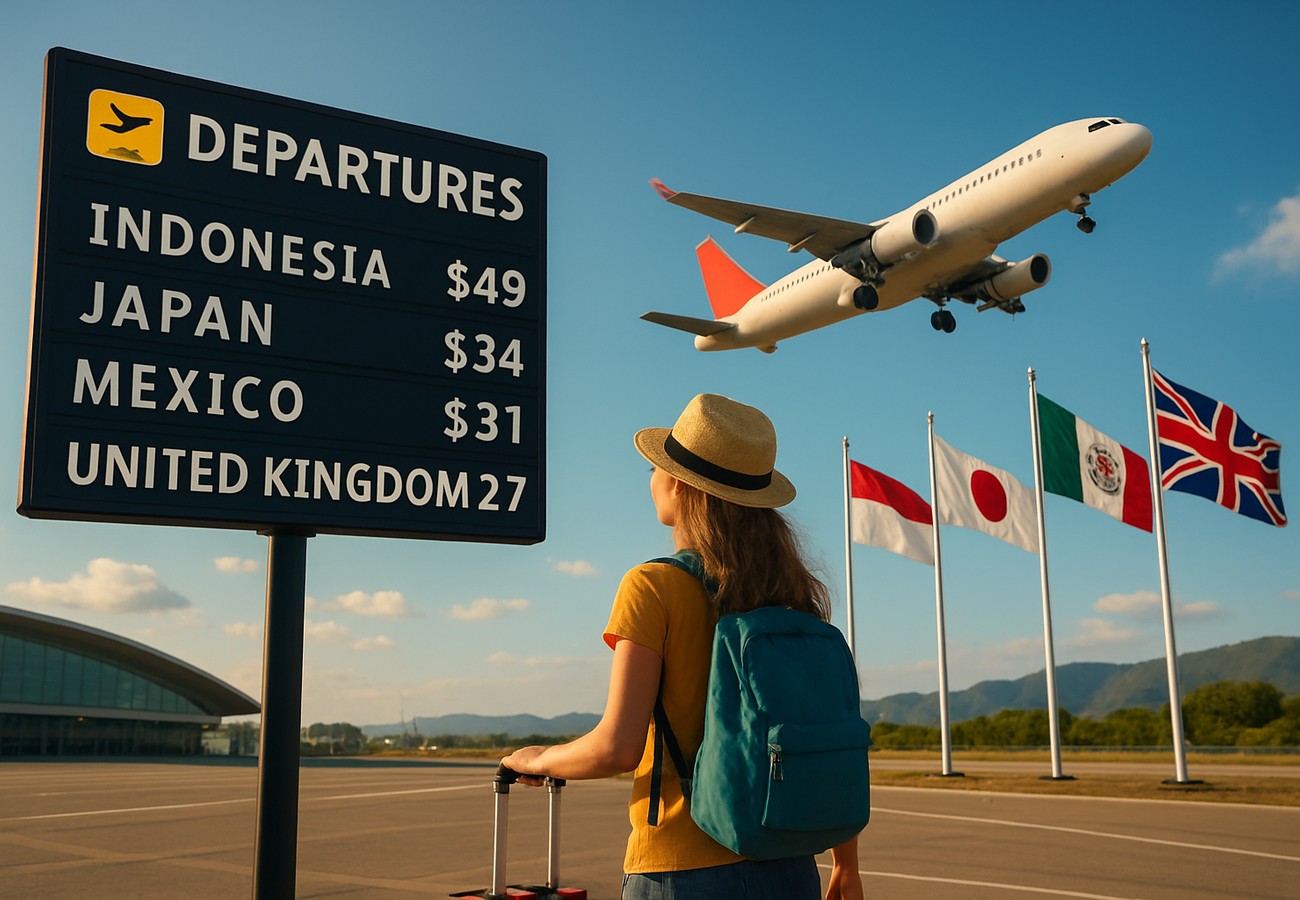
The Stealth Tax Surge: Hidden airport fees have become a $60 billion industry, catching travelers off guard.
The 'Departure Tax Trap': Indonesia, Japan, Mexico, and the UK Shock Travelers with Rising Hidden Airport Fees; Argentina Emerges as World's Most Expensive Market as Global Aviation Charges Hit $60 Billion
In an era defined by record-breaking international mobility, travelers are being blindsided by a silent surge in the cost of leaving. This airline news update confirms that as of May 11, 2026, nations including Indonesia, Japan, Mexico, the United Kingdom, Australia, and Argentina are increasingly leveraging hidden airport departure fees and aviation-related exit taxes to fund infrastructure and sustainability programs. According to the latest data from the International Air Transport Association (IATA), these passenger-related charges generated a staggering US$60.4 billion globally in 2024 alone. While many carriers attempt to bundle these costs into ticket prices, the "Taxation Maze" continues to trigger travel chaos and airport disruptions, particularly in destinations where last-minute payments are still required at the gate.
For the modern tourist, digital nomad, or business professional, the base airfare is no longer an accurate reflection of the cost of travel. In some markets, the "Stealth Tax" can now exceed the price of a short-haul ticket. As countries like Japan double down on their "Sayonara Tax" and the UK maintains its aggressive Air Passenger Duty (APD), the global tourism landscape is being reshaped by a complex web of fees that many travelers fail to anticipate until they are already in the departure hall.
Expanded Overview: The $60 Billion Aviation Revenue Engine
The rise of these fees is not merely a bureaucratic trend; it is a fundamental shift in how global aviation is financed. The IATA’s 2024 findings reveal that the average passenger now pays nearly US$6.8 in direct airport-related charges, but this number is heavily skewed by "High-Tax Hubs." In regions where infrastructure modernization is a national priority, such as Mexico City or London Heathrow, the fees are acting as a primary revenue stream for runway maintenance, border control, and noise-mitigation programs.
This aviation update highlights that the "Information Gap" remains the primary source of passenger frustration. While Indonesia integrated its departure tax into airline tickets back in 2014, travelers in other regions—including parts of the Caribbean and Africa—still face the "Cash Catch-22" at the airport. Travelers arriving at departure gates without enough local currency or access to functioning ATMs have occasionally missed flights, turning a minor fee into a major logistical disaster.
Section-Wise Breakdown: The World’s Most Expensive Exits
Argentina: The Global Apex of Aviation Taxation
Argentina currently holds the dubious title of the world’s most expensive aviation tax market. Travelers departing from the South American nation face an average burden of US$138 per passenger. This fee, designed to support the country's vast airport network and civil aviation authority, has become a significant barrier for budget travelers and has led to a reshuffling of regional travel patterns in the Southern Cone.
United Kingdom: The Long-Haul Class Penalty
The UK’s Air Passenger Duty (APD) remains one of the most scrutinized taxes in the industry. For those flying long-haul in premium cabins, the tax can soar as high as £253 (approximately US$336). This "Premium Penalty" has faced intense criticism from airline CEOs, who argue that it discourages international investment and adds unnecessary friction to the UK's post-Brexit trade ambitions.
Japan’s “Sayonara Tax” and Sustainable Tourism
Introduced in 2019, Japan’s 1,000 yen (~US$6) international departure tax is often cited as a model for "Sustainable Funding." Automatically included in ticket prices, the revenue is earmarked for promoting tourism to rural areas and improving airport Wi-Fi. However, with Japan welcoming tens of millions of visitors in 2026, there are ongoing discussions about significantly increasing this fee to manage the "Environmental Strain" of overtourism in cities like Tokyo and Kyoto.
Australia & Mexico: Regional Cost Variations
Australia maintains a substantial Passenger Movement Charge of roughly 70 Australian dollars (US$40), making it a significant cost factor for those flying to the US or Asia. Meanwhile, Mexico uses a decentralized model where individual airports determine their own TUA (Tarifa de Uso de Aeropuerto) fees. This means that leaving Cancun or Los Cabos can vary significantly in price, depending on the specific infrastructure upgrades underway at each facility.
Global Aviation Tax Index: May 2026 Profile
The following table outlines the most significant departure tax burdens currently affecting international travelers.
Global Hubs: Average Departure & Airport Fee Burdens
| Country/Region | Average Fee per Passenger | Primary Revenue Target |
|---|---|---|
| Argentina | US$138 | National Infrastructure |
| United Kingdom (Long-Haul) | Up to £253 (~US$336) | Air Passenger Duty (APD) |
| Australia | ~US$40 (70 AUD) | Passenger Movement Charge |
| Japan | ~US$6 (1,000 Yen) | "Sayonara Tax" Sustainability |
| Palau | Environmental Levy | Marine & Coral Protection |
| Mexico | Variable (TUA Model) | Independent Hub Modernization |
Source: IATA 2024/2026 Reports & National Tourism Authorities. Data subject to currency fluctuations and policy updates.
Passenger Impact: The Human Cost of 'Hidden' Pricing
For the millions of travelers catching flights today, the lack of transparency around these fees is a recurring nightmare. The "Hidden Cost" phenomenon leads to:
- Last-Minute Cash Scrambles: Travelers in destinations like Egypt or Kenya occasionally find themselves short on cash at the gate, leading to panicked ATM searches and missed flights.
- Budget Bloat: For a family of four, the Argentina departure tax adds over $550 to the cost of a vacation, often forcing travelers to cut spending on local hotels and restaurants.
- Connection Confusion: Travelers flying through multiple hubs—such as London to Sydney via Dubai—often struggle to understand which taxes are bundled and which are being charged at each layover point.
Travel advisors now recommend keeping at least $50 in local currency until the moment of boarding, even in digital-first economies, as a safety net against "Stealth Administrative Fees" that may not be integrated into ticket pricing.
Industry Analysis: The Sustainability Shift
Aviation experts believe that we are entering an era of "Ecological Taxation." Beyond infrastructure, countries like Palau and Saint Lucia are increasingly linking departure fees to environmental preservation. These "Eco-Taxes" support marine conservation and carbon offset programs, reflecting a global shift where the traveler is expected to pay for the "Environmental Footprint" of their journey.
"The industry is moving toward a scalable growth model where the traveler funds the preservation of the destination," says one senior aviation analyst. "While this is good for sustainability, the lack of pricing transparency is causing significant airport disruptions. We need a global standard for how these fees are disclosed at the point of booking."
Conclusion: Navigating the New Financial Landscape of Travel
As the 2026 summer season approaches, the "Stealth Tax" is no longer an outlier; it is a permanent fixture of the global tourism economy. From the "Sayonara Tax" in Tokyo to the APD in London and the TUA in Mexico City, the cost of leaving has never been more complex. For the traveler, the message is one of vigilance. By budgeting beyond the base airfare and staying informed on national tourism policies, international passengers can avoid the travel chaos that defines the "Hidden Fee" era.
Key Takeaways
- Global airport departure fees and taxes generated $60.4 billion in the last recorded year.
- Argentina ranks as the most expensive market, with an average fee of $138 per passenger.
- The UK’s Air Passenger Duty (APD) remains a major cost factor, reaching up to $336 for long-haul premium travel.
- Japan’s "Sayonara Tax" and Palau’s environmental levies represent a shift toward "Sustainable Tourism Funding."
- Mexico’s TUA model allows for variable pricing based on specific airport infrastructure needs.
- Travelers face "Cash Catch-22" scenarios in destinations where fees are not fully integrated into ticket prices.
- Transparency and flexibility are essential for avoiding airport disruptions and budgeting for 2026 international travel.
/article-footer-standard
Related Travel Guides:
Disclaimer
This article is for informational and educational purposes only. It does not constitute legal, financial, or professional advice. While we strive to provide accurate and up-to-date information, travel policies, regulations, and conditions change rapidly. Always verify information with official sources before making travel decisions. Nomad Lawyer makes no representations about the accuracy, reliability, completeness, or suitability of the information provided. Readers should consult qualified professionals for advice specific to their circumstances. The views expressed in this article are those of the author and do not necessarily reflect the views of Nomad Lawyer.
Kunal K Choudhary
Co-Founder & Contributor
A passionate traveller and tech enthusiast. Kunal contributes to the vision and growth of Nomad Lawyer, bringing fresh perspectives and driving the community forward.
Learn more about our team →