
Qantas Project Sunrise: 22-Hour Non-Stop Flights from Sydney to London and New York in 2027
Qantas is redefining ultra-long-haul travel with Airbus A350-1000ULR aircraft, launching direct 22-hour flights from Sydney to London and New York by October 2027.

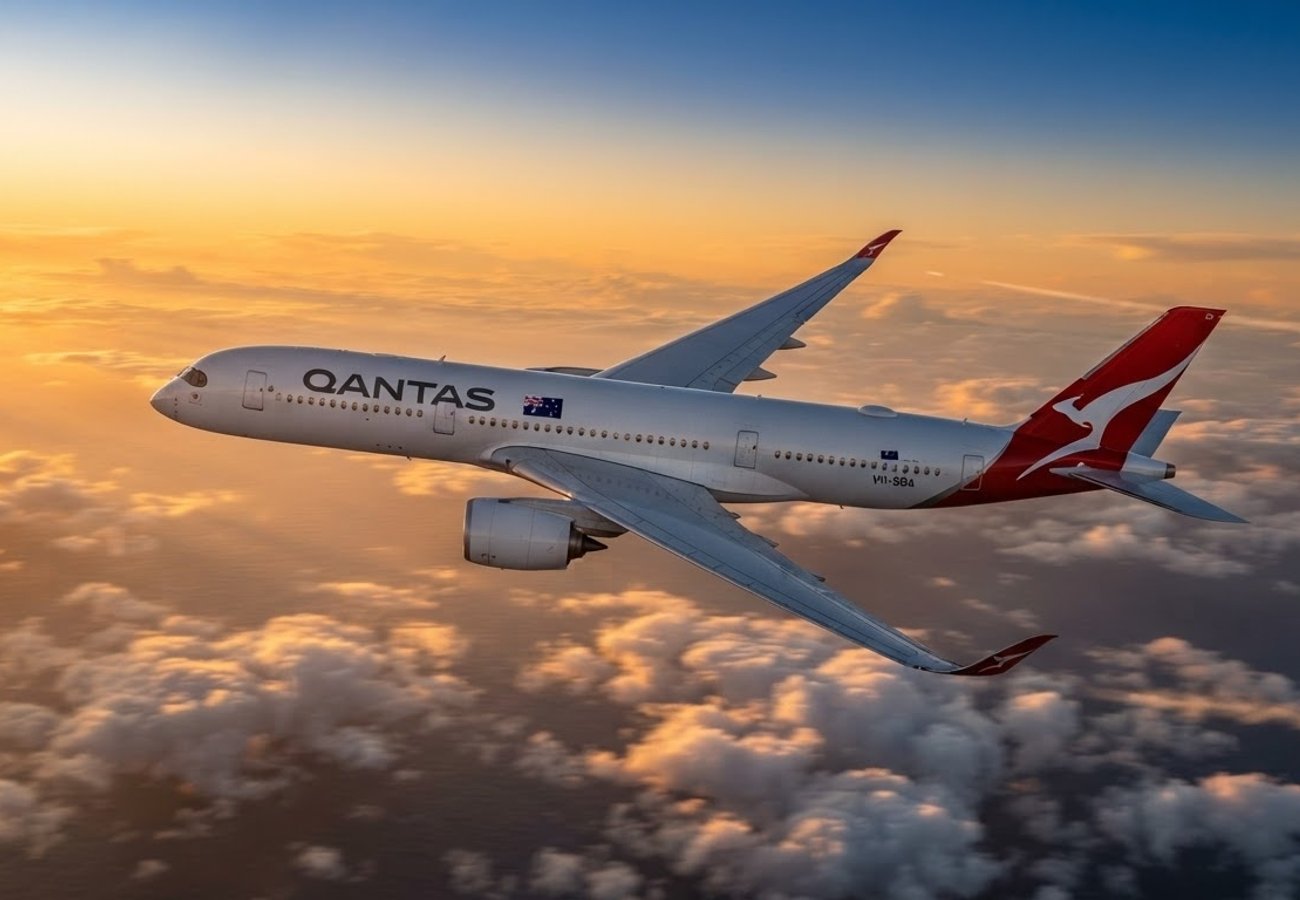
Image generated by AI
The era of the technical stop is ending. Starting October 2027, Qantas will launch non-stop flights from Sydney to London and New York, cutting up to four hours from total travel time via 22-hour endurance journeys.
The Shift to Ultra-Long-Haul Dominance
Aviation is moving toward a "point-to-point" reality for the world's most distant cities. Qantas is spearheading this transition with Project Sunrise, utilizing a fleet of 12 specially configured Airbus A350-1000ULR aircraft. The primary objective is to eliminate the traditional hub-and-spoke interruptions that have defined travel between Australia, Europe, and North America for decades.
The first milestone arrives in October 2027 with the Sydney-London route, followed closely by the Sydney-New York service. For the high-value corporate traveler or the premium leisure visitor, the removal of a stopover isn't just about time—it is about reducing the cognitive and physical friction of international transit.
Engineering Endurance: The A350-1000ULR Specifications
These aircraft are not standard fleet additions; they are engineered for extreme range. With a maximum non-stop capability of 22 hours and a range exceeding 16,000 kilometres, the A350-1000ULR features expanded fuel capacity to sustain these massive sectors.
To make a 20-hour flight commercially viable, Qantas has opted for a lower-density cabin layout. By limiting capacity to 238 passengers, the airline ensures more personal space and a higher ratio of premium seating, which accounts for over 40 per cent of the aircraft.
| Project Sunrise Feature | Planned Details |
|---|---|
| Aircraft Model | Airbus A350-1000ULR |
| Fleet Size | 12 Aircraft |
| Passenger Capacity | 238 |
| Max Non-Stop Duration | 22 Hours |
| Approximate Range | > 16,000 km |
| First Delivery | April 2027 |
| Sydney-London Launch | October 2027 |
| Connectivity | Fast Wi-Fi & Bluetooth |
Solving the Physiological Cost of Flight
The real challenge of a 22-hour journey is not the distance, but the biological impact. Prolonged immobility and circadian disruption can render a traveler unproductive for days after landing. To counter this, Qantas collaborated with the University of Sydney’s Charles Perkins Centre to integrate sleep, movement, and hydration science into the flight experience.
For the visitor, the most significant innovation is the Wellbeing Zone. Positioned between Premium Economy and Economy, this dedicated space provides stretching handles and guided movement programs, allowing passengers to break the sedentary cycle of long-haul flying. This is paired with advanced lighting scenes that mimic natural day-night cycles to regulate the body's internal clock.
Cabin Configuration and Comfort
| Cabin Class | Seats | Key Experience Feature |
|---|---|---|
| First | 6 | Enclosed suites with 80-inch flat beds |
| Business | 52 | Privacy doors and lie-flat beds |
| Premium Economy | 40 | Enhanced personal space and wider seats |
| Economy | 140 | 3-3-3 configuration (incl. 42 Economy Plus seats) |
Economic Impact and Tourism Integration
Project Sunrise is a strategic response to Australia's growing international demand. According to the Australian Bureau of Statistics, Australia saw 9.10 million short-term visitor arrivals in 2025-26. The US and UK remain critical high-value markets, with the US recording 755,500 arrivals and the UK 751,420 in the same period.
By reducing the "accessibility barrier," Qantas is effectively expanding the reachable tourism market. High-spending American and British tourists are more likely to visit remote Australian destinations if the initial transpacific or transcontinental leg is streamlined.
Regional Tourism Market Context (2025-26)
- New Zealand: 1,422,790 arrivals (Largest source market)
- United States: 755,500 arrivals (High-value business/leisure)
- United Kingdom: 751,420 arrivals (Leisure and VFR)
- India: 435,570 arrivals (Fast-growing opportunity)
With Sydney Airport recording a record 17.17 million international passengers in 2025, the infrastructure is already primed for this surge in ultra-long-haul demand.
Visitor Insider Tips for Ultra-Long-Haul
Traveling for 22 hours requires a different strategy than a standard 10-hour flight. To maximize the benefits of the A350-1000ULR:
- The Movement Window: Utilize the Wellbeing Zone every 4-6 hours. Even simple stretching using the provided handles can significantly reduce the risk of deep vein thrombosis (DVT).
- Hydration Timing: Avoid relying solely on meal-service water. Use the hydration stations in the Wellbeing Zone to maintain fluid intake, which is critical for combating jet lag.
- Lighting Alignment: Follow the cabin's lighting cues. If the lights shift to a "sunset" hue, begin your wind-down routine immediately, regardless of your current local time, to align with the destination.
- Off-Peak Booking: For those seeking the best value in Premium Economy, monitor ticket releases shortly after the April 2027 aircraft delivery but before the October launch.
Tourism Outlook
The long-term impact of Project Sunrise extends beyond Qantas. If these routes prove commercially sustainable, it will likely trigger a wave of similar non-stop offerings from other global carriers, further integrating Australia into the global economy. The shift toward "wellness-centric" aviation—where the aircraft is a health-management tool rather than just a transport vessel—will become the new industry standard for all long-haul travel.
The horizon of global travel just got a lot closer.
Related Travel Guides
Disclaimer
This article is for informational and educational purposes only. It does not constitute legal, financial, or professional advice. While we strive to provide accurate and up-to-date information, travel policies, regulations, and conditions change rapidly. Always verify information with official sources before making travel decisions. Nomad Lawyer makes no representations about the accuracy, reliability, completeness, or suitability of the information provided. Readers should consult qualified professionals for advice specific to their circumstances. The views expressed in this article are those of the author and do not necessarily reflect the views of Nomad Lawyer.
Preeti Gunjan
Contributor & Community Manager
A passionate traveller and community builder. Preeti helps grow the Nomad Lawyer community, fostering engagement and bringing the reader experience to life.
Learn more about our team →