
Puerto Rico Aligns With Caribbean and Latin America to Boost Cruise Tourism and Expand Local Economic Benefits
As global cruise passengers surge toward 46 million by 2031, Puerto Rico and regional leaders at the 32nd FCCA Conference pivot from raw passenger volume to local economic retention.

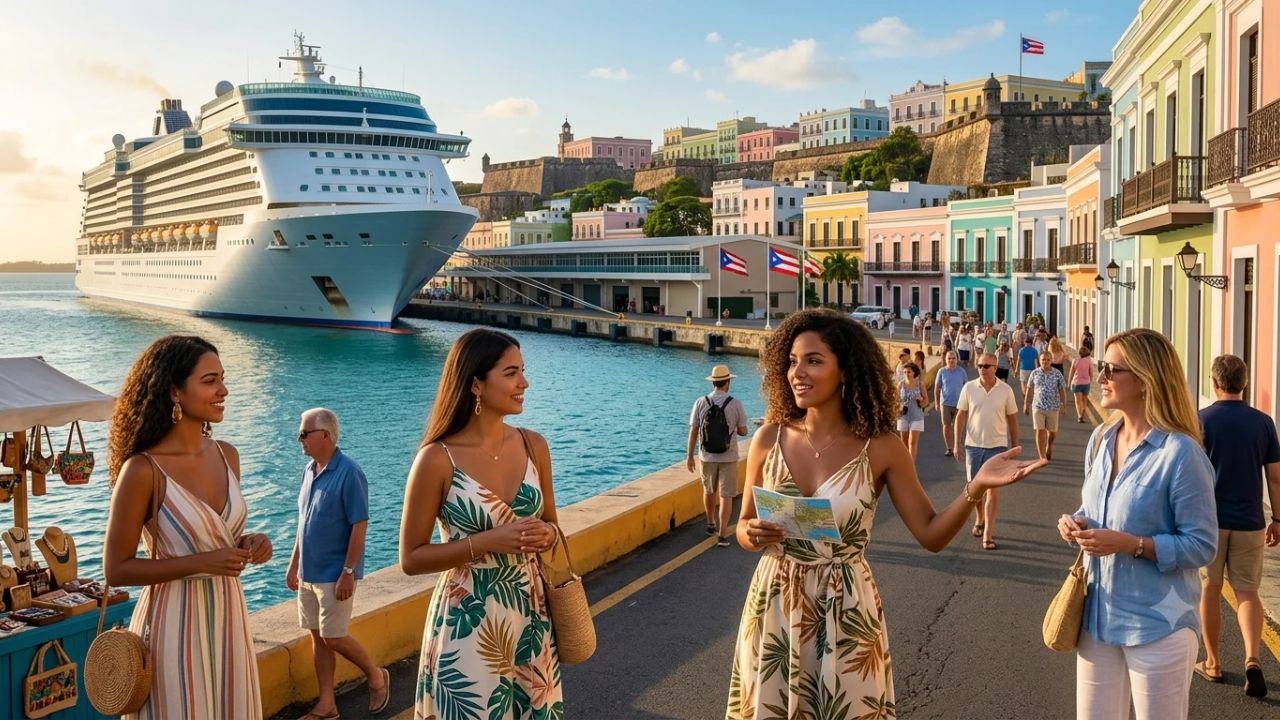
San Juan Bay cruise piers serving as a premier homeport and maritime gateway for Caribbean itineraries
[SAN JUAN, Oct 21, 2026] — Facing a global cruise market projected to surge from 37 million passengers in 2025 to 46 million by 2031, Puerto Rico has positioned itself as the anchor of a coordinated regional initiative across the Caribbean and Latin America to convert record maritime arrivals into measurable community wealth. Convening nearly 700 cruise line chief executives, government ministers, port directors, and excursion operators at the 32nd annual Florida-Caribbean Cruise Association (FCCA) Cruise Conference and Trade Show in San Juan from October 12 to 16, 2026, regional stakeholders confronted a central industry challenge. While passenger totals continue to break historical records, destination governments are shifting away from evaluating tourism success solely through raw passenger disembarkations, focusing instead on capturing meaningful per-passenger local spending, expanding homeporting infrastructure, and protecting coastal ecosystems.
The regional consensus forged in San Juan establishes that passenger volume without robust local economic integration leaves host communities bearing the costs of municipal wear and environmental pressure without adequate financial returns.
[!NOTE] Key Operational Findings:
- Macro Passenger Projections: Global cruise passenger volume is on track to expand from approximately 37 million in 2025 to 46 million by 2031, placing immense logistical and physical demands on Caribbean and Latin American berths.
- Summit Attendance & Representation: The 32nd FCCA Cruise Conference convened nearly 700 industry delegates in San Juan, featuring direct participation from top leadership at Carnival Cruise Line, Margaritaville at Sea, MSC Cruises, Norwegian Cruise Line, and Virgin Voyages.
- The Homeporting Multiplier: Shifting from transit ports of call to dedicated homeporting operations dramatically expands economic yields, generating significant pre- and post-cruise hotel occupancies, airport transit traffic, and containerized vessel provisioning.
- Oxford Economics Insights: Research presented at the conference underscored that destination retention depends heavily on local procurement, independent onshore excursion development, and targeted customer service training for local artisans and service providers.
- Governance & Leadership: FCCA President Adam Ceserano and Chief Executive Michele Paige joined Puerto Rico Governor Jenniffer González Colón and the Puerto Rico Tourism Company in outlining collaborative frameworks designed to align private itinerary planning with public economic objectives.
DESTINATION VALUE RETENTION: CRUISE PASSENGER EXPENDITURE FUNNEL
| Column 1 |
|---|
| [TOTAL PASSENGER MANIFEST] (37M in 2025 -> 46M Projected by 2031) |
| v |
| [PORT ENTRY & TERMINAL GATEWAY] |
| * Port dues, passenger facility charges, customs processing. |
| * Primary Beneficiaries: Port authorities, terminal concessionaires. |
| +---------------------------------------+ |
| v (Transit Port Call: 4-8 Hours) v (Homeporting Operation: 24-48 Hours) |
| [SHORE EXCURSION & RETAIL] [EXTENDED VALUE MULTIPLIER] |
| * Shipboard-sold motorcoach tours. * Pre- & post-cruise hotel stays (1.8-2.4 nights). |
| * Gated duty-free pier shopping. * Dual airport-to-port ground transportation. |
| * Local Retention: 15% - 28% * Vessel provisioning (local produce, water, bunkering). |
| +-------------------+-------------------+ |
| v |
| [COMMUNITY-LEVEL ECONOMIC ABSORPTION] |
| * Independent food & beverage establishments, cultural guides, and artisan markets. |
San Juan Summit Sets New Direction for Regional Destination Partnerships
The 32nd annual FCCA Cruise Conference and Trade Show served as an operational meeting ground between multinational cruise corporations and sovereign destination leaders. Held at the Puerto Rico Convention Center in San Juan from October 12 to 16, 2026, the summit hosted delegates representing sovereign island nations, Central American maritime ministries, and regional logistics providers.
Puerto Rico's role as host destination highlighted the island's dual status as both a high-volume port of call and the eastern Caribbean's preeminent homeporting hub. In opening ceremonies and ministerial roundtables, Puerto Rico Governor Jenniffer González Colón and executive leadership from the Puerto Rico Tourism Company demonstrated how investments in cultural preservation and port infrastructure turn cruise tourism into a catalyst for domestic enterprise. Cultural presentations, traditional music, and regional gastronomy were integrated into the event schedule, illustrating to visiting cruise line executives that authentic local heritage serves as a powerful market differentiator.
During the conference's signature President and CEO Leadership Panel, senior executives from Carnival Cruise Line, Margaritaville at Sea, MSC Cruises, Norwegian Cruise Line, and Virgin Voyages addressed changing passenger demographics. Discussions focused on the reality that modern travelers seek unique, locally rooted experiences rather than generic, manufactured retail enclaves.
FCCA President Adam Ceserano emphasized that destination partnerships must move beyond basic berthing agreements. Cruise operators need diverse, authentic shore activities to maintain high customer satisfaction scores, while destinations require transparent collaboration to ensure that local entrepreneurs, historical districts, and family-owned restaurants benefit directly from passenger footfall.
Global Cruise Trajectory: The Expansion to 46 Million Passengers
The operational context governing the San Juan discussions is defined by unprecedented global fleet expansion. Official industry forecasts presented at the conference indicate that global cruise passenger volume will rise from approximately 37 million in 2025 to 46 million by 2031. This projected addition of 9 million annual cruisers represents an expanding commercial pipeline, but it also introduces severe infrastructure bottlenecks for Caribbean and Latin American harbors.
The Caribbean and Latin American regions remain the world's most sought-after cruise theater, capturing over a third of global vessel deployments. Accommodating this impending influx requires substantial capital management. Without strategic port planning, surging numbers risk overwhelming historic urban centres like Old San Juan, degrading sensitive marine environments, and causing passenger congestion that diminishes destination appeal.
| Maritime Operational Metric | 2025 Baseline | 2031 Industry Projection | Strategic Operational Focus for Destinations |
|---|---|---|---|
| Global Cruise Passenger Volume | ~37 Million Passengers | ~46 Million Passengers | Berthing capacity, terminal electrification, and crowd dispersion |
| Regional Deployment Share | ~35% Global Fleet Concentration | ~38% Anticipated Share | Expanding secondary ports and regional multi-port itineraries |
| Port Engagement Model | Predominantly 6-8 Hour Transit Calls | Strategic Shift Toward Homeporting | Developing airport-to-seaport transfer logistics and hotel partnerships |
| Shore Excursion Architecture | Mass-Market Standard Motorcoach Tours | Curated, Hyper-Local & AI-Guided Visits | Direct contracting with independent cultural and culinary guides |
| Economic Retention Benchmark | $15–$25 per Transit Passenger Local Yield | $85–$140 per Homeport Passenger Yield | Maximizing pre-cruise hotel stays and local food provisioning |
As outlined in an Oxford Economics study presented during the conference, cruise tourism already supports hundreds of thousands of livelihoods throughout the Caribbean basin. However, the study emphasized that economic benefits are not distributed evenly by default. A significant portion of passenger spending can remain trapped within shipboard excursions and foreign-owned duty-free retail concessions. To capture true economic value, host nations must actively establish business frameworks that channel passenger spending into domestically owned enterprises.
Homeporting Strategy: Unlocking the Multiplier Effect
A primary theme of the San Juan conference was the strategic imperative for destinations to pursue homeporting operations. Unlike a transit port of call, where an ocean liner arrives in the morning and departs in the late afternoon, a homeport serves as the official embarkation and disembarkation point for an entire itinerary.
The economic differences between these two operating models are substantial:
- Hotel and Hospitality Occupancy: Homeporting passengers frequently arrive one to two days before their cruise departs or extend their stay following disembarkation. This behavior generates direct demand for urban hotels, boutique accommodations, and independent dining establishments outside traditional cruise pier perimeters.
- Aviation and Ground Logistics: Operating as a turnaround hub stimulates passenger traffic at international airports, supporting direct air routes from key North American and European feeder markets. It also sustains taxi associations, rideshare operators, and private transfer firms shuttling guests between airports, accommodation centers, and cruise quays.
- Vessel Provisioning and Marine Bunkering: Turnaround days require mega-liners to restock provisions for thousands of guests and crew members. Homeports with developed agricultural and commercial distribution networks can supply vessels with local produce, seafood, bottled beverages, and marine services, injecting capital directly into domestic supply chains.
- Port Authority Revenue: Homeporting operations yield higher maritime revenues through extended berth dwell times, terminal handling charges, luggage logistics fees, and passenger departure taxes.
However, as delegates in San Juan observed, establishing a successful homeport requires rigorous planning. Destinations must possess modern international airports capable of handling wide-body passenger aircraft, streamlined dual-customs clearance protocols, automated baggage transfer systems, and deepwater quays equipped with modern passenger terminals. Homeporting cannot be treated as a casual operational add-on; it requires sustained infrastructure investment and seamless coordination among civil aviation bodies, port authorities, and the hospitality sector.
Upgrading Port Infrastructure into Immersive Cultural Gateways
The passenger experience begins long before a traveler walks through an island's historic streets. The layout, design, and operational efficiency of the cruise terminal determine initial visitor impressions and influence how easily passengers disperse into surrounding communities.
During a dedicated conference workshop entitled "Building Your Port into an Unforgettable Experience," port engineers, architects, and hospitality directors analyzed strategies to eliminate arrival friction points. Industry leaders noted that confusing disembarkation routes, aggressive transportation touts, disorganized taxi queues, and insufficient directional signage create passenger anxiety, causing visitors to retreat to the familiar environment of the ship or limit their spending to pier-side corporate shops.
| Port & Terminal Component | Traditional Operational Standard | Modernized Destination Framework | Local Community Impact |
|---|---|---|---|
| Pier Arrival Area | Enclosed industrial security zone | Open-air cultural welcome plaza | Showcases local musicians, dancers, and regional artists |
| Retail Allocation | Exclusive leases to duty-free chains | Segmented stalls for verified artisans | Direct income for domestic craftspeople and cooperatives |
| Ground Transport | Unregulated, chaotic taxi ranks | Flat-rate digital booking kiosks | Fair fare distribution for drivers and transparent pricing for guests |
| Excursion Assembly | Congested curbside bus loading | Shaded, organized departure concourses | Reduces passenger stress and accelerates tour departures |
| Visitor Information | Static, outdated paper brochures | Interactive digital and AI kiosks | Highlights off-the-beaten-path heritage sites and independent dining |
To solve these challenges, forward-looking ports are implementing targeted operational solutions, including wide, barrier-free passenger concourses with digital wayfinding displays, organized transit hubs, and dedicated retail spaces for verified local artisans. Comprehensive customer service and language training programs for taxi drivers, tour guides, and terminal staff further enhance the guest experience. By transforming utilitarian concrete piers into engaging cultural portals, destinations encourage passengers to venture confidently into local neighborhoods and historic business corridors.
Executive Leadership Panel: Aligning Cruise Deployments with Destination Needs
The core dialogue of the FCCA conference centered on the President and CEO Leadership Panel, which brought together high-ranking decision-makers from five prominent cruise corporations: Carnival Cruise Line, Margaritaville at Sea, MSC Cruises, Norwegian Cruise Line, and Virgin Voyages.
The panel addressed the shifting dynamics of cruise itinerary planning. In previous decades, cruise lines selected ports based almost entirely on geographical convenience, fuel efficiency between waypoints, and low port fees. Today, vessel deployment decisions are heavily driven by destination guest satisfaction scores. If passengers report overcrowding, poor excursion value, or an uninviting reception ashore, cruise lines alter their deployment schedules in favor of competing ports or private island resorts.
Cruise line executives emphasized that private island destinations—such as those developed extensively in the Bahamas—gained popularity partly because they offer immaculate, safe, and controlled guest environments. However, leaders acknowledged that private islands cannot replicate the deep history, vibrant culinary traditions, and authentic human connections found in established Caribbean and Latin American societies.
For destination authorities, this executive acknowledgment presents a powerful commercial opportunity. Governments that collaborate openly with cruise line deployment planners can identify operational bottlenecks early, adjust ship arrival timings to avoid port congestion, and co-develop unique shore excursions that distribute visitors evenly across rural and coastal communities.
Technology, Digital Guidance, and the Evolution of Luxury Cruising
As cruise lines introduce sophisticated new vessels, the integration of advanced technology and luxury curation is redefining how passengers interact with destinations. The San Juan summit highlighted how artificial intelligence, mobile geolocation applications, and digital storytelling platforms are transforming port days:
- AI-Powered Visitor Guidance: Destinations are partnering with technology providers to roll out localized digital concierges accessible via passengers' smartphones. These platforms deliver real-time recommendations for independent restaurants, historic walking paths, and artisan studios, tailoring suggestions to individual passenger preferences and walking distances.
- Smart Crowd Dispersal Systems: By tracking foot traffic densities through mobile networks, municipal tourism managers can guide passengers away from congested historic monuments toward less-frequented cultural sites, easing neighborhood overcrowding and balancing economic spending.
- Contactless and Multi-Currency Payments: Expanding digital payment infrastructure allows small food vendors, market stallholders, and independent guides to accept mobile wallets and international debit cards smoothly, eliminating the transaction barrier of physical currency exchange.
Simultaneously, the steady expansion of luxury and boutique expedition cruising is opening high-yield avenues for Caribbean destinations. Luxury passengers prioritize exclusivity, private access, and gastronomic immersion over mass-market shopping. Specialist tour operators who curate small-group interactions—such as private culinary masterclasses with regional chefs, guided architectural tours of historic estates, and marine biology expeditions—can generate significant revenue with small group sizes, minimizing the physical footprint on local communities.
Balancing Tourism Volume, Ecological Protection, and Resident Welfare
While the commercial potential of 46 million global cruisers by 2031 offers significant economic opportunities, delegates in San Juan acknowledged that rapid growth carries serious operational and ecological risks. Uncontrolled visitor volume places severe stress on municipal infrastructure, strains electrical and water utilities, and generates substantial waste that can overwhelm small island waste management facilities.
FCCA Chief Executive Michele Paige emphasized that sustainable growth requires an enduring commitment to community welfare. Tourism expansion that generates corporate profits while causing resident frustration, housing displacement, or marine degradation is fundamentally unsustainable over the long term.
Destination management authorities must establish scientific carrying capacities for ports and surrounding attractions. Staggering ship arrival windows, implementing shoreside power connections (cold ironing) to eliminate dockside diesel emissions, enforcing strict marine zero-discharge regulations, and reinvesting passenger facility charges directly into municipal sanitation, parks, and schools ensure that local communities share tangibly in tourism growth.
Actionable Takeaways for Caribbean and Latin American Tourism Authorities
To capitalize on the strategic directions established at the 32nd FCCA Cruise Conference, destination authorities and business leaders should implement five practical policies:
- Pursue Homeporting Capabilities Aggressively: Assess international airport capacities, dual-customs clearance protocols, and hotel room inventories to develop attractive homeport packages for medium- and large-sized vessels.
- Diversify Onshore Tour Inventories: Move beyond standard beach and motorcoach excursions by helping domestic entrepreneurs launch culinary, ecological, and cultural tours that spread visitor spending into rural and suburban districts.
- Formalize Local Sourcing Pipelines: Create structured supplier networks connecting domestic agricultural producers, beverage manufacturers, and artisan guilds directly with cruise line procurement divisions.
- Implement Modern Terminal Management: Upgrade arrival docks with transparent flat-rate transit booking, free public Wi-Fi, barrier-free accessibility concourses, and dedicated spaces for independent local merchants.
- Establish Comprehensive Data Tracking: Deploy digital surveying and banking data analytics to measure exact per-passenger destination spend, identifying where leakage occurs and tracking net community economic retention over multi-year cycles.
The Future of Caribbean Maritime Partnerships
The 32nd annual FCCA Cruise Conference in San Juan established a clear path forward for Caribbean and Latin American tourism. The prospect of 46 million global cruise passengers by 2031 proves that demand for ocean travel is accelerating. However, destination success will no longer be measured simply by counting the hulls anchored in the bay or the passengers disembarking onto the pier.
By building true operational partnerships with cruise lines, modernizing passenger reception facilities, prioritizing homeporting development, and ensuring that local small businesses participate fully in the tourism value chain, Puerto Rico and its regional neighbors can ensure that cruise expansion enriches the communities that make these destinations extraordinary.
Frequently Asked Questions (PAA)
What was the primary focus of the 32nd FCCA Cruise Conference in Puerto Rico?
Held from October 12 to 16, 2026, in San Juan, the 32nd annual Florida-Caribbean Cruise Association (FCCA) Cruise Conference and Trade Show gathered nearly 700 cruise line executives, government ministers, and tourism leaders to coordinate destination partnerships, homeporting strategies, and infrastructure investments ahead of projected global passenger growth.
What is the projected growth for the global cruise industry by 2031?
Industry forecasts presented at the FCCA conference indicate that global cruise passenger volume will rise from approximately 37 million in 2025 to 46 million by 2031. This 9-million-passenger expansion is driving significant operational and infrastructure upgrades across the Caribbean and Latin America.
How does cruise homeporting generate more economic value than standard transit calls?
Homeporting occurs when an itinerary begins and ends at a destination. This creates substantial economic benefits by generating pre- and post-cruise hotel stays, increasing airport traffic, stimulating ground transportation, and providing local supply chains with opportunities to restock vessels with food, beverages, and marine services.
Which major cruise lines participated in the San Juan executive leadership panel?
The President and CEO Leadership Panel featured executive leadership from five prominent cruise corporations: Carnival Cruise Line, Margaritaville at Sea, MSC Cruises, Norwegian Cruise Line, and Virgin Voyages.
How can local businesses benefit more directly from visiting cruise passengers?
Local businesses can maximize economic gains by forming supplier cooperatives, offering curated cultural and culinary shore excursions, accepting contactless digital payments, and participating in port terminal artisan programs that connect travelers directly with authentic local goods and experiences.
Related Travel Guides
Disclaimer
This article is for informational and educational purposes only. It does not constitute legal, financial, or professional advice. While we strive to provide accurate and up-to-date information, travel policies, regulations, and conditions change rapidly. Always verify information with official sources before making travel decisions. Nomad Lawyer makes no representations about the accuracy, reliability, completeness, or suitability of the information provided. Readers should consult qualified professionals for advice specific to their circumstances. The views expressed in this article are those of the author and do not necessarily reflect the views of Nomad Lawyer.
Raushan Kumar
Founder & Lead Developer
Full-stack developer with 11+ years of experience and a passionate traveller. Raushan built Nomad Lawyer from the ground up with a vision to create the best travel and law experience on the web.
Learn more about our team →