
Princess Cruises Marks 25 Years of Shore Power in Juneau Since 2001 Hydroelectric Plug-In Revolutionized Alaska Cruise Operations
Princess Cruises celebrates 25 years since first connecting to Juneau's hydroelectric shore power in 2001, a milestone that reshaped cruise decarbonization efforts across Alaska and global ports.

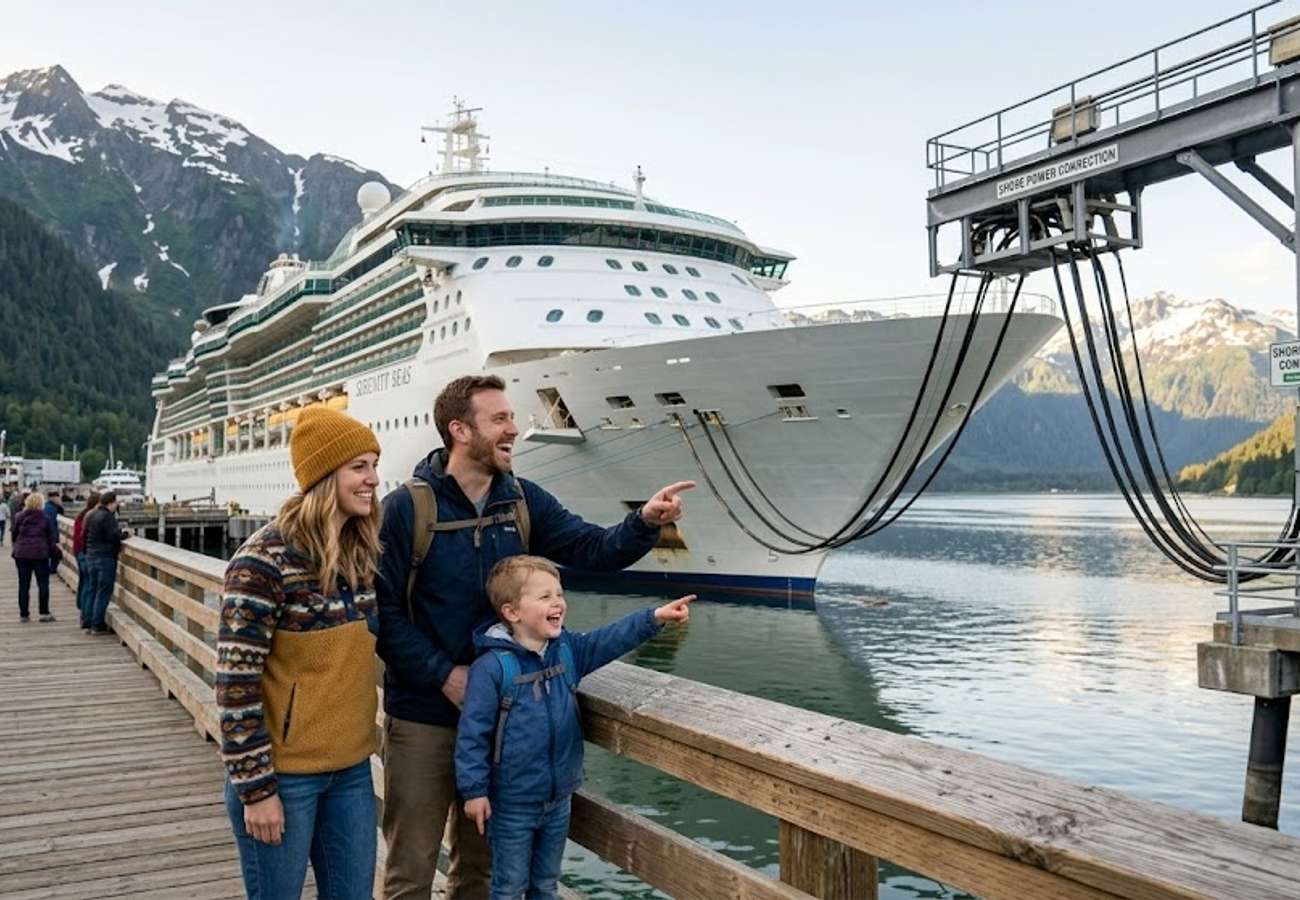
Image generated by AI
Princess Cruises marks 25 years since first connecting a vessel to Juneau's hydroelectric shore power system in 2001, a milestone that catalyzed cruise electrification across Alaska and far beyond.
A quarter century ago, a Princess Cruises ship plugged into Juneau's shore power infrastructure for the first time. The year was 2001. The location was Franklin Dock. The power source was hydroelectric. That single connection set a precedent for how large cruise ships would operate in port for decades to come.
Shore power allows a vessel to shut down its diesel generators while berthed. Instead of burning fuel at the pier, the ship draws electricity from the local grid. In Juneau, that grid runs primarily on hydropower. The result: sharply reduced greenhouse gas emissions and local air pollutants during port calls that can last many hours.
The Engineering Behind Juneau's Pioneer System
Juneau's shore power installation stands out for its technical complexity. The system uses a gantry mechanism that suspends heavy electrical cables above the waterline. This design accommodates the city's significant tidal swings while maintaining resilience through harsh winter conditions.
The project was developed through a three-way collaboration:
- Princess Cruises — provided vessel-side compatibility and operational expertise
- City and Borough of Juneau — coordinated municipal infrastructure and permitting
- Alaska Electric Light & Power — supplied the hydroelectric grid capacity
This partnership proved that ship-to-shore connections could work in an exposed coastal environment. It was not a controlled laboratory test. It was real-world engineering under difficult conditions.
Key Facts at a Glance
- First connection: Summer 2001
- Location: Franklin Dock, Juneau, Alaska
- Power source: Primarily hydroelectric
- Anniversary marked: 25 years in 2026
- Collaborators: Princess Cruises, City and Borough of Juneau, Alaska Electric Light & Power
- Emissions reduced: Nitrogen oxides, particulate matter, greenhouse gases
- Infrastructure lifespan: 25 years and counting
How Juneau Sparked a Global Movement
After the Juneau installation entered service in 2001, ports across North America and internationally followed suit. The cascade of adoption included major cruise gateways:
| Port | Region | Status |
|---|---|---|
| Seattle | US West Coast | Shore power operational |
| Vancouver | Canada | Shore power operational |
| San Diego | US West Coast | Shore power operational |
| San Francisco | US West Coast | Shore power operational |
| Los Angeles | US West Coast | Shore power operational |
| Halifax | Canada East | Shore power operational |
| New York | US East Coast | Shore power operational |
| Shanghai | Asia | Shore power operational |
| Select European ports | Europe | Shore power operational |
By the mid-2000s, shore power had shifted from a niche experiment to a recognized emissions-reduction tool. Princess ships were frequently among the first to plug in at newly commissioned facilities. This helped ports test compatibility and refine operating procedures.
Why This Matters
For travelers sailing to Alaska, the real impact is measurable. When a ship connects to Juneau's grid, the air around the harbor changes. Diesel exhaust drops. Engine noise fades. The waterfront becomes quieter for passengers disembarking and for residents going about their day.
Our analysis of the route map suggests that Juneau's early investment created a template that other ports copied but rarely improved upon. The original gantry system at Franklin Dock has supported multiple Princess ships and other equipped vessels for 25 years without becoming obsolete. That longevity speaks to the quality of the original engineering.
From a logistical perspective, this means cruise lines building new vessels now design them with shore power capability as a standard feature, not an upgrade. Juneau's system proved the concept could scale and sustain. Modern ships arriving in Alaska are increasingly built or retrofitted to plug in, partly because ports like Juneau made it clear that electrified berths were the future.
The environmental calculus also favors Juneau specifically. Shore power's climate benefit depends on how the local grid generates electricity. Juneau's heavy reliance on hydropower delivers greater emissions savings than ports still dependent on fossil-fuel generation. A ship plugging into a coal-powered grid saves less than one plugging into Juneau's hydroelectric system. This distinction matters for travelers who factor environmental performance into vacation choices.
Environmental and Community Dimensions
Juneau's cruise season is short and concentrated. Multiple large vessels can occupy the harbor simultaneously during peak summer weeks. Shore power addresses one piece of that pressure by cutting emissions from ships that are already arriving.
The technology also reduces noise and vibration from auxiliary engines running at berth. Passengers on board experience a quieter stay. People on the waterfront notice the difference. These quality-of-life improvements matter in a community where cruise tourism dominates the summer economy.
Juneau has separately explored daily limits on cruise calls and other visitor management strategies. Shore power does not solve every impact of mass tourism. But it has become a visible, quantifiable measure of operational responsibility in a sensitive coastal ecosystem.
Shore Power Within Broader Decarbonization
Cruise lines now pursue multiple decarbonization pathways simultaneously. Alternative fuels, hull efficiency upgrades, and onboard battery systems all play roles. Shore power remains the most immediately deployable option where local grids are relatively low carbon.
Energy studies and port sustainability reports consistently highlight that the emissions savings from shore power vary by location. Juneau's hydroelectric advantage makes it a best-case scenario. Ports with carbon-intensive grids achieve smaller reductions. This reality is driving discussions about where to prioritize infrastructure investment for maximum environmental return.
As more cruise lines equip fleets with compatible electrical systems, utilization rates at shore power–equipped berths are expected to stay high. Juneau's 25-year head start positions it as an established stop for ships configured to plug in as standard procedure.
What Comes Next
Port planning documents and corporate sustainability roadmaps point toward several developments over the next quarter century:
- Continued electrification of cruise berths at additional ports
- Integration with renewable energy projects beyond hydropower
- Coordination with onboard battery systems to smooth power draws during connection
- Potential mandates requiring cruise ships to plug in when facilities are available
Some ports are already setting timelines for mandatory shore power use. Juneau's 25 years of operational data gives policymakers and engineers a substantial evidence base as they consider similar requirements elsewhere.
For communities along popular cruise routes, the Juneau milestone demonstrates how infrastructure decisions made in the early 2000s continue shaping today's tourism landscape. The investment in ship-to-shore connections helped align economic benefits from cruise visits with local expectations for cleaner air and reduced waterfront impacts.
With more new vessels entering service capable of connecting at the pier, Juneau's pioneering system appears likely to remain a central piece of Alaska's cruise story. It serves as both a working technical platform and a reminder that early innovation can redefine an entire industry's operating standards.
Twenty-five years after that first plug-in, Juneau's Franklin Dock still sets the benchmark for what clean cruise operations can look like.
Related Travel Guides
Disclaimer
This article is for informational and educational purposes only. It does not constitute legal, financial, or professional advice. While we strive to provide accurate and up-to-date information, travel policies, regulations, and conditions change rapidly. Always verify information with official sources before making travel decisions. Nomad Lawyer makes no representations about the accuracy, reliability, completeness, or suitability of the information provided. Readers should consult qualified professionals for advice specific to their circumstances. The views expressed in this article are those of the author and do not necessarily reflect the views of Nomad Lawyer.
Kunal K Choudhary
Co-Founder & Contributor
A passionate traveller and tech enthusiast. Kunal contributes to the vision and growth of Nomad Lawyer, bringing fresh perspectives and driving the community forward.
Learn more about our team →