
Premium Economy Long-Haul Flights: The Smart Comfort Upgrade for 2026
Premium economy long-haul flights have emerged as the optimal middle ground in 2026, offering substantial comfort upgrades between economy and business class at significantly lower fares. Major carriers like Emirates and Singapore Airlines are leading the charge with differentiated cabin products.

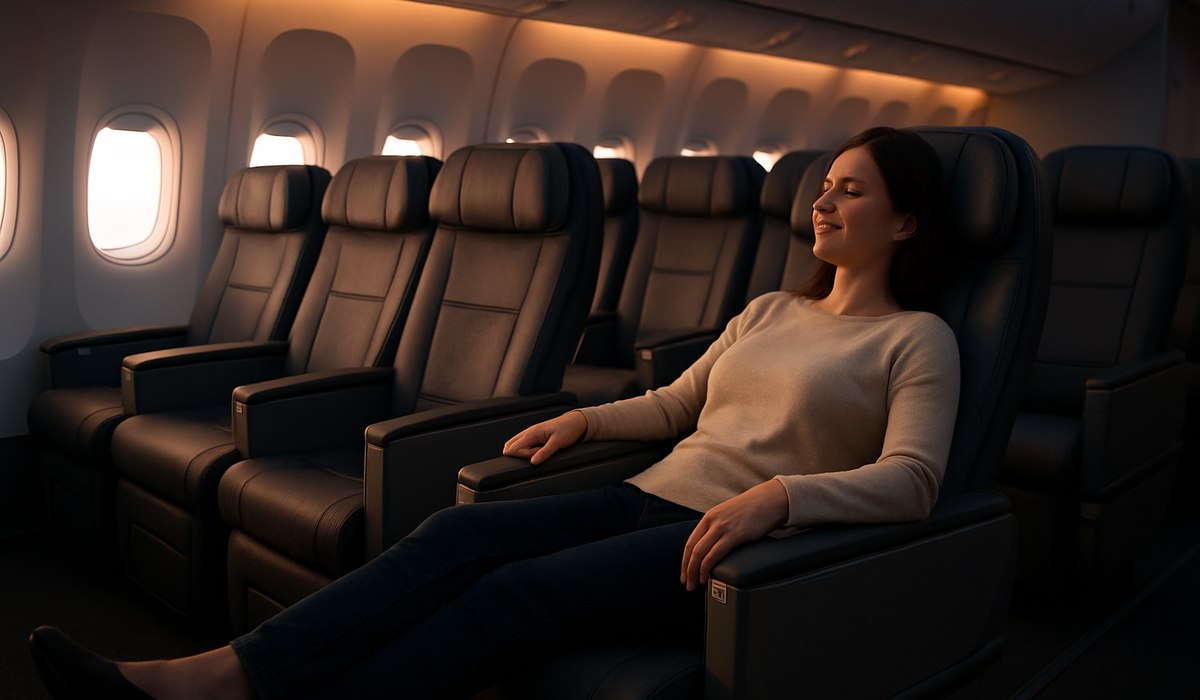
Image generated by AI
Premium Economy Emerges as the Sweet Spot for Long-Distance Travel
Premium economy long-haul flights have solidified their position as the preferred cabin class for discerning travelers in 2026, bridging the financial and comfort gap between standard economy and prohibitively expensive business-class fares. This cabin segment has transformed how millions approach international travel, offering meaningful amenities—wider seats, priority boarding, enhanced meals, and dedicated cabin service—without the five-figure ticket prices associated with premium cabins. Airlines including Emirates, Singapore Airlines, and United Airlines have invested heavily in differentiating their premium economy products, recognizing that business travelers and leisure passengers alike seek greater comfort on flights exceeding eight hours.
The rise of premium economy reflects broader travel market dynamics. As economy cabins grow increasingly cramped and business-class pricing remains stubbornly high, carriers have identified a lucrative middle market willing to pay 30-50% more than economy for tangible improvements. This strategic positioning has transformed airline revenue models and reshaped long-haul fleet planning across the industry.
What Sets Premium Economy Apart on Long-Haul Routes
Premium economy cabins on widebody aircraft deliver substantive upgrades that fundamentally alter the long-haul travel experience. Seats typically measure 18-19 inches wide with 38-40 inches of pitch, compared to economy's 17-inch width and 31-32-inch pitch—differences that accumulate across 10+ hour flights.
The amenities package distinguishes premium economy from economy significantly. Passengers enjoy enhanced meal services with multiple course options, premium beverage selections, higher-quality bedding and pillows, and dedicated lavatory access. Many carriers provide noise-canceling headphones, larger seatback entertainment screens, and faster wifi access. Singapore Airlines, renowned for cabin innovation, offers premium economy passengers a 23-inch seat width with direct aisle access on select aircraft. Emirates provides shower spas exclusively to first and business passengers, but premium economy guests receive lounge access—a perk absent in standard economy.
Ground-level service improvements matter equally. Premium economy passengers typically enjoy shorter security lines through priority lanes, expedited boarding procedures, and dedicated check-in counters. Baggage allowances jump from 1-2 standard pieces to enhanced allowances, benefiting travelers on extended trips.
The psychological value should not be understated. Passengers report significantly improved sleep quality, reduced jet lag symptoms, and greater productivity upon arrival compared to economy travelers on identical routes. For professionals traveling on personal budgets or leisure travelers maximizing vacation comfort, these benefits justify premium economy pricing.
For detailed comparisons of cabin features across carriers, visit Emirates cabin guide and Singapore Airlines premium economy details for current specifications.
How Major Carriers Differentiate Their Premium Economy Products
Global airlines have implemented distinct premium economy strategies, creating meaningful competitive advantages within this cabin segment. Product differentiation has become essential as premium economy becomes increasingly crowded.
Emirates positions premium economy as an accessible luxury option on its Boeing 777 and Airbus A380 fleets. The airline emphasizes spacious seating, premium meal presentations prepared onboard, access to business-class lounges at certain hubs, and enhanced entertainment systems. Emirates premium economy passengers enjoy priority baggage handling and dedicated ground services, creating a more seamless travel journey.
Singapore Airlines has earned consistent recognition for premium economy innovation. The carrier offers direct-aisle seating on Boeing 777 and Airbus A380 aircraft, eliminating the middle-seat compromise. Premium economy passengers receive premium Givenchy amenity kits, multi-course dining comparable to business class, and access to exclusive lounges. Singapore Airlines' attention to cabin ambiance—including enhanced lighting systems and superior humidity control—differentiates the experience from competitors.
United Airlines has invested substantially in premium economy offerings across its international widebody fleet. United's Premium Plus cabin features 20-inch seats with 38-inch pitch, expanded meal selections, premium beverages including craft beer and wine, and priority boarding. United's approach emphasizes value accessibility, offering premium economy fares often 20-30% lower than competitors while maintaining service quality.
Other carriers including British Airways, Lufthansa, and Air France have similarly invested in cabin differentiation, recognizing that premium economy represents their fastest-growing cabin segment by revenue. These carriers compete aggressively on amenities, seating width, meal quality, and ground services.
The competitive intensity within premium economy has accelerated innovation. Carriers now emphasize unique selling propositions—whether superior entertainment systems, enhanced meal programming, or innovative seating designs—to justify price premiums over competing airlines. This competition directly benefits passengers, who enjoy increasingly sophisticated cabin products.
The Economics: Why Short-Haul Premium Economy Falls Flat
Premium economy succeeds spectacularly on long-haul flights but struggles meaningfully on short-haul routes, creating an interesting economic paradox within airline operations.
Short-haul flights typically operate widebody aircraft including Airbus A320, Boeing 737, and Embraer E190 narrowbody jets. These aircraft feature single-deck cabins with severe spatial constraints. Installing premium economy seating on narrowbody aircraft requires removing economy rows to accommodate wider, more spaced seats—a trade-off that reduces total seat count and passenger revenue per flight.
On a two-hour flight between New York and Boston, premium economy passengers derive minimal value from wider seats and enhanced meals. The cabin experience barely exceeds standard economy comfort. Airlines cannot justify removing premium seating from profitable economy configurations for routes where passengers spend less than three hours aboard.
Widebody aircraft dominate long-haul operations, enabling carriers to dedicate meaningful cabin space to premium economy without sacrificing overall capacity. A Boeing 777 flying 12-hour transpacific routes can comfortably allocate 40-60 premium economy seats while maintaining 200+ economy seats. The long flight duration justifies both the premium seating investment and passenger willingness to pay premiums.
This explains why premium economy remains virtually nonexistent on European short-haul routes, Asian regional flights, and North American cross-border service. Airlines maximize revenue by deploying premium economy exclusively on routes exceeding 6-8 hours, where comfort premiums translate to genuine passenger value. This strategic fleet deployment represents rational yield management in competitive aviation markets.
Is Premium Economy Worth the Investment for Long-Distance Travel?
The value proposition for premium economy varies significantly based on individual travel profiles, fare availability, and personal comfort preferences.
For business travelers, premium economy often represents poor value when compared to business-class amenities and productivity features. However, consultants traveling on personal budgets or corporate policies limiting premium-cabin access frequently choose premium economy over economy, accepting the comfort trade-off for budget compliance.
Leisure travelers over 55 report the highest satisfaction with premium economy investments. Extended legroom reduces circulation concerns during long flights, enhanced dining improves travel experience, and priority boarding eliminates airport stress. These passengers willingly invest in premium economy when flying 10+ hour routes.
Young business professionals appreciate premium economy's middle ground. The cabin offers sufficient comfort for multi-hour work sessions without business-class expense. Strong wifi, larger entertainment screens, and enhanced meals support productivity for professionals managing emails and documents during flight.
The financial calculation depends critically on fare spreads. When premium economy costs 30-40% more than economy, the value proposition strengthens considerably. However, if premium economy fares approach 60-70% of business-class pricing, business class becomes financially rational for business travelers. Conversely, when economy sales appear particularly aggressive, premium economy premiums may exceed justified comfort improvements.
For flights under 8 hours, economy generally suffices unless extreme discomfort sensitivity applies. Flights from 8-12 hours represent premium economy's optimal use case. Flights exceeding 14 hours often justify business-class investment despite
Disclaimer
This article is for informational and educational purposes only. It does not constitute legal, financial, or professional advice. While we strive to provide accurate and up-to-date information, travel policies, regulations, and conditions change rapidly. Always verify information with official sources before making travel decisions. Nomad Lawyer makes no representations about the accuracy, reliability, completeness, or suitability of the information provided. Readers should consult qualified professionals for advice specific to their circumstances. The views expressed in this article are those of the author and do not necessarily reflect the views of Nomad Lawyer.
Kunal K Choudhary
Co-Founder & Contributor
A passionate traveller and tech enthusiast. Kunal contributes to the vision and growth of Nomad Lawyer, bringing fresh perspectives and driving the community forward.
Learn more about our team →