
Prague and Budapest Drive Central European Tourism Surge via Munich Gateway in 2026
Munich serves as the primary entry point for a record-breaking surge in high-yield tourism across Prague and Budapest in 2026, marking a shift toward experiential travel.

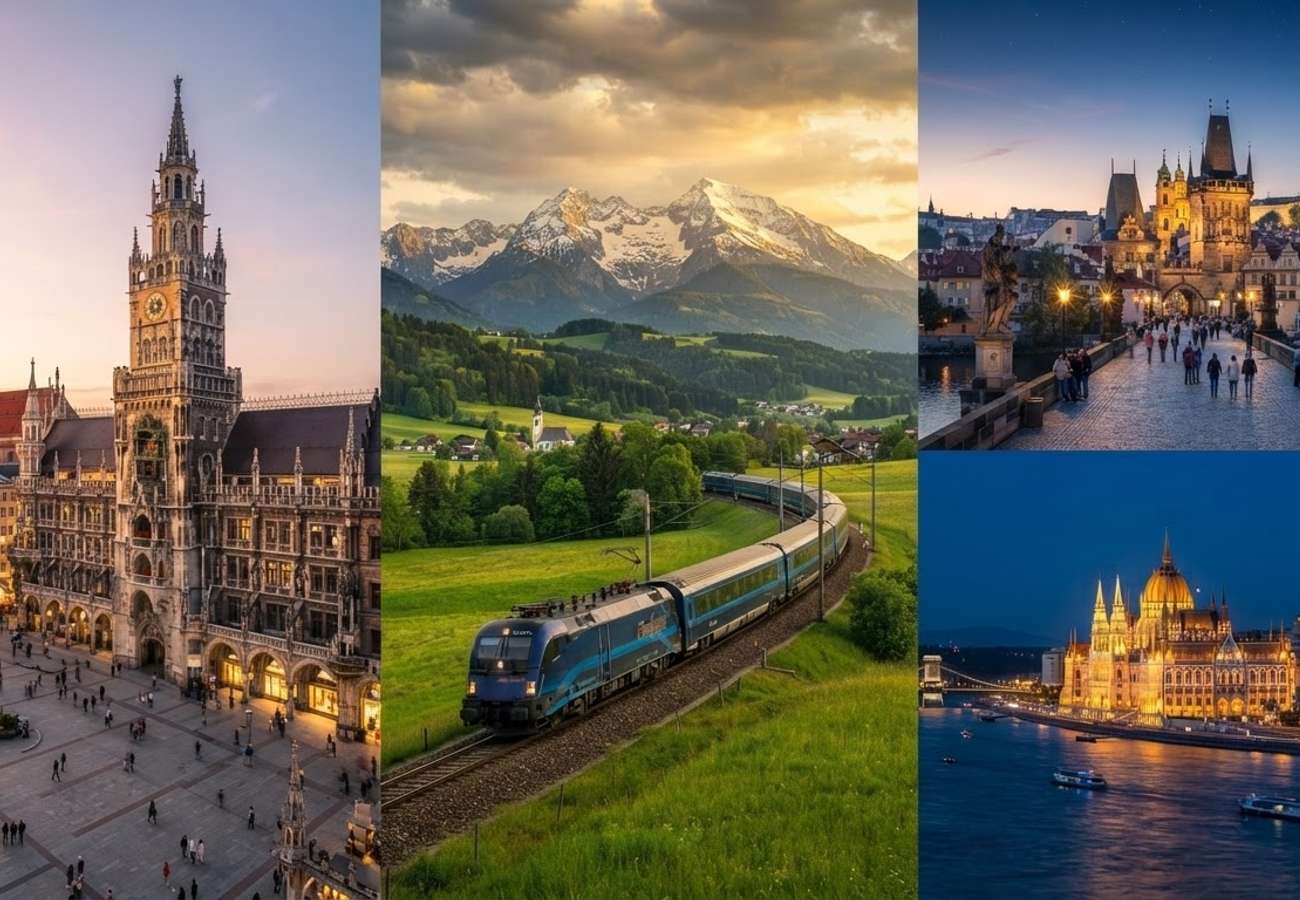
Image generated by AI
Munich has solidified its position as the primary logistical anchor for Central Europe, facilitating a record-setting seven-month growth streak in 2026 for Prague and Budapest.
The Central European tourism corridor is undergoing a fundamental structural shift. Moving away from the volume-driven mass tourism of the previous decade, Germany, Czechia, and Hungary have pivoted toward a "quality over quantity" model. This strategic realignment targets affluent demographics and high-yield experiential travel, reducing the strain on local infrastructure while increasing economic returns per visitor.
Regional Tourism Performance Metrics (January – August 2026)
Based on verified government reports from the Czech Statistical Office (ČSÚ), the Hungarian Central Statistical Office (KSH), and the German National Tourist Board (GNTB), the first half of 2026 shows a coordinated upward trend in arrivals and overnight stays.
| Location | Metric | Period | Figure | Year-on-Year Change |
|---|---|---|---|---|
| Prague | Total Tourists | Jan - June 2026 | 3,830,576 | +1.0% |
| Hungary | Total Arrivals | Jan - May 2026 | ~6.5 Million | +2.0% |
| Budapest | Arrivals (Excl. Dist. VI) | Jan - May 2026 | N/A | +7.9% |
| Germany | Total Overnight Stays | Jan - May 2026 | 174.9 Million | +1.3% |
| Germany | International Stays | Jan - May 2026 | 28.7 Million | Stable |
| Munich | Indian Market Stays | Jan - May 2026 | 350,000+ | Growth |
The Munich Gateway and the Central European Ring
Munich serves as the indispensable western anchor for the "Central European Ring," a coordinated economic engine encompassing Munich, Salzburg, Vienna, Prague, and Budapest. Because of its world-class aviation infrastructure and rail connectivity, Munich acts as the distributive node for long-haul travelers from North America and Asia.
Data indicates a direct correlation between arrivals in Munich and subsequent spending in the Czech and Hungarian capitals. As long-haul visitors land in Bavaria, they frequently utilize the regional rail network to venture east, creating a reciprocal surge in hospitality and retail sectors across the bloc.
Urban Resurgence and Regulatory Shifts
Prague's Demographic Pivot While raw volume in Prague increased by only 1%, the demographic profile has shifted. The city has successfully reduced lower-yield "party tourism" in favor of visitors invested in luxury accommodation and high-end gastronomy.
Budapest's Regulatory Adaptation Budapest has seen a 7.9% surge in arrivals (excluding the heavily regulated District VI/Terézváros). This suggests that stringent local regulations on short-term rentals—implemented to protect the domestic housing market—have not deterred international interest. Instead, visitor flows have successfully migrated toward regulated commercial hotels.
Traveler Logistics Guide: Navigating the Central European Ring
From a ground-level perspective, the best way to navigate this high-growth corridor is to leverage the integrated rail network rather than relying on regional flights.
Optimal Connection Strategies
- The Munich Entry: For those arriving from outside the EU, Munich Airport (MUC) offers the most efficient transit links. Use the Lufthansa Express Bus or the S-Bahn to reach the city center for initial stays.
- Rail Logistics: The route from Munich to Prague and Budapest is best served by the Railjet or EuroCity networks. Booking "Sparschiene" (discounted) tickets via ÖBB (Austrian Railways) or DB (Deutsche Bahn) at least 60 days in advance is essential during the 2026 peak.
- Layover Recommendations: If utilizing Munich as a hub, a 48-hour layover is recommended to avoid transit fatigue before the longer haul to Budapest.
Digital Transit & Customs Policies Travelers should ensure all digital entry requirements are met. For non-EU citizens, verify the current status of ETIAS (European Travel Information and Authorisation System) to avoid boarding delays at long-haul departure points. In Prague and Budapest, utilize official city-transit apps for "contactless" ticketing to bypass queues at kiosks.
Infrastructure and Economic Impact
The shift toward high-yield tourism is driving rapid upgrades in hospitality infrastructure across the region. Legislators are currently using the 2026 data as a case study to balance economic growth with urban livability. By prioritizing affluent, longer-stay visitors, Central European cities are successfully mitigating the negative effects of overtourism while accelerating post-pandemic economic recovery.
The transition from mass transit to curated experiences is redefining the European travel map.
Related Travel Guides
Disclaimer
This article is for informational and educational purposes only. It does not constitute legal, financial, or professional advice. While we strive to provide accurate and up-to-date information, travel policies, regulations, and conditions change rapidly. Always verify information with official sources before making travel decisions. Nomad Lawyer makes no representations about the accuracy, reliability, completeness, or suitability of the information provided. Readers should consult qualified professionals for advice specific to their circumstances. The views expressed in this article are those of the author and do not necessarily reflect the views of Nomad Lawyer.
Preeti Gunjan
Contributor & Community Manager
A passionate traveller and community builder. Preeti helps grow the Nomad Lawyer community, fostering engagement and bringing the reader experience to life.
Learn more about our team →