
Indian Monsoon Tourism Shifts Away From Crowded Hill Stations to Nature-First Destinations in Maharashtra, Rajasthan, Himachal Pradesh
Domestic travelers are abandoning commercial hill stations for secluded monsoon destinations across India, driven by spontaneous travel patterns and demand for authentic rain-soaked landscapes.

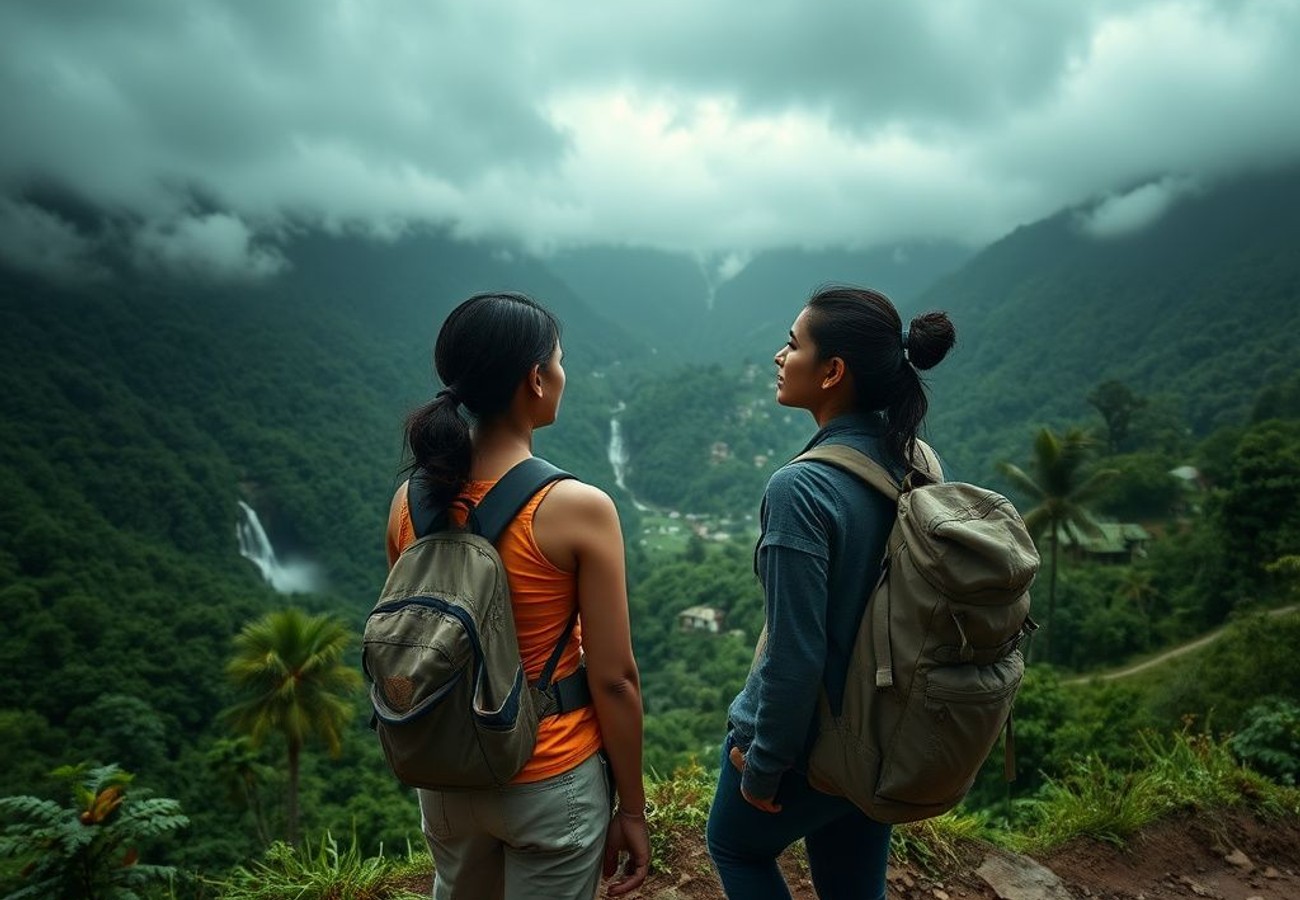
Image generated by AI
The Monsoon Exodus Nobody Saw Coming
India's monsoon season has long meant one thing to most travelers: overcrowded hill stations, pre-booked hotels, and predictable itineraries stamped into guidebooks. But something has shifted this year—and it's quieter than you'd expect.
Domestic travelers are abandoning the Manali-Shimla circuit, the packed slopes of Ooty, and the sanitized heritage towns that dominate summer brochures. Instead, they're heading to places most Indians have never heard of. These aren't luxury retreats or Instagram-famous peaks. They're settlements where the monsoon is the only real attraction—and where travelers are willing to arrive with just days' notice, no fixed plans, and a appetite for unpredictability.
The shift reflects a fundamental change in how Indians travel during the rains. Gone are the 90-day advance bookings and structured package tours. In their place: spontaneous escapes, compressed planning windows, and a hunger for landscapes where rainfall isn't an inconvenience—it's the entire point.
Why Hill Stations Are Losing Ground
The numbers tell part of the story. Rising congestion at traditional tourist hubs, coupled with shorter planning cycles, means fewer travelers are committing to expensive, long-planned monsoon getaways. What's driving the exodus is straightforward: commercial hill stations have become victims of their own success.
Infrastructure at popular destinations hasn't kept pace with demand. Hotels are operating at maximum capacity. Roads clog with tour buses. The experience that once felt like an escape now feels like a migration. For travelers accustomed to flexibility—and increasingly unwilling to fight crowds for authentic experiences—the trade-off no longer makes sense.
Reddit: "Manali in monsoon is basically a parking lot now. We booked last-minute to Dobhi instead and it was completely different." — r/inditravel
The preference shift isn't about rejecting tourism infrastructure entirely. It's about the timing and scale. Travelers want Himalayan beauty, but not in pre-determined lots of 200 people per day.
Dobhi, Himachal Pradesh: The Manali Alternative
Nestled along the approach to Manali in the Fojal Valley, Dobhi sits at a strategic intersection—close enough to attract escapees from the Manali crush, remote enough to avoid becoming one itself.
During monsoon, the transformation is dramatic. Forested slopes deepen in color. The Fojal River runs fuller and faster through the valley floor. The terrain becomes something altogether different from the dry, subdued landscape of other seasons. Yet while Manali's accommodation fills weeks in advance, Dobhi remains comparatively restrained.
Travelers arriving with three days' notice find space. They get the same Himalayan setting—the same geological drama and vegetative richness—without the density that typically peaks further down the road. It's not about isolation for isolation's sake. It's about experiencing a landscape without experiencing a crowd simultaneously.
Bhor, Maharashtra: The Pune Escape
On the outskirts of Pune, Bhor undergoes a radical seasonal metamorphosis. The Sahyadri range, usually dry and subdued outside monsoon months, becomes layered in dense vegetation. Water bodies reappear with force. The terrain shifts into continuous stretches of green that seem impossible in the same location just weeks earlier.
Strategic proximity to both Pune and Mumbai makes Bhor an easy option for overnight getaways—but that's where conventional travel logic ends. The real variable isn't distance; it's timing. A single overnight rainfall can completely alter the landscape, turning familiar routes into temporary corridors of mist and flowing water.
Travelers who visit discover that predictability dissolves the moment the monsoon arrives. What you see on Day 1 may be entirely obscured by cloud cover on Day 2. Roads transform. Visibility changes hourly. This volatility is precisely what's attracting travelers fatigued by scripted tourism experiences.
Rajgundha, Himachal Pradesh: Where Silence Defines Experience
Deep within Barot Valley, Rajgundha represents the opposite end of the accessibility spectrum from mainstream hill stations. The region's isolation isn't incidental—it's structural. Access is limited. Infrastructure is sparse. Daily life unfolds at a pace dictated largely by weather conditions.
During monsoon months, clouds settle low across the valley, often obscuring ridgelines for hours. Movement slows accordingly. Visitors remain within a narrow geographic range, allowing the terrain itself—not planned activities or sightseeing schedules—to dictate the experience.
This is travel that demands adaptation rather than accommodation. There are no fixed itineraries here, no nine-to-five tourism windows. The landscape controls the rhythm.
Bundi, Rajasthan: Rain Rewriting a Desert Town
In eastern Rajasthan, Bundi presents an entirely different monsoon narrative. Here, rainfall doesn't simply cool the climate—it alters the visual language of the entire town. Stepwells regain depth. Reservoirs fill. The old city's iconic blue facades take on muted, rain-washed tones that change the character of the architecture itself.
Compared to Rajasthan's better-known heritage cities like Jaipur and Udaipur, Bundi operates at a lower visitor volume. This relative quiet means its architectural landscape can be experienced without constant movement pressure—particularly during monsoon when water structures become central to the town's spatial and cultural identity.
The appeal here mirrors the appeal elsewhere: seeing a familiar place transformed by its seasonal context, without competing for viewpoints or interruption.
Kareri, Himachal Pradesh: Trails Shaped by Weather Itself
Near Dharamshala in Kangra district, Kareri sits as the starting point for the Kareri Lake trek—a route that transforms completely under monsoon conditions. Surrounding pine forests absorb continuous rainfall. Streams swell. Paths soften and become unpredictable.
The appeal here isn't ease or predictability—it's variability. Conditions shift within hours. The same trail can feel entirely different depending on when you arrive. Unlike commercial trekking zones with fixed infrastructure and predetermined difficulty ratings, Kareri retains an environment where movement is shaped more by terrain than by developed infrastructure.
Travelers arriving here accept that they're not hiking a predetermined route. They're moving through a landscape that's actively changing beneath their feet.
The Broader Behavioral Shift
Across all five destinations, a consistent pattern emerges: travel decisions are increasingly compressed into shorter timeframes. Many trips are confirmed only days before departure. Flexibility has replaced long planning cycles. Spontaneity is becoming the defining feature of monsoon travel, not the exception.
Simultaneously, attention is drifting away from established hill stations toward smaller, less visible destinations where the monsoon isn't merely a backdrop—it's the central organizing principle of the entire experience. These are places where rainfall isn't an inconvenience or an attraction. It's the force that defines how the landscape is seen, moved through, and remembered.
The implications are significant. The travel industry's traditional model—built on advance bookings, fixed itineraries, and high-capacity infrastructure—is being challenged by a segment of travelers who've decided that predictability and comfort matter less than authenticity and spontaneity during the rainy season.
Reddit: "You don't plan monsoon travel anymore. You wake up, check the weather forecast, and decide which valley you're heading to that day." — r/himachal
What This Means for Tourism Going Forward
The shift signals a subtle but consistent change in seasonal travel preferences. Travelers are moving away from predictable circuits toward places that remain closer to their natural rhythm during the rains. Commercial hill stations will continue to draw crowds—inertia and convenience ensure that. But the growth is happening elsewhere: in villages, valleys, and towns that operate at human scale.
For accommodations and local economies in these quieter destinations, the change represents opportunity. For traditional tour operators dependent on fixed bookings, it represents disruption. For travelers themselves, it represents something simpler: the discovery that the most memorable monsoon experiences might be the ones least likely to be pre-packaged, pre-marketed, or pre-planned.
The best monsoon travel in India isn't being sold—it's being discovered.
Related Travel Guides
Disclaimer
This article is for informational and educational purposes only. It does not constitute legal, financial, or professional advice. While we strive to provide accurate and up-to-date information, travel policies, regulations, and conditions change rapidly. Always verify information with official sources before making travel decisions. Nomad Lawyer makes no representations about the accuracy, reliability, completeness, or suitability of the information provided. Readers should consult qualified professionals for advice specific to their circumstances. The views expressed in this article are those of the author and do not necessarily reflect the views of Nomad Lawyer.
Kunal K Choudhary
Co-Founder & Contributor
A passionate traveller and tech enthusiast. Kunal contributes to the vision and growth of Nomad Lawyer, bringing fresh perspectives and driving the community forward.
Learn more about our team →