Portugal Expands Accessible Tourism: Adapted Accommodation Growth and Inclusive Travel Guide 2026

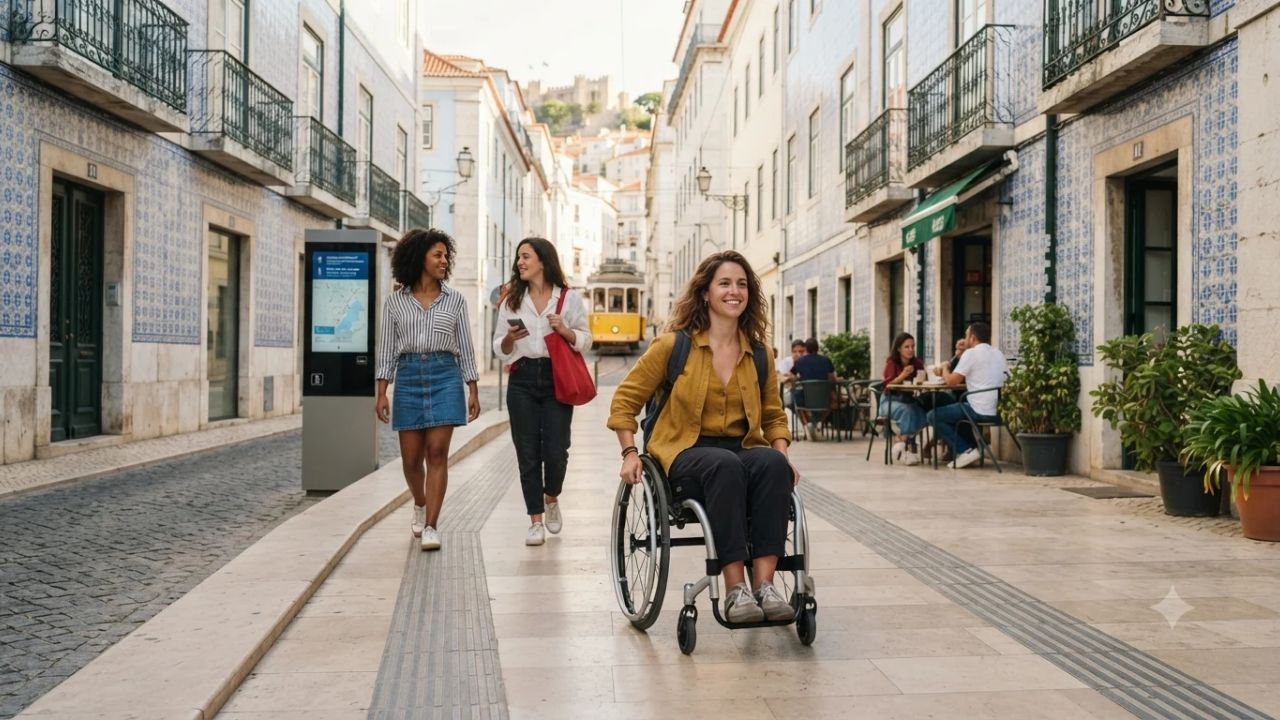
Between 2005 and 2025, the number of certified accessible hospitality properties in Portugal surged from 60 to 219 establishments—a more than threefold expansion that has elevated the national benchmark for inclusive accommodation from 3% to 9.8%. While ancient cobblestone hills and centuries-old fortified castles have historically presented steep physical barriers, a systemic push across regional tourism boards, transport operators, and historic preservation agencies is making the Atlantic nation one of Southern Europe's most proactive destinations for travelers with reduced mobility, sensory needs, and neurodivergent profiles.
The transformation is not happening evenly across the country, but the measurable rise in adapted facilities reflects a profound mindset change. Across the mainland and the Atlantic archipelagos, regional initiatives are pairing physical renovations with smart digital planning tools to ensure that travelers requiring step-free access, tactile guidance, or adapted bathrooms can navigate everything from historic wine cellars to oceanfront boardwalks.
The Regional Mapping of Portugal's Inclusive Tourism Expansion
The expansion of accessible lodging across Portugal reveals distinct regional patterns shaped by modern architecture, historic density, and municipal investment. According to longitudinal tourism assessments tracking properties with at least three adapted units and mobility-friendly bathrooms, Northern Portugal leads the nation with 60 qualifying establishments in 2025. The Centre region ranks second with 45 properties, followed closely by the sun-drenched coastal corridor of the Algarve with 37 establishments.
Urban centers and rural regions present contrasting dynamics:
| Portuguese Region | Qualifying Accessible Establishments (2025) | Accessibility Profile & Focus |
|---|---|---|
| Northern Portugal | 60 | Riverfront promenades in Porto, adapted Douro wine estates |
| Centre Region | 45 | Flat university plazas in Coimbra, accessible mountain paths in Serra da Estrela |
| Algarve | 37 | Accessible beach boardwalks, roll-in sea access points |
| Lisbon | 27 | Low-floor tram connections, elevator access in Baixa-Chiado |
| Alentejo | 26 | Highest regional proportion of accessible rooms across single-story rural estates |
| Madeira | 18 | Adapted levada nature walks, cable car accessibility in Funchal |
| Azores | 6 | Accessible volcanic viewing platforms and thermal bath facilities |
Lisbon currently counts 27 certified accessible establishments, where modern boutique hotels along the Tagus estuary offer purpose-built rooms, though the capital's steep limestone pavements (calçada portuguesa) continue to demand strategic route planning. In Alentejo, 26 properties qualify under the national standard; because many countryside estates (herdades) and wine retreats are single-story farmsteads converted under contemporary building codes, Alentejo boasts the highest proportion of accessible rooms relative to its total lodging inventory.
Across the Atlantic islands, Madeira counts 18 certified properties and has pioneered wheelchair-friendly paths along selected mountain irrigation channels (levadas), while the volcanic Azores archipelago maintains 6 qualifying properties, focusing upgrades on crater viewpoints and geothermal pool entries.
What Makes Accessible Travel in Portugal Unique
Navigating Portugal with reduced mobility or sensory considerations offers a distinct interplay between living heritage and modern engineering. In UNESCO-designated historic districts like Évora, Sintra, and the Ribeira district of Porto, strict preservation regulations prevent the removal of historic stone surfaces. Instead of altering ancient foundations, municipalities have deployed discreet tactile paving, demountable ramps, and electric funiculars.
Portugal's renowned gastronomy and wine culture have also embraced inclusive design. In the Douro Valley, several wine estates have integrated tactile cellar tours, multi-sensory tasting experiences, and step-free barrel rooms. Along the southern coastline, the Praia Acessível (Accessible Beach) initiative equips dozens of beaches each summer with amphibious wheelchairs, shaded resting zones, and boardwalk ramps that extend directly to the water's edge.
Travelers can cross-reference regional certifications and adapted infrastructure through the official Visit Portugal portal, which provides detailed filters for accessible beaches, monuments, and certified lodgings.
Visitor Insider Tips for an Accessible Portuguese Journey
Exploring Portugal smoothly requires hyper-local operational knowledge to bypass tricky topography and take full advantage of dedicated public services:
- Master the Lisbon Elevator Network: Avoid pushing up the steep hills between Baixa, Chiado, and Castelo de São Jorge. Use the public elevator inside the Armazéns do Chiado shopping center, the Santa Justa Lift, or the public lifts on Rua dos Fanqueiros to effortlessly transition between lower and upper city tiers.
- Rely on Rail Assistance: The national railway operator, Comboios de Portugal, operates a complimentary Serviço Integrado de Mobilidade (SIM). Book assistance at least 24 hours in advance to ensure dedicated station staff deploy hydraulic lifts and secure ramps for boarding Alfa Pendular and Intercidades trains between Lisbon, Porto, and Faro.
- Choose Flat Neighborhood Bases: When staying in Lisbon, base yourself in the flat grid of Baixa or the modern riverfront district of Parque das Nações rather than the hilly cobblestones of Alfama or Bairro Alto. In Porto, stay near the Avenida dos Aliados or along the flat riverfront of Vila Nova de Gaia.
- Sample Regional Flavors with Step-Free Ease: Seek out traditional tascas in ground-level town squares or modern market halls like Mercado da Ribeira (Time Out Market) in Lisbon or Mercado do Bolhão in Porto, both of which feature step-free entries, spacious seating corridors, and fully adapted restroom facilities.
- Inspect Historic Heritage Itineraries: When visiting UNESCO World Heritage monuments, such as the Monastery of Batalha or the Convent of Christ in Tomar, consult official UNESCO World Heritage guides to review designated barrier-free circuits that bypass historic stairs through interior cloisters.
Cultural and Environmental Context of Inclusive Tourism
Between 2011 and 2025, Portuguese universities and hospitality institutes initiated specialized postgraduate research to examine barrier-free tourism in historic castles, national parks, and hospitality operations. These studies illuminated an important truth: physical infrastructure alone is insufficient without dedicated staff training and verified data.
When local hospitality teams receive practical training in supporting neurodivergent travelers, guests with visual impairments, or wheelchair users, the travel experience shifts from stressful navigation to warm hospitality. In rural regions like Alentejo and the Centro interior, accessible tourism serves as a catalyst for sustainable economic revitalization, allowing older travelers and multi-generational families to stay longer in quiet villages outside the crowded metropolitan hubs.
Independent verification remains the frontier of Portugal's inclusive tourism agenda. By shifting from self-declared hotel features to rigorous third-party audits, the country is establishing a transparent environment where visitors can book rooms and activities with complete certainty.
FAQ: Visiting Accessible Portugal 2026
How accessible is public transportation in Lisbon and Porto? Modern metro systems in both cities are largely step-free with elevators at most stations. Modern low-floor buses and CP intercity trains offer ramp assistance when booked in advance.
Which Portuguese region has the most accessible accommodation? Northern Portugal leads with 60 qualifying establishments, followed by the Centre region with 45, and the Algarve with 37. Alentejo has the highest regional proportion of accessible rooms.
Can wheelchair users visit historic Portuguese monuments and castles? Yes. Major sites like the Jerónimos Monastery, Batalha Monastery, and Serralves Museum have designated step-free routes, ramps, and adapted visitor facilities.
Are Portuguese beaches equipped for visitors with mobility impairments? Dozens of coastal beaches fly the Praia Acessível flag each summer, featuring ramps, boardwalk access, accessible parking, and complimentary amphibious wheelchairs.
With thoughtful planning and modern infrastructure, Portugal's storied heritage is opening its doors wider to every traveler.
Related Travel Guides
This article is for informational purposes. Flight routes, passenger regulations, visa rules, and transit advisories are subject to change by airlines and aviation authorities. Readers are advised to verify schedules and travel documentation with relevant carriers and border agencies before departure.
Related Stories

Air Europa and Global MICE Forums to Converge in Tróia Portugal for Euro-American Edition 2027

Ayodhya Deepotsav 2026 Logistics Guide: Attending the 30 Lakh Lamp Festival in India