
The New Era of PDX: Portland International Airport Unveils a $2.15 Billion Modernized Terminal Rooted in Sustainable Timber and Oregon Heritage
The Port of Portland presents its $2.15 Billion modernization of PDX, featuring a nine-acre timber canopy sourced within 300 miles, biophilic design, and local shops.

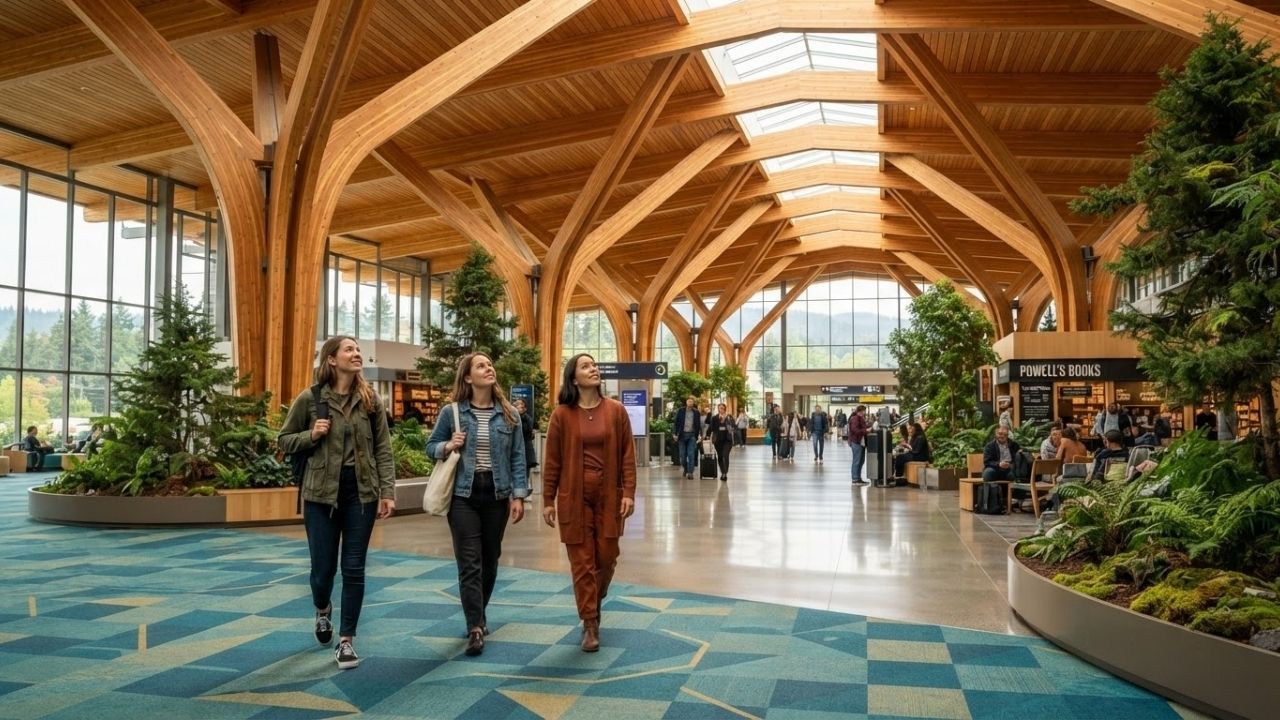
Image generated by AI
Transforming the traveler experience with a stunning wood-designed gateway, the Port of Portland has presented its $2.15 Billion modernization of Portland International Airport.
Aviation travel in the Pacific Northwest has entered a new phase of environmental stewardship and regional storytelling. Port officials have completed a massive expansion of the main terminal, designed to celebrate the natural environment and community values of Oregon. By replacing cold industrial materials with warm, locally sourced timber, the modernized hub establishes a new global standard for sustainable infrastructure. The terminal functions not only as a transit point, but also as a physical showcase of regional forestry, art, and local culinary traditions.
Local Woodcraft: The Nine-Acre Timber Canopy
The most prominent feature of the expanded terminal is a massive nine-acre timber canopy that shields the main building. The Port of Portland engineered this structure using locally sourced wood to honor regional forestry traditions. Every piece of Douglas fir timber used in the canopy was harvested within a 300-mile radius of the airport.
This wood was supplied by nearby tribal nations, small family foresters, and community trusts, directing construction funds back into the local economy. The massive canopy showcases the beauty of raw wood, with detailed joinery visible to passengers as they walk through the ticket halls. This focus on local sourcing reduces transportation emissions and supports sustainable woodland management across Oregon and Washington.
Biophilic Architecture: Bringing Oregon Nature Indoors
The design of the new terminal integrates nature directly into the passenger walkways to create a calming travel environment. The Port of Portland collaborated with regional botanists to install more than 70 living trees along the main concourses. Additionally, over 5,000 native Pacific Northwest plants line the seating areas and pathways.
This biophilic design helps lower passenger stress, reduce noise, and guide travelers toward security checkpoints. The indoor gardens are illuminated by 49 massive skylights that flood the terminal with natural daylight. The daylight filters through the timber beams, creating a pattern of light and shadow that resembles a walk through a native Oregon forest.
Seismic Engineering: The Y-Column Ceiling System
Beneath its natural wood finishes, the new terminal features advanced seismic engineering. Because the Pacific Northwest is prone to tectonic activity, the Port of Portland engineered the entire canopy to withstand heavy earthquake shocks. The massive timber roof is supported by specialized Y-shaped steel columns.
These columns are equipped with sliding joints that allow the massive timber ceiling to slide safely during seismic events. This design isolates the roof's movement from the terminal floor, protecting travelers and maintaining structural integrity. The engineering allows the airport to serve as an emergency response hub for the state during natural disasters.
Sustainable Infrastructure: Deep Energy Cuts and Heat Pump Systems
The modernization project updates the airport's infrastructure to handle future travel demands while reducing its carbon footprint. The expanded terminal is built to accommodate 35 million passengers annually by 2045. Despite this growth in capacity, the building operates with high energy efficiency.
The Port of Portland has cut energy usage per square foot in half compared to the old terminal design. The primary heating and cooling source is a giant ground-source geothermal heat pump system. This system reduces fossil fuel heating by 95%, making the airport one of the greenest travel hubs in the world.
Regional Commerce: Local Brands and Minority-Owned Businesses
Port officials have redesigned the airport's commercial program to support the local economy. Traditional national fast-food chains and franchises have been removed from the main terminal. In their place, travelers will find regional shops, microbreweries, and coffee roasters.
Portland's famous Powell's Books operates a primary storefront inside the hub, alongside local apparel brands and craft beverage outposts. More than 50% of the commercial spaces in the terminal are operated by minority- and women-owned businesses. This equity-focused leasing program ensures that regional economic growth directly supports diverse local entrepreneurs.
Cultural Identity: Indigenous Art and the Iconic Teal Carpet
The terminal displays 21 original art installations that reflect the cultural heritage of the Pacific Northwest. Indigenous artists contributed major visual pieces, including wood carvings and textile displays, to the terminal's ceilings and walls. The Port of Portland also restored historic regional murals, preserving local art history for modern travelers.
Additionally, the port has reinstated the iconic teal runway-intersection carpet pattern in designated seating zones. The pattern, popular in the 1980s, has a dedicated following among regional travelers. The return of the carpet offers an immediate connection to Portland pop culture, providing incoming tourists with a photo opportunity the moment they land.
Practical Traveler Tips for Navigating the New PDX Terminal
Exploring the modernized terminal is easy with these practical tips from local guides:
- Stroll the Concourse During Off-Peak Hours: Tuesday and Wednesday mornings are the quietest times at the terminal. Take time to examine the woodwork and browse the shelves at Powell's Books without the weekend rush.
- Refuel at Local Microbrewery Outposts: Avoid standard airport food by dining at the regional microbreweries in the terminal, which serve local craft beer and Tillamook cheese specialties.
- Observe the Living Installations Respectfully: The 70 trees and 5,000 plants are part of a living indoor ecosystem. Avoid plucking leaves or disturbing the soil, as these gardens are carefully maintained by botanists.
- Find the Art Walk Route: Spend time exploring the 21 original art installations. Grab a digital guide from the port's information desks to locate the pieces created by Indigenous artists.
- Locate the Historic Teal Carpet: The 1980s teal carpet is located in designated seating areas near the concourse connections, offering the perfect spot for an arrival photo.
Portland International Airport Modernization Metrics
| Airport Metric Specification | Official Port of Portland Baseline | Technical Design Benefit |
|---|---|---|
| Total Project Investment | $2.15 Billion USD | Comprehensive hub modernization |
| Annual Passenger Capacity | Scaling to 35 Million by 2045 | Long-term regional growth support |
| Timber Sourcing Radius | 100% Sourced Within 300 Miles | Local forestry economy integration |
| Natural Daylight Features | 49 Massive Ceiling Skylights | Simulates forest walk illumination |
| Energy Reduction Metric | 50% Energy Reduction Per Sq. Ft. | Enhanced building system efficiency |
| Fossil Fuel Heating Cuts | 95% Cut via Ground-Source Heat Pump | Ground-source geothermal conversion |
| Biophilic Landscaping | 70 Trees and 5,000 Native Plants | Stress reduction & path navigation |
| Visual Art Integration | 21 Original PNW Artworks | Celebrates local Indigenous heritage |
Frequently Asked Questions
How much did the Portland International Airport modernization cost?
The Port of Portland invested $2.15 Billion USD to expand and modernize the main terminal, focusing on sustainability, earthquake safety, and regional design.
Where did the wood for the PDX terminal roof come from?
Every piece of Douglas fir timber used in the nine-acre canopy was sourced within a 300-mile radius, supplied by family foresters, tribal nations, and community trusts.
What are the primary eco-friendly features of the new terminal?
The terminal reduces energy use per square foot by 50% and cuts fossil fuel heating by 95% using a ground-source geothermal heat pump system.
What local shops can travelers find inside the new PDX?
Travelers will find local brands like Powell's Books, regional outerwear stores, coffee roasters, and microbreweries, with over 50% of businesses owned by women and minorities.
The Long-Term Outlook for Green Aviation Hubs
The completion of the PDX terminal modernization demonstrates how airports can integrate local culture and environmental design. By prioritizing regional materials, geothermal energy, and community commerce, the Port of Portland has created a model for future aviation hubs. This sustainable approach helps reduce travel stress while supporting the local economy. As global aviation shifts toward green development, Portland's terminal will continue to serve as a leading example of sustainable design.
By choosing local vendors and supporting sustainable forestry initiatives, travelers contribute directly to the conservation of the Pacific Northwest environment.
Related Travel Guides
Disclaimer
This article is for informational and educational purposes only. It does not constitute legal, financial, or professional advice. While we strive to provide accurate and up-to-date information, travel policies, regulations, and conditions change rapidly. Always verify information with official sources before making travel decisions. Nomad Lawyer makes no representations about the accuracy, reliability, completeness, or suitability of the information provided. Readers should consult qualified professionals for advice specific to their circumstances. The views expressed in this article are those of the author and do not necessarily reflect the views of Nomad Lawyer.
Raushan Kumar
Founder & Lead Developer
Full-stack developer with 11+ years of experience and a passionate traveller. Raushan built Nomad Lawyer from the ground up with a vision to create the best travel and law experience on the web.
Learn more about our team →