
Porter Airlines and Jazz Aviation Ground 12 Flights at Billy Bishop Toronto City Airport, Disrupting US-Canada Routes June 2026
Porter Airlines and Jazz Aviation grounded 12 flights at Billy Bishop Toronto City Airport on June 19, 2026, disrupting connections across Canada and the US, affecting Chicago, Montreal, Ottawa, and more.

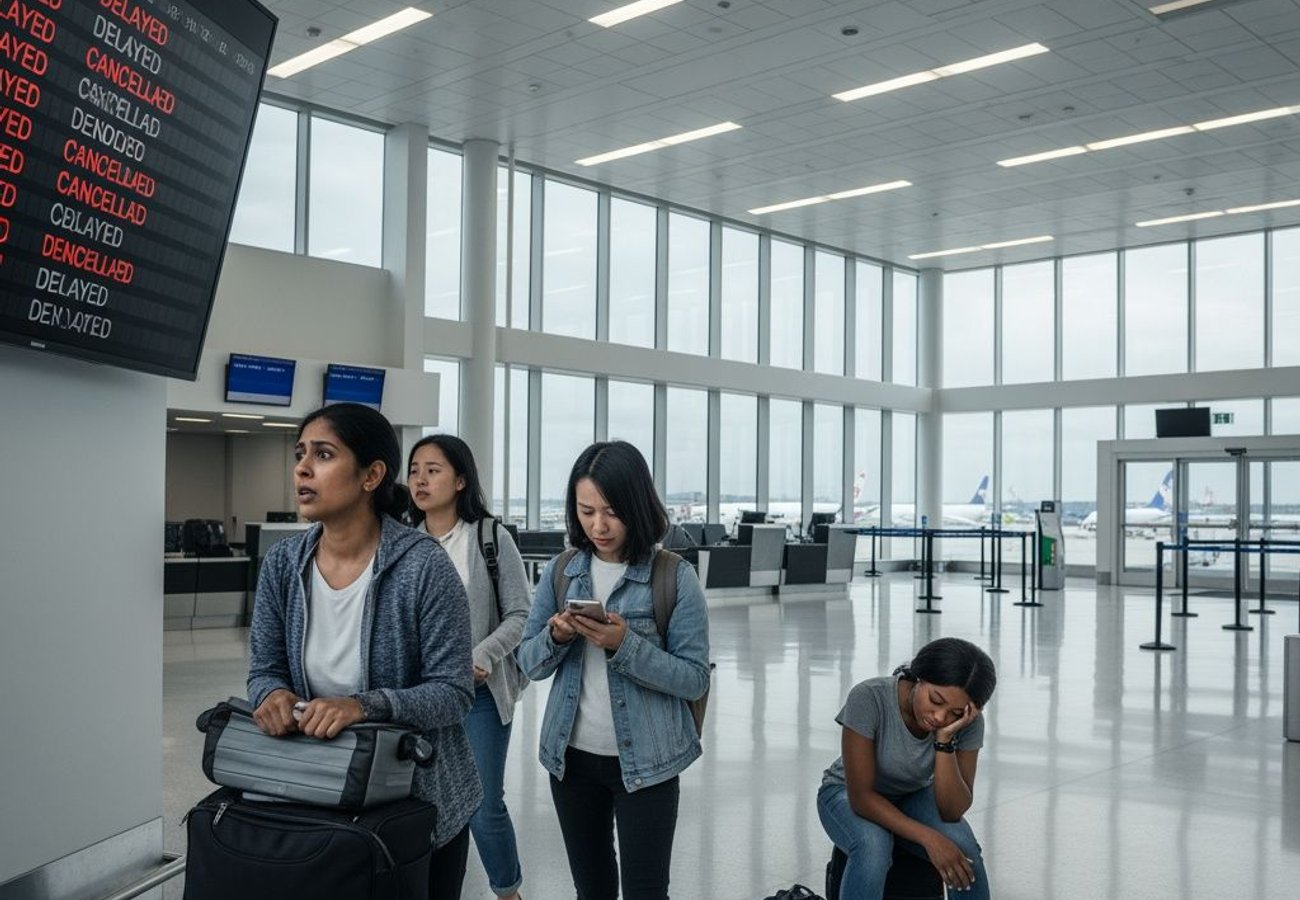
Image generated by AI
The Disruption Unfolds
On June 19, 2026, operations at Billy Bishop Toronto City Airport came under strain as Porter Airlines and Jazz Aviation grounded a combined 12 flights, creating a cascading effect across regional and cross-border networks. The operational challenges forced carriers to manage multiple delays throughout the day, leaving hundreds of passengers scrambling to adjust travel plans.
What started as a localized issue at Toronto's iconic island airport quickly morphed into a continental problem. Delayed departures rippled across vital connections spanning Canada and the United States, affecting travelers heading to destinations from Chicago to Montreal and beyond. The situation underscores a critical reality: even a limited number of cancellations at a major hub can destabilize entire regional networks within hours.
Reddit: "Woke up to a cancellation email from Porter. No explanation, no compensation offered yet. This is ridiculous." — r/canadiantravel
Where the Pain Hit Hardest
The disruptions weren't evenly distributed. Toronto bore the brunt of cancellations, accounting for 6 grounded flights and representing 5% of scheduled operations. But the real trouble zone was Ottawa, which recorded 3 cancellations with a staggering 25%–27% cancellation rate on services between the two cities—indicating near-total disruption on certain time slots.
Montreal experienced between 1 and 2 cancellations (6%–12% cancellation rates), while Boston saw 1 cancelled flight affecting up to 25% of scheduled services. Even Chicago Midway took a hit with 1 cancellation representing 50% of operations on that route.
The full network impact extended across these major markets: Toronto, Ottawa, Montreal, Chicago, Boston, Halifax, Quebec City, Thunder Bay, Nashville, Newark, Washington, and Sault Ste. Marie. Some destinations continued experiencing operational delays despite no outright cancellations, suggesting systemic strain throughout the day.
By the Numbers
The cancellation breakdown tells a stark story:
Porter Airlines absorbed the heaviest load: 9 cancelled flights and 40 delayed departures. Jazz Aviation (Jazz ACA) recorded 3 cancellations paired with 17 delayed flights. Combined, these two carriers disrupted service for an estimated 2,000+ passengers across their networks.
Toronto accounted for the largest share of cancellations and delays. Ottawa and Montreal also experienced notable disruptions, with cross-border routes connecting Canadian cities to Chicago, Boston, Newark, and Washington facing varying levels of delay. Regional destinations—including Halifax, Quebec City, Thunder Bay, and Sault Ste. Marie—underscore how disruptions penetrate both high-traffic metropolitan corridors and smaller regional markets.
What Happens When Your Flight Gets Cancelled
If you found yourself caught in this disruption, here's the playbook:
Stay Updated Immediately. Monitor your email, phone, and the airline's app for rebooking confirmation or announcements. Many carriers now push notifications directly to mobile devices, but don't rely on that alone—check the airline website for real-time status updates.
Contact Customer Service Fast. Reach out to Porter or Jazz Aviation either in person at the airport service desk or through their phone and online chat systems. Calling ahead avoids long queues, though airport service desks often have more rebooking flexibility.
Know Your Rights. Familiarize yourself with carrier policies on cancellations. Some airlines offer automatic rebooking or compensation, especially if the cancellation stems from operational decisions rather than weather or security issues. In the EU, passengers are entitled to compensation under EU261 regulations, though Canadian carriers operate under different frameworks—check the Canadian Transportation Agency for domestic protections.
Explore Alternatives Immediately. Ask about the next available flight on your carrier. If timing doesn't work, book through another airline or investigate ground transport options like trains or buses. Greyhound and Via Rail often see traffic spikes during airline disruptions.
Document Everything. Keep confirmation numbers, cancellation notices, and communications. These become critical if you need to file claims for rebooking expenses or seek compensation later.
The Broader Pattern
This incident at Billy Bishop Toronto City Airport illustrates a troubling trend: regional airports handling significant traffic volumes remain vulnerable to operational shocks. When carriers like Porter Airlines—which operates exclusively from this island airport—experience disruptions, there's no backup capacity. Unlike Toronto Pearson International Airport, which handles multiple carriers and has redundancy built in, Billy Bishop concentrates risk.
The June 19 disruption affected business travelers, leisure passengers, and families trying to make connections across North America. Some passengers missed meetings in Chicago. Others missed family events in Montreal. A few likely missed flights entirely at connecting hubs.
For passengers heading cross-border, this amplified the pain: US Customs pre-clearance happens at Billy Bishop, meaning missed flights also wasted pre-clearance wait times.
What Airlines and Travelers Need to Know
As Porter Airlines and Jazz Aviation work to restore normal operations, the incident reinforces fundamental travel realities:
Operational disruptions happen. Mechanical issues, crew scheduling conflicts, or air traffic control delays can force cancellations at any moment. The best protection is flexibility and real-time information.
Regional networks are fragile. A single carrier's disruption at a concentrated hub—like an island airport—creates outsized impacts. Travelers should build buffer time into connections and avoid tight layovers during peak travel periods.
Preparation beats panic. Knowing airline policies, customer service channels, and alternative options before disruption hits means faster resolution when it happens.
The passengers who recovered fastest on June 19 weren't those who panicked at service desks. They were the ones who immediately checked airline apps, called customer service while walking to the departure board, and had backup plans in mind.
Reddit: "Always book with a 3+ hour connection if you're going cross-border. This is exactly why." — r/travel
The Takeaway
The grounding of 12 flights by Porter Airlines and Jazz Aviation at Billy Bishop Toronto City Airport on June 19, 2026, serves as a sharp reminder: airline disruptions cascade. What begins as a localized operational challenge becomes a continent-spanning problem within hours. Passengers traveling through Canadian hubs should monitor real-time updates religiously, build flexibility into itineraries, and understand their rights under airline policies and transportation regulations.
As operations normalize, the key lesson remains: stay informed, stay calm, and stay flexible.
Don't let airline disruptions derail your journey—know your rights and options before you fly.
Related Travel Guides
Disclaimer
This article is for informational and educational purposes only. It does not constitute legal, financial, or professional advice. While we strive to provide accurate and up-to-date information, travel policies, regulations, and conditions change rapidly. Always verify information with official sources before making travel decisions. Nomad Lawyer makes no representations about the accuracy, reliability, completeness, or suitability of the information provided. Readers should consult qualified professionals for advice specific to their circumstances. The views expressed in this article are those of the author and do not necessarily reflect the views of Nomad Lawyer.
Preeti Gunjan
Contributor & Community Manager
A passionate traveller and community builder. Preeti helps grow the Nomad Lawyer community, fostering engagement and bringing the reader experience to life.
Learn more about our team →