
SkyWest Flight SKW3636 Abandons Buffalo Route Triggering Travel Chaos as CRJ-900 Executes Dramatic Return to Detroit
Breaking airline news: SkyWest Flight SKW3636 unexpectedly aborts its journey to Buffalo, causing sudden travel chaos as the aircraft executes an airborne return to Detroit.

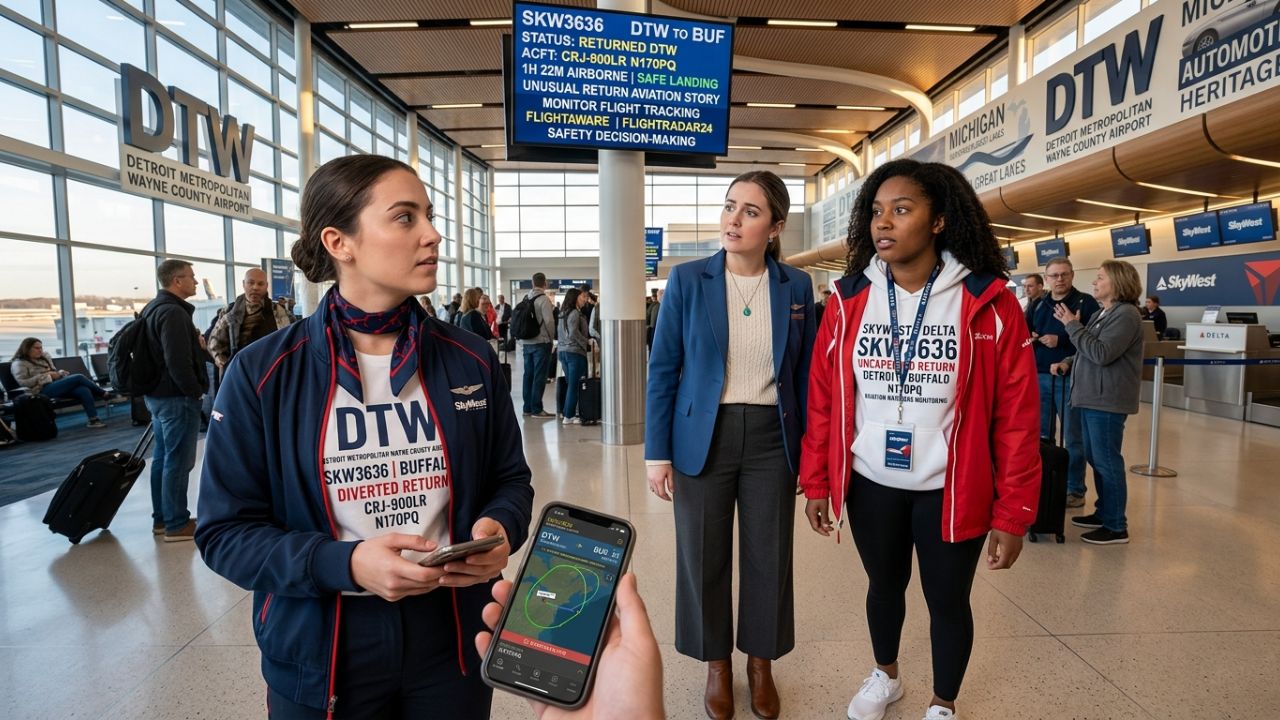
Image representing the sudden operational shift of SkyWest Flight SKW3636, where a Mitsubishi CRJ-900LR unexpectedly aborted its route to Buffalo and returned to Detroit, triggering airport disruptions and travel chaos for regional passengers. (Image Credit: Aviation Tracking)
SkyWest Flight SKW3636 Abandons Buffalo Route Triggering Travel Chaos as CRJ-900 Executes Dramatic Return to Detroit
An Unexpected Airborne Reversal Exposes the Volatility of Regional Transit Schedules
The intricate and highly synchronized nature of the United States regional aviation network was thrust into the spotlight following a sudden, unexpected operational reversal involving a major regional carrier. According to the latest breaking airline news and real-time aviation tracking telemetry, SkyWest Flight SKW3636 (operating on behalf of Delta Air Lines)—a routine regional sector—experienced a significant mid-flight disruption that plunged its passengers into sudden travel chaos. On Sunday, June 14, 2026, the Mitsubishi CRJ-900LR departed Michigan bound for upstate New York. However, the flight never reached its intended destination. Instead, a critical operational decision forced the aircraft to execute an unexpected airborne return, abandoning the route to Buffalo and safely landing back at Detroit Metropolitan Wayne County Airport. While the aircraft concluded the flight with no emergency conditions reported, this sudden "flight to nowhere" has triggered immediate airport disruptions for the affected travelers, highlighting the absolute volatility of modern flight schedules.
This incident perfectly illustrates how rapidly a standard domestic journey can mutate into a complex logistical challenge. When a flight bound for Buffalo Niagara International Airport (BUF)—a crucial regional gateway in the northeastern United States—fails to arrive as scheduled, the resulting shockwaves actively destroy connectivity for both corporate and leisure travelers. Passengers relying on tightly choreographed regional connections found their meticulously planned itineraries completely obliterated. As airline operational control centers scrambled to manage the ground logistics back in Michigan and re-accommodate the stranded passengers, the reality of the airborne return violently exacerbated the travel chaos. The situation powerfully highlights that even without catastrophic, system-wide flight cancellations, a single diverted aircraft can severely penalize transit efficiency and generate immense downstream complications across an interconnected network.
Section-Wise Breakdown: The Anatomy of the SKW3636 Return
The operational reversal of SkyWest Flight SKW3636 reveals how quickly dispatch decisions alter the reality of commercial aviation:
The Detroit Departure and Mid-Flight Reversal According to real-time aviation updates, SkyWest Flight SKW3636 departed Detroit Metropolitan Wayne County Airport (DTW) on June 14. The aircraft, registered as N170PQ, was operating a scheduled, high-frequency regional service utilizing the reliable Mitsubishi CRJ-900LR platform, a staple of the Delta Connection network. The aircraft initially proceeded along its planned eastbound route toward Buffalo, climbing to its cruising altitude without any publicly reported anomalies. However, as the flight progressed, circumstances dictated a significant and immediate change in the flight’s operational profile, forcing the crew to abandon the original flight plan and execute a 180-degree turn.
The Operational Return to Wayne County Airport Instead of entering the arrival patterns at Buffalo as originally scheduled, the aircraft ultimately altered its trajectory and landed safely at the exact same airport from which it had departed. Operational flight records indicate that the regional jet remained airborne for approximately one hour and twenty-two minutes before the crew completed the return. Available flight tracking data from both FlightAware and Flightradar24 confirms that the airborne return concluded safely, allowing all passengers and crew to reach the ground without incident. While the exact reasoning for the reversal remains unconfirmed by the airline, such operational shifts are generally executed following intense coordination between the flight crew, airline dispatch centers, and air traffic control.
Managing Passenger Disruptions at the Origin Airport The failure of SKW3636 to arrive in Buffalo created an immediate logistical vacuum for the airline. Because regional flights serve as primary connecting arteries for vast domestic networks, the passengers onboard were heavily reliant on arriving in New York. An airborne return on a short route like Detroit to Buffalo is relatively uncommon, making this deviation highly disruptive. Airline ground teams in Detroit were forced to manage the unexpected return of an aircraft they had just dispatched, while network planners simultaneously worked to mitigate the secondary travel chaos caused by the missed connections and ruined itineraries.
Operational Infrastructure Details: The Flight SKW3636 Return Matrix
To provide exact, factual clarity on the operational metrics of this specific mid-flight disruption, aviation analysts have compiled the specific data regarding the diverted route. The following factual matrix details the precise parameters of the SkyWest incident:
Factual Flight SKW3636 Airborne Return Matrix
| Operational Metric | Flight Details | Strategic Context |
|---|---|---|
| Airline Operator | SkyWest (Operating for Delta) | Critical regional feeder network |
| Flight Number | SKW3636 | Scheduled short-haul domestic service |
| Aircraft Deployed | Mitsubishi CRJ-900LR | Regional narrowbody workhorse |
| Aircraft Registration | N170PQ | Actively tracked via FlightAware and Flightradar24 |
| Original Origin | Detroit Metro Airport (DTW) | Departed on Sunday, June 14, 2026 |
| Intended Destination | Buffalo Niagara Airport (BUF) | Crucial northeastern US gateway |
| Diversion Airport | Returned to Detroit (DTW) | Executed safe landing at origin airport |
| Total Airborne Time | Approx. 1 hour, 22 minutes | Aircraft remained airborne before returning |
| Operational Status | Safely Landed; No Injuries | Reason for return unconfirmed; safety prioritized |
Data reflects the tracked operational metrics of the June 14, 2026 flight. (Source: FlightAware / Flightradar24)
Passenger Impact: Missed Connections and Extended Transit Delays
For the passengers trapped aboard the diverted CRJ-900LR, this disruption represents a highly acute, localized form of travel chaos. Enduring a "flight to nowhere" and an unexpected landing at the origin airport creates intense psychological frustration and generates immense logistical liability. The immediate impact is staggering: guaranteed missed onward events in New York, extended airport dwell times while waiting on the tarmac or inside the Detroit terminal, and the agonizing reality of overwhelmed airline rebooking systems. Travelers bound for time-sensitive corporate meetings or highly structured leisure itineraries in Buffalo were severely penalized, facing the terrifying reality of ruined schedules. Passengers attempting to execute multi-leg domestic journeys were abruptly grounded back in Michigan, forcing increased loads onto Delta's customer service networks.
Industry Analysis: The Logic Behind Airborne Returns
The global aviation sector operates on the principle of extreme operational conservatism. The airport disruptions caused by the return of SKW3636 indicate how airlines rely on established contingency protocols to manage evolving circumstances. Airlines may return to their departure airport for numerous reasons: sudden weather developments over the destination, precautionary technical assessments, maintenance evaluations, or air traffic considerations. Returning to the origin airport—especially a major hub like Detroit—is often the most practical solution because airline personnel, maintenance facilities, and operational support teams are already available on the ground. While unexpected airborne returns generate immediate travel chaos and frustration, they do not automatically indicate a serious emergency. Instead, they reflect a highly calculated, precautionary response intended to maintain absolute safety.
Conclusion: A Disruptive Shift in Regional Transit
The sudden airborne return of SkyWest Flight SKW3636 on June 14, 2026, serves as a stark reminder of the absolute volatility of modern commercial flight. By failing to complete its scheduled sector between Detroit and Buffalo, the Mitsubishi CRJ-900LR inadvertently plunged its passengers into sudden travel chaos, forcing an unexpected arrival back at its starting point. The resulting disruption crippled tightly choreographed itineraries connecting through the northeastern United States, deeply impacting Delta's operational flow for the affected travelers. While airlines desperately scramble to execute rebooking plans and re-accommodate stranded passengers, the incident brutally highlights how rapidly a routine domestic flight can mutate into a highly complex logistical challenge, prioritizing safety above all schedule considerations. (Source: FlightAware / Flightradar24 via Travel And Tour World)
Key Takeaways
- Sudden Airborne Reversal: SkyWest Flight SKW3636 aborted its intended destination of Buffalo, returning safely to Detroit.
- Aircraft Details: The flight was operated by a Mitsubishi CRJ-900LR, registered as N170PQ.
- Flight Origin: The aircraft departed Detroit Metropolitan Wayne County Airport (DTW) on Sunday, June 14, 2026.
- Airborne Duration: Operational records indicate the flight remained airborne for approximately one hour and twenty-two minutes before returning.
- Connectivity Destroyed: The return caused immediate travel chaos for passengers who missed critical events and connections in Buffalo.
✈️ Frequently Asked Questions (Factual Aviation Data)
Which specific airline and flight number experienced this unexpected return? The airborne return involved SkyWest Flight SKW3636, which was operating on behalf of Delta Air Lines.
What specific type of aircraft was operating Flight SKW3636? The flight was operated by a Mitsubishi CRJ-900LR aircraft, registered as N170PQ.
Where did the flight originally depart from, and what was its scheduled destination? The aircraft departed from Detroit Metropolitan Wayne County Airport (DTW) and was scheduled to land at Buffalo Niagara International Airport (BUF).
When did this specific flight disruption occur? The flight departed and executed its airborne return on Sunday, 14 June 2026.
Exactly how long was the aircraft in the air before returning to Detroit? Flight tracking data indicates that the aircraft remained airborne for approximately one hour and twenty-two minutes before completing its return.
Were there any injuries or emergency conditions reported during the return? No, available flight data confirms that the return concluded safely in Detroit, and there have been no reports of injuries involving passengers or crew.
Has the airline released an official reason for the airborne return? As of publication, the exact circumstances and specific reasons behind the decision to abandon the route to Buffalo remain unconfirmed.
Where was the specific flight tracking data for SKW3636 sourced from? All specific tracking records, flight paths, airborne times, and operational data were officially sourced from FlightAware and Flightradar24.
🌍 Related Travel Guides & Flight Resources
- Navigate Airport Disruptions Like a Pro Master the art of surviving unexpected travel chaos with our expert strategies.
- Breaking Airline News & Evasion Routes Stay ahead of the delays with our real-time aviation updates and route intelligence.
- Global Flight Cancellation Defense Grid Essential legal rights and compensation tactics when your flight goes down.
⚖️ Disclaimer
The aviation safety statistics, flight tracking data, and aircraft diversion reports provided in this report are for informational purposes only. Aircraft operational statuses, specific details regarding the airborne return of SkyWest Flight SKW3636 (Mitsubishi CRJ-900LR / N170PQ), and the subsequent passenger recovery timeline at Detroit Metropolitan Wayne County Airport are highly volatile and subject to ongoing review by airline operational control centers. All data regarding this incident has been officially sourced from live aviation tracking platforms (FlightAware and Flightradar24) as of June 14, 2026, and remains completely fluid as airlines restore normal operations. NomadLawyer does not guarantee the absolute accuracy or current validity of the information provided and assumes no liability for travel disruptions, sudden flight cancellations, missed connections in Buffalo, altered itineraries, or any financial consequences resulting from the use of this content. Passengers affected by the return are strongly advised to coordinate directly with Delta Air Lines for rebooking options.
Disclaimer
This article is for informational and educational purposes only. It does not constitute legal, financial, or professional advice. While we strive to provide accurate and up-to-date information, travel policies, regulations, and conditions change rapidly. Always verify information with official sources before making travel decisions. Nomad Lawyer makes no representations about the accuracy, reliability, completeness, or suitability of the information provided. Readers should consult qualified professionals for advice specific to their circumstances. The views expressed in this article are those of the author and do not necessarily reflect the views of Nomad Lawyer.
Kunal K Choudhary
Co-Founder & Contributor
A passionate traveller and tech enthusiast. Kunal contributes to the vision and growth of Nomad Lawyer, bringing fresh perspectives and driving the community forward.
Learn more about our team →