
Aviation Updates: Travel Chaos Hits Billy Bishop Airport as 15 Flight Disruptions Paralyze Porter and Jazz Operations
As catastrophic logistical bottlenecks severely paralyze Toronto's downtown transit grid, regional commuters are trapped in intense travel chaos following 15 sudden flight disruptions at Billy Bishop.

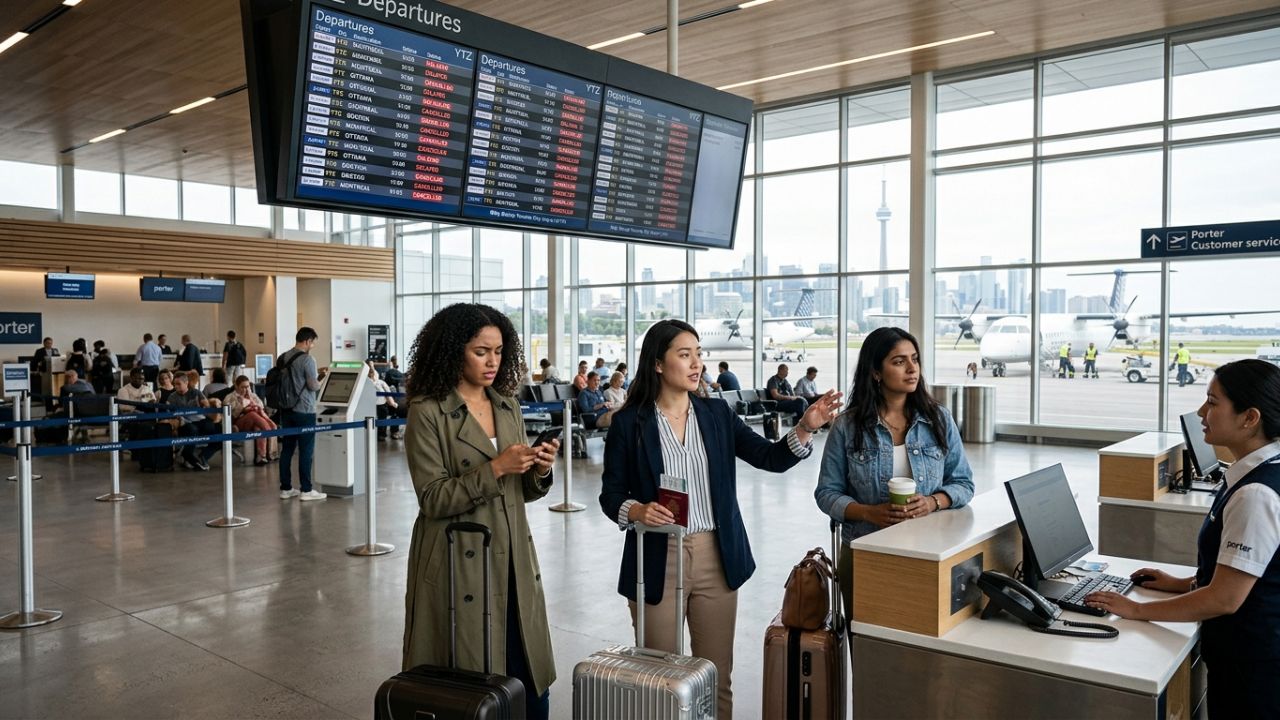
Image generated by AI
Aviation Updates: Travel Chaos Hits Billy Bishop Airport as 15 Flight Disruptions Paralyze Porter and Jazz Operations
As highly localized operational friction and suddenly compounding infrastructure bottlenecks continue to terrorize the Canadian transit network, a severe wave of massive logistical failures has officially struck Toronto's downtown aviation gateway.
Image generated by AI
As high-impact airline news platforms rapidly issue continuous aviation updates regarding the intense fragility of the North American transit grid, Toronto has suffered a highly concentrated operational meltdown. Today, at the highly strategic Billy Bishop Toronto City Airport (YTZ), ground operations completely deteriorated, instantly sending 15 heavily relied-upon flight schedules up in smoke. Based strictly on transport-aligned tracking metrics, the incredibly vital downtown air travel facility recorded a highly disruptive 10 flight delays and 5 outright flight cancellations. This sudden, aggressive wave of severe airport disruptions instantly fractured the entire regional flow of crucial connections at the Toronto waterfront. The intense travel chaos directly triggered a devastating cascading effect for high-paying corporate travelers and weekend commuters who rely explicitly on Toronto’s secondary international airport for highly efficient transit. Ultimately, this isolated logistical collapse violently disrupted the scheduled operations for hundreds of desperate passengers, heavily paralyzing the primary local carriers: Porter Airlines and Jazz Aviation (the massive regional subsidiary of Air Canada Express).
Expanded Overview: The Collapse of a Downtown Funnel
To fully comprehend the sheer scale of this localized disaster, aviation analysts must closely examine the incredibly compact footprint of Billy Bishop Airport.
Unlike sprawling major international hubs located on the outskirts of cities, YTZ’s incredibly compact physical footprint means that sudden disruptions pack a remarkably heavy, localized punch. The terminal waiting lounges fill up incredibly rapidly when structural structural failures occur. Because the airport serves as an incredibly high-density funnel for high-spending corporate travelers and weekend tourists arriving directly adjacent to Toronto’s commercial center, these 15 flight schedules represent highly vital economic arteries. When operations fracture on the island, the logistical fallout heavily targets the absolute most critical short-haul flight paths running through the hub, completely destroying the finely tuned daily rotations connecting Ontario’s capital with massive neighboring business centers across Canada and the United States.
Section-Wise Breakdown: Jazz and Porter Suffer Heavy Friction
The devastating operational issues were extremely concentrated on Billy Bishop’s two absolute main airline operators, completely destroying their daily punctuality metrics.
Jazz Aviation (Air Canada Express): Operational burden estimates definitively placed Jazz (ACA) in the primary position for catastrophic network failure today. Jazz's specific operational metrics registered an incredibly steep 48% cancellation vulnerability marker relative to its notably smaller physical footprint on specific routes, heavily indicating severe equipment or localized crew shortages that ground their aircraft entirely.
Porter Airlines: While Jazz suffered the outright cancellations, a devastating secondary position was placed squarely on Porter Airlines. Porter accounted for the massive majority of the standard departure backlogs, compounding the extreme frustrations for hundreds of travelers hopelessly trapped at the congested terminal gates while their flights suffered rolling delays.
Section-Wise Breakdown: Severed Regional Hub Connections
The travel chaos at YTZ aggressively spilled across borders, massively crippling critical inbound funnels and transborder outbound targets.
By Origin Airport: Inbound regional flights desperately attempting to arrive from major Canadian hubs like Montréal–Trudeau International Airport (YUL) and Ottawa Macdonald-Cartier International Airport (YOW) experienced an immediate, terrifying cascading backlog. Inbound delays instantly poisoned the schedule, aggressively delaying consecutive aircraft rotations for the rest of the working day.
By Destination Airport: Outbound corridors toward highly lucrative US transborder targets—most notably New York-Newark (EWR)—and crucial domestic connections encountered severe structural halts. These delays entirely prevented flight crews and vital aircraft equipment from successfully executing their standard, high-speed return loops.
Flight Details: Billy Bishop Airport (YTZ) Disruption Matrix
To ensure international travelers and aviation analysts can accurately track the exact operational telemetry of this highly concentrated transit failure, the verified disruption data has been consolidated into the mandatory matrix below.
| Operational Metric | Verified Data |
|---|---|
| Total Flight Delays | 10 Flights |
| Total Cancellations | 5 Flights |
| Primary Hub Operators | Porter Airlines, Jazz Aviation (Air Canada Express) |
| Impacted Origins | Montréal–Trudeau (YUL), Ottawa Macdonald-Cartier (YOW) |
| Severed Destinations | New York-Newark (EWR), Canadian domestic routes |
| Passenger Protections | CTA / APPR Regulations |
| Jazz Cancellation Metric | 48% cancellation vulnerability |
Passenger Impact: Enforcing Strict CTA Consumer Rights
For the hundreds of stranded commuters violently caught in the crossfire of this downtown aviation failure, executing Canadian passenger rights is absolutely critical for financial survival.
Under the incredibly powerful Canadian Transportation Agency (CTA) and Air Passenger Protection Regulations (APPR), passengers facing these brutal disruptions possess heavily defined, legally binding rights. Carriers like Porter and Jazz are legally mandated to communicate the exact, explicit reason for a delay or cancellation. Furthermore, if a severe interruption stretches overnight, the airline must immediately provide adequate food, water, and emergency accommodation, and must rebook the stranded passengers on the very next available flight at absolutely no added cost. Regulatory watchdogs strongly advise all passengers hit by these localized disruptions to keep incredibly strict physical and digital documentation of all airline boarding passes, cancellation texts, and digital notifications to successfully streamline future compensation claims via government-verified transport channels.
Industry Analysis: The Collateral Hit to Toronto Tourism
From a macro-economic perspective, the strategic position of the Toronto City Centre airport means schedule structural failures instantly ripple into the incredibly lucrative local hospitality ecosystem.
When 15 highly vital flights face immediate operational failure, the local hospitality ecosystem takes a direct, violent hit. Local downtown hotel operators instantly see immediate reservation voids originating from missed incoming check-ins. Simultaneously, high-end restaurants, massive convention spaces, and downtown entertainment venues experience sudden, catastrophic cancellations. Furthermore, recurrent travel friction heavily dims regional consumer confidence. This forces short-term weekend tourists to immediately pivot to alternative regional options, ultimately dealing massive harm to Toronto’s highly lucrative summer economic momentum.
Conclusion: Surviving the Downtown Gridlock
Ultimately, the highly concentrated 10 flight delays and 5 cancellations at Billy Bishop Toronto City Airport explicitly reveal how incredibly sensitive tightly packed, regional short-haul schedules truly are. With Porter Airlines and Jazz Aviation aggressively running into the exact same regional bottlenecks affecting Montreal, Ottawa, and Newark, the entire downtown transit funnel becomes completely paralyzed. Until airlines successfully decide to implement massive operational buffers, travelers should absolutely expect more delays. Passengers are fiercely encouraged to continuously monitor the digital dashboards on the official Billy Bishop terminal website for the latest status updates, strictly review airline rebooking restrictions, and maintain extreme flexibility to survive the grueling realities of modern downtown air travel.
Key Takeaways
- Downtown Terminal Gridlock: Billy Bishop Airport (YTZ) suffered a highly concentrated disruption event consisting of 10 flight delays and 5 outright cancellations.
- Major Carriers Paralyzed: Jazz Aviation (Air Canada Express) suffered a steep 48% cancellation vulnerability, while Porter Airlines accounted for the majority of severe rolling delays.
- Regional Routes Severed: The travel chaos severely severed inbound connections from Montreal (YUL) and Ottawa (YOW), while crippling outbound routes to New York-Newark (EWR).
- Hospitality Sector Impacted: The sudden cancellations directly harmed Toronto's downtown hospitality ecosystem, triggering hotel reservation voids and restaurant cancellations.
- Passenger Protections: Travelers are legally protected under CTA and APPR regulations, mandating airlines to provide food, overnight accommodation, and rapid rebooking.
FAQ: Billy Bishop Airport Flight Disruptions
How many total flights were delayed or canceled at Billy Bishop Airport today? According to verified transport tracking metrics, operations at YTZ were severely disrupted by 10 rolling flight delays and 5 outright cancellations.
Which airlines experienced the worst flight disruptions at YTZ? The localized travel chaos heavily paralyzed the airport's two primary operators: Jazz Aviation (Air Canada Express), which suffered massive cancellations, and Porter Airlines, which suffered severe departure backlogs.
What major routes were affected by the travel chaos in Toronto? The massive operational breakdown brutally severed inbound regional flights from Montreal (YUL) and Ottawa (YOW), alongside transborder outbound routes targeting New York-Newark (EWR).
What should I do if my flight from Billy Bishop is severely delayed? Under APPR regulations, passengers are legally entitled to demand immediate rebooking, food, and overnight lodging from their carrier. Travelers must keep strict documentation of all cancellation notices to execute government-backed compensation claims.
Related Travel Guides
Montreal Trudeau 88 Delays Air Canada Jazz Travel Chaos 2026
Brazil Airports 148 Delays LATAM GOL Azul Travel Chaos 2026
North America Regional Tourism and Transit Survival Guide 2026
Disclaimer: This article is strictly for informational and aviation planning purposes. The specific flight disruption telemetry (10 delays, 5 cancellations), affected airlines (Porter Airlines, Jazz Aviation), and impacted routes (Montreal, Ottawa, Newark) are based on verified, manually obtained FlightAware data available at the time of publication. Canadian airspace conditions, specific airline recovery schedules, and localized weather restrictions are highly dynamic and subject to immediate modification by the operating carriers and regulatory authorities (CTA). Passengers planning domestic or international travel through Billy Bishop Toronto City Airport should explicitly verify their exact flight itineraries, strictly monitor their airlines for sudden flight cancellations, and secure comprehensive travel insurance prior to departure.
Disclaimer
This article is for informational and educational purposes only. It does not constitute legal, financial, or professional advice. While we strive to provide accurate and up-to-date information, travel policies, regulations, and conditions change rapidly. Always verify information with official sources before making travel decisions. Nomad Lawyer makes no representations about the accuracy, reliability, completeness, or suitability of the information provided. Readers should consult qualified professionals for advice specific to their circumstances. The views expressed in this article are those of the author and do not necessarily reflect the views of Nomad Lawyer.
Kunal K Choudhary
Co-Founder & Contributor
A passionate traveller and tech enthusiast. Kunal contributes to the vision and growth of Nomad Lawyer, bringing fresh perspectives and driving the community forward.
Learn more about our team →