
How Exclusive Destination Merchandise Is Reshaping Global Tourism Economies
International travelers are anchoring itineraries around location-exclusive merchandise, redirecting discretionary spending from generic transit hubs into regional artisan workshops and branded hospitality flagships.

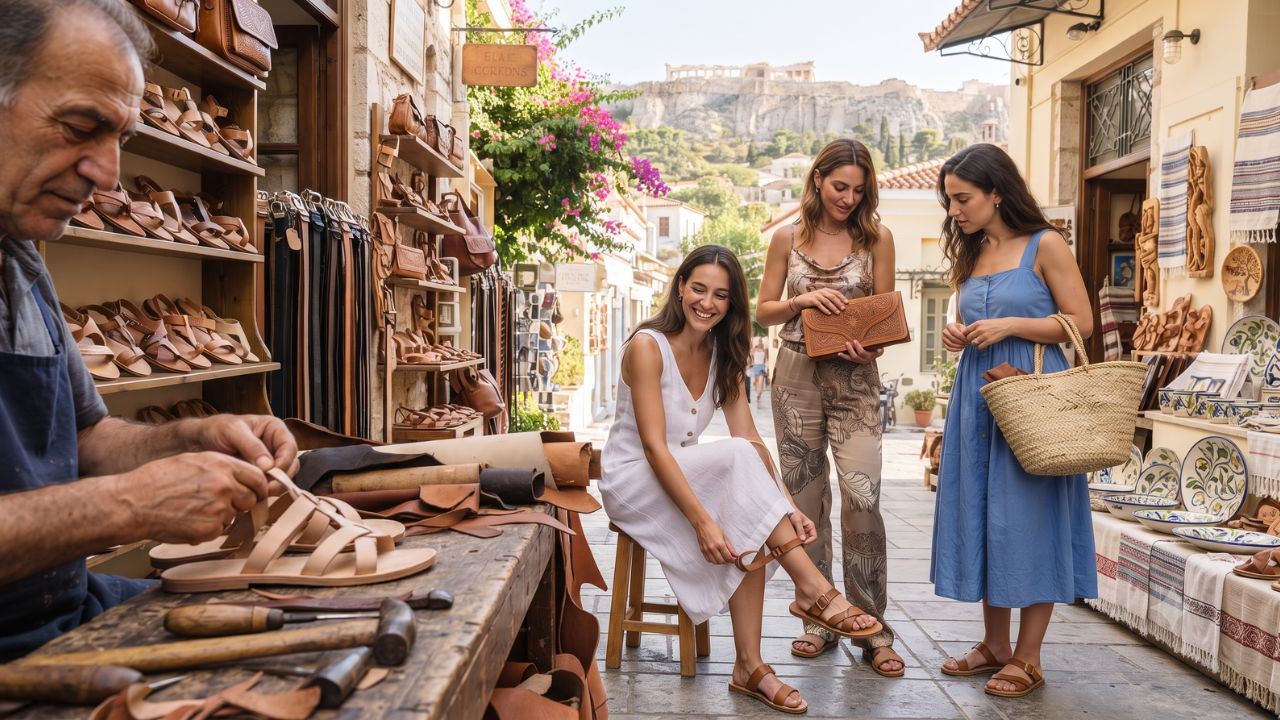
An intake of €13.52 billion in international travel receipts across Greece between January and July 2026 highlights how foreign visitor capital is expanding alongside targeted consumer retail across primary European gateways. Rather than treating shopping as an afterthought relegated to airport duty-free corridors, international travelers are systematically designing itineraries around regionally anchored retail acquisitions. This phenomenon, known as pilgra-merch tourism, spans bespoke Athenian leathercraft, heritage Nordic knitwear, regional Japanese collector lines, Parisian palace hotel apparel, Baltic ethnographic textiles, and viral American supermarket goods. The movement reallocates leisure expenditures from standardized mass commerce directly into localized production networks, independent ateliers, and luxury hospitality flagships.
While national balance-of-payments ledgers record these inflows under broad travel accounts, the qualitative behavior represents a structural shift in trip planning. The value of these items stems from strict geographic restriction: they cannot be acquired through standard e-commerce channels without eroding their regional significance. Consequently, physical retail points serve as geographic catalysts, determining daily transit routes, neighborhood foot traffic, and international baggage considerations.
Structural Economics of Destination-Exclusive Retail in Global Tourism
The transition from conventional souvenir purchasing to intentional merchandise pilgrimage reflects an evolving traveler profile that prioritizes tangible authenticity over mass-produced trinkets. In Athens, historic leathercraft ateliers such as Melissinos Sandals draw global visitors who schedule custom fittings in the Monastiraki district beneath the Acropolis. These purchases merge functional footwear with direct engagement in living craft heritage, distributing tourist foot traffic beyond state-run archaeological monuments into independent merchant enclaves.
This behavioral pattern is echoed across northern and eastern Europe through textile heritage. In Iceland, the traditional lopapeysa sweater, hand-knitted from unspun native lopi fleece by members of the Handknitting Association of Iceland (Handprjónasamband Íslands), provides both cold-weather protection and connection to domestic pastoral traditions. Similarly, in Riga, the cultural archive and retail center SENĀ KLĒTS supplies travelers with hand-knitted mittens bearing regional Baltic ethnographic motifs and protective symbols. In both cases, the merchandise functions as a tactile cultural archive that resists industrial mass manufacture.
At the opposite end of the retail spectrum, Japan and the United States reveal how everyday convenience and mass-market design can generate regional collector behavior. Across Japan, convenience store operator FamilyMart introduced a collection of 47 prefecture-themed socks, using distinct textile palettes to symbolize administrative districts. This initiative turned mundane retail visits into localized scavenger hunts, encouraging foreign visitors to explore secondary prefectures. In the United States, basic canvas and mini-insulated tote bags sold by grocery chain Trader Joe's became sought-after collector pieces across European and Asian markets due to their store-exclusive availability and distinct Americana aesthetic. Meanwhile, in Paris, palace hotels led by the Ritz Paris successfully commodify heritage prestige through branded embroidered baseball caps, loungewear, and home goods, monetizing brand equity well beyond physical room occupancy.
Macroeconomic Travel Receipts and National Retail Indicators Compared
While central banks and statistical agencies do not disaggregate merchandise sales into separate balance-of-payments lines, broader macroeconomic reports confirm robust visitor purchasing power across all six examined markets. Official data published by the Bank of Greece reveals that international travel receipts expanded 12% year-over-year between January and July 2026, driven by an 8.6% increase in inbound arrivals and a 2.9% rise in average expenditure per trip. This expansion confirms that visitors are arriving with greater disposable budgets earmarked for localized experiences and physical goods.
According to figures from Statistics Iceland, direct tourism activities contributed 8.8% to national gross domestic product in 2025, climbing from 8.2% recorded in 2024. Total domestic and international tourism consumption reached nearly ISK 914 billion, demonstrating the sector's foundational role within the North Atlantic economy. In Asia, data compiled by the Japan Tourism Agency indicates that foreign visitor expenditures reached ¥2.51 trillion during the second quarter of 2026 (April through June), marking a 0.3% increase compared to the previous year. Average expenditure per inbound traveler rose 3.4% to approximately ¥245,000, providing the capital base required for specialized regional shopping routes.
| Destination & Reporting Authority | Primary Macroeconomic Metric | Reporting Period | Core Merchandise Category | Geographic Distribution Role |
|---|---|---|---|---|
| Greece (Bank of Greece) | €13.52B travel receipts (+12% YoY); +8.6% arrivals; +2.9% spend per trip | Jan–Jul 2026 | Bespoke handmade leather sandals (Athens) | Disperses visitor spend into historic urban merchant districts |
| Iceland (Statistics Iceland) | 8.8% direct GDP contribution; ISK 914B total consumption | Full-Year 2025 (Issued May 2026) | Traditional hand-knitted lopapeysa wool sweaters | Supports domestic sheep farming and rural craft cooperatives |
| Japan (Japan Tourism Agency) | ¥2.51T visitor spend (+0.3% YoY); ¥245,000 average spend (+3.4% YoY) | Q2 2026 (Apr–Jun) | 47-prefecture-exclusive convenience store socks | Incentivizes rail travel across secondary regional prefectures |
| France (INSEE France) | 61.1M hotel nights (+1.4% YoY); 4/5-star stays up +4.2% YoY | Q2 2026 (Apr–Jun) | Branded palace hotel caps, loungewear, homewares | Monetizes historic luxury hotel prestige beyond guest stays |
| Latvia (Central Statistical Bureau of Latvia) | 447,100 total guests; 246,600 foreign visitors; Riga share 80.4% | Q1 2026 (Jan–Mar) | Ethnographic hand-knitted Baltic mittens | Concentrates cultural retail within historic Old Riga |
| United States (NTTO) | $145.4B inbound visitor spend; July spend near $20.4B (-1% YoY) | Jan–Jul 2026 | Branded grocery canvas and insulated tote bags | Integrates suburban supermarket chains into foreign tour stops |
In Western Europe, accommodation statistics from the National Institute of Statistics and Economic Studies (INSEE) show that French hotels recorded 61.1 million overnight stays in the second quarter of 2026, up 1.4% year-over-year. Four- and five-star properties drove this momentum with a 4.2% year-over-year surge, creating prime conditions for luxury hospitality merchandising. In contrast, the Central Statistical Bureau of Latvia reported that commercial accommodations hosted 447,100 guests during the first quarter of 2026, with international travelers making up 246,600 arrivals (55.2%). Although Riga captured 80.4% of foreign guest nights, total international arrivals fell 7.2% year-over-year, illustrating that heritage craft retailers in the Baltic state must navigate a stabilizing visitor market. In North America, the US National Travel and Tourism Office reported $145.4 billion in foreign travel spending between January and July 2026, with July alone generating nearly $20.4 billion despite a modest 1% contraction against July 2025.
Expert Analysis: The Logistical and Supply-Chain Realities Behind Itinerary-Driven Retail
For travelers building itineraries around regional merchandise, the direct consequence is a marked change in logistical planning. Securing limited-production goods requires advance verification of workshop schedules, artisan availability, seasonal inventory cycles, and neighborhood trading regulations. Unlike duty-free shops that operate 24 hours inside departure terminals, independent craft cooperatives and boutique ateliers observe restricted opening windows and limited batch runs that dictate traveler timing.
The pricing pressure this creates means that regional craft markets are caught between surging foreign purchasing power and domestic production limits. When viral attention converges on artisanal workshops, output bottlenecks emerge. A master sandal maker in Athens or a member of the Icelandic knitting cooperative cannot scale production overnight without mechanizing hand-stitching or outsourcing to foreign factories. Preserving provenance and genuine materials requires maintaining strict output limits, which inevitably pushes retail price tags upward.
From an aviation and border perspective, shopping-driven journeys introduce tangible regulatory friction. International travelers must calculate baggage weight limits, checked luggage surcharges, fragile textile packing requirements, and bilateral customs duty thresholds. In the European Union, non-resident visitors navigating value-added tax (VAT) refund schemes must verify that artisan receipts meet minimum purchase values and obtain customs validation stamps before departure. For international carriers, increased passenger carry-on volume for delicate crafts and boxed footwear adds operational strain during aircraft boarding, underscoring how downstream retail trends ripple into transport operations.
Key Takeaways
- Greece captured €13.52 billion in international travel receipts between January and July 2026, reflecting a 12% year-over-year expansion supported by rising inbound volumes and elevated per-trip spending.
- Iceland's tourism industry directly accounted for 8.8% of national gross domestic product in 2025, generating approximately ISK 914 billion in combined domestic and international tourism consumption.
- Japan recorded ¥2.51 trillion in foreign visitor expenditure during the second quarter of 2026, with individual visitor spend rising 3.4% to an average of ¥245,000.
- Luxury hospitality merchandising expanded alongside accommodation gains in France, where four- and five-star hotel stays grew 4.2% in the second quarter of 2026.
- International travelers planning retail-oriented routes must account for workshop production cycles, airline cabin baggage limitations, and customs duty exemptions.
FAQ: Pilgra-Merch Shopping Tourism 2026
What is pilgra-merch tourism?
Pilgra-merch tourism describes leisure travel planned specifically around acquiring geographically exclusive, authentic retail items that cannot be purchased through standard domestic e-commerce channels.
How does location-exclusive shopping affect travel itineraries?
It shifts traveler focus from centralized transit hubs to specific neighborhood workshops, rural craft cooperatives, or regional retail outlets, dictating route selection and daily schedules.
What customs and duty rules apply to overseas souvenir purchases?
Travelers must declare retail acquisitions exceeding statutory duty-free exemptions upon re-entry to their home country and maintain itemized receipts for value-added tax refund processing.
Which destinations lead the destination-exclusive merchandise trend?
Key markets include Greece (artisanal leathercraft), Iceland (lopi wool knitwear), Japan (prefecture-exclusive retail), France (palace hotel lifestyle lines), Latvia (ethnographic mittens), and the United States (branded grocery goods).
When souvenirs transform from casual holiday afterthoughts into primary journey catalysts, authentic local craftsmanship becomes a powerful commercial anchor in global travel.
Related Travel Guides
Disclaimer
This article is for informational and educational purposes only. It does not constitute legal, financial, or professional advice. While we strive to provide accurate and up-to-date information, travel policies, regulations, and conditions change rapidly. Always verify information with official sources before making travel decisions. Nomad Lawyer makes no representations about the accuracy, reliability, completeness, or suitability of the information provided. Readers should consult qualified professionals for advice specific to their circumstances. The views expressed in this article are those of the author and do not necessarily reflect the views of Nomad Lawyer.
Raushan Kumar
Founder & Lead Developer
Full-stack developer with 11+ years of experience and a passionate traveller. Raushan built Nomad Lawyer from the ground up with a vision to create the best travel and law experience on the web.
Learn more about our team →