
Pigeon Island Saint Lucia Snorkeling Guide: Best Shore Entry and Marine Life Tips 2026
A comprehensive guide to snorkeling at Pigeon Island National Landmark, Saint Lucia, focusing on beginner-friendly shore entry, essential safety tips, and what marine life to expect in 2026.

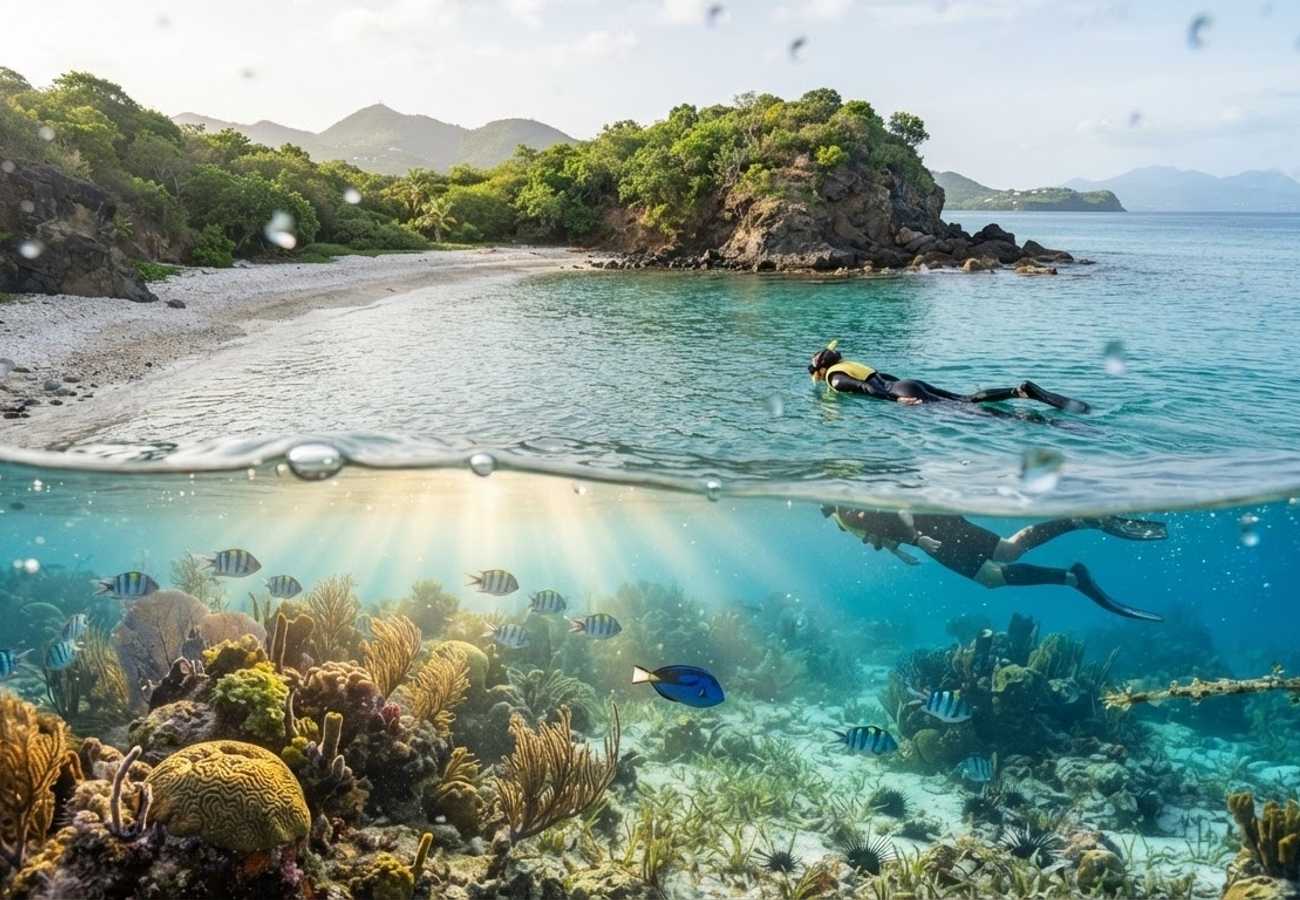
Image generated by AI
Pigeon Island National Landmark is often celebrated for its military ruins and panoramic vistas, but its sheltered Caribbean coves offer a low-stress entry point for first-time snorkelers. For those based in Rodney Bay, it provides a seamless transition from land to sea without the need for expensive boat charters.
Located on the northernmost tip of Saint Lucia, Pigeon Island is connected to the mainland via a man-made causeway. While it may not rival the deep-sea coral gardens of the south, its leeward beaches provide calm, gently shelving waters that are ideal for families and novice swimmers.
Navigating the Pigeon Island Coastline
The landmark features two primary beaches on its Caribbean side. These stretches of sand and pebbles are framed by low cliffs and rocky headlands, providing a natural buffer against heavy surf. On clear days, visitors can spot Martinique in the distance while swimming.
Access is managed through the Saint Lucia National Trust gate. While the area offers basic restrooms and changing facilities near the entrance, the beaches themselves remain rustic. Visitors should expect picnic tables and natural shade rather than the full-service infrastructure found at luxury resorts.
For those staying in Rodney Bay, the destination is highly accessible:
- Walking: A 20 to 30-minute stroll along the causeway.
- Taxi: Typically costs between 10 and 20 US dollars each way.
- Timing: The site operates on a daytime schedule, closing in the late afternoon.
Strategic Shore Entry Points
Snorkeling here is entirely shore-based, meaning no boats are required to reach the marine life. There are two primary ways to enter the water depending on your comfort level.
The Sandy Approach (Best for Beginners)
The most secure entry is via the main sandy section of the lower Caribbean beach. The seabed slopes gradually, and wave action is generally limited to light chop from passing vessels. This route allows swimmers to acclimate to their gear in waist-deep water before heading toward the rocky margins where fish congregate.
The Rocky Approach (For Confident Swimmers)
More experienced snorkelers may enter near the northern headland. This provides faster access to deeper water and avoids the sand stirred up by other bathers. However, this method requires caution; algae and wave surge can make the rocks slippery, and sharp edges are common.
Marine Life and Underwater Topography
Pigeon Island is a protected landmark rather than a dedicated marine reserve. Consequently, visitors will find modest underwater landscapes rather than expansive coral reefs. The environment consists primarily of seagrass beds, sponges, sea fans, and small clusters of hard and soft corals.
Common Sightings Include:
- Reef Fish: Sergeant majors, blue tangs, and wrasses are frequent in the shallows.
- Ambush Predators: Trumpetfish are often seen motionless in seagrass, while larger jacks or barracuda may glide through deeper channels.
- Bottom Dwellers: Juvenile parrotfish, sea cucumbers, and sea urchins are common.
Because this is a protected site, strict "look but do not touch" rules apply. Spear fishing and the collection of marine specimens are prohibited.
Safety and Equipment Essentials
Due to the presence of sea urchins and broken shells among the rocks, footwear is highly recommended. Water shoes or open-heel fins protect against punctures and provide better grip on slippery surfaces.
Visibility varies based on rainfall and boat traffic from the nearby Rodney Bay Marina. To ensure safety, snorkelers should:
- Stay Visible: Use brightly colored snorkels or surface marker floats.
- Mind the Traffic: Keep a safe distance from boat lanes leading to the marina.
- Account for Currents: Check for coastal tugs and swim up-current first to ensure an easier return to shore.
Suitability for Families and Novices
Pigeon Island is arguably one of the most accessible snorkeling spots in Saint Lucia. The ability to stand up in waist-deep water just meters from the shore removes the intimidation factor associated with deeper reef walls.
For children, the first 5 to 10 meters of the waterline serve as an ideal practice zone. Using flotation vests and pool noodles allows children to master the "face-down" position before venturing toward the rocks. Weekday mornings are recommended for families to avoid the weekend crowds of local visitors.
Pigeon Island Visitor Quick-Reference
| Feature | Detail |
|---|---|
| Entry Type | 100% Shore-based |
| Water Condition | Calm, leeward Caribbean side |
| Primary Marine Life | Sergeant majors, Blue tangs, Trumpetfish |
| Recommended Gear | Water shoes, Mask, Snorkel, Flotation vest |
| Access from Rodney Bay | 20-30 min walk or $10-$20 USD taxi |
| Environment | Protected National Landmark |
Key Takeaways
- Beginner Friendly: Ideal for those who prefer shallow, calm water over deep-sea diving.
- Low Cost: Accessible via a modest entrance fee and short walk/taxi from Rodney Bay.
- Protective Gear: Water shoes are essential due to sea urchins and rocky terrain.
- Eco-Conscious: Strict regulations prohibit touching or removing any marine life.
FAQ
Is snorkeling at Pigeon Island better than other Saint Lucia beaches? It depends on your goal. If you seek massive coral gardens and diverse reef systems, the southern beaches are superior. If you want a safe, easy, and low-cost experience for beginners or children, Pigeon Island is the best choice.
Do I need to rent gear? While some Rodney Bay resorts provide rentals, bringing your own properly fitted mask and snorkel ensures a better experience.
Are there currents at Pigeon Island? Yes, mild coastal currents can occur, especially on breezy afternoons. Always observe the water from the shore before entering.
Enjoy the serenity of the Caribbean's northern tip, where history meets the horizon.
Related Travel Guides
Disclaimer
This article is for informational and educational purposes only. It does not constitute legal, financial, or professional advice. While we strive to provide accurate and up-to-date information, travel policies, regulations, and conditions change rapidly. Always verify information with official sources before making travel decisions. Nomad Lawyer makes no representations about the accuracy, reliability, completeness, or suitability of the information provided. Readers should consult qualified professionals for advice specific to their circumstances. The views expressed in this article are those of the author and do not necessarily reflect the views of Nomad Lawyer.
Raushan Kumar
Founder & Lead Developer
Full-stack developer with 11+ years of experience and a passionate traveller. Raushan built Nomad Lawyer from the ground up with a vision to create the best travel and law experience on the web.
Learn more about our team →