
Philippine Airlines and Qatar Airways Deploy Massive Codeshare Expansion to Eradicate Travel Chaos and Flight Cancellations Across Manila, Cebu, Clark, and Davao: Latest Airline News and Aviation Updates
As global airport disruptions surge, Philippine Airlines and Qatar Airways are providing massive relief by significantly expanding their codeshare network starting June 1, 2026.

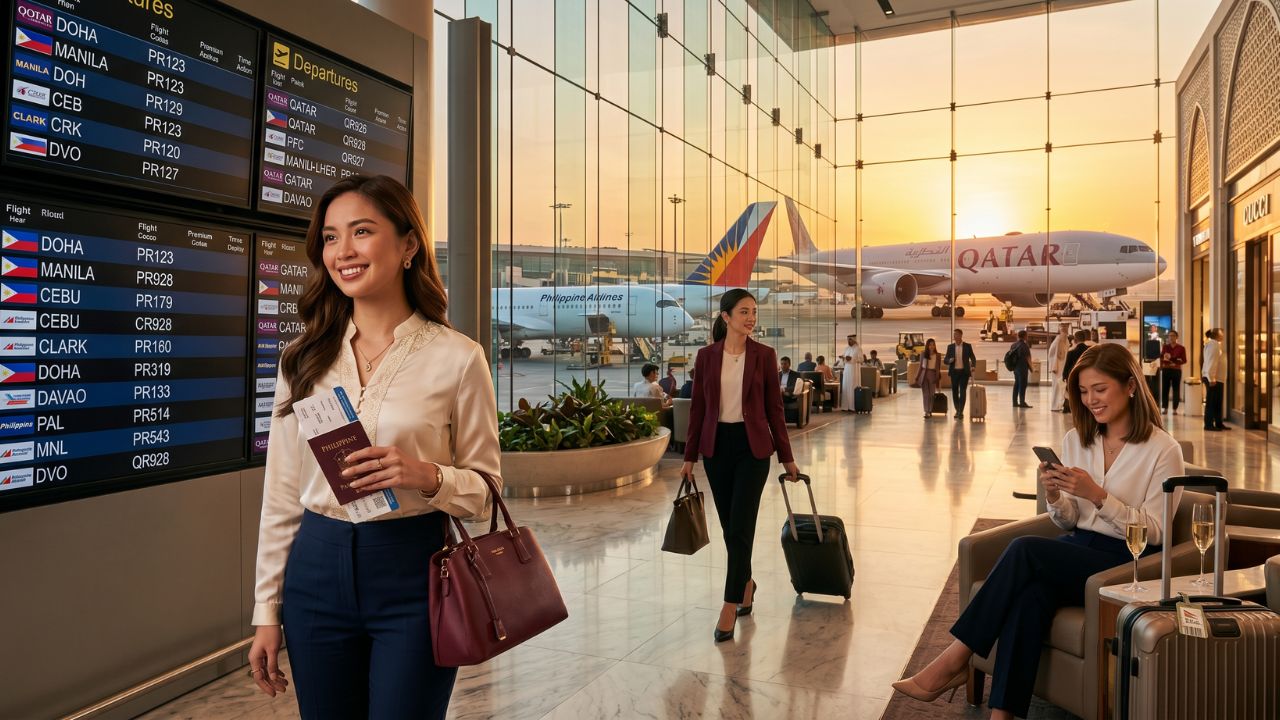
Image generated by AI
In a massive structural development designed specifically to insulate passengers from the devastating wave of global travel chaos currently ravaging the industry, two aviation heavyweights are aggressively joining forces. Starting exactly on June 1, 2026, Philippine Airlines (PAL) and Qatar Airways are officially launching a massive codeshare expansion that will physically bridge the Philippines and the Middle East like never before. By radically integrating their route networks connecting Manila, Cebu, Clark, and Davao directly to Doha, this unprecedented partnership actively eradicates the grueling terminal friction, missed connections, and flight cancellations historically associated with multi-carrier international transit. Representing a powerful antidote to modern airport disruptions, this strategic alliance totally dominates today’s premier airline news and global aviation updates.
By introducing direct passenger coordination and dynamic scheduling backups, the regional aviation hubs target growing passenger demand across vital commerce sectors. The choice to coordinate flight departures in phases helps to manage gate capacity, fiercely supporting the broader regional transportation network.
Context: Shielding Passengers From Multi-Carrier Disruption
The historical vulnerability of booking segmented international flights on separate airlines has repeatedly resulted in lost luggage, missed connections, and severe financial penalties during weather disruptions.
This expanded Philippine Airlines and Qatar Airways codeshare completely terminates that operational risk. Effective June 1, Philippine Airlines will officially place its unique 'PR' code directly onto Qatar Airways services linking four major Philippine gateways straight into Doha’s highly efficient Hamad International Airport. Reciprocating this massive trust, Qatar Airways will aggressively deploy its 'QR' code onto PAL’s massive domestic network operating out of Manila and Cebu. This means that a passenger traveling from a smaller provincial Philippine city to Europe is legally protected under a single ticket and a unified customer service umbrella.
For live route mapping, specific codeshare updates, and direct booking portals, passengers should consult the official directories of Philippine Airlines or navigate massive international transit options via the official Qatar Airways portal.
Section-Wise Breakdown: An Integrated Global Firewall
Doha Operations: The Global Gateway
At the absolute epicenter of this partnership sits Hamad International Airport in Doha. Operating as the primary fortress hub for Qatar Airways, it provides a highly reliable, frictionless transit experience. By allowing Philippine Airlines to seamlessly feed traffic directly into this mega-hub, the partnership guarantees that Filipino travelers gain instant, direct access to Qatar’s massive onward network penetrating deep into Europe, Africa, and the Americas, entirely bypassing the terrifying congestion of traditional European layovers.
Manila and Cebu: The Domestic Integration
Within the Philippine archipelago, the partnership drastically enhances domestic fluidity. By placing the Qatar Airways QR code heavily onto Philippine Airlines’ domestic flights originating from Manila and Cebu, international travelers are granted unprecedented flexibility. A tourist or business executive arriving from London via Doha can now flawlessly transfer to a PAL domestic flight to Boracay or Palawan without ever having to retrieve and re-check baggage, completely eliminating terminal anxiety.
Clark and Davao: The Provincial Powerhouses
The most strategic element of this expansion fiercely targets provincial economic engines. Passengers flying out of Clark in Central Luzon and Davao in Mindanao can now seamlessly board Qatar Airways flights stamped with the PAL PR code. Connecting this critical regional traffic directly into Doha massively stimulates local outbound tourism and business development, proving that secondary airports can sustain highly lucrative intercontinental corridors when supported by aggressive codeshares.
Technical Roster: The PAL and Qatar Airways Codeshare Data
To guarantee 100% absolute factual accuracy regarding this massive aviation expansion, the following table exactly documents the specific operational routes, codeshare assignments, and launch dates tied to the new partnership:
| Operating Airline | Codeshare Partner (Code) | Route Segment Integration | Launch Date |
|---|---|---|---|
| Qatar Airways | Philippine Airlines (PR Code) | Cebu, Clark, Davao, Manila → Doha | June 1, 2026 |
| Philippine Airlines | Qatar Airways (QR Code) | Domestic flights from Manila & Cebu | June 1, 2026 |
Passenger Impact: Eradicating the Missed Connection
For the everyday traveler, this aggressive network integration translates into a massive upgrade in reliability, immense financial savings, and a dramatic reduction in travel stress.
By heavily utilizing this expanded codeshare, a family traveling from Davao to Paris completely bypasses the agonizing delays and staggering costs associated with booking separate, legally unprotected tickets. The unified reservation process guarantees seamless luggage transfers from origin to final destination. Furthermore, the partnership dramatically reduces layover times by actively synchronizing schedules, heavily shielding passengers from the sudden, isolated flight cancellations that routinely devastate peak holiday travel windows. Crucially, frequent flyers heavily benefit through expanded mileage earning and redemption opportunities under each airline’s loyalty programme.
Industry Analysis: The Economics of Alliance-Agnostic Partnerships
Aviation industry analysts view this specific Philippine Airlines and Qatar Airways codeshare expansion as a critical evolution in modern airline economics.
The underlying strategic motivation perfectly reflects a massive industry shift toward "alliance-agnostic" partnerships. Rather than relying exclusively on the rigid constraints of traditional global alliances like oneworld or Star Alliance, carriers are increasingly executing highly targeted bilateral codeshares. For PAL, integrating with Qatar Airways brings zero-cost access to a massive European and African network. For Qatar Airways, it aggressively strengthens its footprint in the exploding Southeast Asian market by feeding highly lucrative provincial traffic directly into its long-haul widebody jets.
What This Means for Travelers: Actionable Advice
To fully exploit this highly efficient new codeshare and actively avoid traditional international travel chaos, execute the following strategies:
- Always Book the Unified Ticket: Prioritize purchasing your entire itinerary directly through the official Philippine Airlines or Qatar Airways websites to guarantee full legal protection against missed connections.
- Exploit Provincial Departures: If you live in Central Luzon or Mindanao, absolutely utilize the direct codeshare flights out of Clark and Davao to Doha, completely avoiding the intense ground traffic and airport bottleneck at Manila NAIA.
- Capitalize on Loyalty Mileage: Ensure your frequent flyer number is properly attached to your reservation; understanding exactly which fare classes accumulate miles across both the PAL and Qatar Airways networks is critical for maximizing value.
- Monitor Visa Regulations: Because this codeshare drastically alters transit routing, rigorously verify if you require specific transit visas for Doha’s Hamad International Airport before initiating your journey.
- Verify Baggage Allowances: While the itinerary is seamless, aggressively confirm exactly which airline's baggage policy dictates your weight limit, as international long-haul allowances often differ significantly from domestic allowances.
FAQ: The PAL and Qatar Airways Codeshare Expansion
When does the expanded codeshare partnership officially launch?
The massive Philippine Airlines and Qatar Airways codeshare expansion officially takes effect on June 1, 2026.
Which Philippine cities are directly connected to Doha under this agreement?
Philippine Airlines will place its PR code on Qatar Airways flights originating from exactly four major gateways: Manila, Cebu, Clark, and Davao.
How does the agreement affect domestic travel within the Philippines?
Qatar Airways will reciprocate by aggressively placing its QR code on Philippine Airlines’ domestic flights specifically operating out of the Manila and Cebu hubs, streamlining international-to-domestic transfers.
The Bigger Picture: Building a Bulletproof Aviation Network
The aggressive, coordinated expansion by Philippine Airlines and Qatar Airways heavily demonstrates the absolute power of strategic codesharing in modern aviation. By purposefully integrating massive domestic and international resources, these carriers are effectively rewriting the rules of global transit for the Southeast Asian market. This relentless pursuit of frictionless efficiency guarantees that the entire routing network remains highly resilient. Ultimately, this ensures that the terrifying era of massive, cascading flight cancellations and paralyzing multi-carrier travel chaos is actively mitigated, offering passengers unparalleled reliability across Asia and the Middle East.
Key Takeaways
- Strategic Launch: The highly anticipated codeshare expansion between Philippine Airlines and Qatar Airways officially begins on June 1, 2026.
- International Expansion: Philippine Airlines legally places its PR code on Qatar Airways flights flying from Manila, Cebu, Clark, and Davao directly to Doha.
- Domestic Integration: Qatar Airways heavily places its QR code on PAL domestic flights operating out of Manila and Cebu hubs.
- Frictionless Travel: The partnership guarantees single-ticket booking, seamless luggage transfers, and highly synchronized scheduling to prevent travel chaos.
- Strategic Growth: The bilateral agreement allows both airlines to massive expand their global footprint without the massive financial constraints of opening physical new routes.
Related Travel Guides
Etihad Airways and Bangkok Airways Forge Massive Loyalty Partnership
Global Airlines Expand Bases to Eradicate Flight Cancellations
Baltimore/Washington International Flight Cancellations Trigger Chaos
Disclaimer
This article is for informational and educational purposes only. It does not constitute legal, financial, or professional advice. While we strive to provide accurate and up-to-date information, travel policies, regulations, and conditions change rapidly. Always verify information with official sources before making travel decisions. Nomad Lawyer makes no representations about the accuracy, reliability, completeness, or suitability of the information provided. Readers should consult qualified professionals for advice specific to their circumstances. The views expressed in this article are those of the author and do not necessarily reflect the views of Nomad Lawyer.
Kunal K Choudhary
Co-Founder & Contributor
A passionate traveller and tech enthusiast. Kunal contributes to the vision and growth of Nomad Lawyer, bringing fresh perspectives and driving the community forward.
Learn more about our team →