
Silence Beneath the Southern Cross: How Private Camps and Solar Glamping Are Redefining Peru’s Coastal Desert

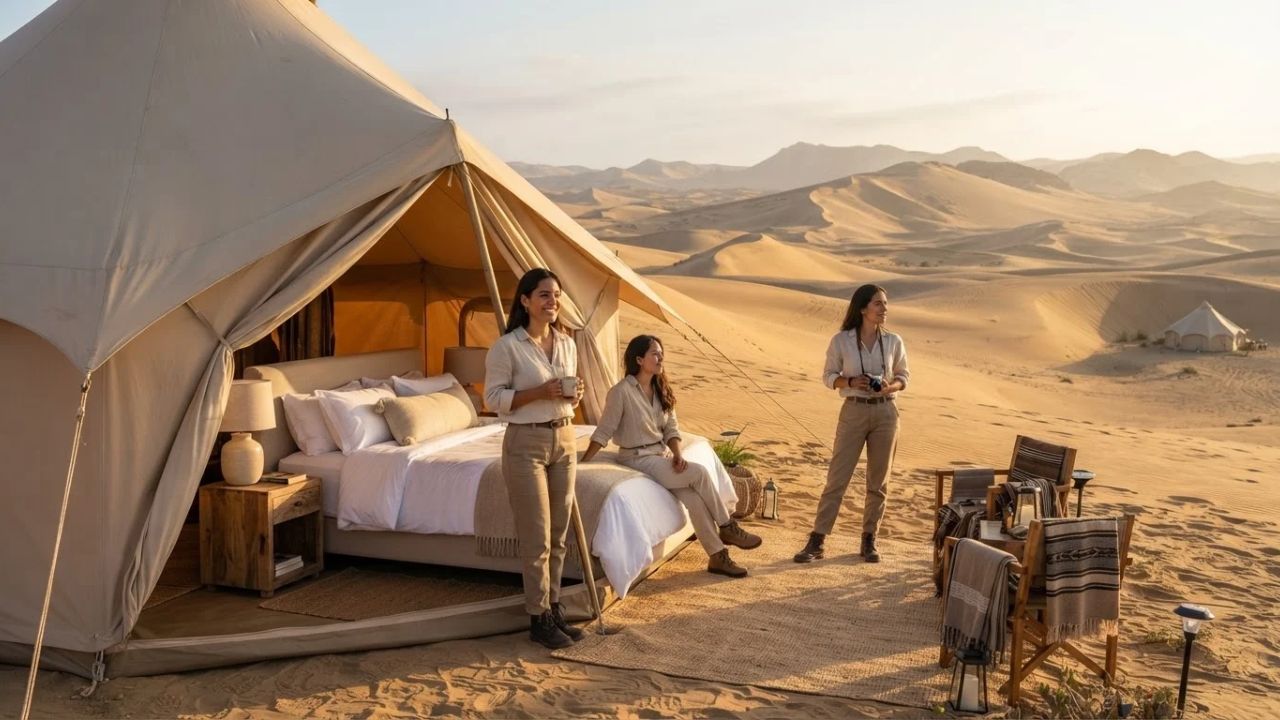
While the vast majority of international visitors to Peru rush immediately from Lima up to the Andean heights of Cusco and Machu Picchu, treating the Pacific coast merely as a fleeting transit stop, an inspiring travel revolution is unfolding across the golden dunes of southern Peru. Drawing on 31 years of desert tourism experience, Paracas-based outfitter Adrenalena—founded by Cecilia Fernández—unveiled a private experiential camp model at the TravelM conference, replacing noisy two-hour dune buggy joyrides with custom walk-in canvas sanctuaries, proper beds, and quiet sunrise-to-sunset immersions.
For years, coastal desert tourism around Paracas and Ica followed a rigid, frantic template: travelers endured loud diesel engines roaring across sand bowls, snapped quick selfies at sunset, and retreated to standard roadside hotels. That formula is giving way to mindful exploration. By engineering bespoke accommodations that honor the physical comfort of discerning travelers without sacrificing outdoor intimacy, Peru’s Pacific sands are emerging as a world-class retreat for travelers seeking genuine stillness, celestial clarity, and deep geological heritage.
The Adrenalena Model: Three Decades of Desert Insight at TravelM
The unveiling of Adrenalena's specialized private camps at TravelM represents a milestone for experiential travel along Peru’s southern corridor. Marking the company’s inaugural participation at the global industry forum, founder Cecilia Fernández detailed how three decades of desert exploration evolved from an intimate family affinity for nature into a sophisticated private tourism model.
Rather than cramming visitors into public campsites or using mass-market festival tents, the company developed purpose-built accommodations designed specifically for the extreme conditions of the Peruvian coastal desert. One of the most thoughtful innovations is the tent entryway: designed with full-height vertical doorways, guests can walk directly into their living quarters without having to crouch or bend down. Inside, sleeping bags and thin foam mats are replaced with proper elevated beds fitted with crisp linens, creating a residential-level comfort standard.
Practical modern amenities are integrated cleanly through off-grid renewable energy. Silent solar-powered systems provide gentle interior illumination and enable guests to recharge mobile phones and cameras, bridging the gap between wilderness detachment and personal convenience.
Equally significant is the operational model. Adrenalena operates exclusively through private circuits restricted to their own clients and trusted travel agency partners, alongside direct reservations booked through digital channels. By sequestering its camps deep within private dune valleys far beyond the auditory reach of commercial buggy parks, the outfitter delivers what affluent and contemplative travelers crave most: absolute privacy and uninterrupted connection with nature from twilight until dawn.
What Makes the Coastal Desert of Paracas Unique
The coastal desert of southern Peru is one of the most extraordinary geographical paradoxes on the planet. Extending along the Pacific rim, this hyper-arid desert sits directly adjacent to the frigid, nutrient-rich Humboldt Current. The cold marine waters suppress cloud condensation and rainfall over the mainland, creating vast tracts of hyper-dry dunes that drop precipitously into crashing Pacific surf.
In the Quechua language, Paracas translates to "sand rain," an evocative reference to the powerful coastal winds that sweep across the desert floor every afternoon, shifting dune crests and clearing the sky of all atmospheric haze. This wind-sculpted environment cradled the ancient Paracas culture (spanning approximately 800 BCE to 100 BCE), renowned among anthropologists for creating some of the world's most intricate pre-Columbian textiles, ceramic vessels, and ritual trepanned skulls. Etched onto a sloping seaside headland overlooking the bay sits El Candelabro, a mysterious 180-meter-tall prehistoric geoglyph whose origins remain an enduring enigma.
Contrasting with the dry sand dunes is the protected marine sanctuary of the Paracas National Reserve, managed under SERNANP. Here, yellow and ochre cliffs collide with rich turquoise bays, creating nesting colonies for Humboldt penguins, South American fur seals, sea lions, and millions of guano birds such as Peruvian boobies and pelicans. Experiencing this junction from the quiet of a private desert camp provides a profound sense of elemental isolation that high-altitude mountain valleys cannot replicate.
Visitor Insider Tips: Navigating Paracas, Coastal Dunes, and Ocean Breezes
Experiencing Peru’s Pacific dunes with the sensitivity of an insider requires adapting to local climatic cycles and culinary customs. Supported by official traveler insights from PromPerú, these practical principles ensure an unforgettable journey.
- Bypass the Huacachina Crowds for Deeper Paracas Dunes: While the desert oasis of Huacachina near Ica is famous on social media, it often suffers from overcrowding, blaring music, and heavy exhaust fumes from unlicensed dune buggies. Base your desert adventures in the protected concessions around Paracas, where private operators navigate designated ecological corridors that safeguard dune formations and ensure peaceful starry nights.
- Master the Daily Rhythm of the Wind: Plan your activities around the midday wind shift. Morning hours between 7:00 AM and 11:00 AM feature calm seas and light air, making it the perfect window for coastal boat excursions to the Ballestas Islands from El Chaco pier. By 2:00 PM, the prevailing paracas winds pick up, creating dramatic shifting sands. Retreat into your windproof camp to read or relax, emerging at 5:00 PM when the wind softens into a tranquil, golden sunset.
- Savor Pisco and Coastal Gastronomy at the Campfire: Pair the evening desert chill with authentic regional cuisine. Savor fresh tiradito—thinly sliced raw sea bass marinated in zesty lime juice, yellow aji chili, and ginger—accompanied by sweet glazed sweet potato (camote) and toasted Andean corn kernels (cancha). Complete your meal with an artisanal Pisco sour crafted from single-varietal Quebranta grapes grown in the sun-drenched vineyards of the nearby Ica Valley.
- Layer for Dramatic Coastal Temperature Swings: Desert sands lose thermal energy rapidly once the sun dips below the Pacific horizon. While daytime temperatures can hover around a sunny 26°C, nocturnal readings regularly plummet to 12°C or lower with brisk ocean breezes. Pack lightweight, sun-protective linen clothing for the day, and carry a warm fleece jacket, thermal windbreaker, and beanie for evening stargazing sessions.
- Travel South via Luxury Long-Distance Coaches: Skip domestic commuter flights and navigate down the Pacific coast via first-class express coaches departing Lima. Modern carriers like Cruz del Sur offer reclining sleeper seats (cama) that complete the scenic 250-kilometer run along the Pan-American Highway in approximately 3.5 to 4 hours, dropping you directly in Paracas.
Cultural and Environmental Context: Sustainable Stewardship in a Fragile Sand Realm
The shift toward private, low-impact glamping camps addresses an urgent conservation challenge facing Peru's coastal reserves. Unregulated off-road vehicle excursions have historically caused irreversible scarring across fossil-rich desert pavements, crushing prehistoric marine deposits and disturbing delicate nesting grounds of desert lizards and coastal shorebirds.
By creating permanent or semi-permanent camps powered entirely by solar arrays, Adrenalena and responsible local outfitters are setting a new standard for sustainable desert tourism. Solar energy eliminates the need for noisy, polluting diesel generators, preserving the pristine acoustic environment and minimizing carbon emissions along the coastal boundary.
Equally vital is the preservation of ancient indigenous heritage. Sustainable operators work in close coordination with regional conservation wardens to steer vehicle tracks away from undiscovered archaeological deposits and protected paleontological sites containing fossilized whale bones and giant penguin skeletons dating back millions of years.
By choosing private, conservation-focused camps that employ local drivers, guides, and culinary staff, travelers help foster an economic model that values the quiet dignity of the desert over commercial exploitation. In doing so, they ensure that the golden sands of Paracas remain an untamed, contemplative wilderness for generations to come.
FAQ: Visiting Peru’s Coastal Desert and Paracas 2026
What makes Adrenalena's private desert camps different from standard tours? Adrenalena utilizes 31 years of experience to provide custom walk-in tents with full-height doors, real elevated beds, solar-powered lighting, and private desert circuits that avoid crowded, noisy public tour routes.
How do travelers get to Paracas from Lima? Paracas is located approximately 250 kilometers south of Lima, accessible in under four hours via first-class long-distance coaches or private car transfers along the paved Pan-American Highway.
What is the best time of year to visit Paracas? December through April offers warm sunny weather, calm ocean conditions, and clear night skies, while the winter months from June to September provide cooler temperatures and exceptional wildlife viewing.
Is it safe to spend the night in the Peruvian desert? Yes, when booking with established, licensed outfitters who operate vetted private circuits, maintain continuous radio and satellite communication, and provide insulated, weather-engineered camp facilities.
Beneath the eternal silence of the southern stars, the dunes of Paracas whisper that the truest luxury is not found in lavish excess, but in the boundless space to breathe.
Related Travel Guides
- Car-Free on the Pacific Shore: How Santa Monica’s Big Blue Bus Revolutionizes Southern California Travel
- Carved from River Ice: Inside Harbin’s Record-Breaking Winter Tourism Phenomenon and China’s Frozen Frontier
- Cosmic Frontier at 4,500 Metres: How Women Stargazers Are Transforming Ladakh’s Hanle Dark Sky Reserve
Disclaimer
This article is for informational and educational purposes only. It does not constitute legal, financial, or professional advice. While we strive to provide accurate and up-to-date information, travel policies, regulations, and conditions change rapidly. Always verify information with official sources before making travel decisions. Nomad Lawyer makes no representations about the accuracy, reliability, completeness, or suitability of the information provided. Readers should consult qualified professionals for advice specific to their circumstances. The views expressed in this article are those of the author and do not necessarily reflect the views of Nomad Lawyer.
Raushan Kumar
Founder & Lead Developer
Full-stack developer with 11+ years of experience and a passionate traveller. Raushan built Nomad Lawyer from the ground up with a vision to create the best travel and law experience on the web.
Learn more about our team →