
Into the Steaming Jungle: Inside Shanay-Timpishka, Peru's Sacred 90°C Boiling River

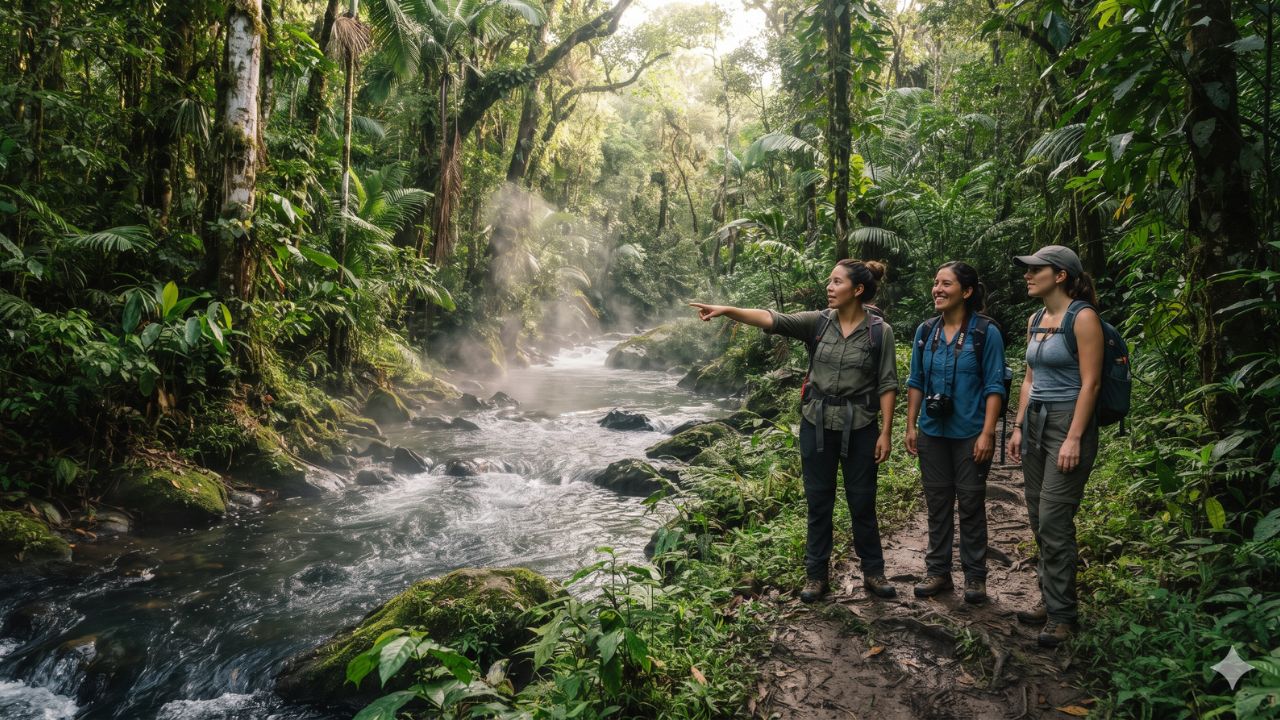
Hundreds of kilometers from the nearest active volcano, a four-mile river surges through the central Peruvian Amazon with waters so intensely heated that sections exceed 90°C—hot enough to brew tea or poach an egg within minutes. Known in local indigenous folklore as Shanay-Timpishka, translating poetically to "boiled with the heat of the sun," this extraordinary geothermal waterway in the Huánuco region defies traditional volcanic geology, sustained instead by deep continental hydrothermal faults that push scalding groundwater through the jungle floor.
Situated in the Honoria district of Puerto Inca province, the Boiling River flows through the 263-hectare Mayantuyacu conservation forest before draining into the broader Pachitea River system. As international interest in off-grid expedition travel intensifies, this delicate meeting point of geothermal marvel, Asháninka spiritual tradition, and Amazonian biodiversity presents an urgent test case for sustainable conservation tourism in Peru.
The Geothermal Enigma: How Water Boils Without a Volcano
Most thermal springs across the Andes owe their heat to magmatic chambers beneath active volcanic peaks. Shanay-Timpishka is fundamentally different. Scientists and geologists have confirmed that the river sits over 700 kilometers away from the nearest active volcanic center.
The heating mechanism is tectonic. Rainwater falling high in the Andean cordillera travels deep into the earth through porous sedimentary fractures, sinking thousands of meters beneath the surface where the earth's natural geothermal gradient heats it to extreme temperatures. Under intense underground hydraulic pressure, this boiling fluid shoots upward through massive strike-slip fault fissures, bursting into the riverbed at torrential flow rates.
The visual spectacle is hypnotic. Thick white clouds of steam drift between strangler figs, giant ferns, and towering cecropia trees, creating an ethereal microclimate where the air feels like an intense natural sauna. Yet the physical reality demands extreme caution: small frogs and birds that inadvertently tumble into the central current suffer third-degree burns within seconds, floating lifeless downstream.
What Makes Mayantuyacu and Honoria Different
For travelers accustomed to the standard Inca Trail or boat lodges around Puerto Maldonado, the central Peruvian Amazon around Honoria offers a far more raw, culturally grounded wilderness experience:
- The Sacred Medicine Sanctuaries of Mayantuyacu: Encompassing approximately 263 hectares of protected rainforest, Mayantuyacu is not an artificial eco-resort. It is a working sanctuary for traditional Amazonian plant medicine (vegetalismo), maintained by indigenous Asháninka healers who revere the thermal river as a living deity named Yacumama, the serpent mother of waters.
- Canopy Biodiversity along the Pachitea: While walking forest trails flanking the thermal waters, travelers encounter scarlet macaws, toucans, Amazonian parrots, and several primate species, including saddleback tamarins and dusky titi monkeys foraging for wild jungle fruits.
- Thermal Gradient Pools: While the upper reaches of the river are lethal, specific downstream confluences allow cooler freshwater tributaries to mix with thermal currents. Here, under the careful guidance of local Asháninka elders, visitors can soak in safe, naturally heated mineral pools rich in therapeutic minerals.
Expedition Breakdown: Journey Legs, Coordinates, and Environmental Metrics
Reaching this remote geothermal wonder requires an authentic multi-stage expedition starting from the Amazonian city of Pucallpa:
| Journey Leg & Corridor | Transport Vehicle | Approximate Transit Duration | Terrain Conditions & Environmental Metrics |
|---|---|---|---|
| Leg 1: Campo Verde to Puerto Honoria | 4x4 Road Vehicle | 1 hour 40 minutes | Unpaved dirt tracks through cattle ranches and secondary forest |
| Leg 2: Puerto Honoria to River Landing | Motorized Riverboat (peki-peki) | 25 minutes | Navigating the muddy waters of the Pachitea River |
| Leg 3: River Landing to Shanay-Timpishka | Guided Jungle Hike on Foot | 45 minutes | Humid dirt trails crossing muddy ravines into Mayantuyacu |
| Water Temperature Benchmark | Geothermal Springheads | Continuous Flow | Exceeds 90°C; severe scalding hazard across main current |
| Protected Forest Footprint | Mayantuyacu Conservation Area | Honoria District | 263 hectares of preserved primary and secondary forest |
| Regional Transit Hub | Pucallpa (Ucayali Region) | Daily Flights from Lima | Capital city base offering airport links and river transport |
Visitor Insider Tips: Navigating the River Safely
Visiting a boiling river in the remote Amazon requires careful preparation and deep respect for physical hazards:
- Never Touch the Main Current Unassisted: Do not dip hands or feet into steaming water without checking with your local guide. Stream banks are frequently undercut by erosion, and slipping on wet clay into 90°C water causes catastrophic burns.
- Equip Yourself with Heavy-Tread Mud Boots: The 45-minute trek from the river landing to Mayantuyacu features slippery red clay and hidden tree roots. Avoid running shoes; wear knee-high rubber jungle boots (botas de jebe), which provide ankle grip and protection against stinging ants and trail vipers.
- Base Yourself in Pucallpa or Campo Verde: Pucallpa provides daily commercial jet connections from Lima aboard domestic airlines. Hire an experienced local expedition operator in the city who arranges private 4x4 transit to Puerto Honoria and reliable riverboats.
- Approach Traditional Plant Ceremonies with Discretion: While traditional plant medicine forms an integral part of Asháninka heritage, avoid treating sacred plants or ceremonies as tourist novelty. If participating in healing traditions, ensure you work directly with recognized community elders and verify all physical health precautions beforehand.
- Carry a Compact Thermometer and Water Purification: Bring along an infrared digital thermometer to safely read water temperatures from the bank, and carry a minimum of two liters of electrolyte-enhanced drinking water to counteract rapid fluid loss in the steamy microclimate.
Cultural and Environmental Context: Indigenous Guardianship and Conservation
The delicate ecosystem of Shanay-Timpishka faces acute pressures from the outside world. Puerto Inca province has historically experienced aggressive deforestation driven by illegal logging, gold panning, and cattle ranching. The 263 hectares of Mayantuyacu represent a vital green buffer protecting old-growth hardwood trees and medicinal flora from total clearing.
According to guidelines championed by PromPerú and environmental authorities like SERNANP, responsible tourism provides an essential financial counterweight to habitat destruction. When travelers pay local entrance fees, hire indigenous boatmen, and contract native guides, they inject direct capital into forest stewardship.
Preserving this ancient river is not merely a scientific priority; it is a cultural imperative. To the Asháninka, the river's heat is a sacred force of life and spiritual purification. Visiting with humble curiosity, honoring trail rules, and refusing to leave synthetic waste ensures that this natural marvel remains pristine for the indigenous guardians who have sung prayers over its steaming currents for generations.
FAQ: Visiting Peru's Boiling River 2026
Where is Shanay-Timpishka located?
Shanay-Timpishka is situated near Mayantuyacu in the Honoria district of Puerto Inca province, within Peru's central Huánuco region along the Pachitea River basin.
Why does the river boil without a nearby volcano?
The river is heated non-volcanically by deep hydrothermal fault systems that push groundwater thousands of meters down into the earth's crust before forcing boiling water back to the surface.
Can visitors swim in the Boiling River?
No. The main river current exceeds 90°C and causes severe, life-threatening burns. Swimming is permitted only in designated downstream pools where cool tributaries mix safely with thermal flows.
How do I travel to the Boiling River from Lima?
Fly from Lima to Pucallpa (approx. one hour), drive 1 hour and 40 minutes via Campo Verde to Puerto Honoria, take a 25-minute boat upriver, and complete a 45-minute jungle hike.
Where boiling currents rise like breath beneath ancient Amazonian canopies, nature reveals a sacred power that demands both our wonder and our deepest reverence.
Related Travel Guides
- Latin America's 2036 Flight Surge: How Brazil, Mexico, and Central America Unlock Travel
- Bogotá's Festive Rhythm: Inside the Free 'Al Parque' Festivals and Christmas Shows 2026
- Reviving Quebec City's Forgotten Spire: Transformation of Église Saint-Jean-Baptiste 2026
- Amex Travel Integrates One Million Airbnb Stays: Rewards and Luxe Rules 2026
Disclaimer
This article is for informational and educational purposes only. It does not constitute legal, financial, or professional advice. While we strive to provide accurate and up-to-date information, travel policies, regulations, and conditions change rapidly. Always verify information with official sources before making travel decisions. Nomad Lawyer makes no representations about the accuracy, reliability, completeness, or suitability of the information provided. Readers should consult qualified professionals for advice specific to their circumstances. The views expressed in this article are those of the author and do not necessarily reflect the views of Nomad Lawyer.
Preeti Gunjan
Contributor & Community Manager
A passionate traveller and community builder. Preeti helps grow the Nomad Lawyer community, fostering engagement and bringing the reader experience to life.
Learn more about our team →