
Exploring Beyond Machu Picchu: How Community Homestays and Indigenous Heritage Reshape Peru Tourism

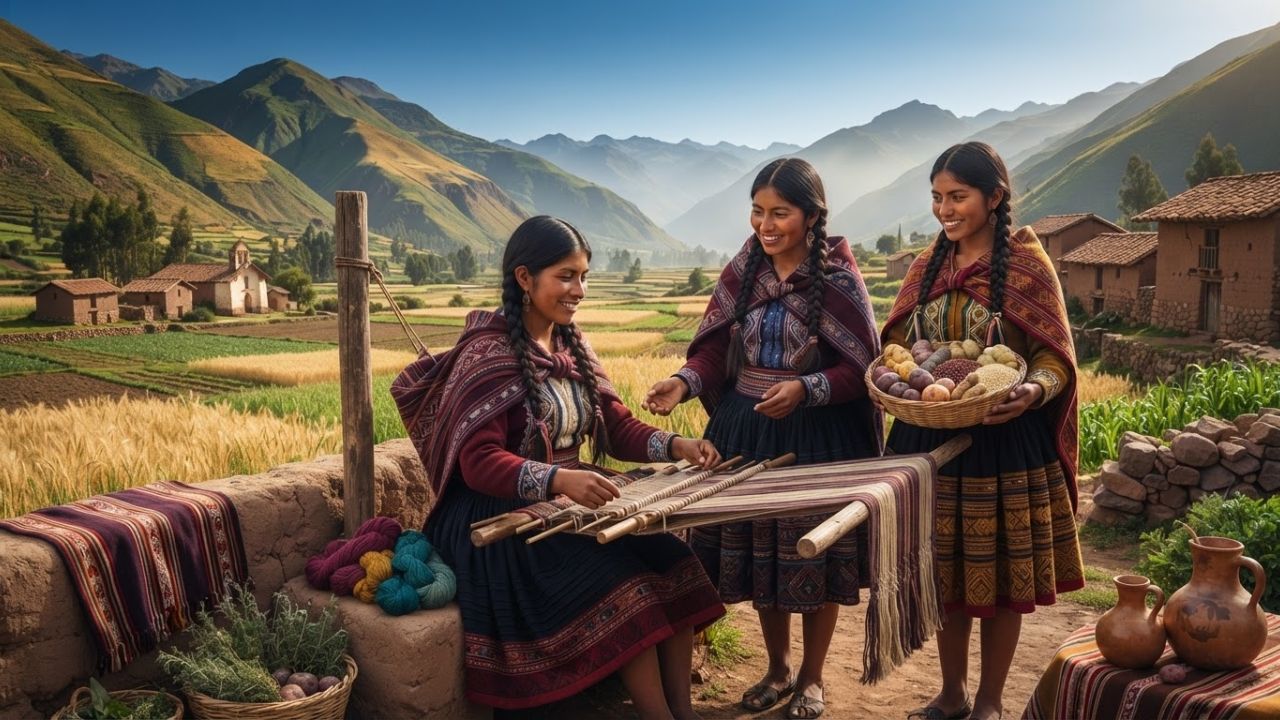
Image generated by AI
Travelers visiting Peru are increasingly venturing beyond mainstream tourist checkpoints like Machu Picchu and Cusco, choosing community-based homestays, native crop biodiversity tours, and backstrap textile weaving workshops in high-altitude Andean villages.
CUSCO, Peru — A major shift in international travel behavior is transforming tourism across South America as conscious travelers prioritize authentic cultural immersion over standard sightseeing. While iconic landmarks such as Machu Picchu, the historic center of Cusco, and the Sacred Valley remain core destinations, a growing segment of global visitors is seeking direct engagement with indigenous Quechua communities who safeguard ancient Andean traditions.
From farming native potato varieties on ancient terraced fields to mastering backstrap textile weaving using natural cochineal dyes, rural village homestays offer travelers a deeper understanding of Peru's living heritage while ensuring tourism revenues directly support local families and educational programs.
Expanding South American Journeys Beyond the Machu Picchu Checklist
For decades, international travel to Peru concentrated on rigid itineraries encompassing Cusco, the Inca Trail, and the citadel of Machu Picchu. However, mass tourism pressures have prompted regional authorities and community leaders to promote decentralized travel models.
By opening remote mountain villages to small-group experiential tourism, local populations preserve generational traditions while creating economic alternatives to urban migration.
These immersive journeys replace superficial photo opportunities with meaningful cross-cultural exchanges, allowing visitors to participate in daily agricultural tasks, traditional culinary preparations, and communal celebrations.
Peru Cultural and Community Ecotourism Dimension Matrix
The reference table below summarizes the key cultural pillars, indigenous practices, regional locations, and community impacts defining Peru’s experiential travel sector:
| Cultural & Ecotourism Pillar | Indigenous Practice / Craft | Primary Regional Location | Direct Community & Environmental Impact |
|---|---|---|---|
| Agricultural Biodiversity | Terraced farming of native potatoes, quinoa & kiwicha | Sacred Valley & Urubamba High-Altitude Zones | Protects ancestral seeds & food security against industrial farming |
| Textile Arts & Natural Dyes | Backstrap weaving using plant, mineral & cochineal dyes | Remote settlements surrounding Cusco & Chinchero | Sustains female artisan cooperatives & preserves tribal history |
| Community-Based Homestays | Lodging directly within family village homes | Rural communities near Ollantaytambo & Lake Titicaca | Direct household income funding village schools & infrastructure |
| Pre-Columbian Masonry | Traditional stone-cutting & seismic mortarless engineering | Sacred Valley historical ruins & local stonemason guilds | Local heritage conservation preventing over-tourism degradation |
| Ancestral Music & Folklore | Performances using antara, charango & pututu conch horns | Andean highland communities & cultural workshops | Preserves oral histories, tribal legends & native folklore |
| Indigenous Ecology | High-altitude glacier & watershed environmental monitoring | Vilcanota mountain range & high-alpine passes | Integrates native ecological wisdom with modern climate tracking |
Safeguarding Native Potato and Superfood Biodiversity in the Sacred Valley
In high-altitude farming settlements across the Sacred Valley, indigenous agricultural stewards dedicate themselves to preserving thousands of native potato varieties alongside ancient Andean superfoods like quinoa and kiwicha (Amaranthus caudatus).
Utilizing stone-terraced farming techniques (andenes) engineered during pre-Columbian times, local farmers cultivate crops without chemical fertilizers, relying on traditional crop rotation and mountain irrigation channels.
Travelers participating in agricultural tours gain firsthand insight into how mountain communities safeguard food sovereignty, learning about the arduous labor and ecological wisdom required to harvest crops at elevations exceeding 3,500 meters above sea level.
Master Weavers Preserve Backstrap Textile Arts and Cochineal Dyes Near Cusco
In villages such as Chinchero and rural settlements around Cusco, Quechua women continue the intricate art of backstrap weaving—a craft passed down from mothers to daughters across millennia.
Master weavers harvest natural dyes from local plants, minerals, and cochineal insects (found on nopal cacti), creating vibrant reds, purples, and blues without synthetic chemicals. Each geometric pattern woven into alpaca and llama wool garments serves as a visual language encoding tribal heritage, local myths, and family lineages.
By purchasing textiles directly from artisan cooperatives rather than commercial gift shops, travelers support fair-trade livelihoods and ensure the survival of indigenous textile arts.
Rural Homestays Provide Direct Economic Support for High-Altitude Villages
Community-based homestay networks near Ollantaytambo, Amantaní Island, and the Sacred Valley offer an alternative to commercial hotels. Visitors lodge with local families, sharing traditional meals prepared in earthen ovens (pachamanca) and experiencing daily rural routines.
This decentralized hospitality model ensures that 100 per cent of tourism expenditures remain within the host community, funding local healthcare, clean water projects, and bilingual Quechua-Spanish schooling for children.
For travelers, homestays foster genuine cross-cultural friendships, offering a quiet, reflective environment far removed from commercial tourist centers.
Ancestral Instruments Antara, Charango, and Pututu Preserve Oral Histories
Traditional music remains a vital vessel for oral history across the Peruvian Andes. Community gatherings showcase authentic acoustic performances using ancestral instruments:
- Antara (Panpipes): Crafted from bamboo or natural reeds, emitting haunting melodies that mirror high-altitude mountain winds.
- Charango: A small ten-stringed Andean lute traditionally crafted from wood or armadillo shell, providing rhythmic accompaniment for folkloric dances.
- Pututu (Conch Horn): Ancient ceremonial wind instruments blown to signal community gatherings and spiritual rituals.
Elders use song and dance to transmit historical narratives, agricultural cycles, and ancestral legends to younger generations, ensuring native folklore remains vibrant in a rapidly modernizing society.
Practical Implications for Conscious Travelers and Tour Operators
For international travelers planning a trip to South America, choosing community-centered Peru itineraries creates a more rewarding and culturally respectful vacation.
From a travel industry perspective, promoting rural homestays and indigenous workshops reduces overcrowding at fragile World Heritage sites like Machu Picchu while distributing tourism wealth to underrepresented rural populations.
Conscious travel planners emphasize that visitors should approach indigenous communities with humility, seeking active cultural exchange rather than passive photography.
Responsible Traveler Guide: Engaging Ethically With Andean Communities
Travelers exploring Peru’s hidden cultural dimensions should follow these practical guidelines:
- Book Authorized Community Homestays: Select community-managed tour operators and homestays that guarantee direct financial return to host families.
- Buy Directly From Weaving Cooperatives: Purchase handwoven textiles directly from artisan associations in Chinchero or Sacred Valley villages to support fair wages.
- Respect Sacred Spiritual Rituals: Ensure participation in traditional cleansing or plant medicine ceremonies is conducted by respected local spiritual elders (Paqos).
- Pack Environmentally Conscious Supplies: Bring reusable water bottles, biodegradable toiletries, and carry out non-recyclable waste when visiting remote mountain villages.
Related Travel Guides
Disclaimer
This article is for informational and educational purposes only. It does not constitute legal, financial, or professional advice. While we strive to provide accurate and up-to-date information, travel policies, regulations, and conditions change rapidly. Always verify information with official sources before making travel decisions. Nomad Lawyer makes no representations about the accuracy, reliability, completeness, or suitability of the information provided. Readers should consult qualified professionals for advice specific to their circumstances. The views expressed in this article are those of the author and do not necessarily reflect the views of Nomad Lawyer.
Raushan Kumar
Founder & Lead Developer
Full-stack developer with 11+ years of experience and a passionate traveller. Raushan built Nomad Lawyer from the ground up with a vision to create the best travel and law experience on the web.
Learn more about our team →