
Global Paleontological Dig-Tourism Surges Across US, Mongolia, Argentina, and Canada
Paleontological dig-tourism is expanding, as citizen scientists join field excavations across the Gobi Desert, Patagonia, the Morrison Formation, and Alberta.

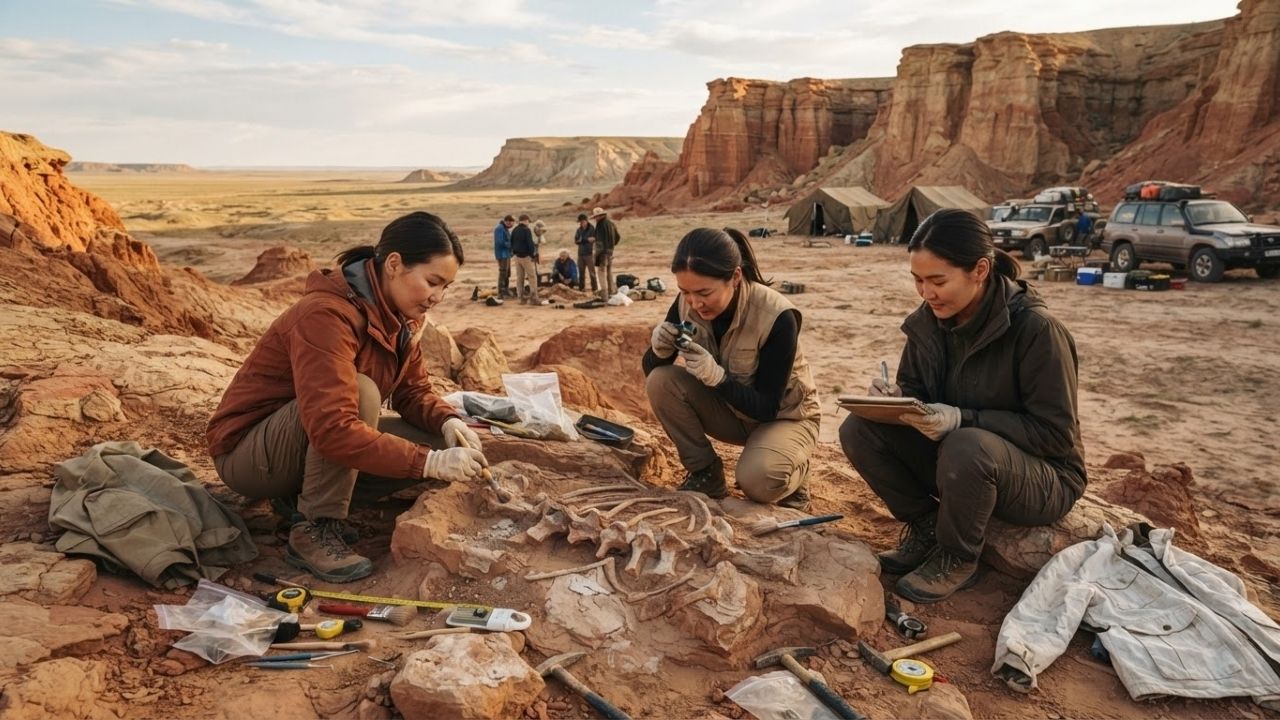
Image generated by AI
Paleontological dig-tourism is expanding globally, allowing everyday travelers to participate in active dinosaur fossil excavations alongside academic researchers. By combining citizen science with field expeditions, destination hubs across the United States, Mongolia, Argentina, and Canada are transforming adventure travel.
Citizen Science Funds and Supplies Labor for Dinosaur Discoveries
[WASHINGTON, D.C.] — Mainstream adventure travel is undergoing a shift as tourists move beyond passive museum viewing to join active paleontological field digs. This expanding citizen science sector allows public volunteers to work alongside academic researchers, helping uncover prehistoric specimens across remote geological badlands.
Public participation provides critical support to university research teams:
- Field Labor Support: Volunteers assist with sediment sieving, mapping stratigraphic layers, and carefully removing rock matrices from fragile bones under expert supervision.
- Academic Research Funding: Program fees paid by dig-tourists help fund university expeditions and field logistics that might otherwise face budget constraints.
- Erosion Protection: Increased field staffing enables research teams to recover exposed fossils before natural weather erosion destroys them completely.
By connecting public curiosity with scientific field research, paleontological tourism generates sustainable funding while protecting global prehistoric heritage.
Gobi Desert Escarpments and Alberta's Cretaceous Bonebeds
International fossil hunters choose between diverse geological environments across North America and Asia:
Mongolia: Gobi Desert and Nemegt Basin
In Mongolia, expedition travelers venture into the wind-swept Gobi Desert to explore Cretaceous-era formations at the Flaming Cliffs and Nemegt Basin. Participants prospect desert escarpments for fossilized dinosaur eggs and skeletons of Velociraptor and Protoceratops, operating from remote tent camps under guide supervision.
Canada: Alberta Badlands and Dinosaur Provincial Park
In western Canada, Alberta’s Dinosaur Provincial Park offers structured public bonebed programs. Participants engage in sediment screening and fossil mapping within Cretaceous badland ecosystems renowned for rich Hadrosaur and Ceratopsian bonebed deposits.
The US Morrison Formation and Patagonia's Giant Titanosaurs
South America and the American West offer major excavation opportunities for travelers interested in massive sauropods and apex predators:
- Argentina (Patagonia Basins): Expeditions across Patagonian sedimentary basins focus on unearthing massive Cretaceous titanosaurs, including Patagotitan. Participants assist with heavy plaster-jacketing techniques required to extract multi-ton sauropod fossils safely.
- United States (Morrison Formation): Spanning Utah, Wyoming, and Montana, the Jurassic Morrison Formation hosts week-long dig courses. Travelers excavate Allosaurus, Stegosaurus, and Diplodocus specimens, combining physical field labor with evening lectures on vertebrate paleontology.
Government land management agencies, including the U.S. Bureau of Land Management (BLM), oversee research permits and preservation guidelines to ensure digs comply with federal conservation laws.
The table below outlines key destination countries, primary excavation hotspots, geological eras, target dinosaur genera, and typical field experiences:
| Destination Country | Primary Region / Hotspot | Geological Era | Key Dinosaur Genera | Typical Field Experience |
|---|---|---|---|---|
| Mongolia | Gobi Desert / Flaming Cliffs | Cretaceous | Velociraptor, Protoceratops | Remote tent camping, desert escarpment prospecting |
| Canada | Alberta Badlands / Dinosaur Park | Cretaceous | Hadrosaurs, Ceratopsians | Public bonebed digs, sediment sieving, park programs |
| Argentina | Patagonia Basins | Cretaceous | Patagotitan (Titanosaurs) | Large-scale plaster-jacket extraction in expansive basins |
| United States | Morrison Formation (UT, WY, MT) | Jurassic | Allosaurus, Stegosaurus, Diplodocus | Week-long dig courses, micro-fossil screening, lectures |
Why This Matters for Passengers and Citizen Science Explorers
For travelers interested in natural history, joining a paleontological dig tour offers an authentic scientific adventure. Instead of looking at mounted skeletons in a museum, participants spend their vacations uncovering 100-million-year-old dinosaur bones directly from the earth. By enrolling in accredited dig programs, travelers contribute directly to scientific discovery while supporting rural economies in remote badland communities.
Frequently Asked Questions
What is paleontological dig-tourism?
Paleontological dig-tourism is a specialized form of adventure travel where non-specialist travelers pay to join active scientific fossil excavations under the guidance of professional paleontologists.
Do participants need scientific experience to join a dinosaur dig?
No. Most organized public dig programs provide on-site training in sediment sieving, tool handling, mapping, and fossil extraction for beginners.
Which countries offer official public dinosaur excavation tours?
Major destinations offering public dig programs include the United States (Morrison Formation), Canada (Dinosaur Provincial Park in Alberta), Mongolia (Gobi Desert), and Argentina (Patagonia).
Related Travel Guides
American West Geological Badlands and Dig Tour Guide
Mongolia Gobi Desert Expedition and Camping Guide
10 Best Citizen Science Travel Expeditions in the World, According to Reddit
Disclaimer
This article is for informational and educational purposes only. It does not constitute legal, financial, or professional advice. While we strive to provide accurate and up-to-date information, travel policies, regulations, and conditions change rapidly. Always verify information with official sources before making travel decisions. Nomad Lawyer makes no representations about the accuracy, reliability, completeness, or suitability of the information provided. Readers should consult qualified professionals for advice specific to their circumstances. The views expressed in this article are those of the author and do not necessarily reflect the views of Nomad Lawyer.
Raushan Kumar
Founder & Lead Developer
Full-stack developer with 11+ years of experience and a passionate traveller. Raushan built Nomad Lawyer from the ground up with a vision to create the best travel and law experience on the web.
Learn more about our team →