
Ouray Colorado Switzerland of America Quietly Winning Gen Z Travelers Over Aspen in 2026 With Affordable Geothermal Pools and Free Ice Climbing
Ouray, Colorado, dubbed the Switzerland of America, is drawing Gen Z travelers away from Aspen with affordable hot springs, free ice climbing, and Victorian charm.

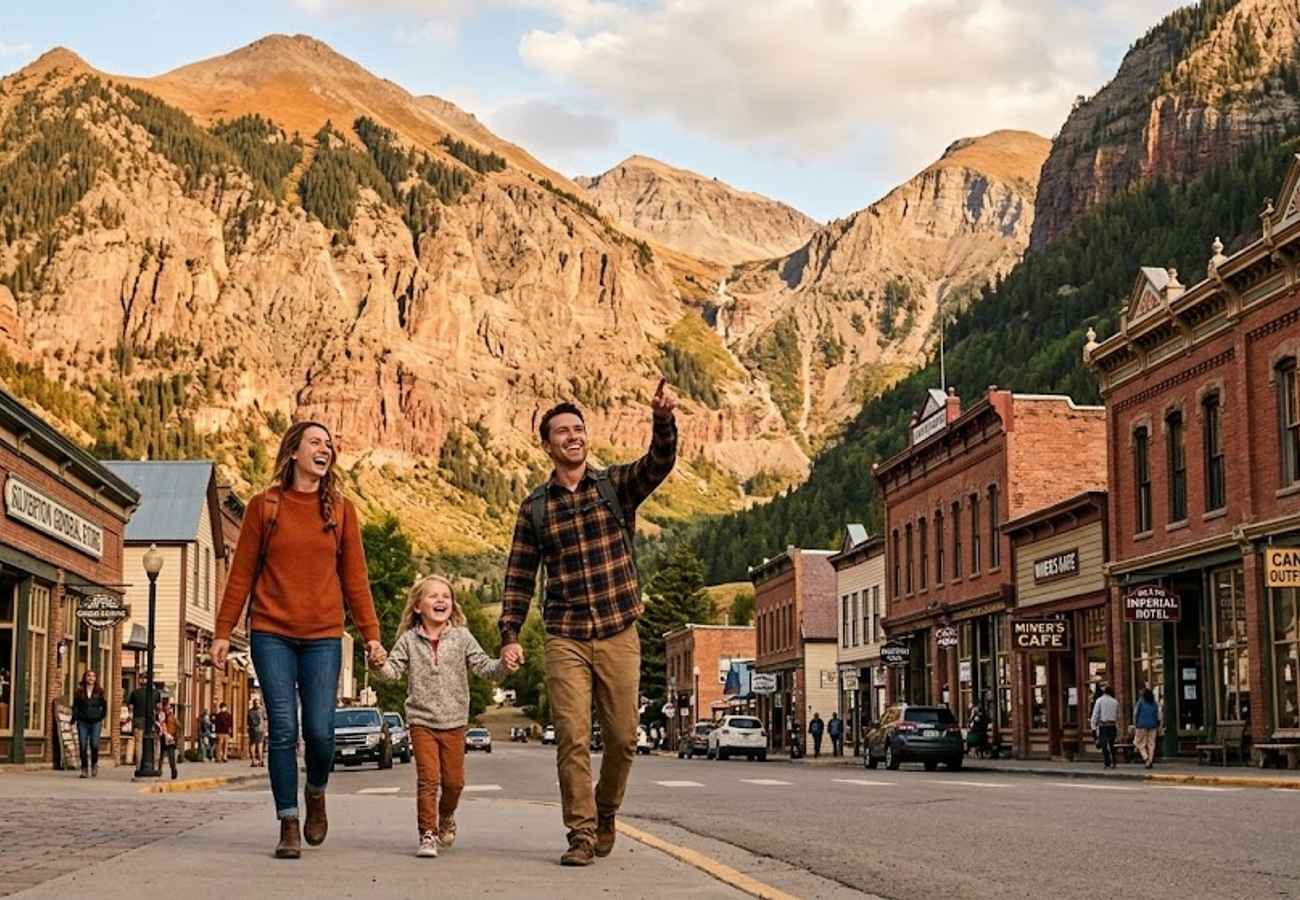
Image generated by AI
[Ouray, Colorado — August 1, 2026] A small mining town tucked inside a box canyon in the San Juan Mountains is pulling younger travelers away from Aspen's valet lines and five-star price tags — and it is doing so with a $18 geothermal pool pass and a free world-class ice climbing park.
Ouray, Colorado, widely known as the "Switzerland of America," is emerging as the breakout destination for Gen Z travelers who are abandoning luxury ski resorts in favor of walkable, authentic mountain communities. The shift is part of a broader movement called "townsizing," where younger visitors seek out small-town environments that offer a slower pace, historic charm, and a sense of discovery that high-end corridors like Aspen and Telluride cannot replicate.
Ouray's Box Canyon Geography Creates a Natural Alpine Amphitheater
Situated in southwestern Colorado at the base of the Uncompahgre National Forest, Ouray occupies a geographic setting that is radically different from most mountain towns in the state. Rather than spreading across a wide valley, the community is compressed into a tight box canyon, enclosed on three sides by steep, rust-colored cliffs that rise sharply overhead. The verticality is immediate and inescapable — every direction offers a wall of rock and evergreen trees climbing toward the sky.
This dramatic topography is what earned the town its Swiss nickname. The landscape feels closer to the heart of the Swiss Alps than the American West, with jagged horizons framing Victorian storefronts along Main Street. While Aspen has become associated with private jets and celebrity culture, Ouray retains its identity as a rugged former mining settlement that happens to sit in one of the most striking natural settings in the country.
The town's lack of pretension is central to its appeal. There are no long waits for trendy brunch spots, no expectation to dress up for evening activities. The local culture centers on gear shops, historic saloons, and communal gathering spaces where hikers and climbers exchange stories from the day. This gritty, grounded atmosphere is precisely what resonates with a generation of travelers who prioritize authenticity over polished resort experiences.
Townsizing Trend Drives Gen Z Toward Small-Town Mountain Destinations
The rise of Ouray as a Gen Z destination is not coincidental. According to reporting by Newsweek, younger travelers are increasingly gravitating toward laid-back, small-town environments rather than bustling urban centers or high-end resort corridors. This shift, known as "townsizing," is driven by a desire to escape digital fatigue, over-tourism, and the performative culture that has come to define many luxury destinations.
Data from Priceline reinforces this pattern. The booking platform found that Gen Z travelers are 89% more likely than the average traveler to seek out vacations that deliver what the company describes as a "Nancy Meyers lifestyle vibe" — an aesthetic defined by cozy interiors, charming walkable streets, and a sense of timeless comfort. Ouray's historic district, with its late 19th-century Victorian architecture and compact commercial core, delivers exactly that visual and atmospheric experience.
A separate investigation by the New York Post found that 67% of Gen Z respondents view vacations as an opportunity to live out small-town fantasies, explicitly moving away from the car-dependent sprawl that characterizes larger cities and resort areas. In Ouray, visitors can stay in a Victorian-era hotel, walk to a local coffee shop, and browse independent bookstores all within a few blocks. The entire commercial district is navigable on foot, creating a stress-free environment where the primary activity is absorbing the surroundings rather than navigating traffic or competing for parking.
Victorian Main Street Blends Mining History With Walkable Small-Town Aesthetic
The visual character of Ouray is one of the strongest factors behind its growing popularity. The town holds a remarkable collection of Victorian-era buildings, many dating back to the late 19th-century mining boom that defined the region's early economy. Brick facades, ornate cornices, and historic storefronts line Main Street, all framed by the massive peaks that loom directly overhead.
Walking through the commercial core feels less like visiting a modern tourist town and more like stepping onto a period film set. This specific aesthetic — where rugged mountain geology meets preserved historic architecture — is exactly what the townsizing movement celebrates. It is not a manufactured theme or a developer's recreation of a small town. It is a genuine community that has maintained its architectural and cultural heritage while opening its doors to a new generation of visitors.
The compactness of the town enhances this experience. Every essential — lodging, dining, gear rentals, trailheads — sits within a short walk. This walkability is a hallmark of the small-town fantasy that surveys show younger travelers are actively pursuing. The ease of movement creates an environment where visitors engage more directly with local history and the natural landscape, rather than spending their trip navigating logistical friction.
Ouray Hot Springs Offers Public Geothermal Access for $18
One of the town's most significant attractions is its municipal hot springs facility. Unlike luxury resorts that restrict geothermal pools to paying hotel guests, the Ouray Hot Springs Pool operates as a public amenity open to everyone. Adult admission costs $18 and grants access to five distinct geothermal pools with temperatures ranging from a cool 75°F to a therapeutic 106°F.
The facility is geothermally heated and offers unobstructed 360-degree views of the surrounding mountain peaks. Because it functions as a municipal pool rather than a private spa, the atmosphere remains communal and inclusive. Locals and tourists share the same water, and the facility serves as a social hub where people gather after a day of hiking or climbing in the surrounding terrain.
This model stands in stark contrast to the private, gated wellness experiences found in Aspen and other high-end Colorado destinations. The public nature of the hot springs reflects the town's broader philosophy: world-class natural amenities should remain accessible to everyone, regardless of budget or accommodation status.
| Attraction | Cost | Key Feature |
|---|---|---|
| Ouray Hot Springs | $18 | 5 Geothermal Pools (up to 106°F) |
| Ouray Ice Park | Free | 200+ Ice Climbing Routes |
| Bear Creek Trail | Free | 1,900-foot Elevation Gain |
| Victorian Main St | Free | Historic Architecture & Shopping |
Ouray Ice Park Draws Global Climbers With 200+ Free Routes
During the winter months, Ouray transforms into an international destination for ice climbing. The Ouray Ice Park is a world-renowned facility that operates as a free public park — a rarity in the adventure sports world. According to Colorado Life Magazine, the park uses a gravity-fed plumbing system to generate more than 200 ice and mixed climbing routes along the walls of the Uncompahgre Gorge.
The fact that a facility of this caliber charges no admission fee is a direct reflection of the town's commitment to outdoor accessibility. Climbers travel from across the globe to tackle routes in the gorge, and the park's free-to-use model ensures that the experience is not limited to those who can afford premium adventure tourism pricing.
Beyond the ice park, the surrounding area offers extensive trail networks. The Bear Creek Trail, one of the most popular local hikes, delivers a 1,900-foot elevation gain at no cost. Combined with the free access to Victorian Main Street's historic architecture and shopping, Ouray presents a value proposition that is increasingly rare in Colorado's mountain corridor — high-quality experiences without the premium price tag.
Why This Matters for Travelers Planning a Colorado Mountain Trip
For the traveler, Ouray's rise signals a meaningful shift in what a mountain vacation can look like in 2026. The standard playbook — fly into a major resort town, pay premium rates for lodging and activities, and navigate crowded commercial corridors — is being challenged by a model that prioritizes accessibility, walkability, and unfiltered natural experience.
From a logistical standpoint, Ouray creates a scenario where a visitor can experience geothermal soaking, world-class ice climbing, and historic architecture without exceeding a modest budget. The $18 hot springs admission, free ice park access, and free trail network mean that the core experiences that define the destination are available to a wide range of travelers, not just those with luxury-level spending power.
This accessibility also has implications for how travelers plan their itineraries. Ouray's compact layout eliminates the need for a car within the town itself, reducing both cost and logistical complexity. Visitors can base themselves in a Victorian-era hotel and reach hiking trailheads, gear shops, restaurants, and the hot springs entirely on foot. For a generation that surveys show is actively seeking walkable, small-town experiences, this setup is not just convenient — it is the destination.
The broader trend also suggests that travelers who have grown frustrated with over-tourism at marquee destinations like Aspen, Telluride, or Vail may find that towns like Ouray offer a more satisfying alternative. The trade-off is straightforward: visitors give up luxury infrastructure and celebrity-spotting culture in exchange for genuine community, dramatic scenery, and experiences that do not require a premium budget to access.
Ouray is proving that the next generation of mountain travelers would rather soak in a $18 public hot spring beneath a box canyon wall than wait in a valet line — and the data shows they are already voting with their bookings.
Related Travel Guides
Disclaimer
This article is for informational and educational purposes only. It does not constitute legal, financial, or professional advice. While we strive to provide accurate and up-to-date information, travel policies, regulations, and conditions change rapidly. Always verify information with official sources before making travel decisions. Nomad Lawyer makes no representations about the accuracy, reliability, completeness, or suitability of the information provided. Readers should consult qualified professionals for advice specific to their circumstances. The views expressed in this article are those of the author and do not necessarily reflect the views of Nomad Lawyer.
Preeti Gunjan
Contributor & Community Manager
A passionate traveller and community builder. Preeti helps grow the Nomad Lawyer community, fostering engagement and bringing the reader experience to life.
Learn more about our team →