
Oregon Tourism Bleeds as Canadian Arrivals Collapse 21% Amid US-Canada Political Friction
Oregon's $14 billion tourism economy is under severe pressure as US-Canada political tensions drive a dramatic 21% decline in Canadian visitors, hitting Portland and coastal towns hardest.

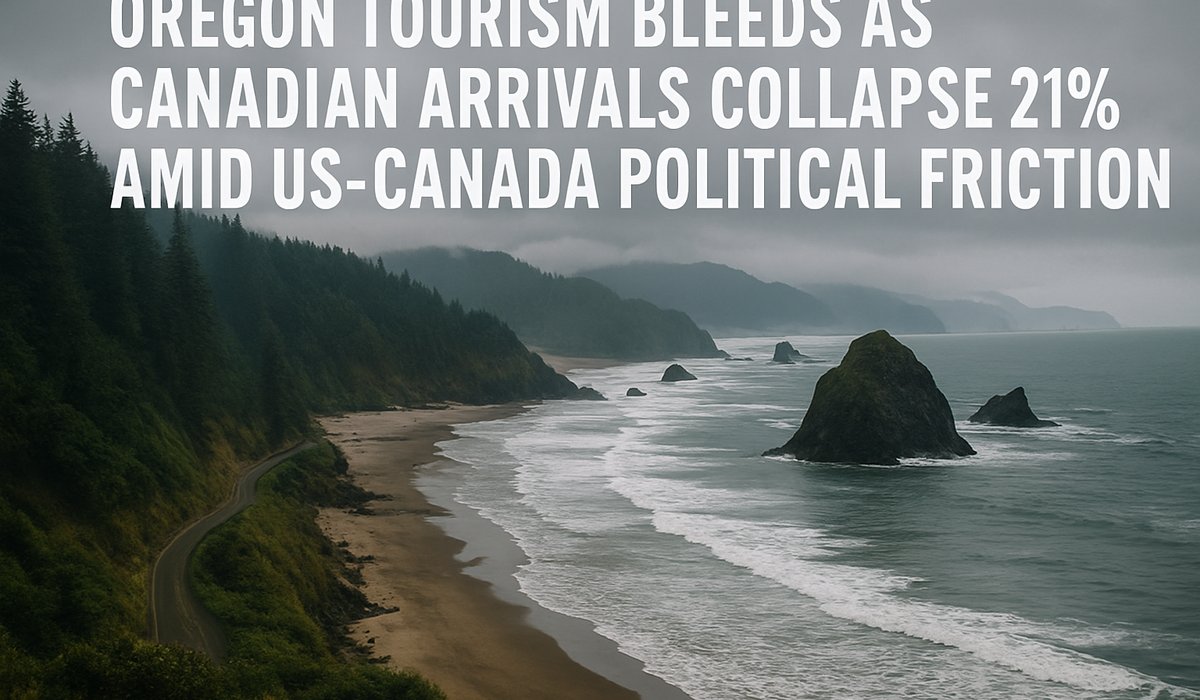
Image generated by AI
The Geopolitical Cost of Travel Sentiment
In an extraordinarily stark demonstration of how political friction translates directly into economic damage, Oregon's $14 billion tourism sector is absorbing a punishing decline in Canadian visitor arrivals, with Portland International Airport recording a verified 21% drop in international passenger volume as a direct consequence of US-Canada trade and political tensions. The data is unambiguous and alarming: Canadians — historically Oregon's largest international visitor group, representing a critical spending demographic for the state's coastal resorts, outdoor recreation economy, and urban hospitality sector — are simply declining to travel south of the 49th parallel in 2026 at rates that are structurally threatening hospitality businesses across the state.
The drivers of this behavioral shift are predominantly emotional and political rather than logistical. Canada's airspace remains fully operational; the flights from Vancouver, Calgary, and Toronto into Portland have not been canceled. What has dramatically changed is the decision by hundreds of thousands of individual Canadian travelers to redirect their vacation spending away from US destinations — toward Europe, Mexico, domestic Canadian options, and other international markets — as a conscious response to political and trade sentiment that emerged under the Trump administration and has reshaped Canadian travel attitudes in ways that tourism economists are calling generational.
The Scale of the Oregon Tourism Damage
The 21% passenger decline at Portland International Airport (PDX) is not the complete picture of the damage. Coastal Oregon towns — particularly Cannon Beach, Astoria, and Newport — have historically derived significant portions of their summer occupancy from British Columbia and Alberta license plates. These same regional communities are reporting meaningfully lower forward booking numbers. The Willamette Valley wine country, which has developed strong Canadian tourism ties through its Pinot Noir reputation, is experiencing softer corporate group and leisure inquiry levels.
Oregon's hospitality workforce is directly absorbing the consequence: 120,000 jobs across the state are connected to tourism activity, and any sustained reduction in international visitor volume creates compounding downstream effects on restaurants, hotels, guided tours, and retail shops that depend on high-spending international demographics.
The Oregon Tourism Impact Matrix
| Sector | The Specific Impact | The Economic Consequence |
|---|---|---|
| Portland International Airport (PDX) | 21% verified international passenger decline. | Reduced airline frequency interest in Canadian route slots. |
| Oregon Coast Hotels | Forward bookings down from BC and Alberta travelers. | Revenue shortfall in what is historically the highest-margin season. |
| Willamette Valley Wine Tourism | Softer Canadian group inquiry and cellar door visits. | Revenue pressure on small, family-run winemaking operations. |
| Outdoor Recreation Guides | Reduced Canadian bookings for Mount Hood, Columbia Gorge tours. | Layoffs and hour reductions in seasonal guiding businesses. |
What Guests Get
- A dramatically less crowded Oregon Coast — paradoxically, the tourism slowdown is creating quieter conditions at peak destinations like Cannon Beach for non-Canadian international visitors in 2026.
- More competitive pricing — with occupancy pressure reduced, some coastal Oregon properties are offering more flexible rates and package incentives to attract domestic replacement visitors.
- A state actively investing in recovery — Travel Oregon is deploying significant marketing investment toward the West Coast domestic market (California, Nevada) to replace declining Canadian volume.
What This Means for Travelers
If you are considering Oregon in 2026: The silver lining of the Canadian decline is genuinely more accessible conditions at Oregon's most beloved destinations. Cannon Beach — perpetually crowded during summer peak — is reporting less extreme parking pressure. Wine country tasting rooms are more readily accepting walk-in visitors. The reduced international flow creates a more intimate, less commercially saturated experience for travelers arriving from US domestic markets or other international origins.
For Canadian Travelers: If you are a Canadian reconsidering a historic Oregon visit, the destination itself has not changed. Crater Lake remains one of the most staggering geological spectacles in North America. The Oregon Coast still delivers some of the most dramatic, fog-sculpted Pacific shoreline accessible by car anywhere on earth. The Willamette Valley Pinot Noir scene continues earning global recognition. The hospitality industry — not responsible for federal politics — warmly welcomes Canadian visitors who choose to return.
FAQ: Understanding Oregon's Tourism Crisis
What specific political events triggered the Canadian travel pullback? Trade tariff tensions, border friction rhetoric, and broader Canada-US diplomatic strain emerging from federal policy shifts have collectively generated a strong sentiment-driven reluctance among Canadian consumers to spend vacation dollars in the United States, channeling spending toward alternative international destinations instead.
Is Portland still safe for international visitors? Yes. Portland's tourism infrastructure is fully operational, with the city's food, arts, outdoor recreation, and cultural scene fully active. The passenger decline at PDX reflects changed desire to visit the US, not degraded safety conditions in Oregon specifically.
How long will this tourism decline likely persist? Tourism economists are cautiously projecting that a meaningful diplomatic normalization between the US and Canada would generate a recovery of Canadian travel patterns within 12-18 months. Without normalization, the behavioral shift risks becoming entrenched as Canadians develop deeper travel habits in alternative destinations.
External Resources
- Travel Oregon – Official State Tourism
- Portland International Airport (PDX) Operations
- US Travel Association – International Inbound Data
Related Travel Guides
- Delta Air Lines Flight DL2322 Diverts to Baltimore After Atlanta Departure on August 5 2026
- Thailand Expands Factory Tourism in 2026: Ayutthaya and Chonburi Lead Industrial Travel Shift
- Five Caribbean Destinations Redefining Island Tourism Through Culture, Adventure, and Ecological Conservation in 2026
Disclaimer
This article is for informational and educational purposes only. It does not constitute legal, financial, or professional advice. While we strive to provide accurate and up-to-date information, travel policies, regulations, and conditions change rapidly. Always verify information with official sources before making travel decisions. Nomad Lawyer makes no representations about the accuracy, reliability, completeness, or suitability of the information provided. Readers should consult qualified professionals for advice specific to their circumstances. The views expressed in this article are those of the author and do not necessarily reflect the views of Nomad Lawyer.
Raushan Kumar
Founder & Lead Developer
Full-stack developer with 11+ years of experience and a passionate traveller. Raushan built Nomad Lawyer from the ground up with a vision to create the best travel and law experience on the web.
Learn more about our team →