
Southwest Airlines Grapples with Severely Underutilized Routes as Capacity Management Becomes Critical Challenge
Breaking airline news and aviation industry updates for 2026.

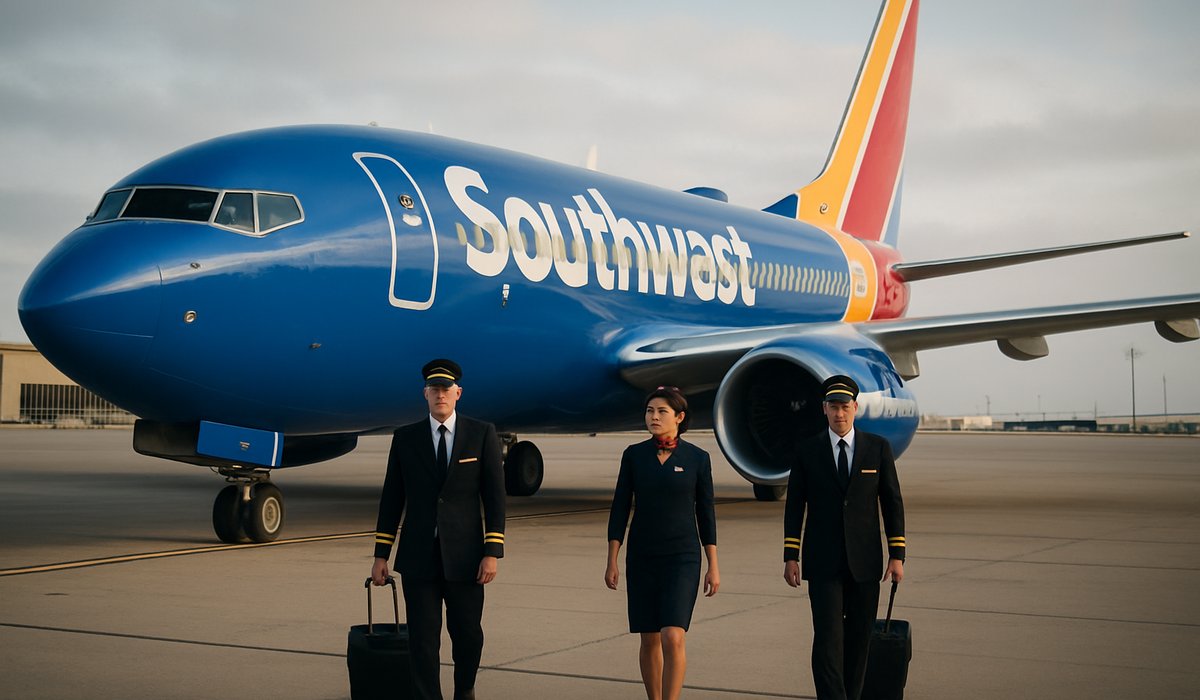
Image generated by AI
Southwest Airlines Grapples with Severely Underutilized Routes as Capacity Management Becomes Critical Challenge
Analysis reveals significant operational inefficiencies across carrier's network, with some flights operating at less than 40% capacity
Airlines Face Growing Pressure to Optimize Route Performance
Southwest Airlines is confronting a mounting capacity challenge across its domestic network, with data revealing that several of its routes are operating at dangerously low passenger loads—some barely exceeding 39% occupancy rates. This operational inefficiency underscores broader pressures facing the aviation industry as carriers struggle to balance network expansion with profitability amid volatile fuel costs and shifting travel demand patterns.
Over the twelve-month period ending January 2026, Southwest transported approximately 170 million passengers, solidifying its position as America's third-largest domestic airline. However, beneath these headline figures lies a troubling reality: the carrier's route optimization strategy appears increasingly misaligned with actual passenger demand, creating significant revenue leakage across its network.
Domestic Focus Masks Underlying Structural Issues
With roughly 97% of Southwest's passenger base flying exclusively on domestic routes, the carrier's growth strategy has remained firmly anchored within United States boundaries. While this domestic concentration has traditionally been a competitive advantage for the budget carrier, it also concentrates operational risk—making the airline's network particularly vulnerable to regional demand fluctuations and overcapacity on specific corridors.
The emergence of the carrier's ten most underutilized routes—averaging around 39% load factors—signals a fundamental mismatch between scheduled capacity and market demand. Load factors, which measure the percentage of available seats filled by paying passengers, represent a critical metric for airline profitability. Industry standards typically require load factors exceeding 75-80% to maintain viable unit economics when accounting for fuel surcharges, crew costs, and maintenance expenses.
What This Means for the Aviation Sector
The situation reflects mounting challenges across the broader aviation industry. Rising jet fuel prices and persistent labor cost pressures are forcing carriers to scrutinize every route's contribution to overall profitability. Routes operating at 39% capacity generate insufficient revenue per flight to cover operational expenses, let alone generate shareholder returns.
For passengers, this scenario typically leads to two outcomes: either airlines consolidate underperforming routes by deploying smaller aircraft or increasing flight frequency to the same destinations, or they withdraw service entirely. Both strategies carry implications for travel choice and potentially upward pressure on ticket pricing for travelers dependent on less-competitive routes.
Southwest's challenge exemplifies a broader industry reckoning: the post-pandemic surge in travel demand has plateaued, forcing carriers to recalibrate network strategies rather than pursue blanket capacity expansion. The carrier's next strategic moves—whether aggressive route optimization, fleet redeployment, or network restructuring—will signal whether it can maintain its domestic leadership position against increasingly efficient competitors.
Frequently Asked Questions
What are airline load factors and why do they matter? Load factors measure the percentage of available seats filled on a flight. Airlines typically need 75-80% load factors to achieve profitability after covering fuel costs, crew salaries, and maintenance expenses.
How do jet fuel prices impact airline route decisions? Elevated fuel costs increase per-flight operating expenses, making low-capacity routes economically unviable. Airlines respond by either reducing frequency, deploying smaller aircraft, or eliminating routes entirely.
Why is Southwest's domestic-only strategy becoming problematic? Concentrating 97% of operations domestically limits revenue diversification and exposes the airline to regional demand volatility. International routes typically generate higher margins and provide network flexibility.
What options does Southwest have to address underutilized routes? The carrier can deploy regional aircraft to reduce costs, increase flight frequency with smaller planes, implement dynamic pricing strategies, or discontinue underperforming routes entirely.
How will these operational challenges affect passenger ticket prices? Route consolidation reduces travel options on less-competitive corridors, potentially enabling airlines to increase fares where competition diminishes.
Related Travel Guides
Flight Delay Compensation Guide 2026
Understanding Airline Route Changes
Airport Security Process Updated (2026)
External Resources
Disclaimer
This article is for informational and educational purposes only. It does not constitute legal, financial, or professional advice. While we strive to provide accurate and up-to-date information, travel policies, regulations, and conditions change rapidly. Always verify information with official sources before making travel decisions. Nomad Lawyer makes no representations about the accuracy, reliability, completeness, or suitability of the information provided. Readers should consult qualified professionals for advice specific to their circumstances. The views expressed in this article are those of the author and do not necessarily reflect the views of Nomad Lawyer.
Kunal K Choudhary
Co-Founder & Contributor
A passionate traveller and tech enthusiast. Kunal contributes to the vision and growth of Nomad Lawyer, bringing fresh perspectives and driving the community forward.
Learn more about our team →