
Spain Hotel Prices Rise 6.7% in September 2026 as Overseas Overnight Stays Climb to 40.1 Million
Spain's hotel sector recorded 40.1 million overnight stays in September 2026 as international stays grew 3.2%, offsetting domestic dips despite a 6.7% surge in hotel room rates led by British and German demand.

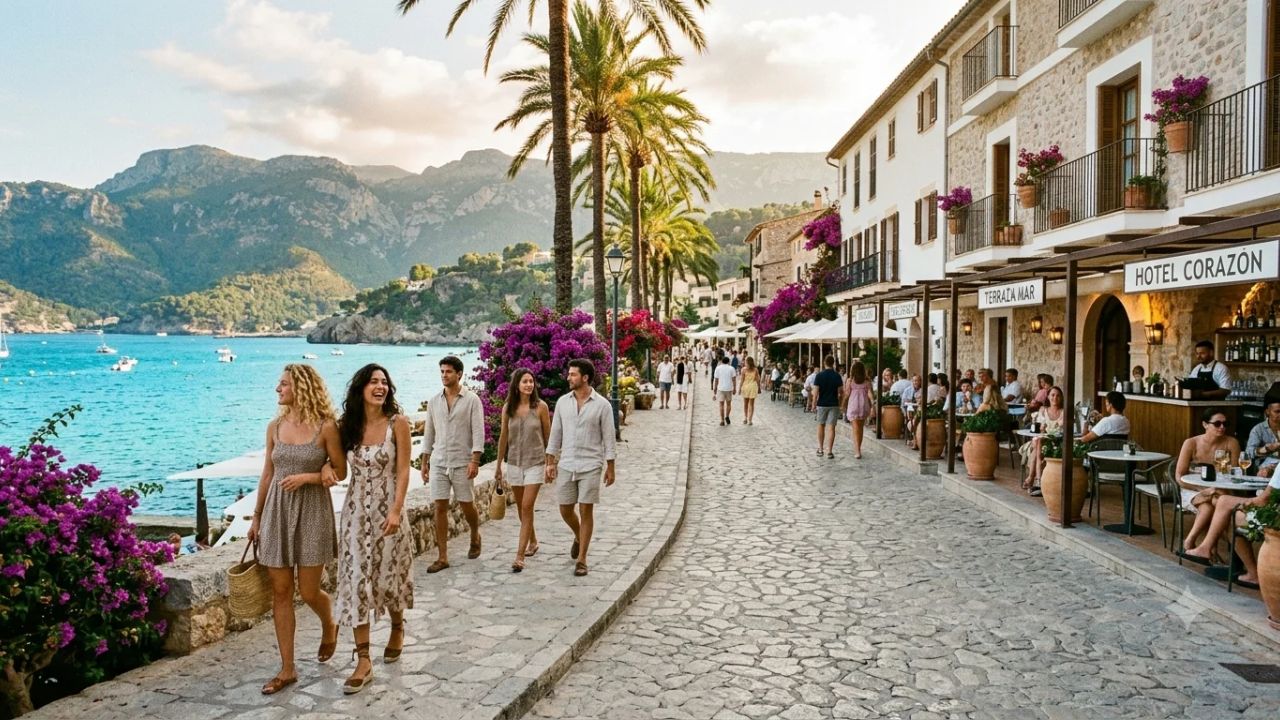
Spain’s hotel industry recorded more than 40.1 million overnight stays in September 2026, expanding 1.7% year-on-year as a 3.2% increase in international tourist bookings counterbalanced domestic softness, even as the national Hotel Price Index climbed 6.7% to its fastest pace since early 2025.
Official hotel occupancy data released by the National Statistics Institute of Spain (INE) demonstrates that foreign traveler demand remains resilient in the face of persistent room rate inflation. With the national Average Daily Rate (ADR) reaching €141.60 per occupied room—a 7.4% annual increase—international visitors from the United Kingdom and Germany accounted for nearly 45% of all foreign hotel nights. Strong shoulder-season demand across the Balearic Islands, Catalonia, Madrid, and the Costa del Sol cushioned Spain's hospitality operators against a 1.9% dip in domestic Spanish guest nights, pushing Revenue Per Available Room (RevPAR) up 7.7% nationwide to €110.50.
The Dual-Speed Market: International Surge vs Domestic Softness
Spain’s September accommodation statistics reveal a clear divergence in traveler behavior between resident and non-resident vacationers. While international travelers took advantage of pleasant shoulder-season weather to extend summer holidays, Spanish domestic consumers curtailed discretionary weekend hotel breaks under broader household budget constraints.
                    SPAIN HOTEL OVERNIGHT STAYS: SEPTEMBER 2026 (INE DATA)
  ========================================================================================
  Operational Indicator         September 2026 Volume    September YoY    Jan–Sep 2026 YoY
  ----------------------------------------------------------------------------------------
  Total Hotel Overnight Stays   40.1+ Million                +1.7%             +1.5%
  Non-Resident (Foreign) Stays  ~27.4 Million                +3.2%             +2.2%
  Domestic (Spanish) Stays      ~12.7 Million                −1.9%             +0.1%
  Average Daily Rate (ADR)      €141.60                      +7.4%             +6.8%
  RevPAR (Revenue per Room)     €110.50                      +7.7%             +8.1%
  National Bed Occupancy Rate   67.0% (72.6% weekends)       +0.3%             Stable
  ========================================================================================
Over the full nine-month stretch from January through September 2026, cumulative hotel stays rose 1.5% across Spain, driven almost entirely by a 2.2% increase in international overnights, while domestic stays remained virtually flat at +0.1%.
Price Inflation and Revenue Yield Across Hotel Categories
The 6.7% rise in Spain’s Hotel Price Index outpaced core consumer price inflation, reflecting robust pricing power among commercial operators in high-demand coastal enclaves and historic metropolitan centers.
  SPAIN HOTEL PRICING HIERARCHY (SEPTEMBER 2026):

  [ 5-Star Luxury Hotels ] ======> ADR: €332.80 | RevPAR: €257.90
  [ 4-Star Upscale Hotels ] =====> ADR: €144.30 | RevPAR: €122.80
  [ 3-Star Midscale Hotels ] ====> ADR: €115.60 | RevPAR: €92.30

  [ National Benchmark ] ========> ADR: €141.60 | RevPAR: €110.50 (+7.7% YoY)
Luxury hospitality demonstrated the greatest revenue yield. Five-star properties commanded an average of €332.80 per occupied room, achieving a RevPAR of €257.90. Four-star properties, which represent the largest volume of tourist beds in Spain, averaged €144.30 per night, while mid-scale three-star hotels recorded an ADR of €115.60.
At the municipal level, Marbella in Andalusia reinforced its standing as Spain’s luxury capital, posting the country’s highest Average Daily Rate at €286.60 and leading national RevPAR at €231.20.
Regional Inflation Divergence: Ceuta and Madrid Lead Increases
Hotel rate increases were unevenly distributed across Spain's autonomous communities and territories:
| Autonomous Community / City | Annual Hotel Price Increase | Primary Market Driver |
|---|---|---|
| Ceuta | +13.7% | Cross-strait transit flows & limited hotel bed supply |
| Community of Madrid | +10.4% | Robust corporate MICE, urban leisure & luxury boutique openings |
| Balearic Islands | +7.2% | Sustained European shoulder-season island demand |
| Canary Islands | +6.5% | Early autumn transatlantic & North European winter bookings |
| Extremadura | +3.6% | Inland heritage & nature tourism with moderate price elasticity |
| Aragón | +2.4% | Stable mountain and cultural tourism with competitive room rates |
Madrid’s double-digit price jump of 10.4% highlights the capital’s ongoing transformation into a global luxury metropolis, supported by promotional initiatives coordinated with Turespaña (Instituto de Turismo de España) and major international convention bookings.
Inbound Market Share: British and German Vacationers Anchor Island Stays
Visitors from the United Kingdom and Germany constituted the financial backbone of Spain's foreign hotel demand, jointly capturing 44.6% of all non-resident overnight stays.
NON-RESIDENT HOTEL OVERNIGHT STAYS BY SOURCE MARKET
| Column 1 |
|---|
| ✦ United Kingdom: 27.2% share (Leading outbound supplier across Balearics/Canaries) |
| ✦ Germany: 17.4% share (Dominant presence in Mallorca and coastal resorts) |
| ✦ France: Key feeder (High drive-in and urban weekend city break volume) |
| ✦ United States: Key feeder (High-spending long-haul cultural and luxury stays) |
| ✦ Netherlands: Key feeder (Campings, family hotels, and Mediterranean resorts) |
Data from the Spanish Confederation of Hotels and Tourist Accommodation (CEHAT) emphasizes that British holidaymakers remained heavily concentrated across the Balearic and Canary Islands, while German visitors continued their decades-long affinity for Mallorca and the Costa Brava.
Regional Concentration: The Balearic Islands Dominate Occupancy
Foreign visitor overnight stays were heavily clustered in coastal and island destinations during September:
- The Balearic Islands: Captured 32.5% of all foreign hotel nights. Mallorca alone logged more than 7.3 million overnight stays—the highest single-island total in the nation. The Balearic archipelago achieved an average bed occupancy rate of 82.6%, far exceeding the national average of 67.0%.
- Catalonia: Followed with 18.4% of international overnights, propelled by intense demand across Barcelona’s cultural quarters and the beach towns of Sitges, Lloret de Mar, and Salou.
- Canary Islands: Accounted for 17.7% of international stays, transitioning smoothly from summer family travel into its high winter sun season.
In contrast, domestic Spanish travelers gravitated toward mainland coastal regions: Andalusia, Catalonia, and the Valencian Community collectively captured nearly half of all domestic hotel overnight stays in September.
Strategic Outlook: Balancing Revenue Yield and Consumer Value
The performance of Spain’s hospitality sector in late 2026 underlines the sector's robust pricing power, yet industry monitoring bodies such as Exceltur (Alliance for Tourism Excellence) caution that sustained rate growth requires careful balance:
- Heightened Value Scrutiny: With average room prices up 7.4% and food-and-beverage costs escalating, European travelers increasingly evaluate the price-to-quality ratio of four- and five-star establishments.
- Shortened Booking Windows: Like other Mediterranean markets, Spanish hoteliers report a compression in booking horizons, requiring agile dynamic pricing models to capture last-minute travelers without diluting premium inventory.
- Lengthening Shoulder Seasons: Expanding international volume in September and October indicates that Spain is successfully extending its active tourism calendar, reducing vulnerability to peak-summer heatwaves and over-tourism friction.
As Spain approaches the final quarter of 2026, the hotel sector remains an engine of national economic growth, successfully converting international travel momentum into record revenue yields while navigating changing traveler budgets.
Frequently Asked Questions
By how much did Spain hotel prices increase in September 2026?
According to the National Statistics Institute (INE), Spain's Hotel Price Index increased by 6.7% year-on-year in September 2026, marking the fastest rate of growth since April 2025.
What was the Average Daily Rate (ADR) for a hotel room in Spain?
The national Average Daily Rate reached €141.60 per occupied room, representing a 7.4% increase compared to September 2025.
Which countries generated the most hotel stays in Spain?
The United Kingdom led all international markets with a 27.2% share of foreign hotel overnight stays, followed by Germany with 17.4%, together accounting for 44.6% of non-resident stays.
Which destination in Spain recorded the highest hotel prices?
Marbella recorded the highest Average Daily Rate in the country at €286.60 and the highest RevPAR at €231.20, while five-star hotels nationwide averaged €332.80 per room.
Related Travel Guides
- Germany Alongside Argentina and US Propels Spain's Off-Peak Tourism Through Luxury, Culture and Wellness
- France and Spain Outpace Global Tourism with Nearly 200 Million Visitors and All-Season Magnetism
- Greece Inbound Arrivals Jump 13.4% in August 2026 as Visitor Spending Sinks 6.5% Amid Soaring Travel Costs
Disclaimer
This article is for informational and educational purposes only. It does not constitute legal, financial, or professional advice. While we strive to provide accurate and up-to-date information, travel policies, regulations, and conditions change rapidly. Always verify information with official sources before making travel decisions. Nomad Lawyer makes no representations about the accuracy, reliability, completeness, or suitability of the information provided. Readers should consult qualified professionals for advice specific to their circumstances. The views expressed in this article are those of the author and do not necessarily reflect the views of Nomad Lawyer.
Preeti Gunjan
Contributor & Community Manager
A passionate traveller and community builder. Preeti helps grow the Nomad Lawyer community, fostering engagement and bringing the reader experience to life.
Learn more about our team →