
Oman Leads GCC Sustainable Tourism Push: Al Jabal Al Akhdar Eco-Model and Unified Gulf Travel Guide

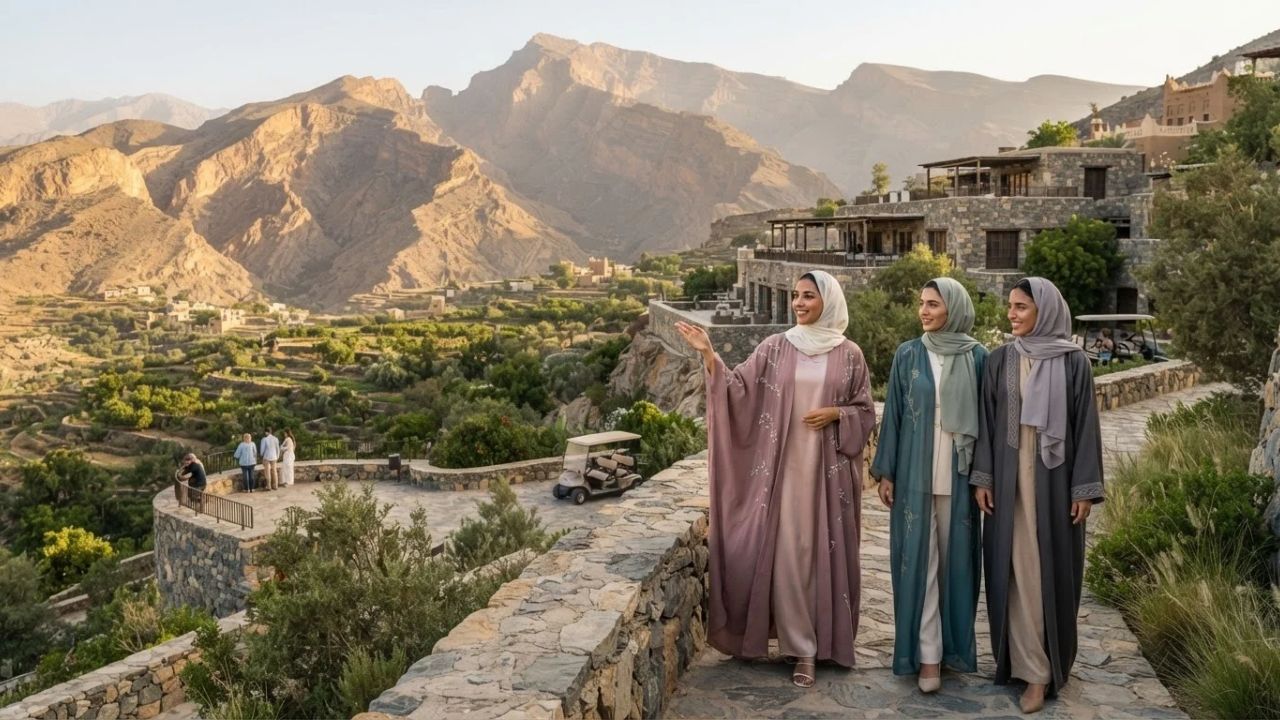
At the 10th Meeting of GCC Ministers Responsible For Tourism in Manama, Bahrain, Oman urged Gulf nations to unify their visitor economies around authentic culture and conservation, spotlighting a 9 per cent visitor surge across its highland retreat of Al Jabal Al Akhdar. With visitor numbers to the Green Mountain climbing from 203,629 in 2024 to 222,151 in 2025 across 95 hotel establishments and over 1,060 rooms, the Sultanate is demonstrating how low-impact, heritage-focused travel can power regional integration alongside the megaprojects of Saudi Arabia and the UAE.
The Local Trend: Gulf Destinations Unite Around Integrated Travel Corridors
The historical model of Middle Eastern tourism—where individual nations competed for standalone city breaks or transit stopovers—is giving way to a cohesive regional tourism pact. At the ministerial gathering in Manama, the Oman Ministry of Heritage and Tourism advocated for concrete initiatives to market the Gulf as a seamless, multi-destination circuit.
The framework is built on six operational pillars:
- Joint Regional Tourism Packages: Allowing international voyagers to bundle desert adventures, mountain retreats, and coastal cities into a single itinerary.
- Unified GCC Tourist Guide Licences: Standardizing heritage interpretation and professional qualifications across all six Gulf states.
- Synchronized Hotel Classification Systems: Establishing consistent hospitality quality metrics from boutique mountain lodges to five-star urban hotels.
- Shared Destination Promotion: Marketing the Arabian Peninsula globally as a unified cultural and ecological region.
- Tourism Data Integration: Connecting visitor arrival analytics to forecast regional infrastructure needs.
- Digital Visa Harmonization: Accelerating the unified GCC grand tourist visa to enable frictionless cross-border overland and air journeys.
This cooperative strategy capitalizes on the diverse strengths of neighboring nations. Saudi Arabia’s Vision 2030 developments in AlUla and the Red Sea drive global cultural interest; the UAE provides premier aviation connectivity and luxury hospitality via Dubai and Abu Dhabi; Qatar anchors major cultural and sporting events as the GCC Tourism Capital 2026; Bahrain presents ancient Dilmun civilization sites and island festivals; while Kuwait expands family leisure and arts spaces. Complementing these Gulf hubs, Egypt and Jordan enrich the broader regional corridor through ancient world wonders, Red Sea dive hubs, and desert canyons.
Travelers planning a visit to the Sultanate can explore official heritage sites and sustainable travel guidelines through the Oman Ministry of Heritage and Tourism.
Al Jabal Al Akhdar: Oman's Benchmark for Mountain Eco-Tourism
| Performance Metric | 2024 Baseline | 2025 Actual | Growth Dynamic |
|---|---|---|---|
| Total Annual Visitors | 203,629 travelers | 222,151 travelers | +9.1% Increase |
| Hospitality Establishments | 95 licensed properties | 95 licensed properties | Focus on eco-boutique quality |
| Total Room Capacity | More than 1,060 keys | More than 1,060 keys | High-yield, low-density zoning |
| Primary Attractions | Terraced rose farming, canyon hiking, UNESCO Aflaj falaj irrigation canals | Authentic village stewardship |
Cultural & Environmental Value: Ancient Falaj Canals and Mountain Communities
Oman’s sustainable model proves that rapid visitor growth does not have to compromise environmental or cultural integrity. In Al Jabal Al Akhdar, located in the Al Hajar mountain range roughly 2,000 metres above sea level, tourism directly supports indigenous livelihoods.
The preservation benefits are felt directly by local communities:
- Revitalizing Terraced Agriculture: Tourist demand provides critical income for multigenerational farming families who cultivate mountain pomegranates, walnuts, figs, and Damask roses along steep, stone-walled terraces.
- Protecting UNESCO Water Systems: The preservation of centuries-old falaj gravity-fed irrigation channels (part of the UNESCO-inscribed Aflaj systems of Oman) ensures that precious mountain spring water is distributed equitably between agricultural fields and village dwellings without motorized pumps.
- Dark Sky Conservation: Mountain resorts adhere to strict downward-facing lighting codes, minimizing light pollution and preserving natural astronomical viewing corridors above the limestone plateaus.
Visitor Insider Tips: Exploring Al Jabal Al Akhdar and Oman
Experiencing Oman's mountain highlands and heritage villages requires careful logistical preparation:
To coordinate multi-destination trips across the region, visitors can check the latest travel requirements and visa updates via the GCC Secretariat General.
- Mandatory 4WD Ascent Checkpoint: The Royal Oman Police operates a mandatory checkpoint at the base of the mountain in Birkat Al Mouz. By law, only four-wheel-drive (4WD/4x4) vehicles are permitted to ascend the mountain road due to the steep 14-degree gradients. Standard two-wheel-drive rental sedans will be turned away. If you do not have a 4WD, hire a licensed local Omani mountain driver at the base transport depot.
- Time Your Visit with Harvest Seasons:
- March to May: Experience the Damask rose harvest, when the terraced cliffs around Al Ayn and Shirayjah turn pink, and traditional distillers extract fragrant rose water inside mud-brick kilns.
- September to October: Arrive for the pomegranate and walnut harvests, when roadside stalls sell heirloom fruit and temperatures hover pleasantly around 20°C to 24°C, offering a refreshing respite from coastal heat.
- Cultural Etiquette in Cliffside Villages: When walking the Four Villages Trail (linking Al Ayn, Ash Shirayjah, Sayq, and Wadi Bani Habib), remember that these are living communities, not outdoor museums. Dress modestly with shoulders and knees covered, and avoid wandering into private orchards or touching irrigation sluices.
- Hospitality Etiquette: When welcomed into a traditional village home or guesthouse, accept dates and cardamom-spiced kahwa (Omani coffee) using your right hand. When you have finished, gently shake the small finjan cup from side to side before handing it back to signal you are satisfied.
- Culinary Specialties of the Interior: Don't leave Nizwa and the mountains without tasting shuwa—marinated lamb or goat wrapped in banana leaves and slow-cooked in a subterranean sand pit for up to 48 hours. Pick up freshly prepared saffron-and-cardamom Omani halwa from the artisan sweets shops opposite Nizwa Fort.
Tourism Outlook: Crafting a Unified Middle Eastern Journey
Oman's leadership at the Manama ministerial conference highlights a major turning point for Middle Eastern travel. Rather than competing in an arms race of identical glass towers, Gulf nations are establishing distinct, complementary identities within a unified framework.
For those integrating Oman into a broader Middle Eastern itinerary, Qatar Tourism provides comprehensive guides for the upcoming GCC Tourism Capital 2026 events.
As unified tourist visas, synchronized hotel standards, and cross-border transport corridors take shape, international travelers will increasingly experience the Middle East as an interconnected cultural odyssey. By championing community-rooted mountain retreats and environmental conservation, Oman ensures that regional integration safeguards the ancient traditions that make the Sultanate truly unique.
Related Travel Guides
- Qatar Hits 1.13 Million Q1 Visitors: Doha GCC Capital Boom
- Azerbaijan and Jordan Visa-Free Travel Deal Tourism Guide
- Shura Links Golf Resort Opens on Saudi Arabia's Red Sea
FAQ: Oman Leads GCC Sustainable Tourism 2026
What is the GCC unified tourist visa? The unified GCC tourist visa is a proposed digital initiative designed to allow international travelers to visit multiple Gulf Cooperation Council member states using a single visa, enabling frictionless cross-border travel.
Why is Al Jabal Al Akhdar considered an eco-tourism model? Al Jabal Al Akhdar focuses on low-impact, heritage-focused travel. By balancing a 9% increase in visitor numbers with a fixed number of hotel establishments, Oman prioritizes conservation and authentic cultural preservation over mass tourism.
How can travelers visit multiple GCC countries in one trip? The GCC is developing "integrated travel corridors" and joint regional tourism packages. These allow voyagers to bundle diverse experiences—such as Oman's mountains, Saudi Arabia's AlUla, and the UAE's cities—into a single, seamless itinerary.
What are the best ways to reach Oman's Green Mountain? Visitors typically fly into Muscat and travel by 4WD vehicle to Al Jabal Al Akhdar. The region offers over 1,060 rooms across 95 licensed properties, ranging from luxury resorts to eco-boutique lodges.
Disclaimer
This article is for informational and educational purposes only. It does not constitute legal, financial, or professional advice. While we strive to provide accurate and up-to-date information, travel policies, regulations, and conditions change rapidly. Always verify information with official sources before making travel decisions. Nomad Lawyer makes no representations about the accuracy, reliability, completeness, or suitability of the information provided. Readers should consult qualified professionals for advice specific to their circumstances. The views expressed in this article are those of the author and do not necessarily reflect the views of Nomad Lawyer.
Preeti Gunjan
Contributor & Community Manager
A passionate traveller and community builder. Preeti helps grow the Nomad Lawyer community, fostering engagement and bringing the reader experience to life.
Learn more about our team →