
Oman Flight Cancellations Hit Muscat and Salalah — GFA and Air Arabia Cancel GFA567, GFA565, ABY393; Passengers Stranded, Travel Chaos to Bahrain and Sharjah | Aviation Updates
Three short‑haul cancellations at Muscat (OOMS) and Salalah (OOSA) — GFA567, GFA565 and ABY393 — disrupted Gulf connections to Bahrain and Sharjah on tightly scheduled rotations.

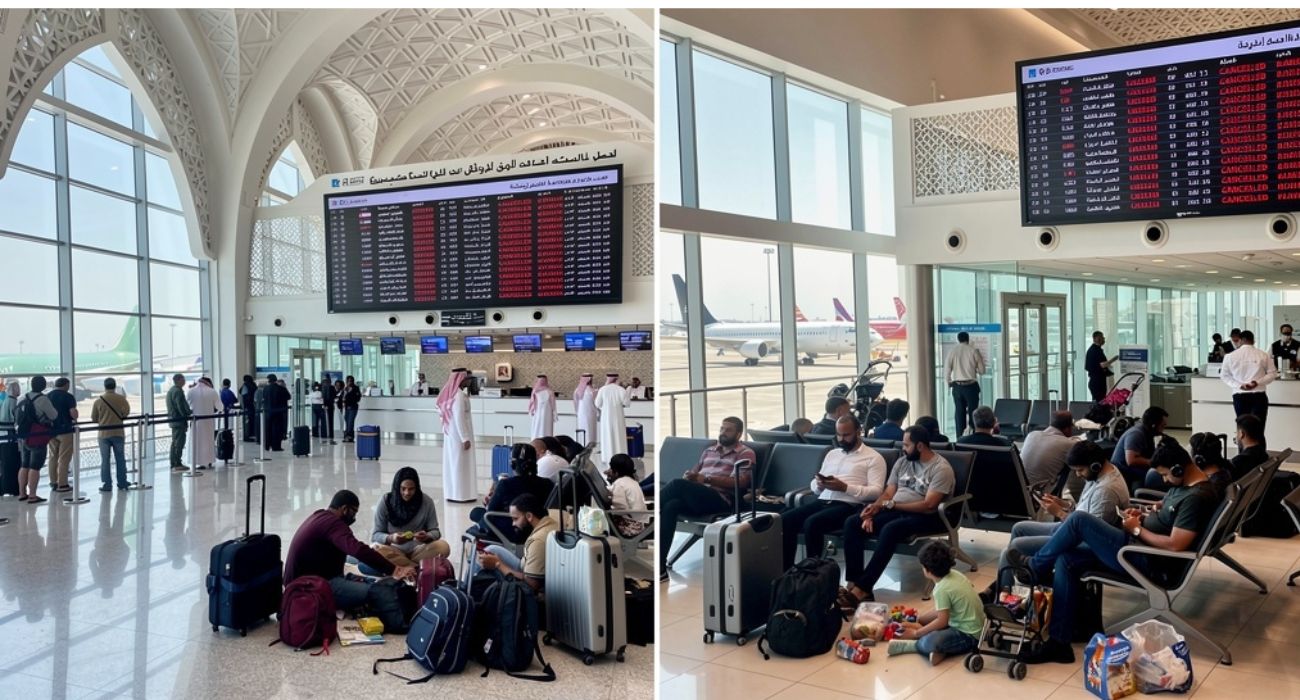
Image generated by AI
Oman Flight Cancellations Hit Muscat and Salalah — GFA and Air Arabia Cancel GFA567, GFA565, ABY393; Passengers Stranded, Travel Chaos to Bahrain and Sharjah | Aviation Updates
Three short‑haul Gulf cancellations leave travellers scrambling — exact services affected: GFA567 (A20N), GFA565 (A20N), ABY393 (A320)
Intro A compact cluster of cancellations on April 16, 2026, produced outsized disruption across Oman’s short‑haul network: a total of 3 scheduled departures were cancelled at Seeb International Airport (Muscat, OOMS) and Salalah Airport (OOSA), severing direct links to Bahrain International Airport (BAH / OBBI) and Sharjah International Airport (SHJ / OMSJ). Two GFA services on the Muscat–Bahrain corridor (GFA567 and GFA565, both A20N) and one Air Arabia service from Salalah to Sharjah (ABY393, A320) were removed from the day’s schedules — a small number but with significant operational ripple effects for passengers and onward connections.
Expanded overview Short‑haul Gulf lanes run on tightly interlocked rotations and short turnarounds; when even a single leg is lost, the consequences cascade. Evening and late‑evening departures in particular feed onward business, transit and connecting traffic, making cancellations at those times especially disruptive. Local airport operations, reservations teams and carriers moved quickly to rebook customers, issue refunds where applicable and identify alternative routings through larger hubs. Below we break down the event airport by airport, list the exact flights involved, assess passenger impact and provide a measured industry view on the operational vectors that typically cause such short‑haul interruptions.
Seeb International Airport (Muscat) — Muscat → Bahrain
At Muscat’s Seeb International Airport two outbound services to Bahrain were cancelled. Both flights used the A20N narrow‑body type commonly deployed on short Gulf sectors and are heavily relied upon by business commuters and transit passengers.
Impacted Muscat departures:
- GFA567 (A20N) — Bahrain International Airport (BAH / OBBI) — Scheduled departure: Wednesday, 11:55 PM (+04)
- GFA565 (A20N) — Bahrain International Airport (BAH / OBBI) — Scheduled departure: Tuesday, 07:10 PM (+04)
Ground handling and reservations teams at Seeb reported an immediate uptick in rebooking requests as impacted passengers sought the next available seats. Because aircraft and crew rotations on short sectors are tightly interconnected, an issue affecting one aircraft or crew block can eliminate multiple services across a day, compressing options for travellers on the Muscat–Bahrain corridor.
Salalah Airport (Salalah) — Salalah → Sharjah
In southern Oman, Salalah Airport recorded one cancelled departure to the UAE, removing a key cross‑border connector used by leisure and business travellers alike.
Impacted Salalah departure:
- ABY393 (A320) — Sharjah International Airport (SHJ / OMSJ) — Scheduled departure: Thursday, 06:40 PM (+04)
The cancelled Air Arabia A320 service left limited same‑day alternatives for many travellers because of the modest daily frequency on this route, forcing some to consider reroutes through larger Gulf hubs or to accept next‑day travel.
Flight Details — Full Table (unchanged)
Flight ID Aircraft Route Destination Scheduled Departure GFA567 A20N Muscat to Bahrain Bahrain International Airport (BAH / OBBI) Wednesday, 11:55 PM (+04) GFA565 A20N Muscat to Bahrain Bahrain International Airport (BAH / OBBI) Tuesday, 07:10 PM (+04) ABY393 A320 Salalah to Sharjah Sharjah International Airport (SHJ / OMSJ) Thursday, 06:40 PM (+04)
Total cancellations: 3 Affected destinations: Bahrain International Airport, Sharjah International Airport
Passenger impact: missed connections, costs and delays
Even a trio of cancellations can trigger cascading problems in lean short‑haul networks:
- Missed onward connections: Business and transit passengers bound for onward flights from Bahrain or Sharjah lost connection windows and faced hurried reroutes.
- Extra time and expense: Some travellers purchased alternative tickets or used surface transport to reach alternate hubs; others incurred overnight accommodation costs when same‑day travel was unavailable.
- Administrative friction: Refunds, re‑accommodation and longer customer‑service wait times increased as trunk lines filled with rebooking requests.
- Emotional toll: Families and time‑sensitive travellers bore the stress of abrupt schedule changes — a human cost often obscured in raw cancellation counts.
Carriers and airports advised affected passengers to check airline notifications, accept offered re‑accommodation, and consider routing through neighboring hubs if direct services were limited.
Industry analysis — common operational drivers (kept general)
Cancellations on tightly scheduled short‑haul routes typically stem from a handful of operational realities rather than any single unique cause. Probable contributors include:
- Aircraft rotation impacts from late arrivals or technical defects that remove a plane from the day’s plan.
- Crew availability and regulatory duty‑time limits that render a crew unavailable for a scheduled sector.
- Last‑minute technical/maintenance issues grounding a narrow‑body such as the A20N or A320 for safety reasons.
- Strategic network adjustments when airlines rebalance flows under constrained resources.
Mitigation hinges on contingency planning: spare aircraft positioning, flexible crew rostering, predictive maintenance and rapid passenger communications to limit passenger disruption.
Conclusion and outlook
The three cancellations across Muscat and Salalah underline the vulnerability of lean Gulf short‑haul rotations: numerically small events can produce outsized passenger impacts when timing and connectivity roles amplify consequences. In the immediate term, carriers will prioritize re‑seating displaced travellers and clearing backlog; in the medium term, operators may increase contingency reserves and enhance predictive maintenance to reduce the probability that a single disruption removes multiple departures.
Key takeaways
- Total cancellations: 3 (two GFA services from Muscat to Bahrain; one Air Arabia service from Salalah to Sharjah).
- Exact services: GFA567 (A20N) — Muscat → Bahrain, Wed 11:55 PM (+04); GFA565 (A20N) — Muscat → Bahrain, Tue 07:10 PM (+04); ABY393 (A320) — Salalah → Sharjah, Thu 06:40 PM (+04).
- Passenger impact: Missed connections, additional costs and longer customer‑service queues.
- Operational drivers (general): Aircraft rotation issues, crew constraints, or last‑minute technical issues.
- Recovery: Rebookings and backlog clearance are immediate priorities; contingency planning and predictive maintenance are longer‑term mitigations.
For travellers, keep airline alerts enabled, verify rebooking options promptly and consider alternative routing through larger Gulf hubs if schedules are constrained. We will continue to monitor carrier notices and regional schedules for real‑time aviation updates on these short‑haul Gulf disruptions.
Disclaimer
This article is for informational and educational purposes only. It does not constitute legal, financial, or professional advice. While we strive to provide accurate and up-to-date information, travel policies, regulations, and conditions change rapidly. Always verify information with official sources before making travel decisions. Nomad Lawyer makes no representations about the accuracy, reliability, completeness, or suitability of the information provided. Readers should consult qualified professionals for advice specific to their circumstances. The views expressed in this article are those of the author and do not necessarily reflect the views of Nomad Lawyer.
Kunal K Choudhary
Co-Founder & Contributor
A passionate traveller and tech enthusiast. Kunal contributes to the vision and growth of Nomad Lawyer, bringing fresh perspectives and driving the community forward.
Learn more about our team →