
Oman Air Cancels 4 Flights at Seeb International Airport; 15 Delays Ripple Across Middle East, South Asia, Southeast Asia on June 5
Oman Air cancellations and delays at Seeb International Airport on June 5, 2026, disrupted travel across 13+ cities spanning Saudi Arabia, Egypt, Kuwait, Malaysia, and India. Here's what affected passengers need to know.

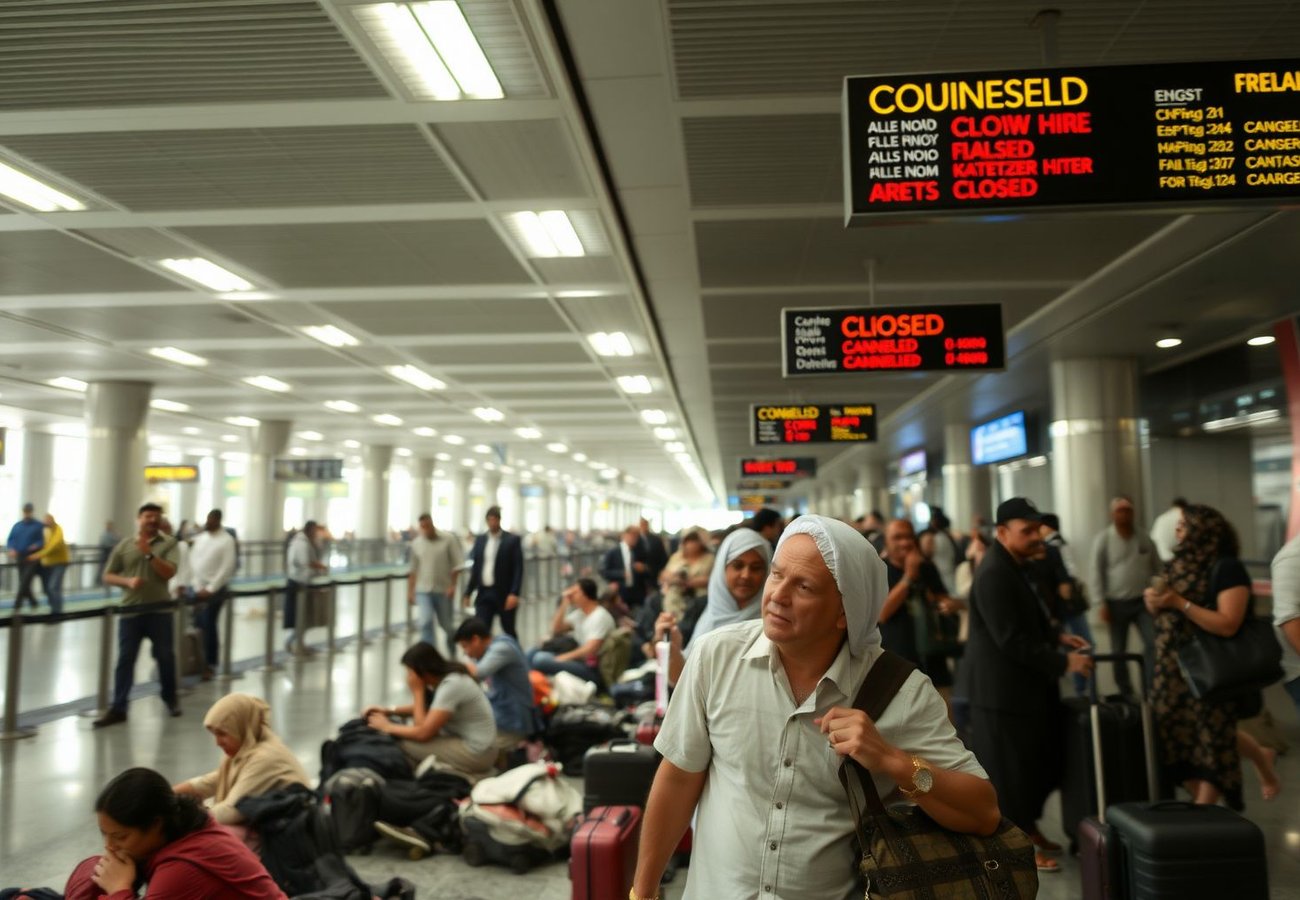
Image generated by AI
Network Collapse: 4 Cancellations, 15 Delays Cascade Across 13 Cities
On June 5, 2026, a cascade of operational disruptions at Seeb International Airport (MCT) in Muscat, Oman, sent shockwaves through regional and international aviation networks. Oman Air cancelled four scheduled flights while simultaneously reporting 15 additional delays—a combination that exposed how concentrated airline operations can paralyze travel across entire geographic regions.
The ripple effects were staggering. From the deserts of Saudi Arabia to the beaches of Southeast Asia, passengers faced schedule chaos, missed connections, and the uncertainty that comes with large-scale network failures.
Reddit: "Booked through Oman Air for a connection to Bangkok. Got the cancellation notification at 3 AM. No rebooking options until the next day. Middle East carriers need redundancy." — r/travel
The Geographic Footprint: 13 Cities, Multiple Continents
The disruption pattern stretched across four continental regions, affecting both major hubs and secondary cities. Here's where the pain was felt most acutely:
Oman: Muscat (the epicenter with 4 cancellations and 15 delays) and Salalah recorded operational failures.
Saudi Arabia: Riyadh and Jeddah reported delays across multiple services, impacting business travellers and pilgrimage-related traffic.
Egypt: Cairo emerged as a secondary hub experiencing multiple delays affecting North African connections.
Middle East Expansion: Kuwait City recorded cancellations, while Istanbul and Trabzon in Turkey experienced interruptions affecting Europe-Asia connectivity.
South Asia Exposed: New Delhi and Kochi in India faced delayed operations on long-haul international routes. Lahore, Pakistan, and Chattogram, Bangladesh, recorded regional travel disruptions.
Southeast Asia Hit Hard: Bangkok, Phuket, and Kuala Lumpur—major tourist and business hubs—all reported service interruptions, affecting connectivity to Australia and further Pacific destinations.
Eurasia Affected: Moscow recorded operational interruptions, extending the impact to European markets.
This geographic spread illustrates a critical vulnerability in modern aviation: when a single carrier experiences operational collapse at a primary hub, the effects distribute across dozens of downstream cities within hours.
The Data: 4 Cancellations, 15 Delays, 3% Operational Impact
Seeb International Airport bore the brunt of the disruption:
| Airport | Airline | Cancelled Flights | Delayed Flights |
|---|---|---|---|
| Seeb (MCT) | Oman Air | 4 | 15 |
The four cancellations at Seeb represented approximately 3% of scheduled Oman Air operations that day—seemingly modest until you consider the downstream effects. Each cancelled flight typically carries 150-200 passengers who must be rebooked, reshuffled, or refunded. Multiply this across 13 affected cities, and you're looking at thousands of stranded passengers.
Secondary disruptions included one cancellation at Salalah Airport (accounting for 11-12% of operations in that segment) and one at Kuwait City (representing 100% of tracked operations in that category).
The 15 delays at Seeb alone created cascading effects across the network. A delayed morning flight to Delhi impacts afternoon connections to Bangkok. A delayed afternoon service to Cairo affects evening onward travel to London or Paris.
According to FlightAware's real-time tracking data, which provided the operational intelligence for this report, such concentrated disruptions have become more common as carriers consolidate hub operations.
What Happened: Why Did Oman Air Fail to Maintain Operations?
Neither Oman Air nor Muscat airport authorities provided detailed public explanations for the cancellations and delays within the first 24 hours of the disruption. This information vacuum is typical of airlines managing reputational damage during operational failures.
Possible causes—based on historical patterns at Gulf aviation hubs—include:
- Maintenance emergencies affecting aircraft availability
- Air traffic control delays cascading from neighboring airports
- Crew scheduling failures creating legal rest period violations
- Ground handling issues affecting turnaround times
- Weather events in upstream or downstream destinations forcing diversions
The lack of transparency frustrated passengers already dealing with schedule disruption. Reddit forums filled with frustrated travellers demanding answers from Oman Air's customer service channels.
Passenger Rights: Know Your Entitlements Before Your Flight Gets Cancelled
If your flight is cancelled, don't panic—but do act decisively. Here's the roadmap:
Immediate Actions: First 60 Minutes Matter
Monitor for Notifications. Airlines typically notify passengers via SMS, email, or their mobile app within minutes of a cancellation decision. Check your email and phone obsessively. Visit the airline's website for real-time updates.
Contact the Airline Immediately. Call customer service, visit the airport service desk, or use the airline's online chat system. Long phone queues are inevitable during disruptions—expect 30-60 minute wait times. If you're at the airport, the service desk is faster.
Understand Your Entitlements. Airline cancellation policies vary significantly. Check your ticket terms before booking. Under EU Regulation 261/2004, passengers on cancelled flights are entitled to compensation ranging from €250-€600 depending on flight distance—but this applies only to flights departing EU airports or operated by EU carriers.
Under US regulations, domestic carriers have no legal obligation to provide compensation for cancellations, though they must rebook you on the next available flight.
Strategic Options: Rebooking and Alternatives
Request Rebooking Priority. Ask for the next available flight, whether on Oman Air or a partner carrier. Airlines often have interline agreements that allow rerouting through competitor flights.
Consider Alternative Transport. If the airline can't rebook you within 24 hours, investigate train, bus, or rental car options. On certain Middle Eastern routes (Muscat to Dubai, for instance), bus services operate competitively with flight times.
Book a Competitor Flight. If the airline refuses rebooking or the next available flight is days away, you have the right to purchase a replacement flight and request reimbursement. Document everything—receipts, email confirmations, timeline of requests.
Claim Compensation (If Eligible). EU passengers can file claims through specialized compensation agencies that handle the legal process for a percentage of recovered compensation. Non-EU passengers have fewer legal protections, but many airlines offer good-will compensation during major disruptions.
The Bigger Picture: Why This Matters for Regional Aviation
The June 5, 2026 disruption at Seeb represents a growing pattern in Middle Eastern aviation. As carriers like Oman Air, Emirates, and Qatar Airways consolidate hub operations to improve efficiency, single-point failures create wider network collapses.
Muscat Airport handles roughly 9 million passengers annually. A 3% operational disruption affects roughly 24,600 passengers on any given day. When that disruption compounds across 13 downstream cities over multiple days, the cumulative passenger impact exceeds 50,000 individuals.
Airlines continue to argue that hub consolidation improves profitability. Passengers experience the opposite: reduced redundancy, longer recovery times, and fewer alternative routing options during disruptions.
The 2026 aviation outlook suggests these disruptions will continue. Supply chain pressures, crew shortages, and aging aircraft fleets all contribute. The solution isn't complicated—it's expensive: carriers need operational redundancy, backup aircraft, and distributed networks. Few are willing to invest.
What's Next: Monitoring and Prevention
As of June 5, 2026, Oman Air had not announced systemic changes to prevent recurrence. Passengers should:
- Monitor FlightAware's tracking system 48 hours before departure to identify operational trends
- Build 4+ hour layover buffers on connections through Seeb or other Middle Eastern hubs
- Consider purchasing travel insurance that covers airline cancellations (not just medical emergencies)
- Sign up for real-time airline notifications through SMS, not email (email delays are common during crises)
The situation demonstrates that even a relatively contained cancellation event can cascade across continents within hours. Flexibility and information are your only defenses.
Stay informed, act fast, and document everything—your compensation might depend on it.
Related Travel Guides
Could a $400 GPS Device Have Prevented the American Airlines Collision? NTSB Findings Suggest Yes
Condor Anniversary Promotion: 70,000 Flights Under €70 for 2026
Disclaimer
This article is for informational and educational purposes only. It does not constitute legal, financial, or professional advice. While we strive to provide accurate and up-to-date information, travel policies, regulations, and conditions change rapidly. Always verify information with official sources before making travel decisions. Nomad Lawyer makes no representations about the accuracy, reliability, completeness, or suitability of the information provided. Readers should consult qualified professionals for advice specific to their circumstances. The views expressed in this article are those of the author and do not necessarily reflect the views of Nomad Lawyer.
Raushan Kumar
Founder & Lead Developer
Full-stack developer with 11+ years of experience and a passionate traveller. Raushan built Nomad Lawyer from the ground up with a vision to create the best travel and law experience on the web.
Learn more about our team →