
Massive Travel Chaos at Seeb International Airport: 27 Delays and 3 Flight Cancellations Hit Etihad, Oman Air, and FlyDubai Across Muscat and the UAE
Seeb International Airport in Oman is gripped by severe travel chaos as 27 flight delays and 3 cancellations disrupt regional tourism and key routes to Dubai and Abu Dhabi.

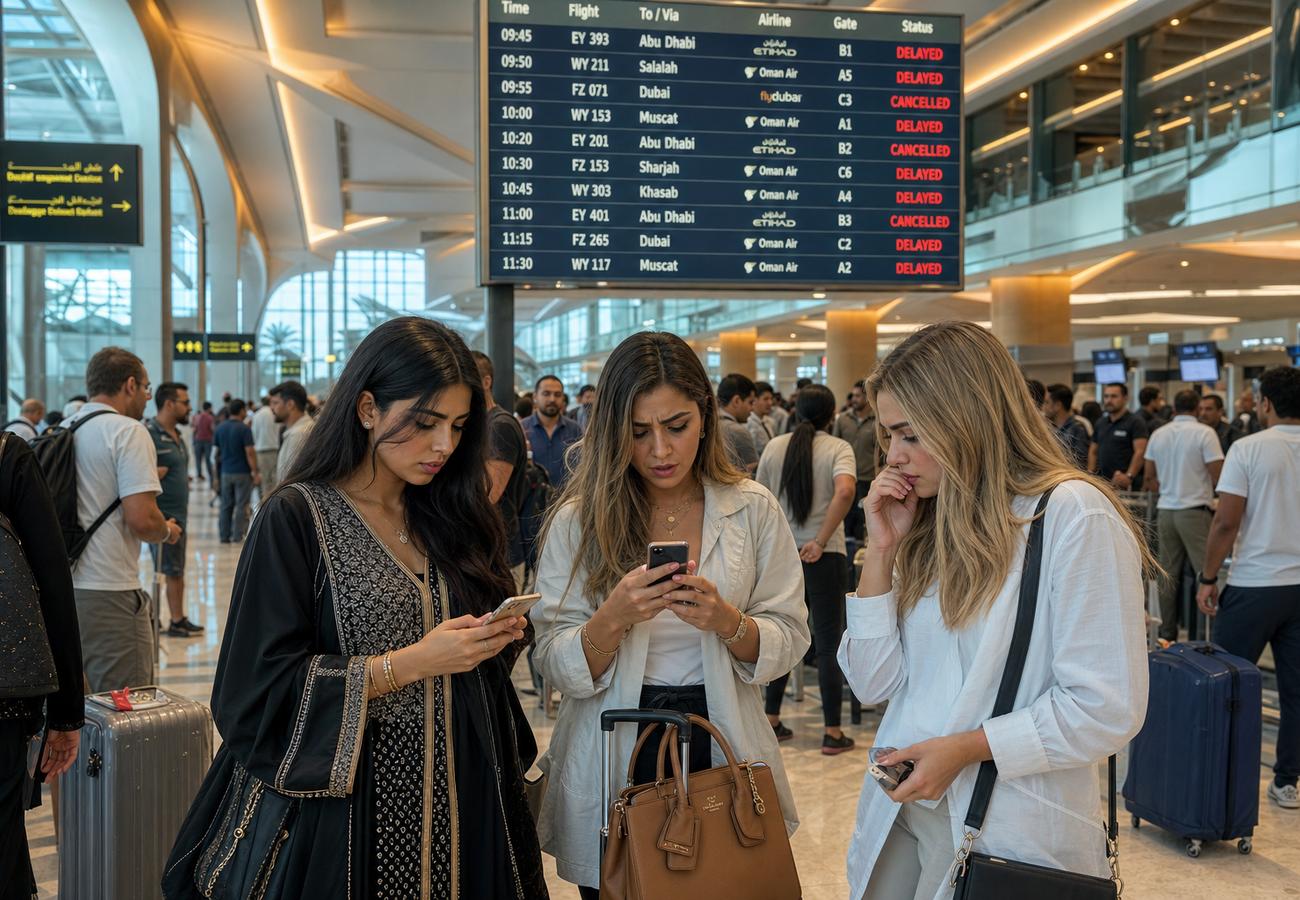
Image generated by AI
A wave of severe travel chaos has swept through Seeb International Airport in Oman, as a series of operational failures triggered 27 flight delays and 3 cancellations in a single day. The disruptions, which hit major regional carriers including Etihad Airways, Oman Air, and FlyDubai, have left hundreds of passengers stranded and raised serious concerns about the reliability of the Sultanate's primary aviation hub. This latest aviation update highlights the fragility of regional flight networks as they grapple with mounting congestion and scheduling complexities during the peak 2026 travel season.
Breaking: Operational Gridlock Grips Seeb International
The airport disruptions at Seeb International were officially confirmed by Sultanate officials late on May 15, 2026. According to the airport’s official records, the turmoil was primarily attributed to deep-seated operational scheduling challenges and severe congestion at both the source and destination airports. What began as minor timing adjustments quickly escalated into a full-scale operational breakdown, affecting both domestic and international corridors.
For the tourism sector in Oman, which relies heavily on the seamless flow of international visitors, this disruption is a significant setback. Leisure travelers planning trips to the interior or connecting via Muscat found themselves caught in a logistical nightmare, with the reputational impact of such flight cancellations likely to linger far beyond the current weekend.
Section-Wise Breakdown: Regional Epicenters of Disruption
Seeb International (Muscat): The Epicenter of the Crisis
As the main gateway to Oman, Seeb International bore the brunt of the scheduling failures. The airport's ground handling services and baggage handling limitations were cited as contributing factors that created a "ripple effect" across the entire day's roster. Despite the best efforts of airport management to coordinate with airlines for rebooking, the sheer volume of delayed passengers created an environment of intense operational stress and visible dissatisfaction in the terminals.
United Arab Emirates Hubs (Dubai & Abu Dhabi): The Connection Struggle
The routes connecting Muscat with Dubai and Abu Dhabi were among the hardest hit. As major regional hubs, even a 30-minute delay in Muscat can lead to missed intercontinental connections in the UAE. Etihad Airways and FlyDubai passengers experienced significant hurdles, with high-demand shuttle services between the three cities facing the highest percentage of operational failures.
South Asian Corridors (India & Pakistan): Impact on Regional Commuters
For the large expatriate and business community traveling between Oman, India, and Pakistan, the delays were particularly punishing. Carriers such as Air India Express and Air Sial reported a series of minor but cumulative delays that impacted late-night and early-morning rotations. These routes are the lifeblood of regional labor and business travel, and any inconsistency in their reliability causes immediate economic friction.
Flight Details and Statistical Breakdown: A Day of Disruption
The following data, manually obtained from official tracking sources, provides a stark look at the carriers most impacted by the day's events.
Seeb International Flight Disruption Matrix: May 15, 2026
| Airline | Total Delayed Flights | Delay Rate (%) | Cancellations | Cancellation Rate (%) |
|---|---|---|---|---|
| Etihad Airways | — | 16% | 1 (Approx.) | 50% |
| Oman Air | 17 | 20% | — | — |
| FlyDubai | — | 33% | — | — |
| SalamAir | — | 9–33% | — | Minor |
| Air India Express | — | 9–33% | — | Minor |
| Air Sial | — | 9–33% | — | Minor |
Note: Individual cancellation numbers for SalamAir and Air Sial were categorized under the collective total of 3 cancellations for the day.
Passenger Impact: The Human Cost of Travel Chaos
The human impact of these airport disruptions is measurable in missed weddings, lost business opportunities, and exhausted families. Hundreds of travelers faced missed connections today, with many forced into extended layovers in Muscat without clear timelines for their next departures.
Tourism stakeholders have expressed alarm, noting that while the airport management is working to rebook passengers, the short-term impact on visitor confidence is unavoidable. Inbound travelers from Europe or the Americas who use Muscat as a transit point may now reconsider their future itineraries, favoring more stable hubs if the frequency of such disruptions continues to rise.
Industry Analysis: The Causes of Regional Congestion
What caused this sudden spike in flight cancellations and delays? Aviation analysts point to three primary factors currently affecting the Middle Eastern market:
- Operational Scheduling Overload: Airlines are pushing their fleets to maximum utilization to capture 2026 demand, leaving zero margin for error.
- Airport Congestion: Both Seeb and destination airports in the UAE are operating at near-capacity, meaning a single gate delay can paralyze a dozen subsequent flights.
- Ground Service Limitations: Shortages in specialized staffing for baggage handling and technical checks have slowed turnaround times significantly.
This combination of factors has turned airline news headlines into a series of travel warnings. Until there is a recalibration of schedules and an increase in ground support staff, the risk of "high-traffic periods" becoming synonymous with "disruption periods" remains high.
Conclusion: A Wake-Up Call for Oman’s Aviation Strategy
The events of May 15 at Seeb International Airport serve as a stark reminder of the difficulties in controlling high-volume flight disruptions in the Middle East. While safety remains the top priority, the economic and reputational consequences for Oman’s tourism industry are real. Proactive passenger support and timely communication are no longer optional extras; they are the bedrock of modern aviation resilience.
As airlines and airport management review their daily schedules and staffing levels, the focus must be on reducing future disruptions. For Oman to maintain its status as a premium travel destination, its primary gateway must demonstrate a level of reliability that matches its cultural and geographic appeal.
Key Takeaways
- Massive Disruption: 27 delays and 3 cancellations hit Seeb International in a single operational window.
- Key Airlines Affected: Etihad, Oman Air, and FlyDubai faced the highest percentage of disruptions.
- Etihad Crisis: The carrier saw a staggering 50% cancellation rate for its Seeb operations today.
- Root Causes: Scheduling challenges and regional airport congestion were cited as the primary triggers.
- Regional Fallout: Flights to Dubai, Abu Dhabi, India, and Pakistan were the most severely impacted.
- Traveler Advice: Passengers are urged to arrive 3 hours early and verify flight status via mobile apps before heading to the terminal.
Related Travel Guides
Disclaimer
This article is for informational and educational purposes only. It does not constitute legal, financial, or professional advice. While we strive to provide accurate and up-to-date information, travel policies, regulations, and conditions change rapidly. Always verify information with official sources before making travel decisions. Nomad Lawyer makes no representations about the accuracy, reliability, completeness, or suitability of the information provided. Readers should consult qualified professionals for advice specific to their circumstances. The views expressed in this article are those of the author and do not necessarily reflect the views of Nomad Lawyer.
Kunal K Choudhary
Co-Founder & Contributor
A passionate traveller and tech enthusiast. Kunal contributes to the vision and growth of Nomad Lawyer, bringing fresh perspectives and driving the community forward.
Learn more about our team →