
Boeing's 777X Fleet Faces Costly Redesign Delays as Early Production Airframes Require Major Modifications
Breaking airline news and aviation industry updates for 2026.

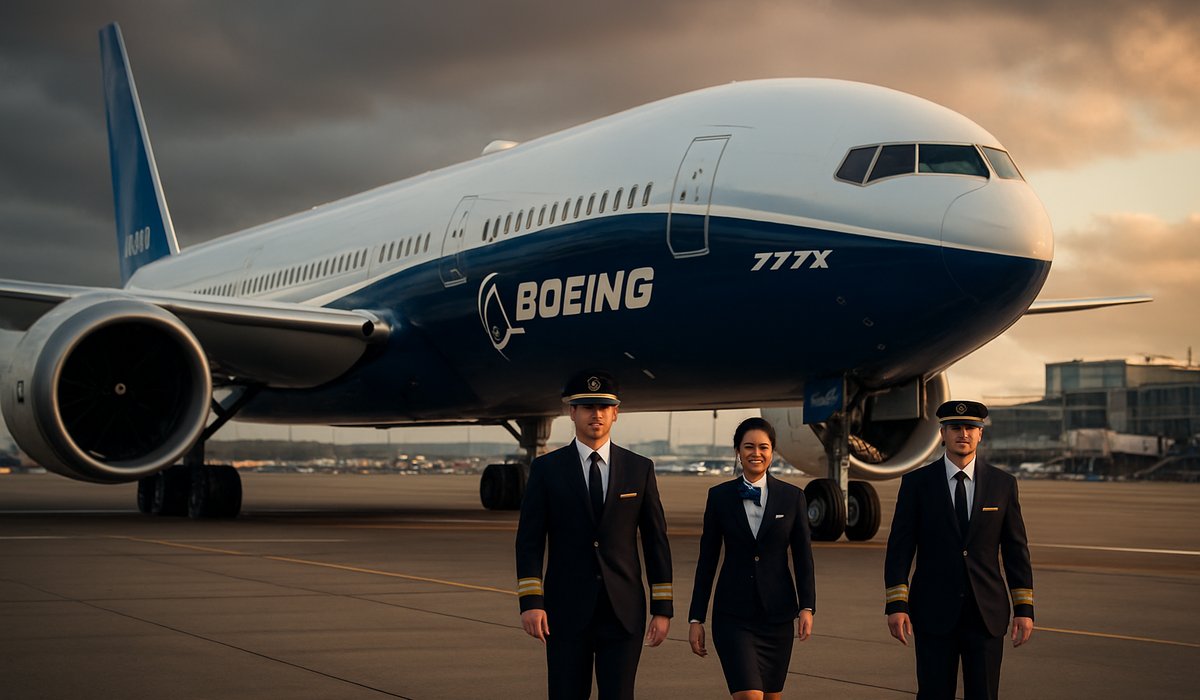
Image generated by AI
Boeing's 777X Fleet Faces Costly Redesign Delays as Early Production Airframes Require Major Modifications
Manufacturing misstep threatens to further postpone deliveries of the long-delayed widebody aircraft
Boeing has announced that approximately 30 completed 777X airframes currently in its production facilities will need significant modifications before they can be delivered to airlines, marking another setback for the embattled aircraft manufacturer's most advanced widebody program.
The disclosure reveals that Boeing prioritized ramping up production ahead of final regulatory certification, resulting in structural and systems modifications now required across the pre-built inventory. The decision to construct airframes before the Federal Aviation Administration granted full type certification has created an unexpected manufacturing challenge that will extend the already-delayed delivery timeline.
Production Racing Ahead of Certification
Boeing's move to build the aircraft ahead of completing certification underscores the intense pressure the aerospace giant faces to demonstrate progress on a program that has suffered repeated delays since its 2013 launch. However, the strategy has backfired, forcing the company to retrofit completed fuselages, wings, and systems integration components to align with the finalized design specifications that emerged during the certification process.
Industry analysts suggest the decision reflects Boeing's attempt to narrow the gap between design completion and customer deliveries, a critical metric for investor confidence and airline scheduling. Nevertheless, the modification requirement now creates a bottleneck in the production pipeline that could delay the first 777X deliveries into 2025 or beyond.
Financial and Operational Implications
The retrofit costs associated with modifying 30 aircraft represent a significant unplanned expense for Boeing, which is already managing substantial financial pressures from the 737 MAX production grounding and broader supply chain disruptions affecting the aviation industry. Airlines awaiting 777X deliveries—including carriers such as Emirates, Singapore Airlines, and All Nippon Airways—face continued uncertainty regarding fleet modernization plans and capacity expansion timelines.
For the broader aviation sector, continued 777X delays have ripple effects on airline scheduling, international route launches, and fleet fuel efficiency improvements that carriers were counting on to offset rising jet fuel costs and narrowing profit margins.
Industry Context
The 777X represents Boeing's answer to Airbus's A350 XWB and is designed to deliver superior fuel efficiency and reduced operating costs for long-haul carriers. However, sustained delays have allowed competitors to strengthen market position, while airlines grapple with persistent inflationary pressures on aviation fuel and labor expenses.
Boeing has not disclosed the expected timeline for completing modifications or announced revised delivery schedules for affected customers.
FAQ: Boeing 777X Delays and Aviation Industry Impact
Q1: Why did Boeing build 777X airframes before the aircraft received full FAA certification? A: Boeing accelerated production to demonstrate program momentum and narrow the timeline between design completion and customer deliveries, prioritizing speed over completing regulatory certification first.
Q2: How will the 777X modifications affect airline customers and their delivery schedules? A: Airlines including Emirates and Singapore Airlines will face extended waiting periods, potentially delaying fleet modernization plans and international route launches dependent on the aircraft's fuel efficiency.
Q3: What is the financial impact of modifying 30 777X airframes for Boeing? A: While Boeing hasn't specified exact retrofit costs, the modifications represent unplanned expenses amid ongoing financial pressures from previous production issues and supply chain disruptions.
Q4: How does the 777X delay affect jet fuel costs and airline operational efficiency? A: Postponed 777X deliveries delay carriers' ability to deploy more fuel-efficient aircraft, extending reliance on older widebodies during a period of volatile aviation fuel prices.
Q5: When will the first 777X aircraft be delivered to customers? A: Boeing has not announced a revised delivery timeline, though industry sources suggest deliveries may extend into 2025 or beyond pending modification completion and FAA approval.
Related Travel Guides
Flight Delay Compensation Guide 2026
Understanding Airline Route Changes
Airport Security Process Updated (2026)
External Resources
Disclaimer
This article is for informational and educational purposes only. It does not constitute legal, financial, or professional advice. While we strive to provide accurate and up-to-date information, travel policies, regulations, and conditions change rapidly. Always verify information with official sources before making travel decisions. Nomad Lawyer makes no representations about the accuracy, reliability, completeness, or suitability of the information provided. Readers should consult qualified professionals for advice specific to their circumstances. The views expressed in this article are those of the author and do not necessarily reflect the views of Nomad Lawyer.
Kunal K Choudhary
Co-Founder & Contributor
A passionate traveller and tech enthusiast. Kunal contributes to the vision and growth of Nomad Lawyer, bringing fresh perspectives and driving the community forward.
Learn more about our team →