
Oklahoma City for Remote Workers: Cost of Living, Internet, and Everyday Life
Affordable rent, fast Wi-Fi, and plenty of room to live and work. See what makes Oklahoma City a practical choice for remote workers.

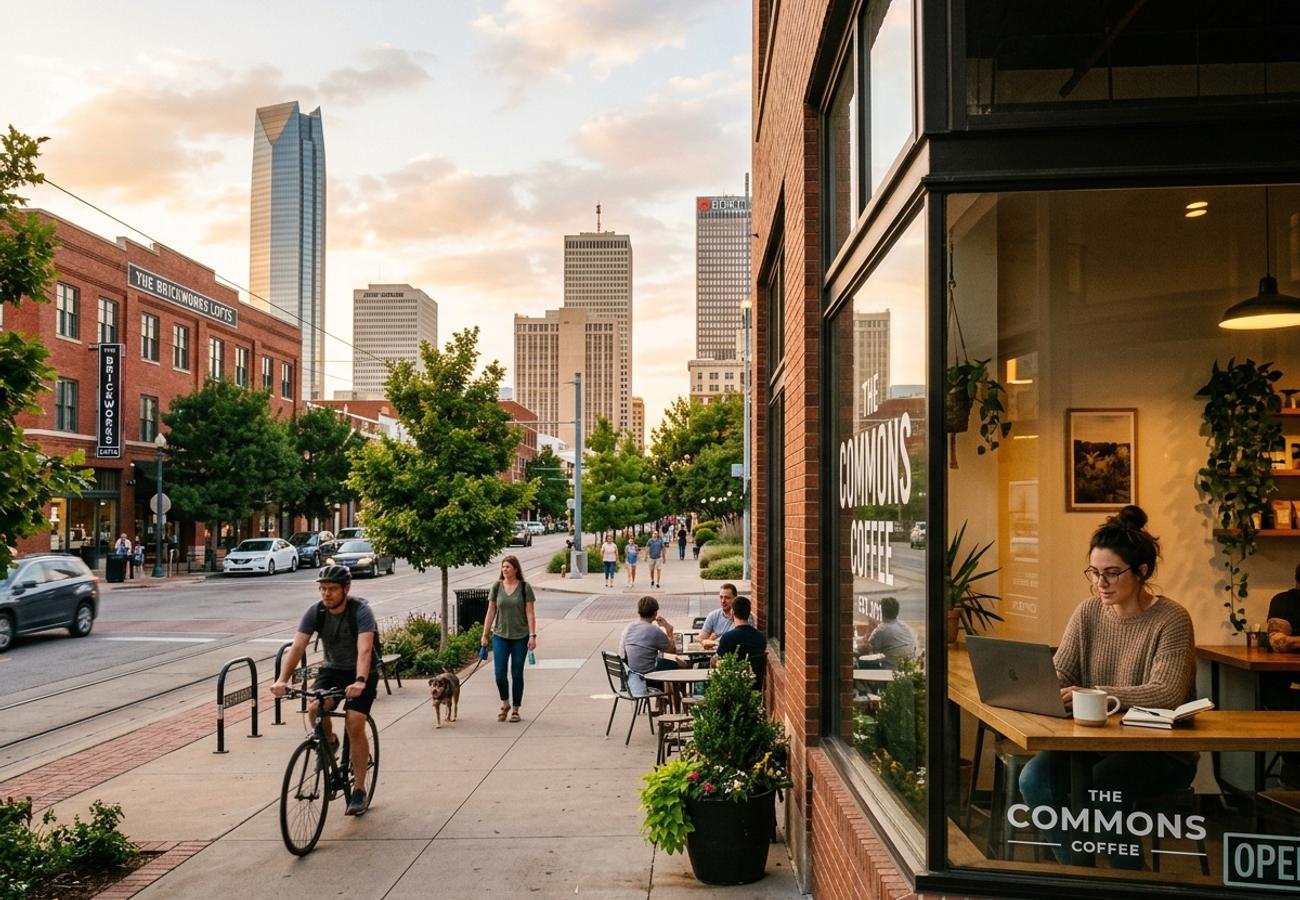
Photo by Nomad Lawyer Travel Desk / Remote working and urban lifestyle in downtown Oklahoma City
Your laptop doesn't care what city you're in. Your rent check does. That's the entire pitch for Oklahoma City. The city has turned into a place where remote workers are quietly trading coastal rent for a home office, a coffee shop that actually has parking, and enough leftover income to feel like a raise.
The Cost of Living Actually Adds Up in Your Favor
Let’s go through the numbers first. Oklahoma City runs 19% below the national average across the board, according to Payscale. Rent for a single person typically ranges from $940 to $1,115 a month, depending on the neighborhood.
Groceries are about 5% cheaper than the national average, while monthly utilities range from $315 to $359. Summer heat spikes electric bills, keeping annual utility costs close to national averages even with cheap housing.
You’ll also spend about 13% less on gas and transportation, although you’ll likely need a car for most daily trips. OKC is spread out, and the bus system won't get you everywhere you need to go.
Internet Speeds That Actually Support a Work Call
Nobody wants to explain a frozen screen during a client meeting. OKC's internet infrastructure holds up well for remote work. AT&T Fiber covers a large share of the metro, and providers like Cox and Dobson Fiber round out the options. In select areas, Dobson offers speeds up to 10 Gbps. Average speeds in the city sit around 104 Mbps, more than enough for video calls, large file transfers, or juggling multiple devices on one connection at once.
If fiber isn't available at your address, satellite and fixed wireless options exist, though speeds there vary a lot more.
Your Everyday Life Centers Around a Real Downtown
OKC isn't just affordable. It's also developed enough that "affordable" doesn't mean "boring." Downtown has been rebuilt over the last decade, and districts like Automobile Alley and Deep Deuce now carry a genuine mix of restaurants, breweries, and local shops. The Myriad Botanical Gardens sit right in the middle of downtown, a 17-acre patch of green space that's easy to wander during a lunch break.
For remote workers who don't want to work from a kitchen table every day, coworking options include The Commonwealth and The 404. These come with a growing list of independent coffee shops built for laptop work and long stays.
Midtown carries a similar draw, with restored brick buildings now holding coffee shops and small offices within walking distance of downtown. The Plaza District, just northwest of there, moves at a slower pace, built around independent galleries and monthly art walks. The Paseo Arts District offers another easy way to spend an afternoon, with a compact mix of studios and cafés that’s walkable enough to leave the car at home.
Finding a Home Base Is Where the Real Savings Show Up
Here's where the math gets interesting. The national median sale price is $438,964, compared to just $260,000 in OKC. If you’re looking for more affordable homes, that price gap is worth considering. Oklahoma City has over 29,000 homes for sale right now, giving remote workers real options instead of a picked-over market.
That kind of inventory matters, especially for someone moving from a coastal city where finding any listing under seven figures feels like a rumor. A remote worker relocating from a market like that can suddenly consider a house with a spare room for an office, something that may have felt out of reach a few states over.
Platforms like Houzeo.com can make that shift easier to navigate. Buyers can browse listings and compare neighborhoods before deciding which side of town fits their routine.
Oklahoma's Tax Rate Adds to the Savings
Lower rent and home prices aren't the only place the math works out. Oklahoma's state income tax tops out at 4.5%, according to the Tax Foundation. For a remote worker moving from a state with a higher top rate, that difference can mean more take-home pay, along with savings on rent or a mortgage.
Weather Is the One Trade-Off Worth Knowing About
Summers run hot, often into the 90s, and spring brings a really severe weather season, including tornado risk. Oklahoma City sits in Tornado Alley, and the metro area has recorded roughly 150 tornadoes within city limits since 1890, according to National Weather Service data. Late April through mid-June is the highest-risk stretch, with May seeing the most activity.
That risk shapes how homes get built here. New construction in the metro often includes a storm shelter or safe room, and many older homes have one added later. It's not a dealbreaker for most people who move here. But it's worth considering, especially if you've never lived somewhere with a tornado siren test on the first Monday of the month.
Why This Combination Works for Remote Workers Specifically
Unlike Tulsa, which leans on a cash-incentive program to pull in remote talent, Oklahoma City doesn't need to pay people to move here. The affordability speaks for itself. Lower rent, lower home prices, and lower day-to-day costs stack up fast when you're not tied to a physical office anymore.
A remote salary that barely covers a one-bedroom in a bigger city can cover a mortgage here instead. Reliable internet, a downtown that's actually worth leaving the house for, and a housing market with room to breathe all add to the appeal. Together, they make OKC look less like a fallback option and more like a smart one.
Time zones work in OKC's favor too. OKC’s Central Time Zone also works well for remote workers. It gives you a few overlapping hours with both the East and West Coasts, making it easier to schedule meetings without too many early mornings or late evenings.
It's not flashy. It's not trying to be Austin or Denver. But for someone weighing rent, home prices, and everyday costs, Oklahoma City makes a pretty compelling case for itself.
Related Travel Guides
Disclaimer
This article is for informational and educational purposes only. It does not constitute legal, financial, or professional advice. While we strive to provide accurate and up-to-date information, travel policies, regulations, and conditions change rapidly. Always verify information with official sources before making travel decisions. Nomad Lawyer makes no representations about the accuracy, reliability, completeness, or suitability of the information provided. Readers should consult qualified professionals for advice specific to their circumstances. The views expressed in this article are those of the author and do not necessarily reflect the views of Nomad Lawyer.
Raushan Kumar
Founder & Lead Developer
Full-stack developer with 11+ years of experience and a passionate traveller. Raushan built Nomad Lawyer from the ground up with a vision to create the best travel and law experience on the web.
Learn more about our team →