
Eight US States Enter Aurora Viewing Window as September Geomagnetic Activity Peaks
NOAA forecasts Northern Lights visibility across Alaska, Wisconsin, and six other US states on Sept 9. Learn the best viewing spots and timing for the aurora.
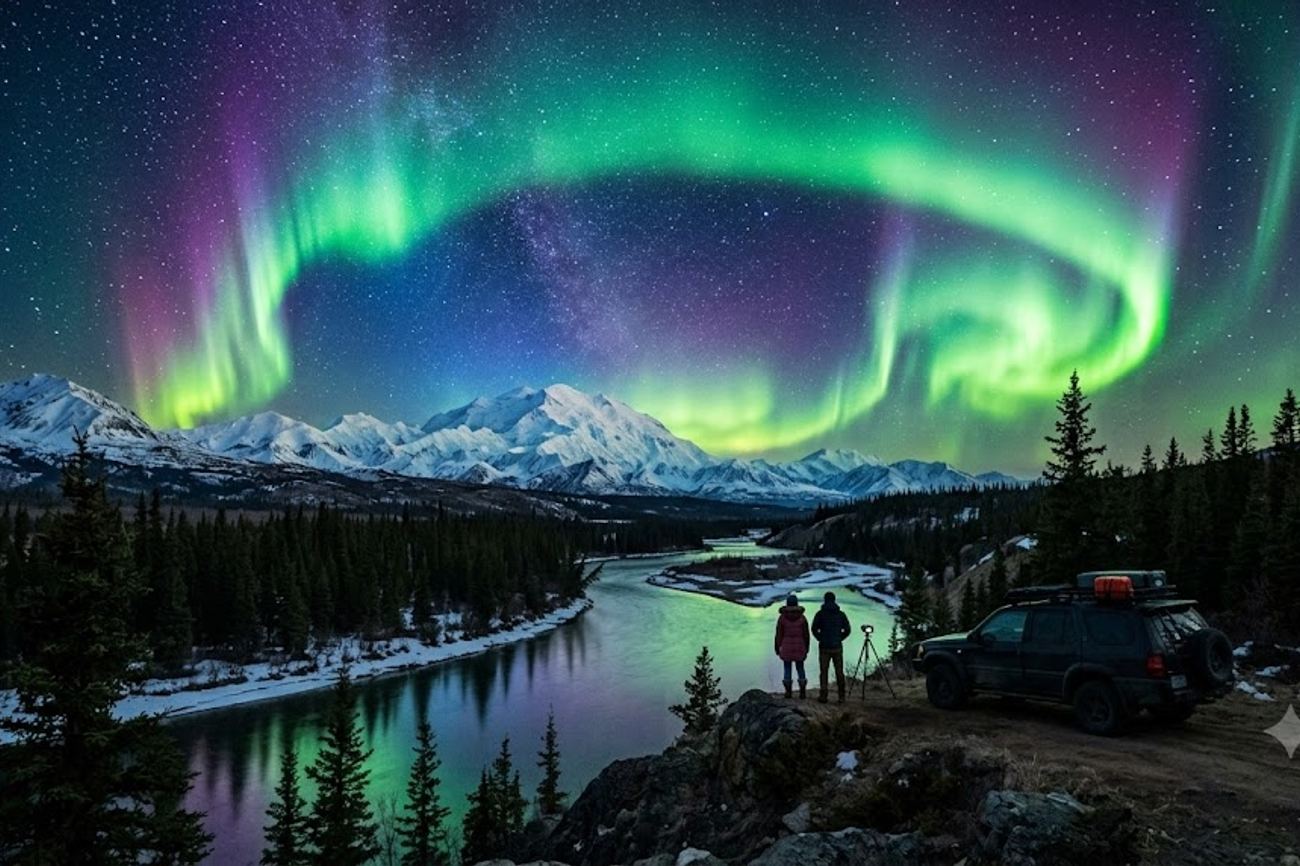
Image generated by AI
US Space Weather Forecast Expands Aurora Visibility
A significant geomagnetic event is bringing the Northern Lights into view for millions of residents and travelers across the northern United States on September 9. According to data from the National Oceanic and Atmospheric Administration (NOAA) Space Weather Prediction Center (SWPC), the aurora borealis is expected to be visible in Alaska, Washington, Idaho, Montana, North Dakota, South Dakota, Minnesota, and Wisconsin.
Industry reports indicate that the optimal viewing window will occur during the evening and overnight hours. While the phenomenon is widespread, visibility remains contingent on local weather conditions and the absence of heavy cloud cover. In Northern Alaska, the likelihood of a sighting is rated as highest, whereas regions closer to the US-Canada border may experience more variable visibility.
The timing of this event is particularly advantageous for stargazers. The presence of a new moon ensures a darker celestial backdrop, which significantly enhances the contrast of the auroral displays, making even moderate activity more apparent to the naked eye.
Regional Breakdown of Aurora Viewing Potential
The geographical scope of this event is notable because it extends the aurora experience far beyond the traditional hubs of the far north. This shift allows travelers currently exploring the northern tier of the US to witness a phenomenon usually reserved for Arctic expeditions. However, officials warn that being located within a "forecast state" does not guarantee a sighting, as artificial light pollution and atmospheric interference play critical roles.
The NOAA remains the primary authority for these projections, providing real-time updates that allow travelers to adjust their plans as geomagnetic conditions evolve throughout the night.
| US Destination | Viewing Outlook | Key Advantage for Travelers |
|---|---|---|
| Alaska | Highest US likelihood | Far-northern position and extensive dark-sky areas |
| Washington | Possible | Rural and mountainous areas offer darker conditions |
| Idaho | Possible | Large rural areas can reduce artificial light |
| Montana | Possible | Open landscapes provide broad horizons |
| North Dakota | Possible | Northern position and sparse development help viewing |
| South Dakota | Possible | Rural areas offer darker skies |
| Minnesota | Possible | Northern regions can provide favourable conditions |
| Wisconsin | Possible | Northern communities offer access to darker skies |
Alaska Maintains Dominance in Aurora Tourism
While eight states are currently in the spotlight, Alaska continues to be the premier destination for those seeking a guaranteed experience. Due to its location directly beneath the auroral oval, the state possesses a permanent geographical advantage. When solar winds interact with the Earth's magnetic field, Alaska is the first and most consistent point of impact within the US.
Hubs such as Fairbanks and other northern settlements have built entire tourism economies around this predictability. Additionally, Denali National Park serves as a critical asset for observers, offering vast stretches of wilderness entirely free from the light pollution of urban centers.
The US National Park Service suggests that patience is the most important tool for any aurora hunter. Because the intensity of the lights can fluctuate wildly within a single hour, visitors are encouraged to spend multiple nights in the field to increase their chances of a successful sighting. For local hospitality operators, this volatility shifts the value proposition from selling a "guaranteed sight" to providing a "curated experience," emphasizing flexible itineraries and guided dark-sky excursions.
The Science of the September Viewing Window
The emergence of the aurora in September is not coincidental. This period aligns with the autumn equinox, a time when the Earth's magnetic field is positioned in a way that makes it more susceptible to solar wind. This phenomenon is known scientifically as the Russell-McPherron effect.
The Russell-McPherron effect occurs when the orientation of the interplanetary magnetic field aligns more effectively with Earth's own magnetosphere. This alignment allows a greater volume of solar-wind energy to penetrate the atmosphere, which triggers more intense and lower-latitude auroral displays.
Beyond the physics, September offers a practical logistical benefit: the return of true darkness. After the "midnight sun" and long twilight hours of the Alaskan and northern summers, the nights are lengthening. This provides the necessary darkness required for the aurora to become visible to the human eye. This "shoulder season" is increasingly popular for travelers who wish to combine aurora hunting with daytime activities like hiking and wildlife photography.
Critical Factors for Successful Sighting
While geomagnetic activity provides the "fuel" for the Northern Lights, several external factors determine whether a traveler actually sees them. The new moon is a significant help this week, as it removes the glare that often washes out faint auroral greens and purples.
However, the primary adversary for any observer is cloud cover. Even a G4-class geomagnetic storm cannot penetrate a thick layer of stratus clouds. Travelers are advised to cross-reference NOAA's space weather data with local hourly meteorological forecasts.
| Viewing Factor | Why It Matters | Best Traveler Response |
|---|---|---|
| Geomagnetic activity | Determines auroral strength | Monitor official NOAA forecasts |
| Cloud cover | Can completely obscure the sky | Check local hourly forecasts |
| Moonlight | Can reduce contrast | Use darker lunar periods |
| Light pollution | Makes faint displays harder to see | Travel away from urban centres |
| Horizon | Determines how much sky remains visible | Choose open viewing locations |
| Duration | Activity can change rapidly | Allow several hours outdoors |
Why This Matters: The Impact on Modern Travel
For the average traveler, this event highlights a shift in how "night tourism" is consumed. No longer is the aurora a "bucket list" item that requires a flight to Tromsø or Fairbanks. The expansion of visibility into states like Wisconsin and South Dakota demonstrates that space weather can create spontaneous, high-value tourism spikes in rural American regions.
From a logistical standpoint, this creates a "pop-up" economy. Small towns in the northern US can see sudden surges in hotel occupancy and fuel sales when a NOAA alert goes viral. For the visitor, the lesson is clear: flexibility is key. The most successful aurora hunters are those who treat the forecast as a prompt to move toward darkness, rather than a scheduled appointment.
Related Travel Guides
Disclaimer
This article is for informational and educational purposes only. It does not constitute legal, financial, or professional advice. While we strive to provide accurate and up-to-date information, travel policies, regulations, and conditions change rapidly. Always verify information with official sources before making travel decisions. Nomad Lawyer makes no representations about the accuracy, reliability, completeness, or suitability of the information provided. Readers should consult qualified professionals for advice specific to their circumstances. The views expressed in this article are those of the author and do not necessarily reflect the views of Nomad Lawyer.