
Emerging European Destinations Outpace Tourism Giants in Growth Momentum
Malta, Poland, and Slovenia are seeing record tourism growth, challenging the dominance of Spain, Italy, and France in the EU visitor economy.
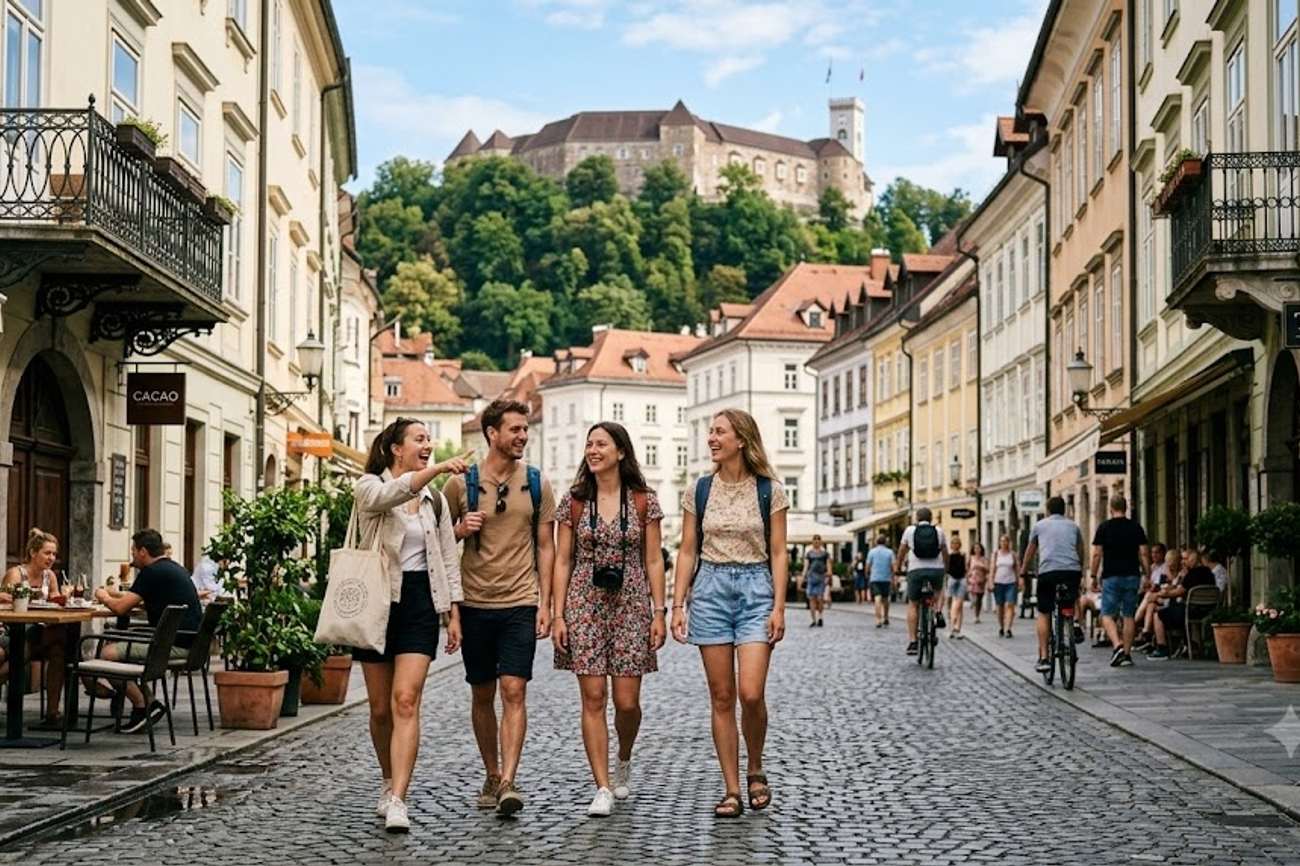
Image generated by AI
[Brussels, September 9, 2026] — A significant shift is occurring within the European travel landscape as smaller nations begin to outpace established tourism giants in terms of percentage growth. Recent data indicates that while the "Big Three"—Spain, Italy, and France—still command the vast majority of total visitors, emerging markets like Malta, Poland, and Slovenia are capturing a growing share of the momentum, signaling a diversification of traveler preferences across the continent.
The European Union recorded nearly 3.1 billion overnight stays in tourist accommodations throughout 2025, according to Eurostat. This reflects a 2.2% annual increase, representing an addition of 66.4 million nights across the bloc. This expansion was primarily fueled by international guests, who contributed 49.7 million of those additional nights, while domestic travelers accounted for the remaining 16.7 million.
Growth Rates vs. Total Volume in EU Tourism
Despite the overall growth of the EU market, a sharp divide has emerged between total volume and growth velocity. The traditional tourism powerhouses—Spain, Italy, France, and Germany—continue to dominate the landscape, collectively generating 61.7% of all EU tourism nights in 2025. Spain led the group with 513.6 million nights, followed closely by Italy with 476.9 million and France with 471.7 million.
However, when analyzing the rate of expansion, the narrative shifts toward smaller markets. Malta emerged as the EU leader in growth, recording a 10.1% increase in tourism nights. Poland followed with a 7.2% rise, while Slovenia saw a 5.9% increase. This trend suggests that while the giants hold the crown in terms of scale, the most aggressive expansion is happening in territories that were previously considered secondary markets.
| Destination | 2025 Tourism Nights | Annual Change | Position in the Story |
|---|---|---|---|
| Malta | Rapidly expanding | +10.1% | Fastest EU growth |
| Poland | Rapidly expanding | +7.2% | Major emerging market |
| Slovenia | 17.84 million | +5.9% | Strong smaller-market momentum |
| Spain | 513.6 million | Slower than challengers | Largest EU market |
| Italy | 476.9 million | Slower than challengers | Major mature market |
| France | 471.7 million | Slower than challengers | Major mature market |
Malta’s Reliance on International Demand
Malta provides the most striking example of rapid acceleration. Beyond its 10.1% growth in 2025, the nation maintained this trajectory into 2026, reporting an 11.1% increase in overnight stays during the first quarter. During that same period, only Ireland saw a higher surge, recording a 35.3% increase.
The structural makeup of Malta's tourism is heavily skewed toward overseas visitors. In the first half of 2025, international guests accounted for 93.6% of all overnight stays, the highest proportion in the European Union, surpassing both Croatia and Cyprus. This reliance on foreign arrivals makes Malta highly responsive to fluctuations in international air capacity and short-break travel trends across the Mediterranean. However, it also leaves the economy more vulnerable to global geopolitical shifts compared to nations with robust domestic tourism bases.
Poland’s Domestic-Driven Expansion
In contrast to Malta, Poland is utilizing a different engine for growth. The Polish tourism market is characterized by a strong internal foundation, meaning its expansion is not solely dependent on foreign arrivals. Data from the first quarter of 2025 reveals that international visitors represented only 18.6% of overnight stays in Poland.
This domestic strength allows Poland to scale its tourism economy regardless of international travel volatility. The country is leveraging its large population and the rising appeal of city-break destinations. While Warsaw and Kraków remain the primary urban magnets, the Baltic coast and the city of Gdańsk are diversifying the offering. This internal resilience creates a stable environment for investment in regional infrastructure and cultural sites outside the traditional high-traffic European circuits.
Slovenia’s Diversified Tourism Portfolio
Slovenia represents a middle ground between the Malta and Poland models. In 2025, the country welcomed nearly 7 million tourists, resulting in 17.84 million overnight stays. Foreign tourists were the primary drivers, contributing 13.36 million nights (approximately 75% of the total). While foreign overnight stays grew by 8.1%, domestic stays saw a slight decline of 0.3%.
Slovenia's success is rooted in a diversified product offering, ensuring that growth is not tied to a single region or activity. The distribution of overnight stays highlights this variety:
- Ljubljana: 2.84 million nights (+9.8%)
- Mountain Resorts: 5.50 million nights (+6.6%)
- Seaside Resorts: 3.25 million nights (+3.1%)
- Camping Sites: 2.52 million nights (+6.5%)
The source of these visitors also indicates a strong regional pull. Germany remains the top foreign market with over 2 million nights, followed by Italy (1.19 million) and Austria (1.07 million). Notably, Czech visitors increased their stays by 12.8%, and Croatian visitors rose by 10.9%, suggesting a strengthening of Central European travel corridors.
Why This Matters: The Shift Toward "Shoulder" Destinations
For the modern traveler, these statistics represent a tangible shift in how Europe is experienced. The extreme congestion seen in the "Big Three" destinations—Spain, Italy, and France—is driving a movement toward "shoulder" opportunities. Travelers are increasingly seeking destinations that offer similar cultural or natural value but without the saturation of the primary hubs.
From a logistical standpoint, the growth in Poland and Slovenia indicates that infrastructure in Central and Eastern Europe is becoming more capable of handling high volumes of diverse tourist profiles, from luxury city-breakers in Warsaw to outdoor enthusiasts in the Slovenian Alps.
For investors and tourism operators, the data proves that "momentum" is a more critical metric than "volume" when identifying growth opportunities. While Spain will likely remain the most visited country for the foreseeable future, the highest percentage of return on investment for new hotel developments or tour operations is currently shifting toward the emerging markets of the EU. This trend suggests a future where European tourism is more balanced, reducing the pressure on over-touristed cities like Venice or Barcelona by distributing the visitor load across a wider array of competitive destinations.
Related Travel Guides
Disclaimer
This article is for informational and educational purposes only. It does not constitute legal, financial, or professional advice. While we strive to provide accurate and up-to-date information, travel policies, regulations, and conditions change rapidly. Always verify information with official sources before making travel decisions. Nomad Lawyer makes no representations about the accuracy, reliability, completeness, or suitability of the information provided. Readers should consult qualified professionals for advice specific to their circumstances. The views expressed in this article are those of the author and do not necessarily reflect the views of Nomad Lawyer.