
North Dakota Confluence Fall Festival: Williston, Fort Buford, and Frontier Heritage Guide for 2026

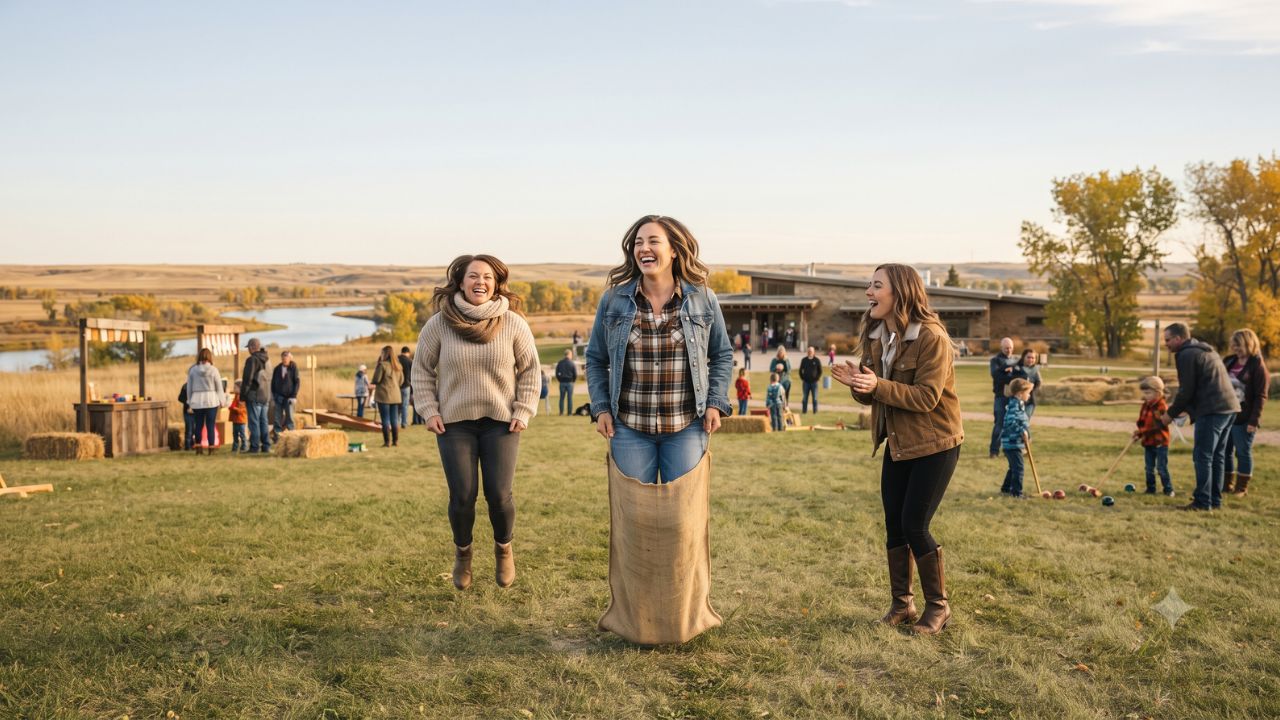
The Missouri-Yellowstone Confluence Interpretive Center near Williston hosts the free Confluence Fall Festival on 24 October 2026.
At the windswept junction where the muddy Yellowstone River pours into the Missouri, stands the historic soil where Hunkpapa Lakota leader Sitting Bull surrendered his rifle in 1881—ending an era of armed resistance on the northern plains. That deep historical crossroads is stepping into the spotlight for autumn travelers. On Saturday, 24 October 2026, the Missouri-Yellowstone Confluence Interpretive Center will host the free Confluence Fall Festival from 10:00 am to 4:00 pm Central Time. Organized under North Dakota’s statewide ND250 program commemorating the 250th anniversary of the United States, the single-day gathering revives nineteenth-century prairie community fairs through Victorian lawn sports, frontier field challenges, and regional acoustic folk music along the golden river bluffs southwest of Williston.
Autumn on the Northern Plains: Inside the Confluence Fall Festival
Set roughly 22 miles southwest of Williston off Highways 1804 and 58, the Missouri-Yellowstone Confluence Interpretive Center offers an authentic look at life before modern digital distractions. The 2026 festival recreates the atmosphere of historic agricultural socials, where homesteading families gathered after the autumn harvest to trade stories, test athletic endurance, and celebrate seasonal abundance.
The event program kicks off at 10:00 am with traditional Victorian-era carnival amusements, croquet sets, and lawn bowling on the center's grounds. At 1:00 pm, the action transitions into the inaugural Confluence Frontier Field Day Games, featuring high-spirited foot races, three-legged heats, sack races, egg-and-spoon dashes, and a traditional frontier-inspired Greased Pig Challenge designed for safe, organized community participation.
The day concludes with live heritage music. From 3:00 pm to 4:00 pm, regional North Dakota folk band The Flea Bitten Tramps will perform inside the interpretive center’s rotunda. The rotunda provides a fitting acoustic and historical setting, adorned with detailed murals depicting river scenes and inscribed with journal excerpts penned by Meriwether Lewis and William Clark during their historic river journeys through the territory in 1805 and 1806.
Festival Schedule and Historic Site Timetable
To assist road-trippers planning an autumn journey through Williams County, the timetable below outlines key festival events and surrounding site details:
| Schedule & Location Details | Operating Hours & Timing | Highlight Activities & Program | Visitor Access & Admission |
|---|---|---|---|
| Morning Lawn Amusements | 10:00 am – 1:00 pm CT | Victorian carnival games, croquet, lawn bowling | Free admission; family-friendly participation |
| Frontier Field Day Contests | 1:00 pm – 3:00 pm CT | Sack races, three-legged races, egg-and-spoon, greased pig contest | Open to children, parents, and travelers |
| Flea Bitten Tramps Concert | 3:00 pm – 4:00 pm CT | Acoustic northern plains folk performance | Center Rotunda surrounded by Lewis & Clark murals |
| Permanent Museum Exhibit | 10:00 am – 4:00 pm CT | Trails, Tracks, Rivers, and Roads exhibition | State-of-the-art interactive river history displays |
| Fort Buford State Historic Site | 0.5 miles west (Year-round grounds) | Powder magazine (1866), post cemetery, Sitting Bull site | Historic grounds open; buildings by event/appointment |
| Regional Highway Access | Open highway corridors | Highway 1804 (Lewis & Clark Trail) & ND-58 | 22 miles southwest of central Williston |
Managed under the State Historical Society of North Dakota, the interpretive center also features the permanent exhibition Trails, Tracks, Rivers, and Roads, which traces native tribal trading trails, steamboat river navigation, military fort outposts, and modern prairie transport corridors.
What Makes the Missouri-Yellowstone Confluence Different
The meeting of the Missouri and Yellowstone rivers is among the most consequential geographic landmarks in the American West. Long before military posts were surveyed, indigenous tribes—including the Mandan, Hidatsa, Arikara, Assiniboine, and Lakota—used the river junctions as natural navigation coordinates and seasonal trading grounds.
In late April 1805, the Corps of Discovery camped here, documented in the national archives of the Lewis and Clark National Historic Trail. Meriwether Lewis climbed the nearby river bluffs and remarked on the immense herds of buffalo, elk, and antelope grazing across the open bottomlands.
Just half a mile west of the interpretive center lies Fort Buford State Historic Site. Established in 1866 to guard military supply steamboats moving upriver toward Montana, Fort Buford stood at the center of the Plains Indian Wars. It was inside the fort's headquarters that Sitting Bull and his band of remaining followers surrendered in July 1881. While Fort Buford's museum buildings enter seasonal closure during October, the expansive parade grounds, stone powder magazine, and historic interpretive signage remain accessible for self-guided walking tours throughout the year.
Visitor Insider Tips: Navigating Williams County in Late Autumn
Experiencing late-October travel across north-western North Dakota requires regional knowledge and realistic seasonal prep:
- Dressing for Prairie Wind: Late October along the Upper Missouri brings brisk daytime highs averaging 10°C to 14°C, but sustained prairie winds can drop wind chills rapidly. Dress in breathable wool or thermal base layers, a windproof outer shell, and sturdy walking boots suitable for gravel trails and grass fairgrounds.
- Where to Base Yourself in Williston: Make Williston your lodging base. The city offers numerous modern hotels along Highway 2, established dining options, and local steakhouses. The drive to the confluence takes approximately 30 minutes south-west along ND-1804.
- Bird-Watching at Confluence Point: Bring a pair of binoculars. The protected cottonwood river bottoms surrounding the confluence serve as a primary migratory stop for sandhill cranes, bald eagles, and white pelicans heading south along the Central Flyway before winter freeze-up.
- Connecting with Fort Union Trading Post: While visiting the area, drive an additional three miles west along Highway 1804 to Fort Union Trading Post National Historic Site, situated on the Montana-North Dakota state line. This reconstructed 1830s fur trading post once served as John Jacob Astor's Upper Missouri headquarters, trading buffalo robes with northern plains tribes.
- Fuel and Driving Precautions: Rural highways in western North Dakota are well-maintained, but deer movement peaks around dawn and dusk in October. Keep your headlights on low beam when driving back to Williston at sunset, and ensure your vehicle has a full fuel tank before exploring rural county roads.
Cultural and Environmental Context: River Ecology and Plains Preservation
Events like the Confluence Fall Festival serve an educational role by connecting modern communities with the complex history of frontier expansion. As North Dakota commemorates the national ND250 milestone, public heritage programs work to acknowledge the full scope of historical narratives—from pioneering homesteaders and military frontier regiments to sovereign indigenous nations whose ancestral homelands were reshaped by westward settlement.
Simultaneously, the confluence ecosystem represents a vital natural corridor supported by North Dakota Tourism and regional conservation bodies. Unlike many heavily dammed stretches of the Missouri system, the Yellowstone River remains the longest free-flowing, undammed river in the lower 48 states. This undammed hydrology preserves natural seasonal silt deposits and gravel bars essential for endangered pallid sturgeon spawning and native riparian woodlands.
By encouraging travelers to spend time on foot across public interpretive trails, local historians foster environmental appreciation that ensures these historic prairies and wild river currents remain intact for generations to come.
FAQ: Visiting Williston and the Confluence Festival in 2026
Is there an admission fee for the Confluence Fall Festival?
No. The festival is completely free and open to the public, including all Victorian games, field day contests, museum exhibitions, and the live folk music concert.
Where is the festival held relative to Williston?
The event takes place at the Missouri-Yellowstone Confluence Interpretive Center, located approximately 22 miles southwest of Williston, accessible via Highways 1804 and 58.
Can visitors tour Fort Buford during the festival?
The grounds and outdoor interpretive markers of Fort Buford State Historic Site are open year-round for walking tours. However, interior museum buildings are closed for the regular season in October, except for special appointments and scheduled group events.
What is the closest commercial airport to the festival?
Williston Basin International Airport (XWA) is the closest commercial airfield, located roughly 30 miles north of the interpretive center, offering direct scheduled flights from Minneapolis and Denver.
Where the muddy waters of the Yellowstone meet the rolling Missouri, the autumn wind still carries the timeless stories of explorers, chiefs, and prairie pioneers across the northern plains.
Related Travel Guides
American Road Trip Classics: The 10 Best Long-Distance Driving Routes Across the USA
Small-Town America Travel Spotlight: 12 Scenic Off-the-Beaten-Path Rural Destinations
North Dakota Upper Missouri Corridor: Lewis & Clark Trail, Fort Union, and Badlands Road Trips
Disclaimer
This article is for informational and educational purposes only. It does not constitute legal, financial, or professional advice. While we strive to provide accurate and up-to-date information, travel policies, regulations, and conditions change rapidly. Always verify information with official sources before making travel decisions. Nomad Lawyer makes no representations about the accuracy, reliability, completeness, or suitability of the information provided. Readers should consult qualified professionals for advice specific to their circumstances. The views expressed in this article are those of the author and do not necessarily reflect the views of Nomad Lawyer.
Raushan Kumar
Founder & Lead Developer
Full-stack developer with 11+ years of experience and a passionate traveller. Raushan built Nomad Lawyer from the ground up with a vision to create the best travel and law experience on the web.
Learn more about our team →