
Aspen Airport Shuts for Seven Months in 2027: The $575 Million Runway Overhaul and Colorado Travel Guide

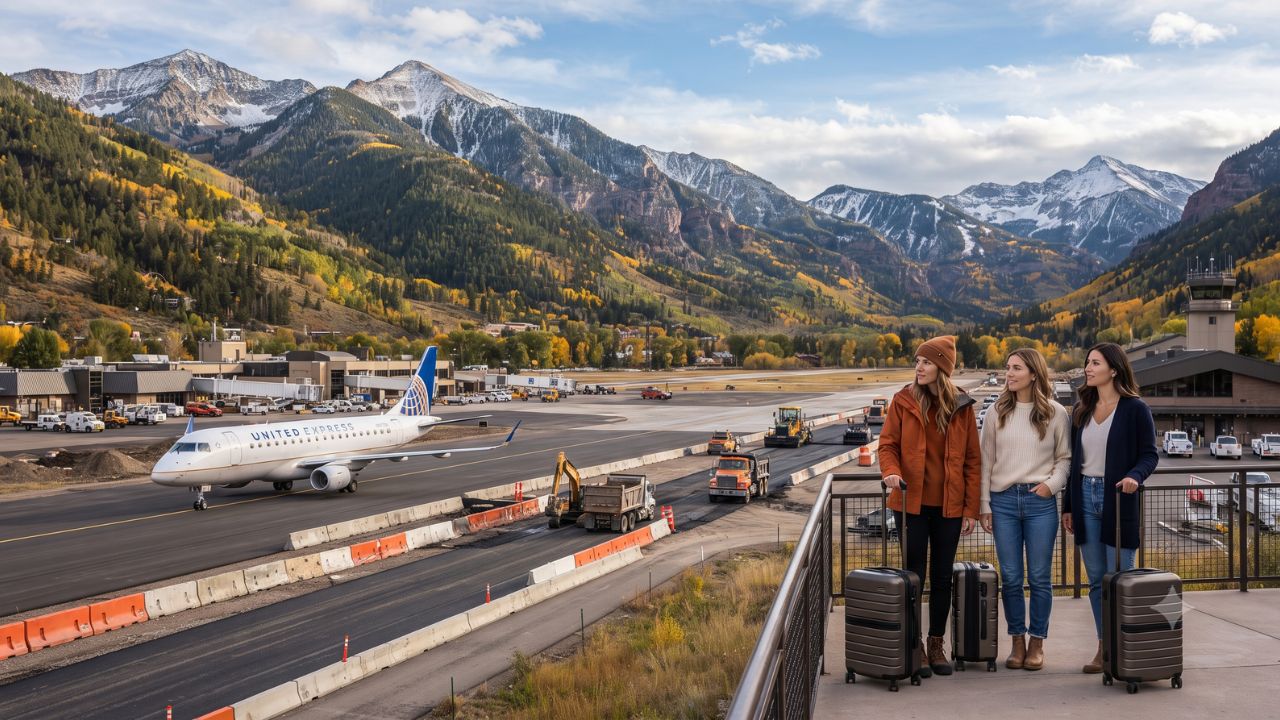
Aspen/Pitkin County Airport (ASE) will close to all flight operations from 4 April to 19 November 2027 for a major airfield modernization.
At nearly 8,000 feet of elevation where thin mountain air tests even the most seasoned aviators, shifting an active runway by just 80 feet has sparked the fiercest civic debate in modern Colorado history. Aspen/Pitkin County Airport (ASE) is preparing for an unprecedented full operational shutdown. The airfield will close to all commercial, private, and general aviation operations at 11:00 pm local time on 4 April 2027, reopening at 7:00 pm on 19 November 2027. The seven-month suspension will allow construction crews to rebuild and widen the aging runway, adjust taxiway separations, and break ground on a new terminal as part of an estimated $575 million comprehensive modernization program that threatens to disrupt summer festivals, autumn foliage tours, and early ski season bookings across the Roaring Fork Valley.
The 80-Foot Shift: Unpacking Aspen’s $575 Million Modernization
Located roughly 2.5 miles northwest of downtown Aspen, Sardy Field operates in one of the most demanding topographical bowls in North America. Surrounded by rapidly rising Rocky Mountain ridges, the existing runway has reached the end of its structural design life. Crucially, the current airfield layout violates modern safety standards enforced by the Federal Aviation Administration (FAA), which mandate a 400-foot separation between runway and taxiway center lines.
The engineering solution requires completely rebuilding the runway, shifting it 80 feet west, and widening the tarmac from 100 feet to 150 feet. Concurrently, the allowable aircraft wingspan will expand from the historical 95-foot limit up to a maximum of 118 feet. While this adjustment permits cleaner, quieter next-generation regional aircraft to operate at ASE, it has triggered widespread community anxiety that larger planes will accelerate local overcrowding and luxury gentrification.
The financial framework backing the project reflects a complex blend of federal grants and local bonding. Pitkin County voters approved Ballot Issue 1A in November 2025, authorizing the issuance of up to $340 million in airport revenue bonds, which will be repaid entirely through airport-generated enterprise fees, airline landing charges, and vendor leases rather than general property taxes. Federal support is equally substantial: in September 2026, the FAA awarded a record $37 million Airport Improvement Program grant, pushing total federal funding for 2026 to nearly $50 million, with roughly $82 million anticipated annually across 2027 and 2028.
Project Scope, Timetable, and Alternative Airport Comparison
To assist travelers planning Colorado vacations during the 2027 calendar year, the breakdown below outlines the engineering specifications and compares the four alternative arrival gateways:
| Gateway & Infrastructure Factor | Project Specs & Alternatives | Distance & Driving Time to Aspen | Strategic Travel Considerations |
|---|---|---|---|
| Aspen/Pitkin County Airport (ASE) | Closed 4 April – 19 Nov 2027 | 2.5 miles (10 minutes) | Full airfield shutdown; reopens ahead of 2027–28 ski opening |
| Vail/Eagle County Airport (EGE) | Primary regional alternative | 70 miles (1 hour 45 minutes) | United and American adding flights; easiest mountain route via Glenwood Canyon |
| Grand Junction Airport (GJT) | Western Colorado feeder | 125 miles (2 hours 15 minutes) | Low weather diversion risk; straightforward drive east along I-70 and CO-82 |
| Montrose Regional Airport (MTJ) | Southwestern regional hub | 135 miles (2 hours 45 minutes) | Scenic route via McClure Pass (CO-133); seasonal winter snow closures |
| Denver International Airport (DEN) | Major global intercontinental hub | 220 miles (3.5 to 4 hours) | Broad flight network; requires mountain driving across the Continental Divide |
| Runway Budget & Work Scope | ~$250 million reconstruction | 80-ft shift, 150-ft width | Increases permitted wingspan limit from 95 to 118 feet |
| Full Modernization Budget | $575 million estimated (2025–2029) | Replaces 1976 terminal in 2029 | New private FBO facility, Owl Creek Road and trail realignment |
What Makes Aspen Different: Silver Mining Roots and Cultural Independence
Aspen is far more than an opulent winter playground for private jets; it is a community shaped by a century and a half of fierce mountain resilience. Founded as a nineteenth-century silver-mining boomtown, the town experienced an intellectual rebirth in the late 1940s, when industrialist Walter Paepcke established the Aspen Institute and the Aspen Music Festival and School, pioneering the "Aspen Idea"—a philosophy dedicated to nurturing the human mind, body, and spirit.
Today, visitors guided by the Aspen Chamber Resort Association encounter a community where world-class cultural institutions sit alongside preserved Victorian brick architecture. The four surrounding ski mountains—Aspen Mountain (Ajax), Aspen Highlands, Buttermilk, and Snowmass—operate under Aspen One, which also manages the landmark Little Nell hotel, award-winning culinary institutions, and housing for more than 1,000 seasonal workers.
In June 2026, Aspen One President and CEO David Tanner addressed the broader debate over regional carrying capacity by posing a fundamental question: "What does Aspen want to be?" That inquiry cuts to the core of the 2027 airport closure. While regional stakeholders project a potential 10% to 20% decline in visitor numbers during the seven-month shutdown, Aspen One and Snowmass Tourism confirmed in May 2026 that the entire resort community will remain fully open, welcoming guests to summer hiking, fly-fishing on the Roaring Fork River, and autumn cultural galas.
Visitor Insider Tips: Navigating Colorado Mountain Travel in 2027
If you plan to visit Aspen between April and November 2027, smart logistics will keep your vacation running smoothly:
- Securing Eagle County (EGE) Flights Early: Vail/Eagle County Airport is the most convenient commercial alternative during the closure, situated only 70 miles down the valley. Both United Airlines and American Airlines have announced expanded flight schedules into EGE during the shutdown. Book these regional seats early, as seat inventory will tighten rapidly during peak summer festival weeks.
- Navigating the I-70 Corridor from Denver: If you choose to fly into Denver International Airport, rent an all-wheel-drive vehicle. Driving the 220 miles to Aspen requires crossing the Continental Divide via Interstate 70 through the Eisenhower Tunnel and winding through spectacular Glenwood Canyon. Always check the Colorado Tourism Office travel tools and state road condition apps for weather-related canyon delays.
- Public Transit Hacks via RFTA: You do not need a personal car once you reach the Roaring Fork Valley. The Roaring Fork Transportation Authority (RFTA) operates the VelociRFTA bus rapid transit system—the first rural BRT in the United States. Clean, comfortable, and frequent buses run from Glenwood Springs all the way to downtown Aspen and Snowmass Village, saving you steep parking fees.
- Summer Festival Booking Windows: The Aspen Ideas Festival (late June) and the Aspen Music Festival (July and August) will proceed as scheduled. Because regional private jet access will be redirected to Rifle, Eagle, or Grand Junction, hotel rooms in downtown Aspen will experience different booking patterns; reserve downtown suites well ahead of time.
- Maroon Bells Reservation Protocols: If visiting the iconic Maroon Bells peaks south of town, remember that personal vehicle access is restricted. Visitors must book shuttle tickets through RFTA departing from Aspen Highlands, or reserve early-morning non-motorized parking permits months in advance.
Cultural and Environmental Context: Affordability, Aircraft Noise, and Alpine Ecology
The debate surrounding Aspen's runway overhaul mirrors the broader challenges confronting high-end mountain communities across the American West. The Roaring Fork Valley is grappling with acute workforce housing shortages, where service staff, teachers, and mountain rescue personnel often face two-hour commutes from downstream towns like Carbondale and Rifle.
Environmental critics of the airport expansion argue that accommodating aircraft with 118-foot wingspans will permit heavier corporate jets and increased commercial passenger throughput, exacerbating carbon emissions, road congestion, and pressure on delicate alpine ecosystems. Supporters counter that newer aircraft models produce lower acoustic footprints and consume less fuel per passenger mile than the aging regional jets currently serving the valley, while bringing the airfield into vital FAA compliance.
Furthermore, the construction itself incorporates stringent environmental standards. The broader $575 million redevelopment will install high-efficiency thermal glazing, advanced LED airfield lighting, and re-engineered drainage systems along Owl Creek to protect native cutthroat trout habitats. Conscientious travelers who use public transit, support locally owned dining cooperatives, and respect high-altitude leave-no-trace ethics help ensure that Aspen retains the natural grandeur that first drew visionaries to its peaks.
FAQ: Visiting Aspen During the 2027 Airport Closure
What are the exact dates of the Aspen Airport closure?
Aspen/Pitkin County Airport will be completely closed to all aircraft operations from 11:00 pm on 4 April 2027 until 7:00 pm on 19 November 2027.
Which airport should I fly into while Aspen's runway is closed?
Vail/Eagle County Regional Airport (EGE) is the closest commercial alternative (70 miles away, roughly a 1-hour 45-minute drive). Denver International Airport (DEN) offers the most flight connections (220 miles away, roughly a 4-hour drive).
Will Aspen Snowmass hotels and attractions remain open in summer 2027?
Yes. Aspen One, the Aspen Chamber Resort Association, and Snowmass Tourism have confirmed that all hotels, restaurants, outdoor recreation, and cultural festivals will operate normally throughout the summer and autumn.
When will the new Aspen airport terminal be completed?
The new passenger terminal and modernized fixed-base operator facility are scheduled for completion in 2029, meaning the airport will initially reopen in November 2027 using its existing terminal.
The roar of descending aircraft may fall silent over Sardy Field for seven months, but beneath the golden aspens and towering peaks of Ajax Mountain, the cultural soul of Aspen will shine as brightly as ever.
Related Travel Guides
Rocky Mountain Aviation Routes: Regional Flight Links Connecting Denver, Moab, and Taos
Utah Mountain Resort Expansion: Terrain Growth and Pass Logistics at Sundance
Vail and Eagle County Airport Transit Guide: Scenic Drives, RFTA Shuttles, and Ski Connections
Disclaimer
This article is for informational and educational purposes only. It does not constitute legal, financial, or professional advice. While we strive to provide accurate and up-to-date information, travel policies, regulations, and conditions change rapidly. Always verify information with official sources before making travel decisions. Nomad Lawyer makes no representations about the accuracy, reliability, completeness, or suitability of the information provided. Readers should consult qualified professionals for advice specific to their circumstances. The views expressed in this article are those of the author and do not necessarily reflect the views of Nomad Lawyer.
Raushan Kumar
Founder & Lead Developer
Full-stack developer with 11+ years of experience and a passionate traveller. Raushan built Nomad Lawyer from the ground up with a vision to create the best travel and law experience on the web.
Learn more about our team →