
Northeast Nor'easter Travel Waivers 2026: Insider Guide to Navigating American, United, and JetBlue Disruption

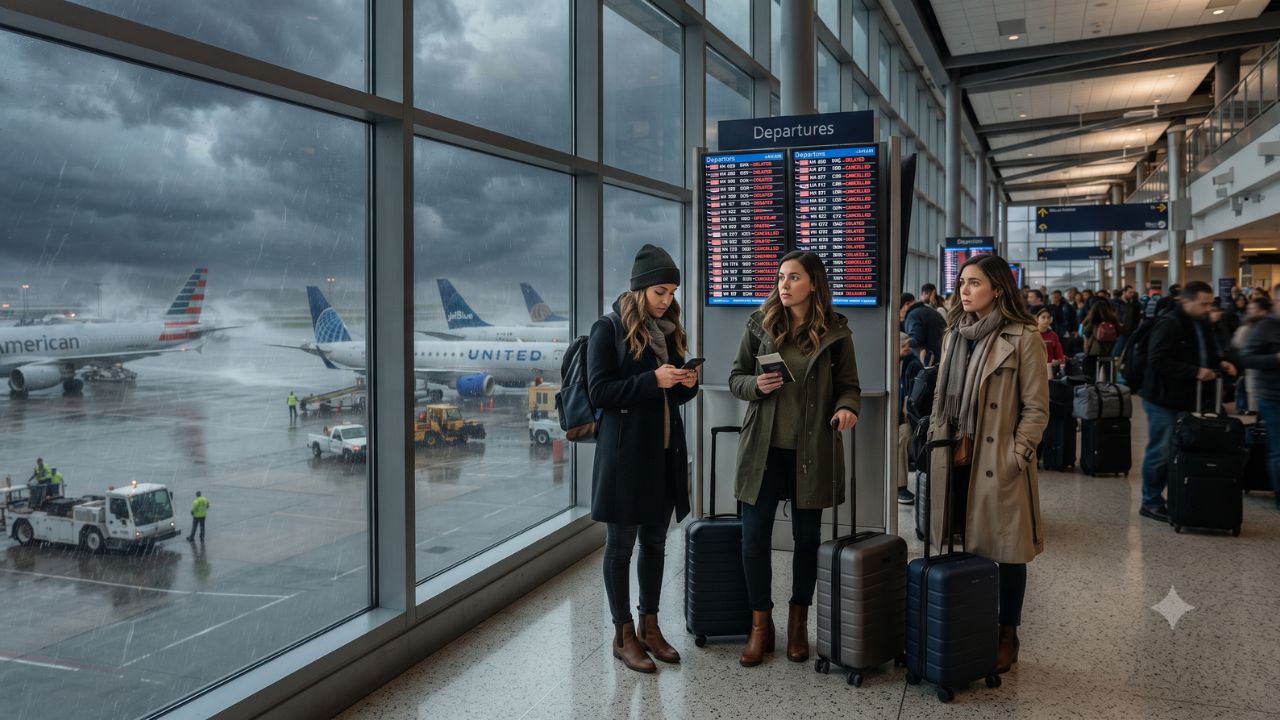
When a severe autumn Nor'easter bears down on the Northeast Corridor, the air traffic bottleneck doesn't just disrupt coastal runways—it grounds up to twenty percent of the nation's domestic flight grid within hours. As torrential coastal rains and gale-force wind gusts sweep into the Mid-Atlantic and New England, major carriers including American Airlines, United Airlines, and JetBlue Airways have activated emergency travel waivers covering flights scheduled from Friday through Sunday. Affecting primary hubs across the New York metropolitan area and New England—including John F. Kennedy International Airport (JFK), LaGuardia Airport (LGA), Newark Liberty International Airport (EWR), and Boston Logan International Airport (BOS)—these policies allow eligible travelers to alter itineraries without paying standard penalty fees.
The storm's reach extends well beyond commercial aviation. Across professional sports, Major League Baseball has been forced to compress regular season final-series matchups, rescheduling the Baltimore Orioles versus New York Yankees and Chicago Cubs versus Boston Red Sox games into Friday doubleheaders to avoid hazardous weekend playing conditions. For passengers caught in the weather system's path, successfully navigating this operational crunch requires knowing the exact contractual fine print of each airline's waiver rather than simply waiting in airport terminal lines.
Airline Policy Breakdown: Deciphering the Fine Print
While airline press announcements emphasize flexible travel, each major carrier enforces strict eligibility windows and rebooking conditions. Understanding the differences between airline rules ensures travelers make fee-free adjustments without triggering unexpected fare differences.
United Airlines has established precise qualification parameters for passengers ticketed through affected hubs. Travelers who purchased tickets on or before Wednesday for travel between Friday and Sunday can reschedule without change fees or fare differences, provided they maintain the exact original city pairing and ticketed cabin class. However, United requires all rescheduled replacement journeys to be completed by Tuesday. Changes requested beyond this tight window or alterations to routing will trigger standard fare differences.
American Airlines offers a slightly different flexibility structure. Qualifying passengers ticketed through designated Northeast airports during the advisory period can waive change fees while retaining the ability to modify their cabin category. If a traveler chooses to upgrade or move to an alternative cabin class on a newly available flight, American allows the change upon payment of the applicable fare difference, providing greater seat selection when economy cabins are fully booked.
JetBlue Airways provides comprehensive waiver terms for its heavy Northeast network, offering fee-free itinerary adjustments as well as direct refund options for customers whose scheduled flights are outright cancelled due to the storm. Real-time aviation tracking and ground delay advisories managed by the Federal Aviation Administration indicate that high crosswinds at coastal airports frequently trigger ground stop programs, making early rebooking or proactive refunds a safer strategy than waiting at departure gates.
What Makes Nor'easter Travel Disruption Different
Unlike localized summer thunderstorms that pass over an airfield in ninety minutes, a classic Atlantic Nor'easter is a sprawling, multi-day cyclonic system. The collision of warm Gulf Stream moisture with cold Canadian air masses generates sustained gale-force winds, reduced runway visibility, and heavy coastal flooding.
At constrained airports like LaGuardia and Newark—which operate near maximum hourly runway capacity under ideal blue-sky conditions—sustained crosswinds force air traffic controllers to increase aircraft separation intervals. This cuts arrival rates by half, creating compounding delays that ripple across domestic airline networks as flight crews and aircraft become stranded out of position.
Simultaneously, regional ground transit and harbor ferry operations face closures. Facilities operated by the Port Authority of New York and New Jersey experience roadway ponding and AirTrain speed restrictions during peak coastal surges, making ground access to JFK and Newark significantly slower than usual.
Visitor Insider Tips
When severe weather threatens your journey through the Northeast, proactive self-service rebooking and tactical transit choices make the difference between a smooth detour and a multi-day airport stranding.
- Rebook via Mobile Apps Before Gates Close: Do not wait in two-hour customer service queues at the airport. The moment an airline issues a weather waiver, open the carrier's mobile application. Waiver-eligible tickets automatically unlock free flight modification tools, allowing you to select earlier departures or reroute through southern connecting hubs like Charlotte (CLT) or Atlanta (ATL).
- Target Earlier Flight Waves: If traveling on Friday, attempt to switch to early morning departures (between 6:00 AM and 8:30 AM). Morning flights have a much higher probability of departing before convective rain bands intensify and regional air traffic management ground stops take effect.
- The Amtrak Northeast Corridor Alternative: If your domestic flight between Boston, New York, Philadelphia, or Washington D.C. is delayed or cancelled, look immediately at Amtrak rail alternatives. Electric rail operations along the Northeast Regional and Acela lines maintain far higher reliability during wind and rain events than short-haul regional flights.
- Understand Refund Rights: Under federal aviation regulations, if an airline cancels your flight or significantly alters your schedule and you choose not to travel, you are entitled to a full cash refund to your original payment method, not merely an expiring travel credit voucher.
- Protecting Sports and Event Itineraries: With MLB games moving to Friday afternoon doubleheaders at Yankee Stadium and Fenway Park, ticket holders must monitor team notifications directly to swap tickets or adjust gate arrival times before gates close early.
Cultural and Environmental Context
Nor'easters are an integral ecological and cultural force in the northeastern United States, shaping coastal geography and maritime life for centuries. However, the increasing frequency of intense coastal storm surges presents significant infrastructure challenges for low-lying urban transport networks.
Meteorologists and climate researchers with the National Weather Service actively track coastal erosion, barrier island breaches, and tidal flooding risks across Long Island Sound, Cape Cod, and Narragansett Bay. Municipal port authorities and transportation planners are investing billions into elevated seawalls, hardened airfield electrical substations, and storm-resilient drainage systems to ensure critical supply chains and passenger hubs remain operational during future extreme weather events.
FAQ: Navigating Nor'easter Travel Waivers 2026
How do I know if my flight qualifies for a free change? Check your airline's travel alerts page or mobile app. If your departure or arrival airport is listed and your original ticket was purchased before the stated cutoff date for travel during Friday through Sunday, change fees are waived.
Can I change my destination city under the waiver? Most airlines require you to maintain the same origin and destination cities to avoid paying fare differences. Rerouting to a completely different destination will usually require paying the difference in ticket prices.
What happens if my flight is delayed overnight? Because severe weather is classified as an uncontrollable event, US airlines are not legally mandated to provide complimentary hotel accommodations, though premium cabin passengers and elite frequent flyers may receive vouchers upon request.
How far in advance should I arrive at the airport during a storm? Allow at least three hours for domestic departures and four hours for international flights to account for highway flooding, transit slowdowns, and extended security screening lines.
When autumn storm winds howl across the Atlantic coastline, a proactive rebooking strategy is the traveler's most valuable asset for staying ahead of the weather.
Related Travel Guides
Disclaimer
This article is for informational and educational purposes only. It does not constitute legal, financial, or professional advice. While we strive to provide accurate and up-to-date information, travel policies, regulations, and conditions change rapidly. Always verify information with official sources before making travel decisions. Nomad Lawyer makes no representations about the accuracy, reliability, completeness, or suitability of the information provided. Readers should consult qualified professionals for advice specific to their circumstances. The views expressed in this article are those of the author and do not necessarily reflect the views of Nomad Lawyer.
Naina Thakur
Contributor & Travel Specialist
Travel enthusiast and legal writer covering visa regulations, responsible tourism, and cultural journeys across global destinations.
Learn more about our team →