
Alaska-Hawaiian Flight 803 Honolulu Incident: Cabin Air Safety, Emergency Protocols, and Hawaii Travel Guide

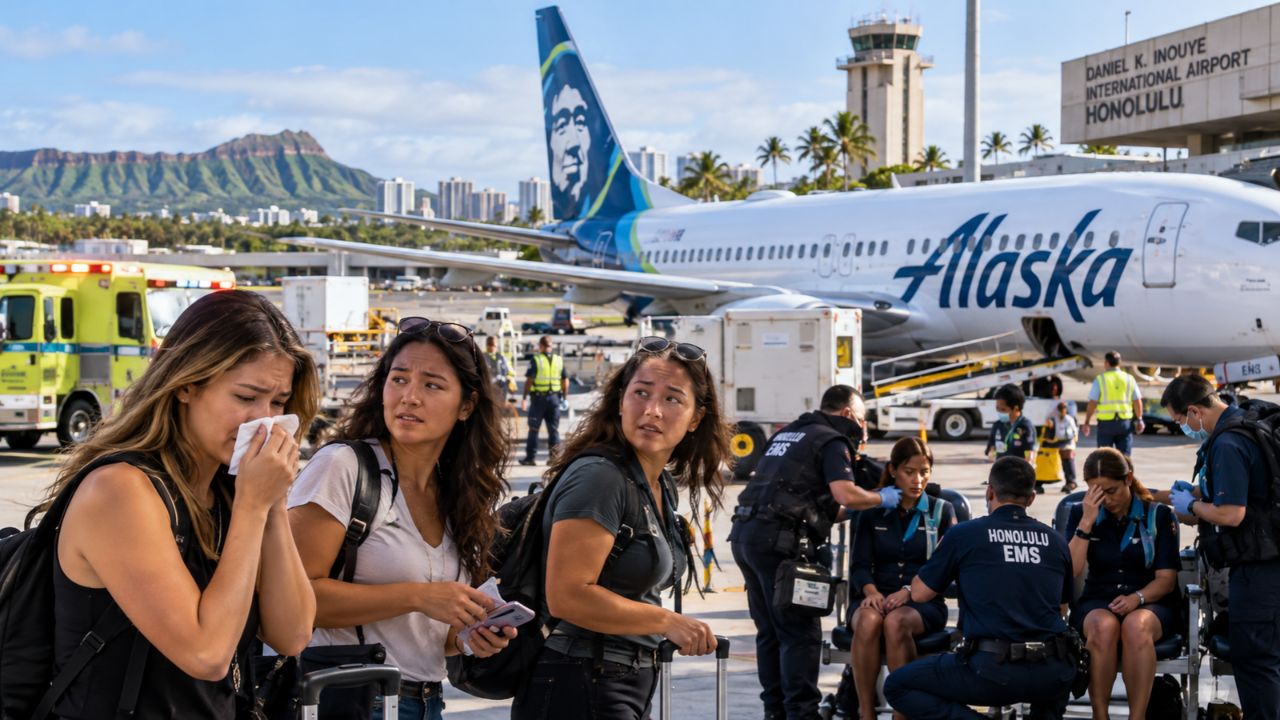
When Alaska Airlines Flight 803 touched down at Daniel K. Inouye International Airport from Los Angeles, emergency sirens on the tarmac greeted an Airbus A330 where seven flight attendants had fallen ill from an unexplained cabin odor—while all 252 passengers on board remained entirely unaffected. Emergency response vehicles and paramedics from Honolulu Emergency Medical Services met the widebody aircraft at Terminal 1, evaluating the affected crew members for nausea and headaches. The widebody jet, operated by Hawaiian Airlines under the combined carrier partnership, was immediately removed from commercial rotation for technical environmental inspections before being cleared to return to service.
The Honolulu incident highlights the heightened operational vigilance surrounding aircraft cabin air systems and fume events across commercial aviation. Occurring just weeks after a Delta Air Lines transcontinental flight from Los Angeles to New York was forced to make an emergency diversion to Albuquerque due to an onboard smoky odor, the event underscores the sophisticated emergency protocols airlines deploy to protect flight crews and passengers during long-haul Pacific crossings.
Emergency Response and Cabin Air Mechanics on Flight 803
The flight, carrying 252 vacationers and commuters across the 2,556-mile Pacific corridor from Los Angeles (LAX) to Honolulu (HNL), proceeded uneventfully until cabin crew members detected a persistent, unusual odor in the aft galley and service sections. While modern commercial aircraft continuously circulate cabin air through military-grade HEPA (High-Efficiency Particulate Air) filtration systems—refreshing total cabin air volume every two to three minutes—localized odors can originate from galley oven heating elements, hydraulic lines, auxiliary power units (APU), or bleed air environmental control systems.
Because cabin crew members are physically active throughout long-haul flights, walking the aisles, managing meal services, and exerting themselves at simulated cabin altitudes of 6,000 to 8,000 feet, they are often the first to experience physiological symptoms from minor air quality shifts. Honolulu first responders conducted on-scene vitals checks and environmental monitoring at Terminal 1, confirming that none of the seven flight attendants required hospital admission.
Maintenance engineers grounded the Airbus A330 to run comprehensive air sampling, air conditioning pack assessments, and engine bleed air duct inspections. Federal safety guidelines coordinated through the Federal Aviation Administration mandate that aircraft exhibiting unexplained fume or odor signatures undergo thorough multi-point checks before passenger re-boarding.
What Makes Hawaii Transpacific Flying Unique
Transpacific flights to the Hawaiian archipelago represent one of the most operationally demanding long-haul routes in global aviation. Operating under strict ETOPS (Extended-range Twin-engine Operational Performance Standards) regulations, twin-engine widebody aircraft like the Airbus A330 fly across vast stretches of ocean where diversion airfields are thousands of miles away.
This geographic isolation requires flight crews and airline dispatchers to maintain uncompromising safety thresholds. From the moment an aircraft passes the Pacific midway point, the flight deck coordinates continuously with air traffic control centers in Oakland and Honolulu. State aviation infrastructure managed through the State of Hawaii Department of Transportation - Airports ensures that Daniel K. Inouye International Airport maintains dedicated emergency medical and firefighting infrastructure capable of mobilizing within ninety seconds of runway touchdown.
For travelers, the merger between Alaska Airlines and Hawaiian Airlines offers expanded loyalty reciprocity and seamless single-ticket connections across North America and the Pacific Rim, combining Alaska’s West Coast network with Hawaiian’s iconic widebody long-haul comfort.
Visitor Insider Tips
Navigating arrivals at Honolulu’s Daniel K. Inouye International Airport and planning an Oahu vacation requires local timing and transit strategies.
- Terminal 1 Navigation Hacks: Terminal 1 serves Hawaiian Airlines and partner Alaska flights. If connecting to neighbor islands (Maui, Kauai, or the Big Island), utilize the third-level Wiki Wiki shuttle bus or the open-air pedestrian bridges connecting Terminal 1 and Terminal 2 rather than re-clearing security on the ground level.
- Overcoming Arrival Jet Lag: The five-hour westward flight from the US West Coast crosses two to three time zones. Upon landing in Honolulu, head straight outdoors to absorb natural afternoon sunlight along Ala Moana Beach Park or Waikiki, which naturally resets your circadian rhythm.
- Public Transit and Skyline Rail: Oahu’s elevated rapid transit system, the Skyline rail line, connects western Oahu communities. For travelers heading directly to Waikiki, pre-arranged airport express shuttles or rideshare pickup zones located on the second-level departures roadway provide the fastest exit routes.
- Where to Base Yourself on Oahu: First-time visitors enjoy the walkable dining, historic beachfront hotels, and catamaran charters of Waikiki. For a quieter, nature-focused experience, base yourself along the North Shore near Haleiwa for world-class surf culture, or on the windward coast around Kailua for calm turquoise bays.
- Respecting Native Hawaiian Etiquette: Hawaii’s cultural tourism guidelines published by the Hawaii Tourism Authority encourage visitors to practice malama (caring for the land and community). Never touch green sea turtles (honu) or Hawaiian monk seals, avoid trespassing on sacred heiau (temple) stone platforms, and use only reef-safe mineral sunscreens containing zinc oxide or titanium dioxide.
Cultural and Environmental Context
Oahu’s coastal ecosystems face severe pressures from environmental change and heavy visitor footfall. Fragile coral reefs surrounding Hanauma Bay and Shark's Cove depend on clean ocean waters and strict visitor capacity caps to survive.
Community-led initiatives across Oahu work to restore traditional Native Hawaiian ahupuaʻa—interconnected land management systems extending from mountain ridges down to offshore fisheries. Travelers are encouraged to support sustainable agritourism farms in the Kahuku and Waialua valleys, participate in native taro patch (loʻi) restorations, and patronize locally owned poke shops and farm-to-table eateries that source ingredients from island growers.
FAQ: Hawaii Transpacific Flights & Honolulu Travel 2026
What occurred on Alaska-Hawaiian Flight 803? An unexplained cabin odor prompted emergency responders to assess seven flight attendants for nausea and headaches upon arrival in Honolulu from Los Angeles. All 252 passengers were unharmed, and the aircraft was cleared after technical inspections.
How does aircraft cabin air circulate during flight? Air is refreshed every two to three minutes using a 50/50 blend of fresh outside air and recirculated air passed through hospital-grade HEPA filters that capture 99.97 percent of airborne particulates.
Do I need a passport to fly to Hawaii from the US mainland? No, US citizens do not need a passport for domestic flights to Hawaii, but a REAL ID-compliant driver’s license or state ID is required for airport security screening.
What is the fastest way to travel between Hawaiian Islands? Inter-island jet flights operated by Hawaiian Airlines connect Honolulu to Kahului (Maui), Lihue (Kauai), and Kona (Big Island) in approximately 35 to 45 minutes of flight time.
As trade winds greet arriving passengers on the Honolulu tarmac and the peaks of the Koolau Range emerge from the morning mist, Hawaii's warm aloha spirit remains as resilient and welcoming as ever.
Related Travel Guides
Disclaimer
This article is for informational and educational purposes only. It does not constitute legal, financial, or professional advice. While we strive to provide accurate and up-to-date information, travel policies, regulations, and conditions change rapidly. Always verify information with official sources before making travel decisions. Nomad Lawyer makes no representations about the accuracy, reliability, completeness, or suitability of the information provided. Readers should consult qualified professionals for advice specific to their circumstances. The views expressed in this article are those of the author and do not necessarily reflect the views of Nomad Lawyer.
Naina Thakur
Contributor & Travel Specialist
Travel enthusiast and legal writer covering visa regulations, responsible tourism, and cultural journeys across global destinations.
Learn more about our team →