
Nordic Year-Round Luxury Travel Guide 2026: Arctic Wellness, Electric Fjords, and Four-Season Lodges

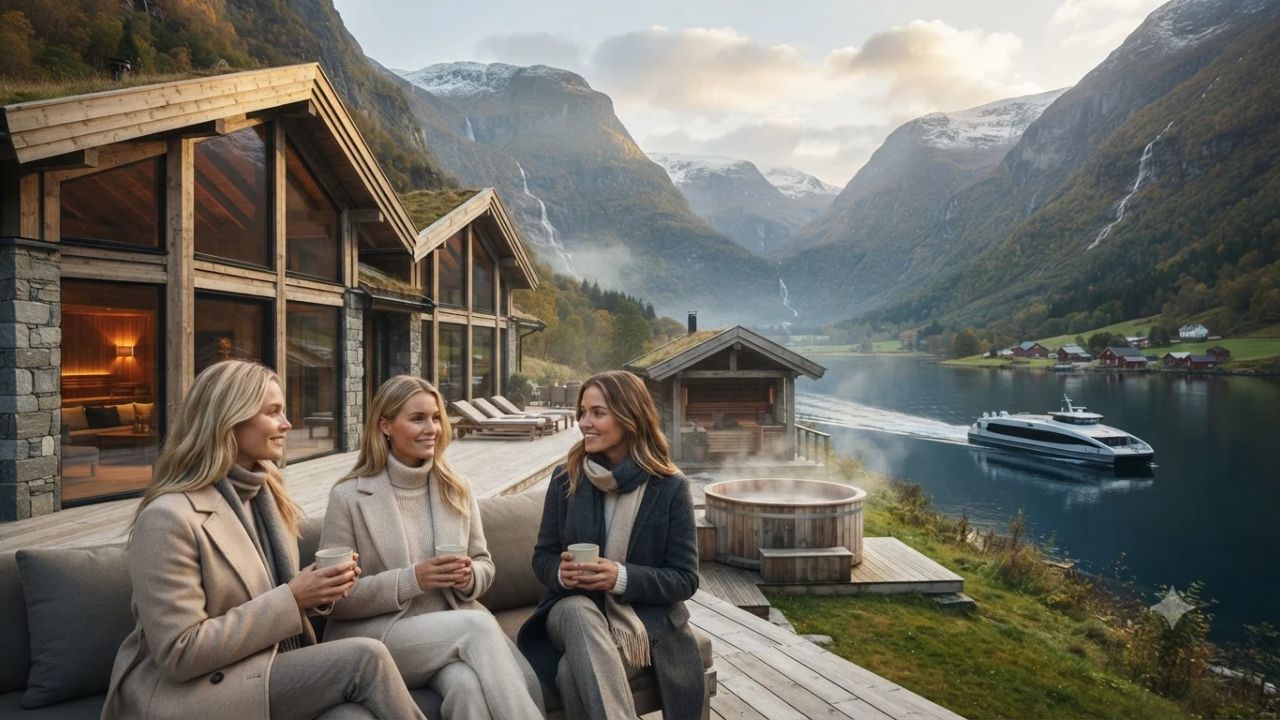
With Denmark mandating that 70% of commercial overnight stays occur outside peak July and August by 2030 and Norway requiring zero emissions in its UNESCO heritage fjords, Northern Europe is replacing summer mass tourism with year-round luxury wellness and silent electric navigation. Rather than confining travel to midnight sun sailings or winter aurora chasing, the Nordic bloc is turning shoulder seasons into high-yield travel windows, backed by Denmark's 171 billion DKK visitor economy and Norway's 20 billion NOK export expansion target.
From floating saunas in Swedish Lapland that freeze solid into river ice to 100% electrified mountain rail journeys over the Hardangervidda plateau, travelers are discovering that Scandinavia's deepest cultural and culinary rhythms flourish across all twelve months.
The Nordic Transformation: De-Seasonalisation and Sustainable CapEx
For decades, Nordic tourism suffered from intense seasonal compression, concentrating revenues into an eight-week midsummer peak. To stabilize rural employment and protect delicate coastal environments, national tourism authorities have enacted statutory frameworks prioritizing high-yield, low-footprint travel across all four seasons.
Policy Frameworks and Year-Round Performance Benchmarks
| Country | Statutory Framework & Agency | Core De-Seasonalisation Target | Primary Economic Benchmark |
|---|---|---|---|
| Denmark | Veje til bæredygtig turismevækst (VisitDenmark) | 70% of overnights outside July–August by 2030 | Over 171 billion DKK turnover across 66M+ overnights |
| Norway | National Tourism Strategy 2030 (Visit Norway) | +20B NOK export revenue via 365-day regional distribution | 50% absolute emission cut; 43,000 permanent rural jobs |
| Sweden | Strategi för hållbar turism (Visit Sweden) | Expansion of autumn and winter culinary and nature exports | Record regional lodging receipts led by boutique conversions |
| Finland | Sustainable Travel Finland (STF) (Visit Finland) | Year-round Arctic asset utilization and Sámi preservation | Equitable regional spend distribution across all 8 micro-seasons |
What Makes the Four-Season Nordic Experience Unique
Secondary Cities as Cultural and Thermal Sanctuaries
Rather than channeling crowds into Copenhagen, Oslo, Stockholm, or Helsinki, the Nordic model elevates secondary cultural hubs:
- Gothenburg (Sweden): Marine biologists and Michelin-starred kitchens like SK Mat & Människor celebrate deep-winter Kattegat harvests when cold waters yield optimal oysters, langoustines, and brown crab. Travelers pair seafood tastings with historic bathing rituals at Hagabadet (founded in 1876) or floating saunas in Jubileumsparken.
- Bergen (Norway): The gateway to the western fjords has transformed rainy maritime weather into an asset with storm-watching lounges, thermal hydrotherapy, and private curated tours through the UNESCO-listed Bryggen wharf and KODE Art Museums housing masterworks by Edvard Munch.
- Aarhus (Denmark): Crowned by Olafur Eliasson's Your rainbow panorama at the ARoS Aarhus Art Museum, East Jutland combines Michelin dining at Frederikshøj and Substans with coastal manor retreats.
- Tampere (Finland): The designated "Sauna Capital of the World" features over 55 public saunas, including Rajaportin Sauna (operating in Pispala since 1906) and Sauna Restaurant Kuuma, where visitors move between birch steam (löyly) and sub-zero ice plunges into Lake Näsijärvi.
Adaptive Architectural Reuse and All-Weather Lodging
Scandinavia's luxury lodging infrastructure emphasizes adaptive architectural restoration over destructive greenfield construction:
- Arctic Bath (Harads, Sweden): Designed by Bertil Harström and Johan Kauppi along the Lule River, this One MICHELIN Key retreat floats on open river waters beneath the summer midnight sun and freezes into solid ice during sub-zero Arctic winters.
- Storfjord Hotel (Glomset, Norway): Handcrafted from slow-grown Scandinavian pine logs with traditional turf roofs (laft craftsmanship), this boutique lodge pairs private forest hot tubs with open hearths and micro-seasonal game.
- Sorrisniva Arctic Wilderness Lodge (Alta, Norway): Featuring 24 glass-fronted riverfront suites along the Alta River, the lodge showcases the Arctic's eight traditional micro-seasons, ranging from autumn foliage (ruska) to late spring crust snow (gida).
- Funen and Jutland Manors (Denmark): Feudal 16th-century moated castles retrofitted with geothermal heating operate year-round as fireside culinary sanctuaries.
Zero-Emission Maritime Corridors in World Heritage Fjords
Under directives from the Norwegian Maritime Authority (Sjøfartsdirektoratet), Norway enforced a mandatory zero-emission rule for passenger vessels operating in the Geirangerfjord and Nærøyfjord, recognized internationally by the UNESCO World Heritage Centre.
Fully electric, 42-meter carbon-fibre catamarans—including Future of the Fjords and Legacy of the Fjords operated by The Fjords—transport up to 400 passengers between Flåm and Gudvangen in silence. The vessels are charged using the floating 2.4 MWh "PowerDock" battery station at Gudvangen, which recharges ships in 20 minutes without placing strain on rural municipal power grids.
Visitor Insider Tips: Navigating Nordic Seasons, Saunas, and Sleeper Rail
- Book Electrified Sleeper Trains Across Scandinavia: Skip short-haul flights by taking the Bergensbanen across Norway's Hardangervidda plateau or the Swedish SJ Euronight and Arctic Night Trains linking Stockholm and Malmö with Kiruna and Narvik. First-class sleeper compartments feature private en-suite showers and locally sourced dining.
- Master Authentic Sauna Etiquette: In Finnish and Swedish public saunas, always sit on a clean towel (pefletti). Shower thoroughly before entering, and ask fellow bathers before adding water to the stones to generate löyly steam. Respect the peaceful atmosphere by keeping conversation quiet.
- Embrace Indigenous Sámi-Led Expeditions: When visiting Lapland, choose operators certified under the Principles for Responsible and Ethically Sustainable Sámi Tourism established by the Sámi Parliament (Sámediggi) in Inari, Finland. These tours ensure fees directly support indigenous reindeer-herding families.
- Pack for Rapid Microclimate Shifts: Nordic coastal and Arctic weather changes rapidly. Utilize a four-layer clothing system: thermal merino wool base, fleece mid-layer, windproof/waterproof breathable shell, and insulated down outer jacket, accompanied by wool socks and studded winter boots.
- Dine During Micro-Seasons: Plan culinary journeys around hyper-local harvest calendars: Arctic cloudberries and chanterelles in September, cold-water shellfish in November, and coastal king crab in February.
Cultural and Environmental Context: Indigenous Sovereignty and Quiet Tourism
The Nordic luxury philosophy is rooted in Allemansrätten (the right to roam responsibly) and deep cultural reverence for natural quiet. Rather than viewing nature as an amusement backdrop, Nordic hospitality integrates strict preservation codes that prevent habitat degradation.
In the Arctic North, responsible tourism frameworks developed in partnership with the Sámi Parliament safeguard traditional pastoralist grazing lands and sacred ancestral sites from disruptive snowmobile routes. By replacing high-decibel motorized tours with silent electric navigation, snowshoe trekking, and artisanal storytelling, the region proves that luxury and environmental conservation can exist in complete equilibrium.
FAQ: Nordic Year-Round Travel 2026
What is the zero-emission vessel rule in Norway's fjords?
Mandatory environmental regulations require all passenger vessels and tourist ferries operating in Norway's UNESCO World Heritage fjords (Geirangerfjord and Nærøyfjord) to be fully emission-free.
When is the best time to experience Nordic wellness and sauna culture?
While saunas operate 365 days a year, late autumn and winter (October through March) provide the most invigorating experience, pairing steaming wood-fired saunas with cold-water lake or ice plunges.
How do I reach remote lodges like Arctic Bath or Sorrisniva?
Arctic Bath is accessible via regional transfers from Luleå Airport (LLA) in Sweden, while Sorrisniva connects via a short transfer from Alta Airport (ALF) in northern Norway.
Are electric fjord cruises operational during the winter?
Yes. Fully electric catamarans such as Future of the Fjords operate year-round passenger services through the sheltered waters of the Nærøyfjord between Flåm and Gudvangen.
Across frozen riverways, quiet fjord basins, and historic thermal bathhouses, Northern Europe reveals that true travel luxury is measured in silence, clean air, and deep seasonal connection.
Related Travel Guides
Disclaimer
This article is for informational and educational purposes only. It does not constitute legal, financial, or professional advice. While we strive to provide accurate and up-to-date information, travel policies, regulations, and conditions change rapidly. Always verify information with official sources before making travel decisions. Nomad Lawyer makes no representations about the accuracy, reliability, completeness, or suitability of the information provided. Readers should consult qualified professionals for advice specific to their circumstances. The views expressed in this article are those of the author and do not necessarily reflect the views of Nomad Lawyer.
Naina Thakur
Contributor & Travel Specialist
Travel enthusiast and legal writer covering visa regulations, responsible tourism, and cultural journeys across global destinations.
Learn more about our team →