
Denmark Travel Advisory 2026: German Border Controls, Copenhagen Hotspots, and Greenland Regulations

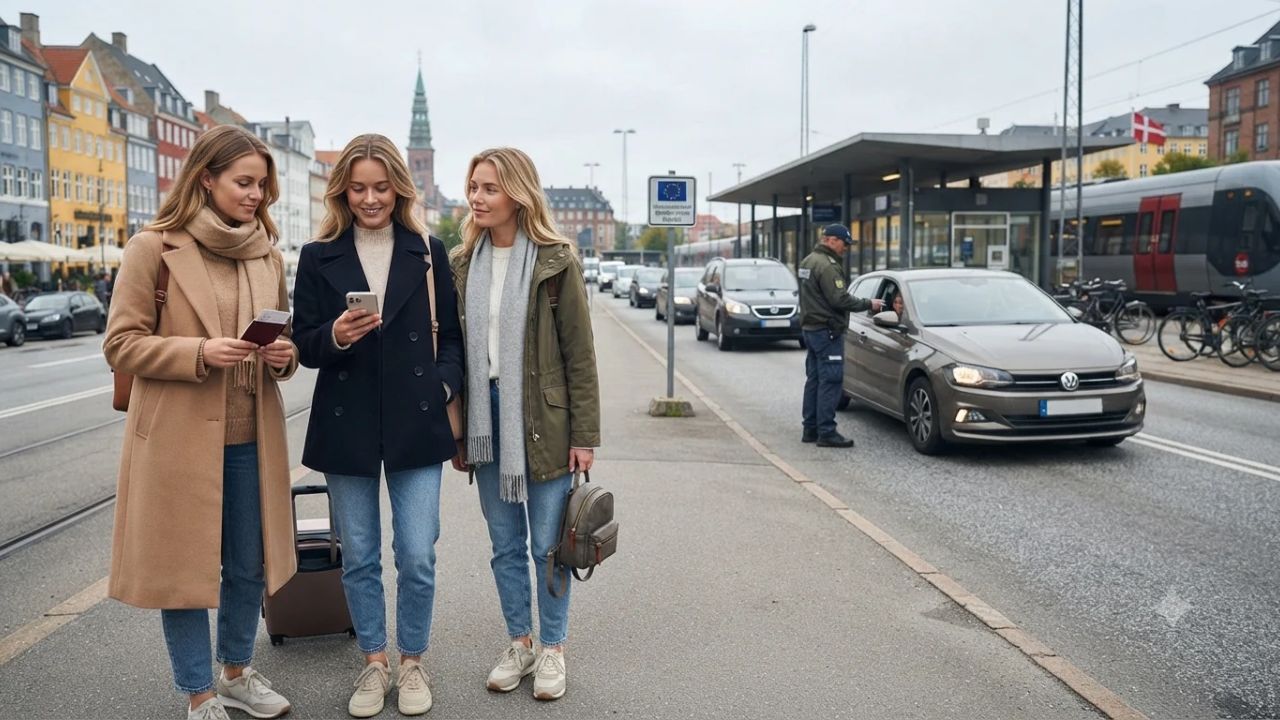
While Denmark consistently ranks among Europe's safest and most orderly travel destinations, Germany's Federal Foreign Office has issued updated nationwide travel guidance warning travelers of ongoing German-Danish land border checks, airport airspace drone disruptions, and distinct entry rules for Greenland and the Faroe Islands. Rather than restricting leisure or business travel, the advisory alerts visitors to targeted pickpocketing corridors in Copenhagen, localized security sensitivities in Christiania and Nørrebro, and strict Scandinavian road traffic and drone registration laws.
For overland drivers transiting from northern Germany, rail commuters crossing the Jutland border, and Arctic explorers venturing into the North Atlantic, understanding these administrative protocols ensures a smooth journey across the Danish realm.
Border Controls and Urban Safety: The Updated Advisory Framework
The guidance released by the German Federal Foreign Office (Auswärtiges Amt) details practical safety measures across transport nodes, urban centers, and autonomous territories. In addition to border inspections along the southern land frontier in Schleswig-Holstein, the advisory emphasizes vigilance during large public demonstrations and in major tourist assembly areas.
Security and Regulatory Matrix: Traveling in Denmark, Greenland, and the Faroe Islands
| Region or Sector | Primary Regulatory Focus | Key Operational Realities | Traveler Verification Action |
|---|---|---|---|
| German-Danish Land Border | Random Police Border Inspections | Temporary internal Schengen controls; vehicle spot-checks in Jutland | Carry valid passport/ID; never transport unknown hitchhikers |
| Copenhagen Public Transit | Pickpocketing in High-Density Corridors | København H (Central Station), Airport Metro line, long-distance bus stops | Keep luggage secured; avoid displaying expensive jewelry |
| Christiania & Nørrebro | Neighborhood Security Sensitivities | Gang conflict incidents in 2024; strict local photography bans in Christiania | Respect local signs; refrain from photographing residential lanes |
| Danish Roadways | Strict Traffic & Speed Enforcement | 130/110 km/h motorways, 80 km/h rural, 50 km/h urban; 0.5 alcohol limit | Keep headlights illuminated 24/7; 17-year-old German permits invalid |
| Danish Airspace | Airport Drone Disruptions & Rules | Temporary airspace halts caused by unauthorized drones; mandatory registration for ≥250 g | Register camera drones with Danish Civil Aviation before flight |
| Greenland | Non-EU / Non-Schengen Arctic Territory | Extreme weather, minimal wilderness rescue infrastructure outside towns | Passport mandatory (National ID invalid); carry satellite comms |
| Faroe Islands | Non-EU North Atlantic Territory | Regulated traditional pilot whale hunts (grindadráp); guide permit rules | Passport required; respect environmental and maritime regulations |
What Makes Navigating Denmark Different
Random Land Border Checks and Hitchhiking Warnings
While both Germany and Denmark are Schengen signatories, Danish police maintain random border control checkpoints along land crossings in Jutland and at ferry terminals in Rødby and Gedser. German authorities explicitly warn drivers against transporting unfamiliar hitchhikers or uninspected cargo packages across the frontier, as transporting undocumented individuals can trigger severe criminal charges under anti-human-smuggling statutes.
Urban Realities in Copenhagen: From Central Station to Christiania
In Copenhagen, petty property theft concentrates around transit hubs, including Copenhagen Central Station (København H), City Hall Square (Rådhuspladsen), Amalienborg Palace during changing of the guard ceremonies, and the M2 Metro line connecting Copenhagen Airport (Kastrup) to the city center.
In the Free State of Christiania and parts of Nørrebro, following gang conflicts recorded in 2024, visitors should remain aware of local regulations. In Christiania, community signs strictly prohibit photography, filming, and running; visitors must respect local resident directives to avoid confrontational incidents.
Official destination advice from VisitDenmark emphasizes that common-sense precautions allow travelers to experience the capital's historic canals, world-class gastronomy, and design districts safely.
Autonomous Territories: Greenland and the Faroe Islands
Although Greenland and the Faroe Islands are part of the Kingdom of Denmark, neither territory belongs to the European Union or the Schengen Area. For Greenland, European national identity cards are not accepted for entry—all travelers must present a valid passport. Furthermore, German authorities advise against independent expeditions into Greenland's backcountry without satellite communicators, GPS beacons, and specialized Arctic survival gear due to limited emergency rescue capacity.
In the Faroe Islands, standard European passports are required. Visitors must also respect local conservation laws regarding regulated traditional pilot whale drives (grindadráp), where unauthorized interference carries statutory fines.
Visitor Insider Tips: Navigating Danish Driving, Drones, and Etiquette
- Keep Vehicle Headlights on 24/7: Danish road regulations require dipped headlights or dedicated daytime running lights to be switched on at all times, day and night, throughout the year. Speed limits are strictly monitored: 130 km/h or 110 km/h on motorways, 80 km/h on rural roads, and 50 km/h in urban areas.
- Note Youth Driving Restrictions: Germany's supervised driving certificate for 17-year-old drivers (Begleitetes Fahren ab 17) is not legally recognized in Denmark. Drivers must hold a full, standard adult license.
- Comply with Drone Registration: Any recreational or commercial drone weighing 250 grams or more, or any lightweight drone fitted with a camera or optical sensor, must be registered in accordance with Danish Civil Aviation Authority regulations before operating in Danish airspace.
- Go Cashless Across Denmark: Denmark is virtually a cashless society. Mobile payment apps, contactless credit cards, and debit cards are accepted everywhere, from rural farm stands to harbor ferries.
- Secure Timed Entry for Heritage Landmarks: Major cultural landmarks recognized by the UNESCO World Heritage Centre—including Kronborg Castle in Helsingør and Roskilde Cathedral—recommend pre-booking tickets online during summer to avoid ticket-counter queues.
Cultural and Environmental Context: Public Order and Arctic Preservation
Denmark's social model relies heavily on mutual civic trust, environmental responsibility, and adherence to shared public standards. In urban spaces, this translates to dedicated cycling priority lanes, strict recycling mandates, and clean harbor swimming baths.
In the Arctic ecosystems of Greenland and the maritime fjords of the Faroe Islands, tourism policies prioritize environmental conservation over rapid infrastructure expansion. Visitors are encouraged to utilize licensed local boat skippers, stay on marked coastal footpaths to prevent fragile tundra erosion, and purchase handicrafts crafted by indigenous artisans.
FAQ: Denmark Travel Advisory 2026
Do I need a passport to cross from Germany into Denmark?
Yes. Although both are Schengen nations, random border controls are active. All travelers must carry a valid passport or national identity card (copies are not accepted).
Are national ID cards accepted for travel to Greenland?
No. European national identity cards are not valid for entering Greenland. All travelers, including EU and German citizens, must present a valid passport.
What is the legal alcohol limit for driving in Denmark?
The legal blood alcohol limit in Denmark is 0.5 per mille. Driving above this limit results in heavy fines and immediate license suspension.
Are credit cards accepted on public transport in Copenhagen?
Yes. Copenhagen's Metro, S-train, and bus networks operate seamless contactless payment terminals and digital transit apps across all fare zones.
With clear awareness of border protocols and local road rules, exploring Denmark's historic streets and North Atlantic archipelagos remains one of Europe's most rewarding journeys.
Related Travel Guides
Disclaimer
This article is for informational and educational purposes only. It does not constitute legal, financial, or professional advice. While we strive to provide accurate and up-to-date information, travel policies, regulations, and conditions change rapidly. Always verify information with official sources before making travel decisions. Nomad Lawyer makes no representations about the accuracy, reliability, completeness, or suitability of the information provided. Readers should consult qualified professionals for advice specific to their circumstances. The views expressed in this article are those of the author and do not necessarily reflect the views of Nomad Lawyer.
Kunal K Choudhary
Co-Founder & Contributor
A passionate traveller and tech enthusiast. Kunal contributes to the vision and growth of Nomad Lawyer, bringing fresh perspectives and driving the community forward.
Learn more about our team →