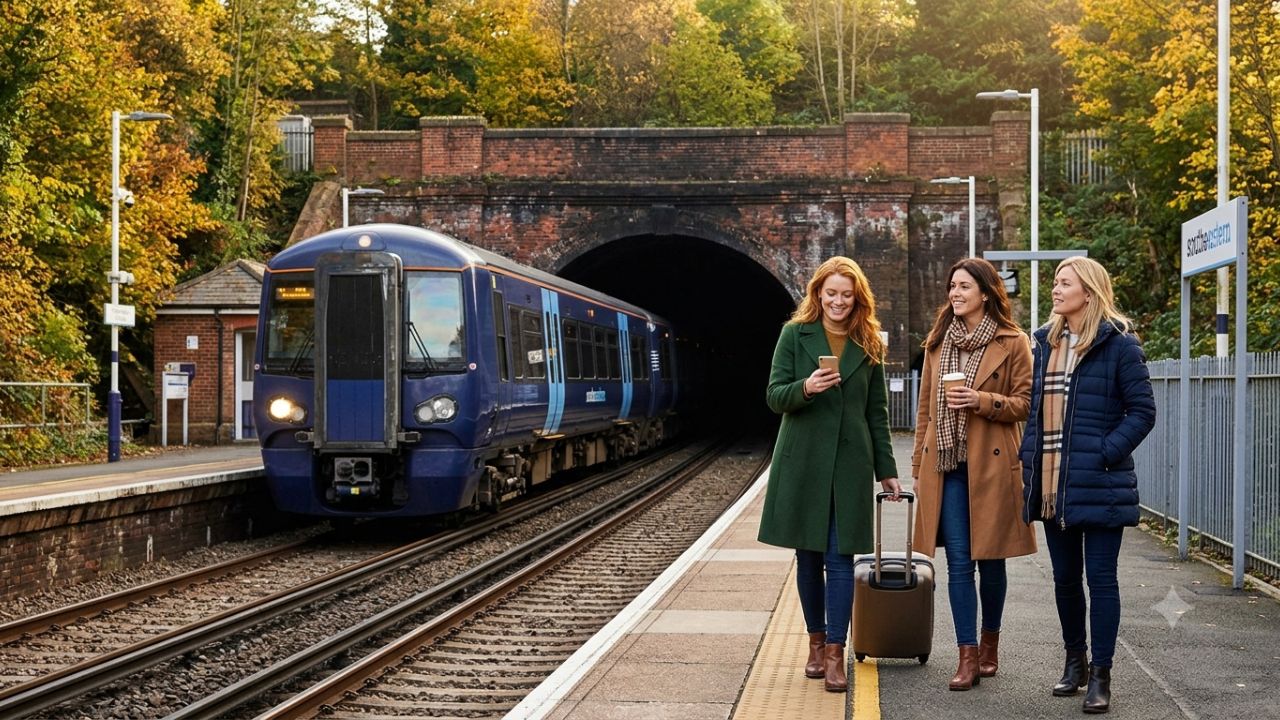
Newcastle Rail Infrastructure Shift: Balancing Heavy Freight and Event Tourism in 2026

Image generated by AI
Regional rail occupancy in New South Wales has historically plummeted during engineering possessions, yet Newcastle's recent shift to a "calibrated possession model" aims to decouple infrastructure maintenance from tourism revenue. While standard operating procedures typically mandate total line closures for 48 to 72 hours, the mid-November 2026 strategy proves that high-capacity passenger transit can coexist with heavy-duty rail renewals.
The Hunter Valley Logistics Conflict in Numbers
The Hunter region faces a unique "Dual-Spine Paradox" where a single corridor must support two diametrically opposed economic drivers: high-tonnage industrial export and high-yield leisure tourism. The Australian Rail Track Corporation (ARTC) manages a network that funnels bulk coal, grain, and agricultural freight from inland basins—specifically Ulan, Gunnedah, and Turrawan—toward the Port of Newcastle.
Simultaneously, NSW TrainLink operates passenger services connecting Newcastle to Maitland, Singleton, Muswellbrook, and Scone. The friction occurs when the mechanical wear caused by heavy axle loads requires urgent maintenance exactly when "headline events" draw massive crowds. In November 2026, this tension peaked with an international concert series featuring Robbie Williams at McDonald Jones Stadium.
The data reveals the scale of the challenge:
- Expected Attendance: 120,000 people across a five-week regional series.
- Venue Capacity: 30,000 seats per event.
- Maintenance Scope: 158 separate work sites between the coast and interior branch lines.
- Standard Closure Window: 72 consecutive hours of total suspension.
Comparative Infrastructure Management: Standard vs. Calibrated Models
Traditionally, rail maintenance in regional Australia follows a binary "Open/Closed" logic. The 2026 Newcastle experiment replaces this with a phased approach to protect the hospitality economy from the volatility of blanket cancellations.
| Operational Phase | Standard Possession Model | 2026 Calibrated Model | Impact on Transit |
|---|---|---|---|
| Event Window | Full Rail Suspension | Passenger Services Active | Avoids M1 Pacific Motorway bottlenecks |
| Primary Works | Day/Night Blanket Closure | Shifted to Midweek Overnight | Maintains daytime leisure flow |
| Secondary Works | Blanket Closure | Targeted Evening Windows | Bridges gaps with short-term shuttles |
| Network Status | Slow Recommissioning | Rapid Speed Restoration | 10 temporary speed restrictions lifted |
This shift is a response to the growing trend of "Regionalization," where secondary cities attract international tours to keep leisure spending within local economies. According to data from Destination NSW, the reliance on rail for stadium access is critical; substituting trains with buses for 30,000 attendees would have caused systemic failure on the New England Highway.
What This Means for Travelers
For those visiting the Hunter Valley or Newcastle for major events in late 2026, the logistics of travel have shifted from "avoidance" to "precision timing."
- Booking Windows: If you are attending an event at McDonald Jones Stadium, rail remains the primary viable option. Do not rely on road transport via the M1 Pacific Motorway during event windows, as the "calibrated model" prioritizes rail to prevent highway gridlock.
- Midweek Travel: Expect intermittent disruptions. While the "Concert Window" is protected, the "Deferred Primary Closedown" occurs during midweek overnight windows. Travelers moving between Newcastle and Muswellbrook on Tuesday or Wednesday nights should check dynamic journey apps for coach replacement alerts.
- Reliability: The removal of 10 temporary speed restrictions means that overall transit times between the coast and the interior have stabilized. Passengers can expect more consistent arrival times at Broadmeadow Station.
Projection: The Future of Regional Transit Hubs
The success of the November 2026 blitz—which included laser-guided ballast tamping, the replacement of several linear kilometers of steel track, and the reconstruction of sub-surface drainage—provides a blueprint for other regional hubs.
We are seeing a move toward "Infrastructure Hedging." By concentrating maintenance into intensive, strategically timed blitzes, regional governments are creating a counter-cyclical economic stimulus. While leisure travel peaks on weekends, the influx of specialist engineering crews during midweek maintenance windows fills local hotels in Maitland, Singleton, and Denman, stabilizing the hospitality sector against the typical midweek slump.
The long-term trajectory suggests that International Union of Railways (UIC) standards for regional corridors will increasingly prioritize "flexible possession," where freight is diverted to branch lines to keep passenger spines open during peak economic events.
FAQ: Newcastle Rail Trends 2026
Will rail ticket prices increase due to these maintenance costs? Maintenance is funded through ARTC and government infrastructure budgets, not direct ticket surcharges. However, dynamic pricing may apply during high-demand event windows.
Is it better to drive or take the train to McDonald Jones Stadium? Rail is strongly recommended. The 2026 model specifically keeps trains running to prevent the M1 Pacific Motorway and New England Highway from reaching total saturation.
Which routes are most affected by the "midweek overnight" closures? The primary impact is felt on the corridor between Newcastle and Muswellbrook. Travelers should verify schedules for Tuesday and Wednesday night departures.
The era of the total rail shutdown is ending; the era of surgical infrastructure precision has arrived.
Related Travel Guides
This article is for informational purposes. Flight routes, passenger regulations, visa rules, and transit advisories are subject to change by airlines and aviation authorities. Readers are advised to verify schedules and travel documentation with relevant carriers and border agencies before departure.
Related Stories
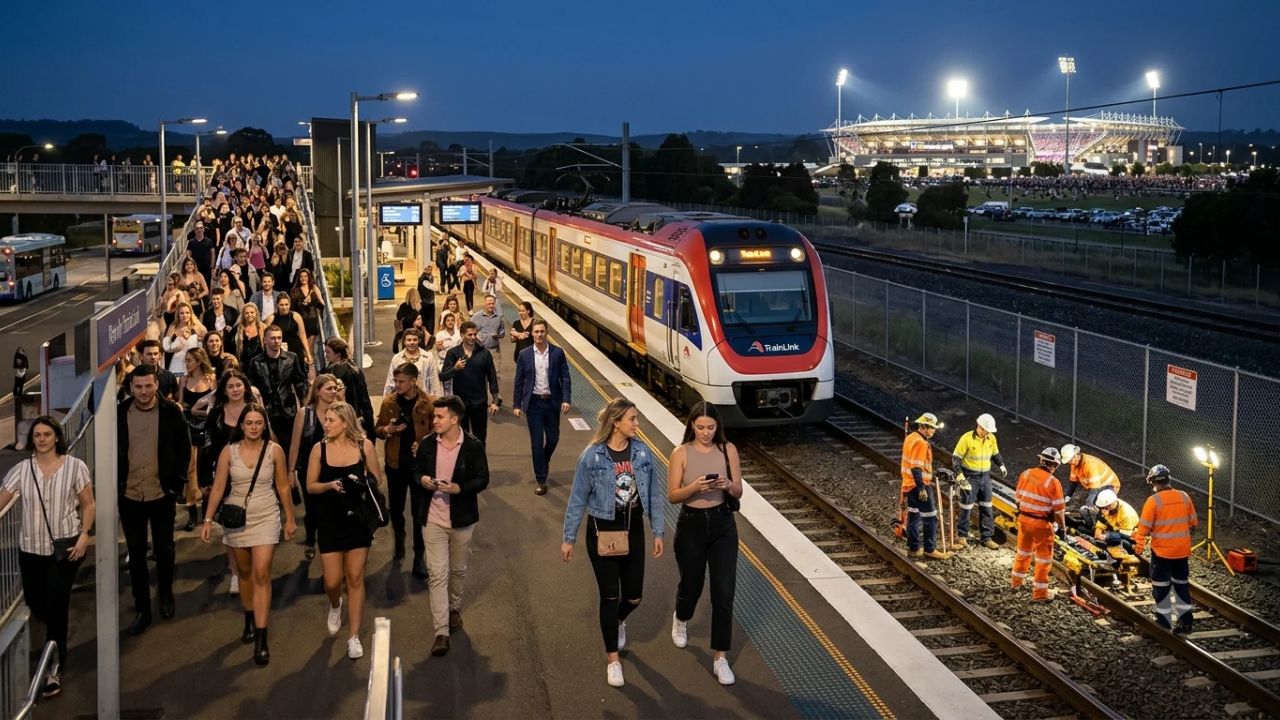
Newcastle Coordinates Hunter Valley Rail Possession Around Robbie Williams Concert to Protect Australia Event Tourism Economy

GTR Partners with Acteol to Deploy Data-Driven Passenger Communications Across 236 UK Stations in 2026