
Newark Flight Disruptions Snarl April 11 Travel Across North America
Newark Liberty International Airport experienced significant newark flight disruptions on April 11, 2026, with 99 delayed flights and six cancellations affecting thousands of travelers across North America and transatlantic routes.

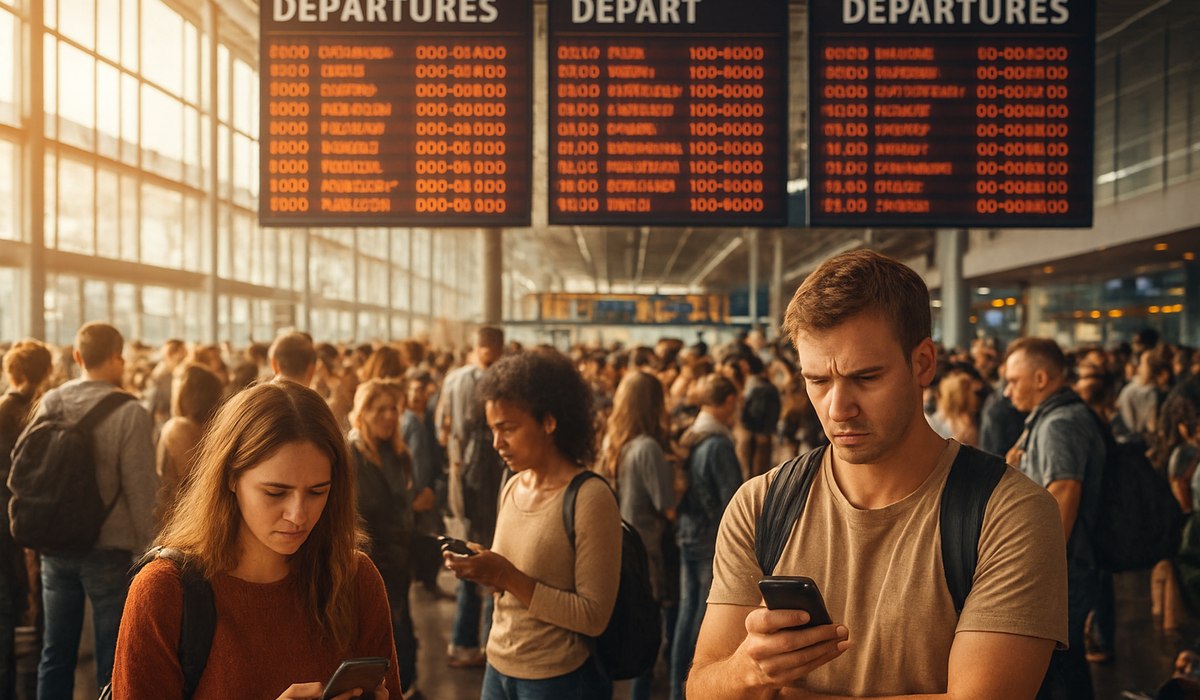
Image generated by AI
Major Northeast Hub Faces Operational Challenges
Newark Liberty International Airport recorded 99 delayed flights and six cancellations on April 11, 2026, creating cascading travel disruptions across North America and transatlantic routes. The significant newark flight disruptions affected thousands of passengers relying on one of the nation's busiest aviation hubs during peak spring travel season. Major carriers including United Airlines, Delta Air Lines, JetBlue Airways, and Spirit Airlines all experienced elevated disruption levels at the facility. This incident underscores the vulnerability of densely scheduled airport operations when even modest disruptions occur at critical connectivity points.
Concentrated Disruption at Newark Liberty International Airport
The April 11 operational challenges at Newark Liberty International Airport demonstrated how quickly airport disruptions can impact continental travel patterns. Flight-tracking data from April 11 revealed the airport processed 99 delays alongside six outright cancellations, affecting both domestic and international services. Unlike outright cancellations, which immediately redirect passengers, delays created extended waits and downstream schedule compression throughout the day.
Newark's strategic importance magnified the impact considerably. As a primary hub for United Airlines and a major East Coast connection point, any operational friction at this facility reverberates across regional and transcontinental networks. The airport's tight scheduling, particularly during spring peak periods, leaves minimal buffer time between aircraft rotations and crew transitions. Recent performance data indicated that Newark ranked second nationally among U.S. airports for disruption frequency during March 2026, with nearly 70 percent of flights experiencing some form of delay or cancellation.
For detailed flight status information, travelers can consult FlightAware's real-time tracking system, which provides minute-by-minute updates on specific flights and airport conditions.
Cascading Impact Across Multiple Carriers and Routes
The flight delays originating at Newark rippled through the networks of four major U.S. carriers simultaneously. United Airlines, as the primary Newark operator, absorbed the most significant impact, though Delta, JetBlue, and Spirit also reported elevated disruption levels at the facility. When aircraft arrive late to Newark, they must either wait for gates or depart from alternative positions, compressing turnaround times and forcing subsequent flights into delayed departure windows.
This cascading effect proved particularly severe during April 11's afternoon and evening banking periods. Aircraft scheduled to depart Newark for distant destinations cannot leave until they've completed passenger boarding, cargo loading, and safety checks. If that aircraft itself arrived late from a previous flight, each subsequent leg experiences inherited delays. Crew fatigue regulations further constrain flexibility, as pilots and flight attendants nearing duty-time limits cannot be pressed into service for additional flights.
National aviation statistics for April 11 documented more than 3,000 delays and over 100 cancellations across U.S. airports, with airport disruptions concentrated at major hubs including Newark, Atlanta, and Dallas-Fort Worth.
Transatlantic and Continental Routes Most Affected
The April 11 newark flight disruptions disproportionately affected passengers traveling on long-haul international routes. Transatlantic services to London experienced schedule pressure as aircraft arrived late to Newark and faced compressed turnaround windows for evening departures. Spring demand for European travel typically strains transatlantic capacity, leaving little operational flexibility when delays occur.
Leisure routes southbound to Cancun and northbound to Montreal similarly struggled under the weight of delayed inbound aircraft and constrained gate availability. West Coast connections to San Francisco compounded delays, given that both Newark and San Francisco airports have experienced elevated disruption rates throughout 2026. Passengers holding connections through Newark faced the highest risk of missed flights, as tight transfer windows compressed further when primary flights experienced delays.
Routes most heavily affected included:
- Newark to London: Evening transatlantic departures delayed 90+ minutes
- Newark to Montreal: Canadian services operating with altered timings
- Newark to Cancun: Leisure routes compressed due to tight turnarounds
- Newark to San Francisco: West Coast services experiencing compound delays
- New York metropolitan area domestic routes: Local connections delayed due to gate congestion
The Federal Aviation Administration maintains comprehensive disruption tracking through its [official FAA website](https://www.faa.gov), which provides regulatory context and safety information for travelers seeking deeper operational details.
Contributing Factors and Operational Constraints
Industry analysts identified multiple contributing factors to April 11's operational challenges at Newark. Congested New York airspace during peak afternoon hours forced air-traffic control to implement holding patterns and speed restrictions on inbound and outbound flights. Residual weather effects in regions feeding traffic to Newark, though not severe enough to trigger major diversions, nonetheless reduced the airport's processing capacity. Staffing constraints across air-traffic control facilities and onboard crew scheduling limitations created additional pressure points that limited operational flexibility.
Newark's March 2026 performance data revealed the airport's structural vulnerability to disruption. With nearly 70 percent of flights experiencing delays during that month, the facility was operating near capacity constraints with minimal schedule buffers. This high baseline disruption rate meant that April 11's additional operational pressure cascaded more severely through the system than it might at airports with greater scheduling redundancy.
Traveler Action Checklist
If your April 11 travel plans were affected by Newark disruptions, or if you're planning future travel through the facility, follow these actionable steps:
- Check your airline's disruption policy before initiating contact—some carriers have standing weather or operationally-caused delay policies that automatically grant rebooking or compensation without claims
- Document all expenses related to delays, including meals, hotel accommodations, ground transportation, and any services not provided by your airline
- File a claim with your airline within 30 days if you experienced significant delays (typically 3+ hours) or cancellations, including documentation of original and rebooked flights
- Review Department of Transportation passenger rights through the U.S. DOT Air Consumer Protection Division website to understand compensation eligibility thresholds
- Request written confirmation from your airline regarding delay causes, as this supports claims for compensation or reimbursement
- Consider travel insurance for future bookings through Newark, as April 11's disruption reflects ongoing operational challenges at the facility
- Monitor real-time flight status using FlightAware before arriving at the airport, allowing time for rebooking before widespread system disruptions occur
What This Means for Spring Travel Volatility
The April 11 disruptions at Newark reflect broader patterns affecting U.S. aviation during spring peak season. Demand for travel surges precisely when staffing levels and aircraft availability face competing pressures. Passenger volumes at major hubs like Newark increase 30-40 percent during April through May compared to winter months, yet airport infrastructure and crew resources cannot scale proportionally.
Newark's specific operational challenges extend beyond single-day events. The airport's role as both a major United Airlines hub and a significant Delta operation creates network effects where disruptions affect far more passengers than the airport's physical location suggests. A single delayed flight from Newark can affect passengers across the entire continental U.S. and internationally.
Travelers planning spring and summer journeys should expect elevated disruption risks at major Northeast airports, particularly Newark. Building additional buffer time between connections, selecting flights during lower-demand periods (early morning, late evening), and maintaining flexibility for rebooking improves the likelihood of successful travel completion.
Key Operational Data
| Metric | Value | Context |
|---|---|---|
| Delayed Flights (April 11) | 99 | Among highest for individual U.S. hub that day |
| Cancelled Flights (April 11) | 6 | Represents 6% of daily operations |
| March 2026 Disruption Rate | 70% | Nearly 7 of 10 flights delayed or cancelled |
| National Delays (April 11) | 3, |
Disclaimer
This article is for informational and educational purposes only. It does not constitute legal, financial, or professional advice. While we strive to provide accurate and up-to-date information, travel policies, regulations, and conditions change rapidly. Always verify information with official sources before making travel decisions. Nomad Lawyer makes no representations about the accuracy, reliability, completeness, or suitability of the information provided. Readers should consult qualified professionals for advice specific to their circumstances. The views expressed in this article are those of the author and do not necessarily reflect the views of Nomad Lawyer.
Raushan Kumar
Founder & Lead Developer
Full-stack developer with 11+ years of experience and a passionate traveller. Raushan built Nomad Lawyer from the ground up with a vision to create the best travel and law experience on the web.
Learn more about our team →