
New Zealand Regenerative Tourism: The Future of ESG Travel
New Zealand Regenerative Tourism: The Future of ESG Travel

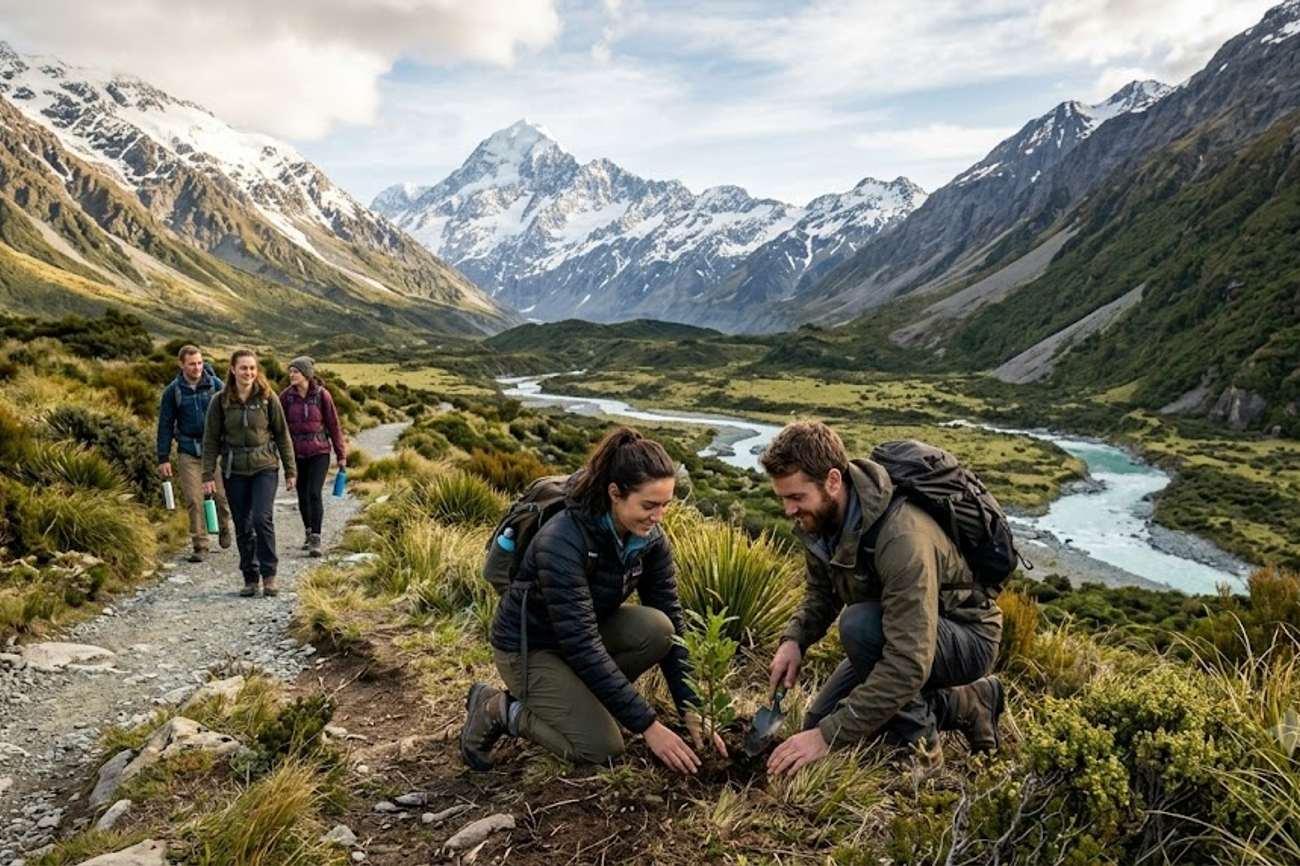
Image generated by AI
Tourism export earnings in New Zealand are projected to double by 2034 relative to 2023 benchmarks, yet this growth is being decoupled from raw visitor volume for the first time in the nation's history. This strategic pivot represents a fundamental departure from the "growth-at-all-costs" model that dominated the previous decade, signaling a transition toward high-yield, low-impact travel. By prioritizing systemic value over quantitative surges, New Zealand is attempting to solve the "tourism paradox": increasing revenue while simultaneously reducing the physical footprint of the traveler.
The Regenerative Pivot in Numbers
The current policy framework establishes a rigid timeline for the transition to a zero-carbon visitor economy, with a hard deadline set for 2030. This is not merely a carbon-offsetting exercise but a structural overhaul of the industry's operational DNA. The primary metric of success has shifted from arrival counts to the "net positive" impact on the ecosystem.
Central to this shift is the Tourism Sustainability Commitment, which mandates that businesses operate across four distinct pillars: economic growth, visitor experience, community enrichment, and environmental protection. This is an operationalization of ESG (Environmental, Social, and Governance) principles, moving them from corporate reports into the actual delivery of travel services. The government's goal to double export earnings by 2034 suggests a strategy of increasing the "spend per visitor" rather than the "number of visitors," effectively targeting a more affluent, conscious demographic that is willing to pay a premium for sustainable access.
According to data from the World Travel & Tourism Council (WTTC), the global trend is shifting toward "value-based" tourism, and New Zealand is positioning itself as a primary case study for this movement. The integration of the Māori concept of Kaitiakitanga (guardianship) transforms the traveler from a consumer into a steward, a move that is designed to protect the destination's competitiveness by preventing the degradation of the very natural assets that drive demand.
Comparative Context: Volume vs. Value
Historically, New Zealand's tourism success was measured by the sheer scale of arrivals. This quantitative approach created a systemic risk where natural infrastructure was strained by mass tourism, leading to a decline in the quality of the visitor experience and local resident satisfaction. The new framework replaces this with a regenerative model, where the objective is to leave the environment healthier than it was found.
The following table illustrates the shift in strategic priorities between the previous era of destination management and the current 2030/2034 trajectory.
| Metric/Priority | Historical Volume-Based Model | Modern Regenerative Model (2030-2034) |
|---|---|---|
| Primary KPI | Total Annual Visitor Arrivals | Total Tourism Export Earnings |
| Environmental Goal | Damage Mitigation / Carbon Offsetting | Net Positive / Zero-Carbon Economy |
| Visitor Role | Passive Consumer | Active Participant/Guardian |
| Economic Focus | Mass Market Penetration | High-Yield, Systemic Value |
| Success Measure | Quantitative Growth (Numbers) | Qualitative Impact (Legacy/Health) |
| Community Impact | Infrastructure Strain | Equitable Benefit Distribution |
This shift mirrors broader patterns seen in other "nature-first" destinations. When comparing this to data from Statista regarding global sustainable travel trends, New Zealand's aggressive 2030 zero-carbon target is among the most ambitious in the Asia-Pacific region. While many nations are focusing on "sustainable" (maintaining the status quo), New Zealand is pursuing "regenerative" (improving the status quo).
Practical Traveler Advisory and Strategic Insights
The transition to a regenerative, high-yield model will have immediate and tangible effects on how travelers plan and experience trips to Aotearoa. The era of unrestricted, low-cost mass access to pristine sites is ending, replaced by a managed-access environment.
For those planning visits in the next 3-5 years, the following shifts are essential to understand:
- Increased Costs for Low-Impact Access: As the government seeks to double export earnings without increasing visitor volume, expect a rise in the cost of permits, entry fees for national parks, and sustainable accommodation. This is a deliberate economic lever to filter for high-value travelers.
- Shift in Activity Offerings: Traditional "sightseeing" is being replaced by "participatory" tourism. Travelers will find more opportunities for habitat restoration and community-led cultural exchanges. If you are booking a tour, prioritize operators who explicitly mention the "Tourism Sustainability Commitment."
- Stricter Environmental Compliance: With the 2030 zero-carbon target, expect more rigorous regulations regarding waste and carbon footprints. Travelers who utilize low-carbon transport options within the country may find streamlined access to certain protected areas.
New Zealand is transitioning from traditional sustainability to a regenerative model that prioritizes the active restoration of natural ecosystems and community wellbeing. This strategic shift is guided by the Tourism New Zealand framework, which encourages visitors to leave the destination better than they found it. 4. Booking Lead Times: As the focus shifts from volume to value, capacity at the most sustainable and "regenerative" lodges and operators will become tighter. Booking 6-12 months in advance is now recommended for high-demand, eco-certified experiences.
Projection: The 2034 Horizon
Based on the current trajectory, New Zealand is moving toward a "boutique nation" status. By 2034, the success of this model will be measured by whether the country achieved its goal of doubling export earnings while maintaining or improving its biodiversity indices.
We can expect the "Zero-Carbon Visitor Economy" of 2030 to serve as a precursor to a fully integrated digital management system for visitors. This will likely include real-time capacity monitoring of natural sites to prevent overcrowding—a direct application of the Kaitiakitanga philosophy. If the 2034 earnings target is met without a corresponding spike in visitor numbers, New Zealand will have successfully decoupled economic growth from environmental degradation, providing a blueprint for other destinations facing overtourism.
The industry's move toward ESG as a foundational management framework rather than a checklist suggests that future investments in the region will be heavily skewed toward "green-tech" tourism infrastructure. This includes the electrification of regional transport and the expansion of sustainable supply chains that benefit local Māori and regional communities.
FAQ: New Zealand Regenerative Tourism 2024
Will travel to New Zealand become more expensive? Yes. The strategy to double export earnings while limiting visitor volume necessitates a shift toward high-yield tourism. This typically results in higher pricing for premium, sustainable experiences and a move away from budget mass-market offerings.
Is this a good time to book a trip? Yes, but with a strategy shift. Now is the time to book if you seek authentic, sustainable experiences before the 2030 zero-carbon transition leads to higher demand and stricter capacity limits for the most eco-friendly operators.
Which types of operators are expanding? Operators aligned with the Tourism Sustainability Commitment and those offering regenerative activities (e.g., reforestation, cultural guardianship) are seeing the most growth and government support.
What is the difference between sustainable and regenerative tourism? Sustainable tourism aims to "do no harm" and maintain the current state. Regenerative tourism, which New Zealand is adopting, aims to actively improve the destination, leaving the environment and community better than they were before the visitor arrived.
The shift from counting heads to counting contributions marks the end of the mass-tourism era in Aotearoa.
Tags: NewZealandTourism2034, RegenerativeTravelGrowth, AotearoaZeroCarbon2030, TourismExportEarnings, KaitiakitangaEconomics, ESGTravelFramework
Related Travel Guides
Disclaimer
This article is for informational and educational purposes only. It does not constitute legal, financial, or professional advice. While we strive to provide accurate and up-to-date information, travel policies, regulations, and conditions change rapidly. Always verify information with official sources before making travel decisions. Nomad Lawyer makes no representations about the accuracy, reliability, completeness, or suitability of the information provided. Readers should consult qualified professionals for advice specific to their circumstances. The views expressed in this article are those of the author and do not necessarily reflect the views of Nomad Lawyer.
Raushan Kumar
Founder & Lead Developer
Full-stack developer with 11+ years of experience and a passionate traveller. Raushan built Nomad Lawyer from the ground up with a vision to create the best travel and law experience on the web.
Learn more about our team →