
New Zealand Proposes 5% Aviation Security Levy Cut for 2027 as Visitor Arrivals Reach 100.4% of Pre-Pandemic Levels
New Zealand's Civil Aviation Authority proposes a 5% cut to passenger security levies for domestic and international flights in H1 2027 following NZ$26M in tech savings.

Official Civil Aviation Authority of New Zealand
New Zealand's Civil Aviation Authority has opened public consultation on a proposed 5% reduction in passenger security levies for domestic and international flights starting in early 2027, driven by NZ$26 million in operational technology savings.
[Wellington, Oct 6, 2026] — Airlines operating across New Zealand may see reduced passenger security charges in early 2027 under a formal proposal released by the Civil Aviation Authority (CAA). Following a consultation period opened on September 30 and running through October 14, 2026, the aviation regulator recommends a NZ$0.55 cut per passenger for domestic flights and a NZ$1.11 cut per passenger for international departures. The proposed reduction follows improved security financial reserves reaching NZ$45.601 million and operational cost savings generated by remote image screening technology.
Proposed Security Levy Rate Reductions
The passenger security levy is a statutory fee charged to commercial airlines based on passenger throughput. Under the proposal submitted to Cabinet for final approval, rates would decrease across both domestic and international sectors:
| Passenger Levy Category | Current Rate (Excl. GST) | Proposed Rate (Excl. GST) | Proposed Reduction per Passenger |
|---|---|---|---|
| Domestic Passenger Levy | NZ$10.91 | NZ$10.36 | -NZ$0.55 (-5.0%) |
| International Passenger Levy | NZ$22.30 | NZ$21.19 | -NZ$1.11 (-5.0%) |
Official data source: Civil Aviation Authority of New Zealand consultation document (September 2026).
If approved by Cabinet, the reduced rates are targeted for implementation in the first half of 2027. The CAA projects that lower charges will yield a cumulative NZ$70.935 million reduction in total levy collections collected from airlines through FY2032.
Operational Savings, Remote Image Screening, and Financial Reserves
The proposal to lower passenger charges stems from operational efficiency gains and stronger-than-projected financial reserves:
- Rebuilt Financial Reserves: As of June 30, 2026, CAA security financial reserves stood at NZ$45.601 million, restoring fiscal sustainability.
- Technology-Driven Cost Reductions: Advanced security deployment—including remote image screening and reorganized screening lane layouts—is projected to cut annual operating expenses by approximately NZ$26 million in FY2027.
- Higher Passenger Throughput: International passenger volumes currently track 3% above baseline assumptions used in previous regulatory pricing models, boosting overall fee revenues.
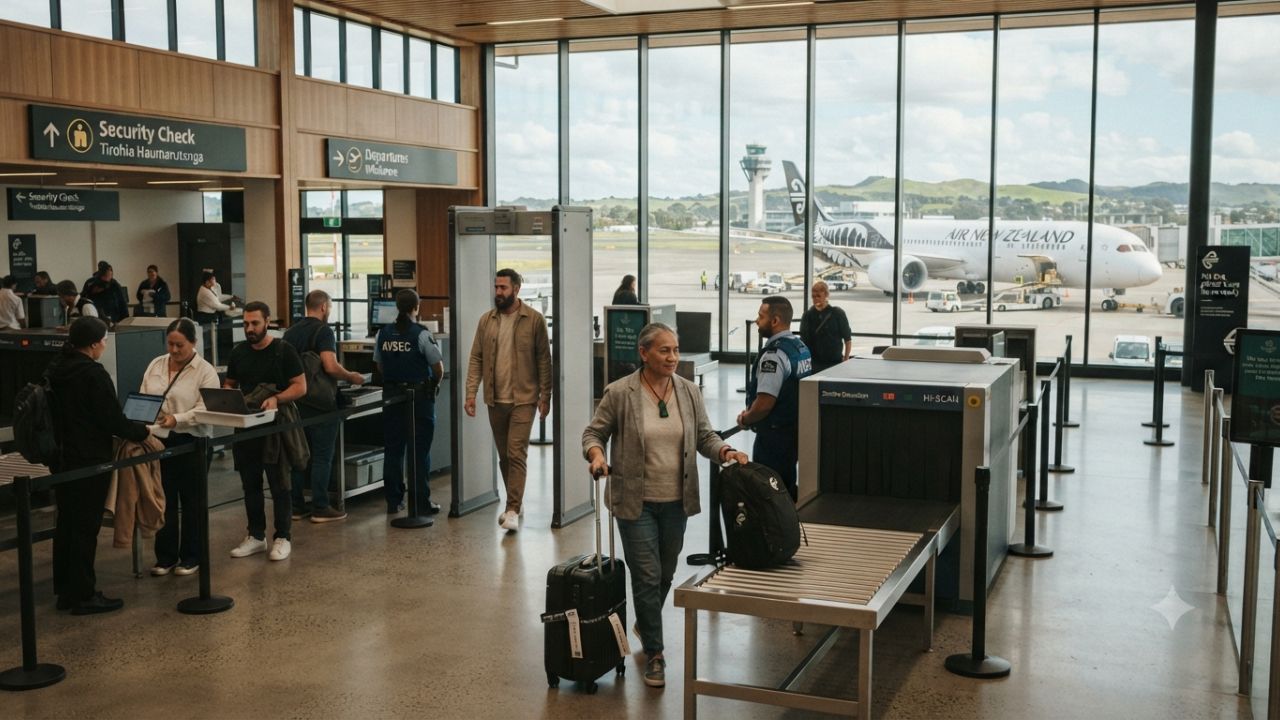
Despite fee reductions, the CAA confirmed that security screening standards will remain unchanged. In the most recent operating period, 97% of passengers were screened in under 10 minutes.
Reversal of 2025 Funding Reset and Regulatory Timeline
The current security levy rates took effect on July 1, 2025, following a comprehensive funding review designed to replace ending pandemic-era government subsidies. At that time, Cabinet set maximum statutory ceilings while permitting the CAA to lower charges if operational efficiencies materialized.
Key regulatory steps following the current consultation include:
- Consultation Window: Closes at noon on October 14, 2026, involving Air New Zealand, Jetstar, the Board of Airline Representatives New Zealand (BARNZ), and the Airports Association.
- Cabinet Assessment: CAA submits final recommendations to the Minister of Transport for Cabinet sign-off.
- Targeted Implementation: First half of 2027.
- First Principles Funding Review: Broader long-term funding structures across safety and security fees will undergo public consultation in mid-2027.
Record Tourism Recovery and Economic Context
The proposed levy reductions coincide with a full recovery in New Zealand's international visitor numbers. Official Stats NZ data released on September 14 logged 256,600 overseas visitor arrivals in July 2026—up 20,100 from July 2025 and reaching 100.4% of July 2019 levels. July 2026 marked the first month since 2020 to exceed pre-pandemic arrival volumes.
Key visitor metrics highlight strong long-haul and regional demand:
- Primary Source Markets (July 2026): Australia accounted for 53% of arrivals, followed by China (11%) and the United States (6%).
- Annual Overseas Visitor Arrivals: Reached 3.69 million in the year ended July 2026, an annual increase of 305,000 visitors.
- Tourism Expenditure: Official Tourism Satellite Account data shows total annual tourism spending reached NZ$46.6 billion (up 3.3%), with international visitor spending contributing NZ$18.1 billion (up 7%).
- Economic Employment Impact: Tourism directly and indirectly employs 327,888 people (194,631 directly), contributing 4.6% of New Zealand's total GDP.
Airline Discretion vs. Guaranteed Consumer Airfare Savings
While the CAA's proposal reduces airline operating costs, regulatory officials emphasize that airfare decisions rest entirely with commercial carriers:
- No Automatic Ticket Price Cut: A 5% reduction in the security levy does not translate to a 5% drop in total ticket prices. The levy represents a small component of an overall airfare.
- Commercial Pricing Power: Individual airlines (such as Air New Zealand and Jetstar) decide whether to pass levy savings directly to consumers, absorb the reduction into operating margins, or offset rising aviation fuel and airport landing charges.
- Scope Limitation: The consultation applies strictly to the passenger security levy and does not alter civil aviation safety fees, airport facility charges, or government border processing levies.
Practical Experience & Logistical Reality for Travelers to New Zealand
For international and domestic passengers traveling through New Zealand airports, the proposed levy changes carry specific practical implications:
- Compare Total Ticket Costs: Passengers should focus on final advertised fare totals rather than individual fee line items, as airline fuel surcharges and dynamic pricing outweigh minor levy adjustments.
- Unchanged Airport Security Protocols: Travelers will experience identical security screening procedures, liquid restrictions, and baggage checks, as screening technology upgrades focus on back-end image processing speed rather than relaxing passenger rules.
- Sustained Peak-Season Travel Demand: With annual arrivals surpassing 3.69 million, booking early for summer peak travel (December through February) remains essential for securing accommodation and domestic flights across the North and South Islands.
Frequently Asked Questions About NZ Aviation Security Levy Cuts
Will flight ticket prices decrease because of the proposed security levy cut?
No ticket price reductions are guaranteed. The levy reduction lowers operating charges for airlines, but individual carriers decide whether to pass savings on to passengers.
How much would the proposed New Zealand security levy decrease?
The proposal would reduce the domestic passenger security levy by NZ$0.55 (to NZ$10.36) and the international levy by NZ$1.11 (to NZ$21.19), excluding GST.
When would the lower security levy rates take effect?
Subject to Cabinet approval following consultation, the CAA expects to implement the reduced rates in the first half of 2027.
Does the levy reduction mean security screening will become less strict?
No. Screening standards and performance targets remain fully intact, with 97% of passengers screened in under 10 minutes.
Related Travel Guides
New Zealand 3.7 Million Visitor Target: India Travel Recovery and Tourism Growth 2026
Qantas and Jetstar Australia-Indonesia Flight Network Expansion: Bali and Jakarta Routes 2026
US Domestic Airfares Q2 2026: BTS Report and Airline Yield Analysis
Disclaimer
This article is for informational and educational purposes only. It does not constitute legal, financial, or professional advice. While we strive to provide accurate and up-to-date information, travel policies, regulations, and conditions change rapidly. Always verify information with official sources before making travel decisions. Nomad Lawyer makes no representations about the accuracy, reliability, completeness, or suitability of the information provided. Readers should consult qualified professionals for advice specific to their circumstances. The views expressed in this article are those of the author and do not necessarily reflect the views of Nomad Lawyer.
Raushan Kumar
Founder & Lead Developer
Full-stack developer with 11+ years of experience and a passionate traveller. Raushan built Nomad Lawyer from the ground up with a vision to create the best travel and law experience on the web.
Learn more about our team →