
Asian Airlines Trigger Airfare Hikes as IndiGo and Regional Carriers Reintroduce Steep Fuel Surcharges
Asian airlines enact steep fuel surcharges in October 2026 as regional jet fuel hits $188.60/bbl, with IndiGo adding up to INR 10,000 on long-haul routes.

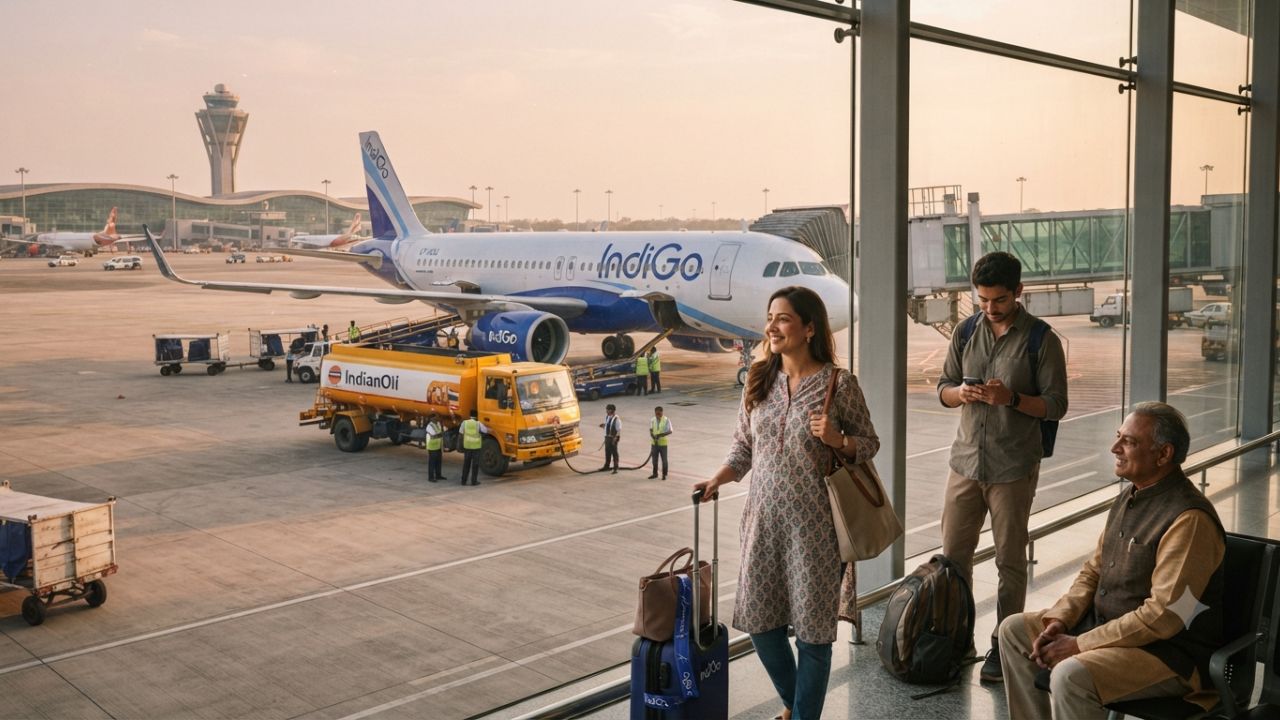
Official IndiGo Media
Commercial airlines across South, Southeast, and East Asia have implemented steep distance-tiered fuel surcharges following a surge in regional jet fuel prices to $188.60 per barrel in October 2026.
[New Delhi, Oct 6, 2026] — Air travelers across Asia face immediate ticket price increases as major regional airlines reintroduce distance-tiered fuel surcharges to offset surging aviation turbine fuel (ATF) costs. Data from the International Air Transport Association (IATA) and S&P Global Platts confirms that regional spot prices for Jet A-1 kerosene in Singapore reached US$188.60 per barrel in October 2026, pushing fuel expenditures up to 42% of total operational costs. In response, IndiGo, Cathay Pacific, Japan Airlines, Korean Air, and Singapore Airlines Group have adjusted fare structures across domestic, regional, and long-haul networks.
Macroeconomic Fuel Volatility and Regional Expense Structures
Jet fuel pricing in October 2026 reflects structural supply tightness across major Asian refining hubs in Singapore, South Korea, and India. Elevated refining crack spreads—the cost differential between raw crude oil and refined aviation kerosene—have driven jet fuel price increases beyond broader inflation metrics.
For low-cost carriers operating thin profit margins, fuel has expanded from its baseline 25%–30% of total operating expenditure to between 35% and 42%.
| Operational Expense Category | Share of Asian Airline Operating Costs |
|---|---|
| Fuel Expenditures (Jet A-1 Kerosene) | 35% – 42% |
| Flight & Cabin Crew Operations | 18% – 22% |
| Aircraft Leasing & Depreciation | 14% – 17% |
| Airport Landing, Navigation & Ground Handling | 12% – 15% |
| Engineering, Maintenance & Fleet Servicing | 8% – 10% |
Regional Jet Fuel Benchmark Price Comparison Matrix
Official IATA data benchmarks reveal significant localized pricing premiums across the Asia-Pacific regional trading hubs compared to other global markets:
| Regional Benchmark Index | October 2026 Spot Price (USD/Bbl) | Equivalent Price per Litre |
|---|---|---|
| Asia-Pacific Regional Index (Singapore) | $188.60 | $1.19 |
| European Benchmark (CIF NWE) | $187.30 | $1.18 |
| Global Average Benchmark | $185.43 | $1.17 |
| North American Benchmark | $184.90 | $1.16 |
| Middle East & Africa Index | $182.10 | $1.14 |
In India, state-owned refiners—including Indian Oil Corporation Limited (IOCL), Bharat Petroleum Corporation Limited (BPCL), and Hindustan Petroleum Corporation Limited (HPCL)—revised ATF prices in Delhi upward on October 1 from INR 121,000 per kilolitre to INR 137,000 per kilolitre, representing a month-on-month surge exceeding 14%.
South Asian Fare Restructuring: IndiGo's Tiered Surcharge Schedule
IndiGo (InterGlobe Aviation Limited), which controls nearly two-thirds of India's domestic aviation market, enacted a comprehensive fuel surcharge restructuring effective 00:01 hours on October 6, 2026. Citing the 14% MoM jump in domestic fuel costs, the airline introduced a distance-tiered fee schedule across all routes:
| Route Distance / Category | Revised IndiGo Fuel Surcharge | Spot Airfare Impact |
|---|---|---|
| Domestic Flights (Up to 500 km) | INR 375 | Baseline ticket price adjustment |
| Domestic Flights (501 km – 1,000 km) | INR 600 | Delhi–Hyderabad fares up +68% |
| Domestic Flights (1,001 km – 1,500 km) | INR 900 | Mumbai–Kolkata fares up +51% |
| Domestic Flights (1,501 km – 2,000 km) | INR 1,150 | Bengaluru–Delhi fares up +44% |
| Domestic Flights (Above 2,000 km) | INR 1,300 | Chennai–Mumbai fares up +39% |
| SAARC Regional Routes (> 500 km) | INR 1,000 – INR 3,000 | Regional capital transit adjustment |
| Southeast Asia, GCC & East Asia Routes | INR 5,500 | Medium-haul international routes |
| African Routes | INR 6,000 | Long-haul intercontinental routes |
| European Long-Haul Routes | INR 10,000 | Transcontinental long-haul routes |
Other South Asian operators—including Air India, Vistara, SpiceJet, and Akasa Air—aligned passenger tariffs to absorb escalating fuel costs.
East Asian Tariff Revisions: Cathay Pacific, JAL, ANA, and Korean Air
Civil aviation regulators and flag carriers across East Asia implemented corresponding tariff adjustments:
- Hong Kong: Cathay Pacific, under approval from the Civil Aviation Department (CAD), enacted a 34% increase in fuel surcharges on long-haul routes connecting Hong Kong to Europe, North America, and Australasia.
- Japan: Japan Airlines (JAL) and All Nippon Airways (ANA), operating under Ministry of Land, Infrastructure, Transport and Tourism (MLIT) guidelines, increased long-haul surcharges up to ¥33,000 (US$220) per segment based on Singapore kerosene benchmarks.
- South Korea: Korean Air and Asiana Airlines, monitored by the Ministry of Land, Infrastructure and Transport (MOLIT), raised international fuel surcharges by two distance bands in October 2026.
Southeast Asian Surcharge Matrix: Philippines CAB Level 6 and ASEAN Carriers
| Airline / Authority | Regulatory Mechanism | October 2026 Surcharge Adjustment |
|---|---|---|
| Philippines CAB | Fuel Surcharge Matrix Enforcement | Raised to Level 6 for domestic/int'l routes |
| Singapore Airlines Group | Dynamic Network Surcharge | +12% adjustment across passenger legs |
| Malaysia Airlines (MAG) | Fixed Leg International Surcharge | +15% increase on international segments |
| Thai Airways International | Long-Haul Tariff Adjustment | +18% international surcharge increase |
| VietJet Air & Vietnam Airlines | CAAV Domestic Price Cap Review | Requesting higher internal fare ceilings |
Fuel Hedging Strategies and Airline Operating Margins
The financial impact of fuel price volatility varies depending on individual airline hedging positions:
- High Hedging Protection (50%–70% Coverage): Cathay Pacific and Singapore Airlines maintain multi-layered fuel hedging contracts, limiting net profit margin compression to -1.1%.
- Moderate Hedging Coverage (20%–40% Coverage): Qantas, ANA, and Korean Air report moderate margin drops of -3.2%.
- Unhedged Exposure (0%–15% Coverage): Low-cost carriers across South and Southeast Asia operate with direct spot market exposure, experiencing margin contractions up to -6.5%.
Sustainable Aviation Fuel (SAF) Mandates and Fleet Modernization
The fuel price surge coincides with rising compliance costs associated with mandatory Sustainable Aviation Fuel (SAF) blending mandates:
- Singapore (CAAS): Enforces a 1% SAF lift-off mandate starting in 2026 at Changi Airport.
- Japan (JCAB): Targets a 10% SAF blending ratio by 2030 across international hubs.
- South Korea (MOLIT): Implements a 1% SAF requirement for outbound international flights.
Because SAF trades at a premium of two to four times conventional Jet A-1 kerosene, mandatory blending increases baseline operational costs. To mitigate long-term fuel burn, regional airlines are accelerating the retirement of older Boeing 737 NGs and Airbus A320ceos in favor of fuel-efficient Airbus A320neo, A350, and Boeing 787 aircraft.
Practical Experience & Logistical Reality for Air Travelers
For air travelers navigating Asian routes during the Q4 2026 fare surge, practical strategies help manage travel budgets:
- Evaluate Total Ticket Breakdown: Fuel surcharges now account for 12% to 28% of total airfares. Travelers should review itemized fare breakdowns during booking to identify fee additions.
- Consider High-Speed Rail Substitutes: On domestic routes under 500 km in India, Japan, China, and South Korea, high-speed rail options avoid airline fuel surcharges entirely.
- Book Off-Peak Windows: Passengers planning medium and long-haul trips should book flights during mid-week windows to access lower base fares that absorb surcharge spikes.
Frequently Asked Questions About Asian Airline Fuel Surcharges
Why are Asian airlines increasing airfares in October 2026?
Regional Jet A-1 fuel prices reached US$188.60 per barrel in Singapore due to refining crack spreads and global energy volatility, forcing airlines to levy distance-tiered fuel surcharges.
How much is IndiGo charging for fuel surcharges?
IndiGo's revised surcharge schedule ranges from INR 375 on domestic flights under 500 km up to INR 10,000 on long-haul European routes, effective October 6, 2026.
How much did domestic spot airfares increase in India?
Spot airfares increased by up to 68% on the Delhi–Hyderabad corridor and 51% on the Mumbai–Kolkata route following ATF price revisions.
Do fuel surcharges apply to low-cost carriers?
Yes. Low-cost carriers operating with unhedged fuel exposure are impacted most severely, using fuel surcharges to cover rising Jet A-1 procurement costs.
Related Travel Guides
Asia Flight Disruptions: Delays and Cancellations Impact Taipei, Delhi, and Shenzhen 2026
US Domestic Airfares Q2 2026: BTS Report and Airline Yield Analysis
Air Canada Route Adjustments: Fuel Costs and International Security Protocols 2026
Disclaimer
This article is for informational and educational purposes only. It does not constitute legal, financial, or professional advice. While we strive to provide accurate and up-to-date information, travel policies, regulations, and conditions change rapidly. Always verify information with official sources before making travel decisions. Nomad Lawyer makes no representations about the accuracy, reliability, completeness, or suitability of the information provided. Readers should consult qualified professionals for advice specific to their circumstances. The views expressed in this article are those of the author and do not necessarily reflect the views of Nomad Lawyer.
Raushan Kumar
Founder & Lead Developer
Full-stack developer with 11+ years of experience and a passionate traveller. Raushan built Nomad Lawyer from the ground up with a vision to create the best travel and law experience on the web.
Learn more about our team →