
New Zealand's Tourism Sector Accelerates Growth as AI Integration Outpaces Traditional Urban Hubs
New Zealand's visitor economy is leveraging a $76 billion AI potential, with Christchurch and Queenstown driving a shift toward regenerative travel systems.

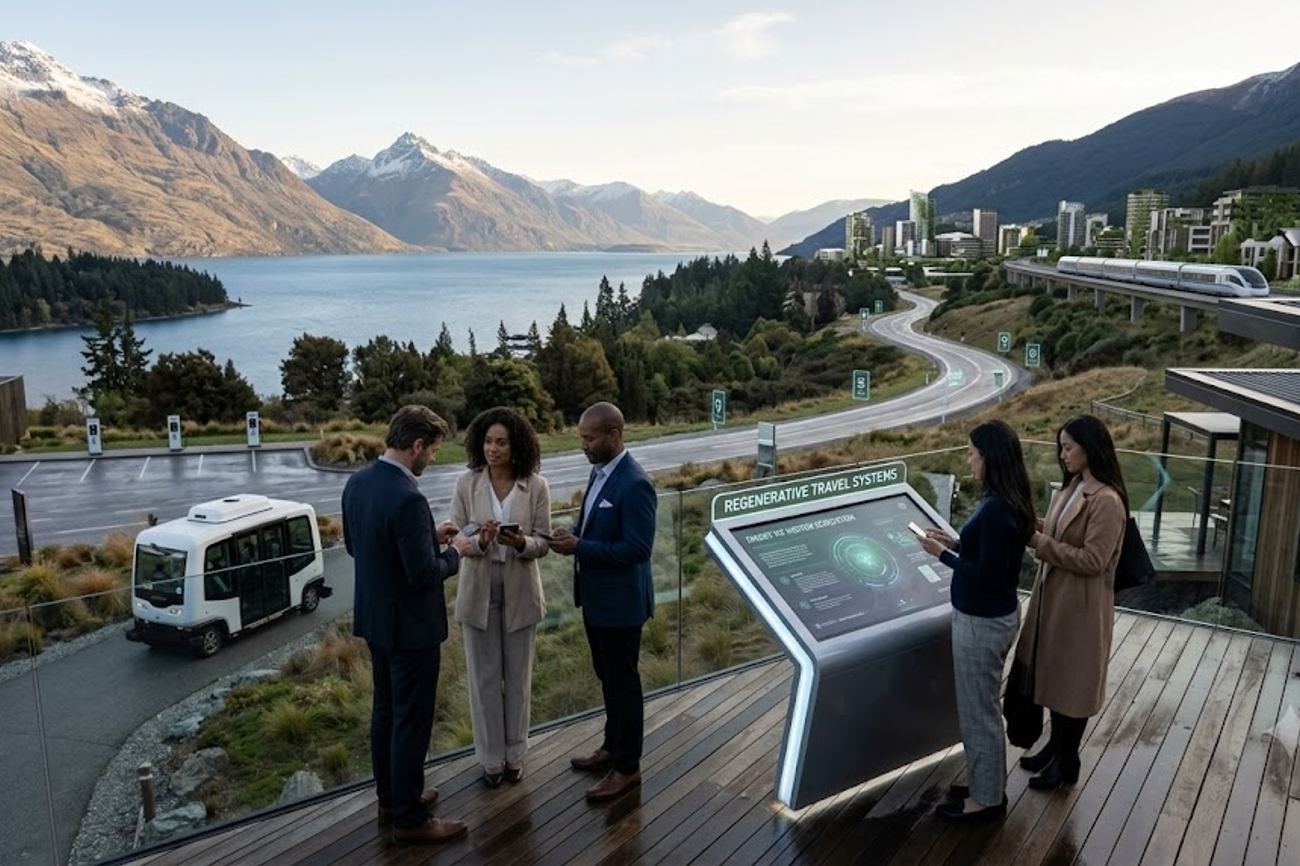
Image generated by AI
New Zealand Redefines Visitor Economy Through Digital Transformation
[Wellington, September 5, 2026] — New Zealand is currently executing a massive digital overhaul of its tourism infrastructure, moving beyond the geographic limitations that historically constrained its visitor economy. By deploying modern technological systems across both the North and South Islands, the nation is transitioning from simple automation toward the creation of "regenerative travel systems." This strategic pivot is allowing cities such as Christchurch, Auckland, Wellington, and Queenstown to solve long-standing operational inefficiencies and establish a sustainable engine for tourism growth.
The current trajectory indicates that New Zealand is no longer merely updating existing software but is instead building a competitive, high-efficiency ecosystem. This evolution ensures that the benefits of technological advancement are distributed beyond major metropolitan areas, allowing regional destinations to compete on a global scale through intelligent systems management.
The Evolution of New Zealand’s Tourism Tech Integration
The maturity of the visitor economy's digital landscape has reached a critical peak in late 2026. For decades, the sector relied heavily on human-centric operations and conventional marketing. However, the systemic shocks experienced in the early 2020s forced a rapid reassessment of operational resilience. Industry data from the "NZ Tourism AI Adoption Analysis," released by Global Thinking AI in June 2025, highlights a pivotal transition period for the country.
While New Zealand has maintained a strong national digital infrastructure and high rates of internet connectivity, the initial integration of artificial intelligence within Small to Medium-sized Enterprises (SMEs) was fragmented. Many operators focused exclusively on the "front-end"—maintaining attractive websites and using generative AI for basic content creation—while their internal back-office operations remained antiquated.
This gap was largely attributed to a lack of specialized skills, financial limitations, and "time poverty" among business owners. To bridge this divide, regional destination management organizations and government bodies have shifted their focus. The goal has moved from experimental AI use to a structured, strategic reliance on real-time data analytics and predictive modeling, ensuring that high-tech efficiency does not compromise the personalized hospitality for which the country is known.
Government Strategy and the MBIE 2025 Economic Blueprint
The driving force behind this systemic shift is the Ministry of Business, Innovation and Employment (MBIE). In August 2025, the government released a definitive policy document titled “New Zealand’s strategy for artificial intelligence: Investing with confidence.” This framework is a pillar of the broader “Going for Growth” economic initiative, designed to provide the private sector with a stable, transparent regulatory environment for AI deployment.
The financial stakes of this transition are immense. According to 2024 economic projections from Microsoft, the integration of generative AI could contribute an estimated $76 billion to the New Zealand economy by 2038. This figure represents more than 15% of the nation's total GDP, making AI adoption a matter of national economic security.
Until the MBIE framework was established, New Zealand was the only OECD member without a formal national AI strategy. The new approach prioritizes pragmatic, scalable applications over theoretical development. By focusing on the automation of routine administrative tasks, the creation of localized marketing intelligence, and the use of predictive algorithms for revenue and inventory management, the government has accelerated the pace of the AI tourism growth engine.
Research Infrastructure and the New Zealand Institute for Advanced Technology
To ensure that these technological gains are backed by rigorous research, the government established the New Zealand Institute for Advanced Technology (NZIAT). As the nation's fourth Public Research Organisation, the NZIAT was launched with a $231 million endowment to bridge the gap between academic theory and commercial viability.
A significant portion of this investment is dedicated specifically to the AI sector. Under the direction of the Prime Minister’s Science, Innovation and Technology Advisory Council, $70 million has been allocated over a seven-year period to establish a national center for AI research.
Based in Auckland, the NZIAT AI Platform serves as a collaborative nexus where private investors, industry operators, and university researchers converge. This ecosystem is designed to ensure that scientific breakthroughs translate directly into commercial tools for the tourism sector, providing SMEs with the tools necessary to optimize their operations.
Economic Impact and Resource Allocation
The following table outlines the financial commitments and projected economic gains associated with New Zealand's AI integration:
| Initiative / Source | Funding/Projected Value | Timeline/Date | Primary Focus |
|---|---|---|---|
| Microsoft Economic Projection | $76 Billion | By 2038 | Generative AI GDP Contribution |
| NZIAT Endowment | $231 Million | Launch Phase | Commercializing Advanced Tech |
| AI Research Allocation | $70 Million | 7 Years | National AI Center of Gravity |
| MBIE AI Strategy | Policy Framework | August 2025 | Regulatory Confidence & Growth |
Analyzing the Shift Toward Regenerative Travel
The transition toward AI-driven tourism is not merely about increasing profit margins; it is about the sustainability of the visitor economy. The shift toward "regenerative travel" implies a system where technology is used to manage tourist flows, reduce environmental impact, and ensure that the economic benefits of tourism are distributed more equitably across rural regions.
By using predictive modeling, operators in Queenstown and Christchurch can now anticipate peak demand with precision, allowing for better resource allocation and a reduction in the "over-tourism" pressures that have plagued popular destinations. This data-centric approach allows for a more curated visitor experience while protecting the natural assets that drive the industry.
Why This Matters: The Impact on the Modern Traveler
For the traveler, this digital transformation fundamentally alters the journey from booking to departure. The integration of AI means that the "cookie-cutter" itinerary is being replaced by hyper-personalized experiences driven by real-time data.
From a logistical standpoint, the reduction of friction in back-office operations means fewer booking errors and more agile customer service. More importantly, the focus on regenerative systems means travelers are more likely to be directed toward under-visited gems rather than overcrowded hotspots, enhancing the quality of the trip. For the local business owner, the move from "experimental" to "strategic" AI means the difference between surviving and scaling in a volatile global market.
Related Travel Guides
Disclaimer
This article is for informational and educational purposes only. It does not constitute legal, financial, or professional advice. While we strive to provide accurate and up-to-date information, travel policies, regulations, and conditions change rapidly. Always verify information with official sources before making travel decisions. Nomad Lawyer makes no representations about the accuracy, reliability, completeness, or suitability of the information provided. Readers should consult qualified professionals for advice specific to their circumstances. The views expressed in this article are those of the author and do not necessarily reflect the views of Nomad Lawyer.
Preeti Gunjan
Contributor & Community Manager
A passionate traveller and community builder. Preeti helps grow the Nomad Lawyer community, fostering engagement and bringing the reader experience to life.
Learn more about our team →