
China Expands Technology Tourism with AI Study Tours and Smart Factory Visits in 2026
China is integrating AI study tours and smart destination services into its national tourism strategy, with AI-related study tour bookings surging 370% year-over-year in summer 2026.

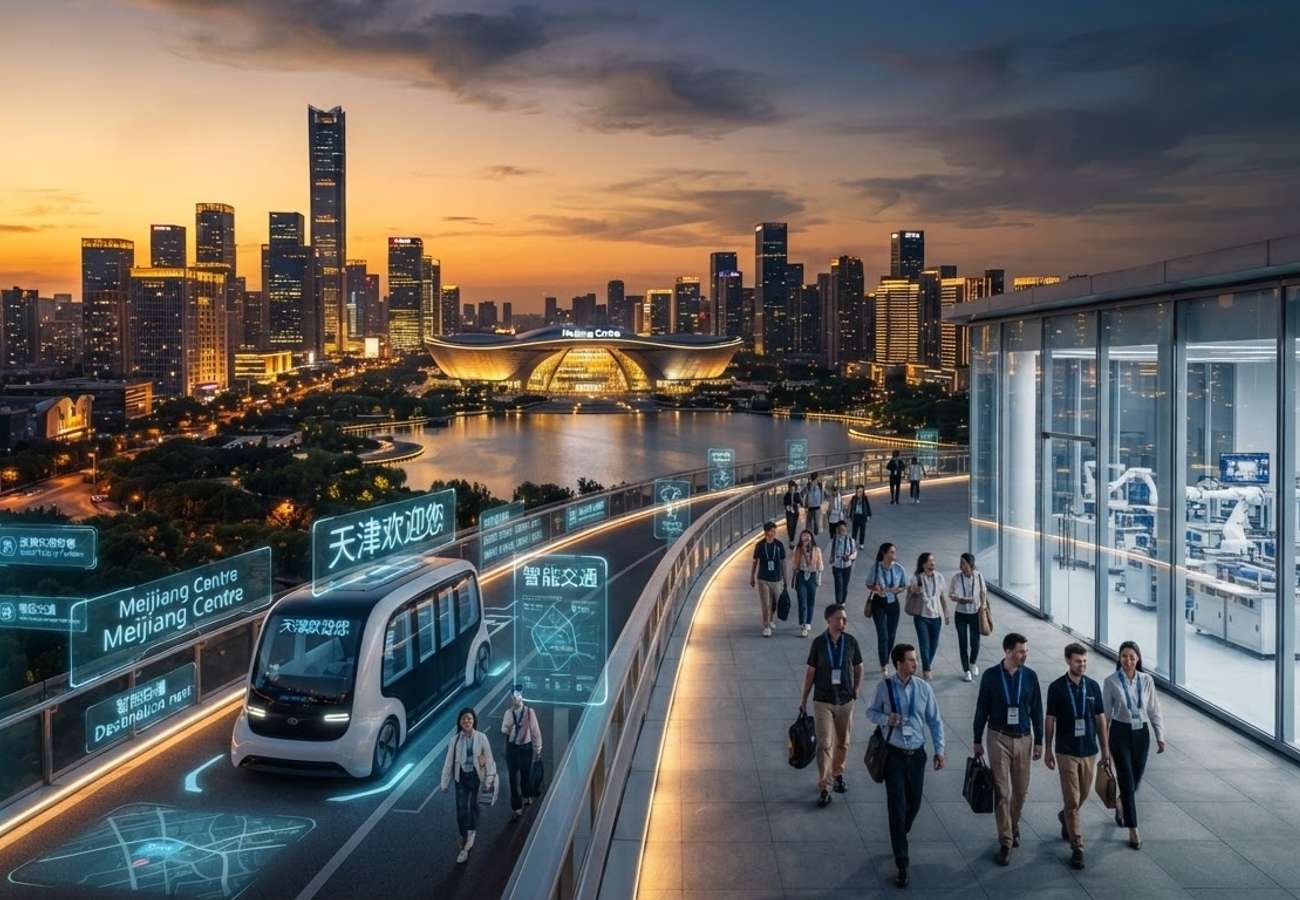
Image generated by AI
China is aggressively pivoting toward "Technology Tourism," blending educational AI journeys with industrial innovation tours to attract international business travelers and students.
Recent initiatives in Tianjin and Yunnan signal a shift in how the region manages destination data and visitor experiences. The momentum peaked in the summer of 2026, when bookings for AI-focused study tours surged by 370% year-over-year. While official government statistics do not yet separate "tech tourism" from general travel spending, the scale of recent industry gatherings suggests a systemic integration of AI into the travel product.
Strategic Developments in Tianjin and Yunnan
The 2026 China Cultural Tourism Industry Expo, held from September 3 at the Meijiang Convention and Exhibition Centre in Tianjin, served as a primary catalyst. Hosted by the Ministry of Culture and Tourism, the four-day event featured 2,540 enterprises from 20 countries and regions, alongside representatives from 30 Chinese provincial-level areas and 10 international industry bodies.
The expo spanned 100,000 square meters and was divided into ten specialized zones, including:
- Digital business models
- Cultural and tourism integration
- Tourism equipment
- International cooperation
- Local Tianjin products and consumer tourism
Parallel to the expo, a smart culture-led travel symposium convened in Yunnan on September 1. This meeting focused on the practical application of data governance and AI to enhance public culture and intangible heritage resources. The Yunnan administration is specifically targeting the optimization of its mobile tourism services to convert digital interest into offline physical spending.
Analysis of Technology Tourism Components
The following breakdown represents an editorial assessment of the current tech-tourism landscape based on verified government and industry findings.
| News Component | Share of Story | Officially Verified Finding | Relevance to Travellers |
|---|---|---|---|
| Digital cultural tourism | 25% | Tianjin hosted a 4-day national expo on digital services | Digital tools are now mainstream in planning/experience |
| Smart destination services | 20% | Yunnan focused on data governance and AI applications | Simplified destination info and service access |
| AI education/study tours | 20% | National policy encourages AI in organized study tours | New learning-focused travel for families/schools |
| AI study-tour demand | 15% | One platform recorded 370% YoY booking increase | High demand for specialized educational travel |
| Wider tourism economy | 10% | 2024 tourism value added reached 5.8631 trillion yuan | Broad economic base for new tech products |
| International access | 10% | 240-hour visa-free transit for 57 eligible countries | Facilitates short-term business/educational trips |
The Rise of AI-Driven Educational Travel
The growth in tech-centric travel is underpinned by the "AI Plus Education Action Plan," released in April 2026. This policy mandates the integration of artificial intelligence across all levels of education—from primary schools to vocational institutions.
This policy shift has transformed travel patterns. AI study tours are no longer niche; they are becoming structured products for student groups and business delegations. From a logistical perspective, this creates a specific demand for:
- Specialized interpretation services for technical factory tours.
- Supervised transport and accommodation for large student cohorts.
- Integration of "digital discovery" tools that lead visitors to physical cultural sites.
Why This Matters: Industry Implication
For the aviation and hospitality sectors, this shift represents a move away from seasonal leisure travel toward high-value, purpose-driven visits. Our analysis of the route map and policy trends suggests that "Technology Tourism" will create more stable, mid-week demand from corporate and educational sectors.
For the traveler, the real impact is the "frictionless" destination. The Yunnan model of centralized data governance means that transport, bookings, and attraction updates will eventually exist within a single ecosystem. However, travelers must recognize that these are currently development priorities; a unified, seamless experience is not yet universal across all provinces.
Forward Outlook
Expect a transition from broad "smart tourism" goals to specific, branded tech-corridors. As the 240-hour visa-free transit policy continues to benefit travelers from 57 countries, the barrier to entry for short-term "innovation sprints" or factory-visit delegations is lowering. The next phase will likely see the emergence of official national statistics specifically tracking the economic contribution of technology-led travel.
The integration of AI into tourism is no longer a futuristic concept but a current operational strategy in China's travel sector.
Related Travel Guides
Disclaimer
This article is for informational and educational purposes only. It does not constitute legal, financial, or professional advice. While we strive to provide accurate and up-to-date information, travel policies, regulations, and conditions change rapidly. Always verify information with official sources before making travel decisions. Nomad Lawyer makes no representations about the accuracy, reliability, completeness, or suitability of the information provided. Readers should consult qualified professionals for advice specific to their circumstances. The views expressed in this article are those of the author and do not necessarily reflect the views of Nomad Lawyer.
Kunal K Choudhary
Co-Founder & Contributor
A passionate traveller and tech enthusiast. Kunal contributes to the vision and growth of Nomad Lawyer, bringing fresh perspectives and driving the community forward.
Learn more about our team →