
Spain Faces Catastrophic Aviation Meltdown as Indefinite Strikes Severely Paralyze Madrid, Barcelona, and Ibiza, Forcing Government Emergency Flight Protocols: Latest Airline News
Spain's aviation network is teetering on the edge of total collapse as massive, indefinite ground handling and air traffic control strikes trigger severe operational chaos across Madrid, Barcelona, and critical Mediterranean hubs.

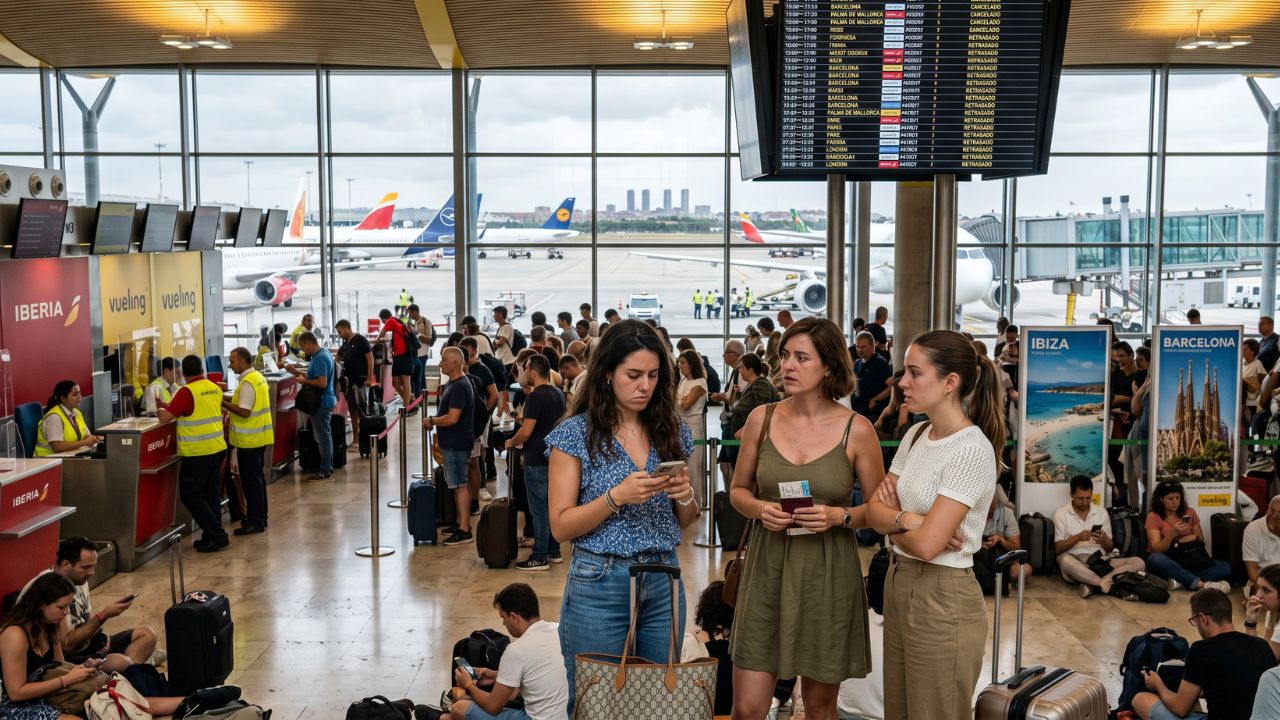
Image generated by AI
In a massive, escalating industrial crisis that is threatening to completely destroy the peak 2026 summer tourism season, Spain is currently enduring its worst aviation breakdown in years. As indefinite, highly aggressive strikes executed by thousands of ground handling personnel (Groundforce) and regional air traffic controllers (SAERCO) rapidly expand, the country's aviation network has been pushed to the absolute brink of operational collapse. Madrid-Barajas has now officially joined Barcelona, Palma de Mallorca, Ibiza, and Valencia in facing paralyzing delays and severe travel chaos. The situation has become so incredibly dire that the Spanish government has been forced to ruthlessly intervene, imposing strict emergency "minimum service" rules simply to prevent the total disintegration of air connectivity. This unprecedented wave of nationwide airport disruptions represents the premier headline in today's breaking airline news and critical global aviation updates.
By introducing direct passenger coordination and dynamic scheduling backups, the regional aviation hubs target growing passenger demand across vital commerce sectors. The choice to coordinate flight departures in phases helps to manage gate capacity, supporting the country's broader regional transportation network.
Context: The Edge of Operational Collapse
Spain’s economy is fundamentally anchored by its massive tourism sector, which relies almost entirely on seamless air connectivity.
The current wave of indefinite industrial action strikes at the very heart of this system. Ground handling personnel—responsible for everything from baggage loading to aircraft pushback—and critical SAERCO air traffic controllers are staging highly coordinated walkouts over labor disputes. Because these strikes are hitting the nation's most vital international gateways simultaneously, the localized disruptions have rapidly metastasized into a nationwide contagion. The Spanish government recognized that a total shutdown of airports like Madrid or Palma de Mallorca would result in catastrophic economic damage. Consequently, authorities have legally mandated strict minimum service levels, forcing a specific percentage of essential flights to operate. While this prevents absolute isolation, it severely strips the airlines of any operational flexibility, leading to massive baggage delays, rolling cancellations of short-haul domestic flights, and intense passenger anxiety across the Iberian Peninsula.
To view live flight schedules, real-time terminal maps, or specific emergency protocols at the primary Spanish gateway, travelers must consult the official Madrid-Barajas Airport (MAD) directory. For direct booking access, specific strike-related waiver policies, and delay compensation rules, passengers should check the official Iberia portal or their respective carrier. To explore live flight tracking and monitor the exact severity of the Spanish airspace disruptions, passengers can consult the official FlightAware tracking service.
Section-Wise Breakdown of the Nationwide Disruption
The Mega-Hubs: Madrid and Barcelona
Madrid-Barajas is the absolute epicenter of the crisis. As the massive Groundforce strike envelops the capital, authorities are desperately fighting to keep international and long-haul routes active. While global connectivity remains technically stable under emergency rules, schedules are incredibly tight. Meanwhile, Barcelona-El Prat is buckling under extreme ground handling strain. Due to its status as Europe's premier tourism hub, the government is heavily protecting its international and island routes, aggressively sacrificing short-haul domestic flights to keep the core international network breathing.
Mediterranean Tourism Hubs: Palma, Ibiza, Valencia, Alicante
The Balearic Islands and the Mediterranean coast are highly vulnerable. Palma de Mallorca and Ibiza rely exclusively on air travel. Government minimum service rules are acting as an emergency life support system here, guaranteeing that mainland and international links survive the strike. Valencia and Alicante-Elche (Costa Blanca) are experiencing moderate to severe disruption; essential international connectivity is fiercely protected, but regional flights are suffering heavy cancellations.
The Protected Island Networks: Canary Islands and Beyond
The Spanish government views the isolation of its island territories as an unacceptable risk. Consequently, airports in the Canary Islands—including Lanzarote, Fuerteventura, La Palma, and El Hierro—are operating under the highest level of government protection. Despite the strikes, these vital lifelines are forced to maintain near-normal essential operations to ensure emergency access and basic tourism survival.
Regional Strain and ATC Walkouts
Airports like Seville, Malaga, Bilbao, and Zaragoza are battling reduced operational flexibility but are prioritizing domestic connectivity to prevent total regional isolation. Most critically, Jerez, Vigo, and A Coruña are suffering from air traffic control strikes affecting SAERCO-operated towers. While airspace management remains safe under minimum service rules, the operational pressure on the controllers is immense, drastically slowing down the rate of aircraft arrivals and departures.
Technical Roster: Spain Aviation Strike Impact Matrix
To ensure absolute factual accuracy regarding how this massive industrial action is fracturing the Spanish aviation network, the following table details the specific impact zones and government interventions:
| Airport / Region | Operational Disruption Trigger | Current Status Under Emergency Rules |
|---|---|---|
| Madrid & Barcelona | Massive Groundforce Strikes | Int'l routes prioritized; domestic short-haul heavily cut |
| Palma de Mallorca & Ibiza | Ground Handling Breakdown | High protection; mainland/island lifelines remain active |
| Alicante & Valencia | Mediterranean Tourism Strain | Essential connectivity intact; severe localized delays |
| Lanzarote & Fuerteventura | Total Aviation Dependency | Maximum government protection to prevent island isolation |
| Jerez, Vigo, A Coruña | SAERCO Air Traffic Control Strikes | Airspace safe but arrivals/departures severely throttled |
| Seville, Malaga, Bilbao | Mixed Ground/ATC Disruptions | Operational flexibility destroyed; schedules tightly managed |
Passenger Impact: Surviving the Spanish Bottleneck
For the everyday passenger flying into or out of Spain during this indefinite crisis, the travel experience has degraded into a brutal exercise in patience and contingency planning.
Because the government is forcing airlines to prioritize long-haul and international flights under the minimum service laws, passengers booked on short-haul domestic flights (e.g., Madrid to Bilbao) face an incredibly high risk of sudden, rolling cancellations. Furthermore, even if your flight operates, the ground handling strikes mean that baggage loading and unloading are severely compromised. Passengers arriving in Barcelona or Palma de Mallorca are frequently reporting waiting several hours at the baggage carousels. Missed connecting flights are rampant, and because hotel occupancy across the Mediterranean is already at peak summer levels, stranded passengers are finding it nearly impossible to secure emergency overnight accommodations.
Industry Analysis: The Fragility of Peak Season Aviation
Aviation industry analysts view the current Spanish breakdown as a terrifying case study in the fragility of peak-season tourism logistics.
Airlines and airports operate on incredibly thin margins of error during the summer. By launching an indefinite strike during the most critical revenue period of the year, the Groundforce and SAERCO unions possess immense, disproportionate negotiating leverage. Analysts note that while the government's minimum service rules successfully prevent total airspace closure, they act merely as a temporary band-aid. The massive financial cost of refunding canceled flights, rerouting passengers, and paying EU261 compensation claims is bleeding European legacy carriers dry. If these negotiations between the unions, airport operator Aena, and the government do not produce an immediate resolution, the cascading delays will permanently damage Spain’s reputation as a reliable global tourism hub for the remainder of the 2026 season.
Actionable Advice for Traveling Through Spain
If you are a traveler with an active itinerary involving any Spanish airport during these indefinite strikes, execute this extreme survival checklist immediately:
- Travel Exclusively with Hand Luggage: Do not check a bag under any circumstances. The ground handling strikes in Madrid, Barcelona, and Palma mean checked baggage is highly susceptible to massive delays or complete loss. Pack only a carry-on to ensure you can bypass the baggage carousels entirely upon arrival.
- Prioritize International Routing: If you must transit, do not book a domestic connection within Spain (e.g., flying into Madrid to catch a domestic flight to Valencia). Domestic routes are the first to be sacrificed under the minimum service laws. Book direct international flights straight to your final Spanish destination whenever mathematically possible.
- Verify Flight Status Constantly: Do not assume your flight is operating until you are physically at the gate. Use your airline's mobile app to check your flight status every hour leading up to departure, as rolling cancellations are occurring with minimal notice.
- Understand Your EU261 Rights: If your flight is delayed by more than three hours or canceled due to the strike, you may be entitled to financial compensation and mandatory hotel accommodation under European Union passenger rights laws. Document all your expenses meticulously.
FAQ: Spain's 2026 Aviation Strikes
Which major Spanish airports are most affected by the ongoing strikes?
Madrid-Barajas and Barcelona-El Prat are at the absolute center of the crisis, alongside critical tourism hubs like Palma de Mallorca, Ibiza, Valencia, and Alicante.
What is causing this massive aviation breakdown across Spain?
The chaos is driven by indefinite, widespread industrial action involving thousands of ground handling personnel (Groundforce) and regional air traffic controllers (SAERCO).
Will my flight to the Canary or Balearic Islands be canceled?
The Spanish government has implemented strict emergency "minimum service" rules that heavily protect island connectivity, meaning essential flights to Ibiza, Palma, and the Canary Islands are highly likely to operate, albeit with delays.
The Brink of Systemic Failure
The devastating wave of indefinite strikes paralyzing Madrid, Barcelona, and Spain's critical Mediterranean hubs proves definitively that the country's aviation infrastructure is currently operating on a razor's edge. By legally forcing airlines to maintain minimum service levels, the Spanish government has narrowly avoided total national isolation, but it cannot mask the brutal reality of the operational collapse occurring on the tarmac. Until a permanent resolution is reached between the labor unions and the aviation authorities, millions of global travelers must navigate an incredibly hostile, unpredictable airspace, underscoring the extreme vulnerability of the world's most popular summer tourism market.
Key Takeaways
- Nationwide Operational Collapse: Indefinite strikes by ground handlers and ATC personnel have pushed Spain's entire aviation network to the brink of failure.
- Mega-Hubs Paralyzed: Madrid-Barajas and Barcelona-El Prat are suffering severe ground delays, forcing the cancellation of non-essential domestic routes.
- Government Emergency Rules: Authorities have mandated strict "minimum service" levels to protect international flights and vital island connectivity.
- Island Lifelines Protected: Flights to heavily tourism-dependent islands like Palma de Mallorca, Ibiza, and the Canary Islands are legally prioritized to prevent economic devastation.
- Severe Baggage Chaos: Passengers are heavily advised to travel exclusively with hand luggage to bypass the massive delays caused by the ground handling strikes.
Related Travel Guides
Europe Flight Cancellations: Frankfurt, Paris, Amsterdam Chaos
Disclaimer
This article is for informational and educational purposes only. It does not constitute legal, financial, or professional advice. While we strive to provide accurate and up-to-date information, travel policies, regulations, and conditions change rapidly. Always verify information with official sources before making travel decisions. Nomad Lawyer makes no representations about the accuracy, reliability, completeness, or suitability of the information provided. Readers should consult qualified professionals for advice specific to their circumstances. The views expressed in this article are those of the author and do not necessarily reflect the views of Nomad Lawyer.
Kunal K Choudhary
Co-Founder & Contributor
A passionate traveller and tech enthusiast. Kunal contributes to the vision and growth of Nomad Lawyer, bringing fresh perspectives and driving the community forward.
Learn more about our team →