New Trabzon Airport Begins Construction: 10 Million Passenger Sea-Reclaimed Terminal Set to Reshape Black Sea Tourism

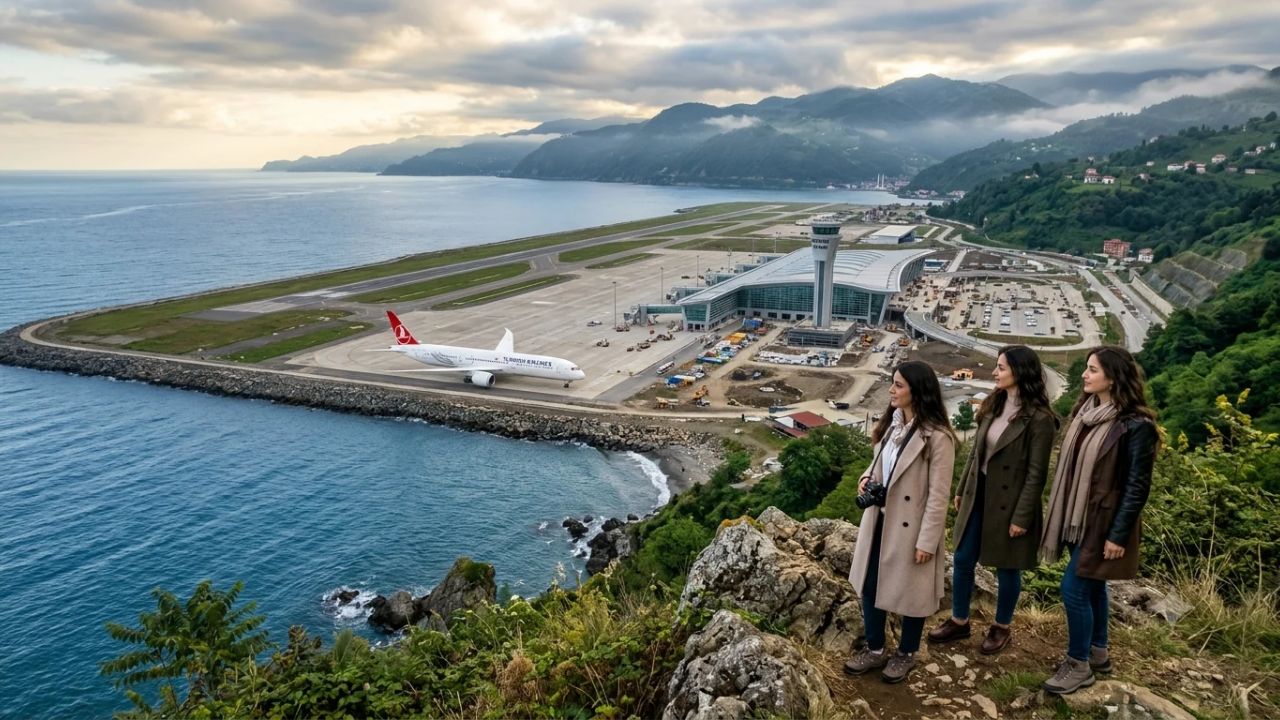
TRABZON, Türkiye — Heavy marine engineering machinery and coastal reclamation teams officially initiated preliminary site works on 26 October 2026 for the New Trabzon Airport, launching an offshore aviation megaproject designed to triple regional passenger throughput and establish the Eastern Black Sea as a premier international tourism corridor. Confirmed by the Turkish Ministry of Transport and Infrastructure (T.C. Ulaştırma ve Altyapı Bakanlığı), the landmark civil engineering project will see an ultra-modern passenger terminal, a 3,000-metre wide-body runway, and complete airside support facilities constructed entirely on land reclaimed from the Black Sea. With an annual design capacity of 10 million passengers, the new gateway represents Türkiye’s third airport built over the sea—following Ordu-Giresun Airport and Rize-Artvin Airport—delivering a permanent operational solution to the severe geographical and capacity bottlenecks constraining the historic maritime province.
The initiation of ground works marks a watershed moment for Black Sea tourism. Over the past decade, Trabzon and its surrounding mountain provinces have evolved from a quiet domestic transit corridor into one of the most sought-after holiday destinations for travelers from the Gulf Cooperation Council (GCC) states, Europe, and neighboring South Caucasus nations. Drawn by the region's temperate highland climate, dense emerald spruce forests, cascading waterfalls, and ancient cultural heritage, international arrivals have repeatedly outpaced the physical capacity of the existing coastal airfield. By deploying cutting-edge marine fill technology, deep-water protective breakwaters, and state-of-the-art Instrument Landing Systems, Turkish aviation planners are laying the physical foundation for direct intercontinental wide-body connectivity connecting Trabzon directly to Riyadh, Dubai, Doha, London, Frankfurt, and beyond.
Marine Engineering on the Open Water: 100 Million Tonnes of Coastal Fill
Constructing an international commercial airport on open seawater presents extraordinary structural and hydrographic challenges. The Eastern Black Sea coastline is characterized by a dramatic topography where the Pontic Mountains (Doğu Karadeniz Dağları) plunge precipitously into deep coastal waters, leaving virtually no flat alluvial coastal plains suitable for modern multi-runway aviation infrastructure. Faced with steep mountain slopes directly behind the existing urban sprawl of Ortahisar and Yomra, the Ministry of Transport opted for maritime reclamation, leveraging proven engineering methodologies refined during the construction of Ordu-Giresun Airport (opened in 2015) and Rize-Artvin Airport (opened in 2022).
The scale of the New Trabzon Airport reclamation project ranks among the largest maritime earthworks in the Mediterranean and Black Sea basins:
- Marine Rock Fill Volume: Engineers estimate that the reclamation will require approximately 100 million tonnes of specially graded quarry rock, armor stones, and core gravel. Heavy dump trucks and split-hopper barges are sourcing basalt, granite, and limestone aggregates from state-approved inland quarries, carefully depositing material into deep underwater trenches to create a stable, non-settling marine foundation.
- Deep-Water Defensive Breakwater: To shield the runway, apron, and terminal structures from fierce seasonal Black Sea storms, prevailing northern gales, and high-energy wave action, the project incorporates a 6-kilometre-long offshore protective breakwater. Engineered using interlocking concrete armor blocks (tetrapods and accropodes) weighing up to 20 tonnes each, the marine wall is designed to dissipate wave energy and safeguard critical runway operations during severe winter maritime squalls.
- Advanced Soil Stabilization: Specialized geotechnical techniques, including deep cement mixing, stone columns, and prefabricated vertical drains, are being deployed across the seabed footprint to accelerate marine sediment consolidation, prevent differential settlement, and ensure complete seismic resilience along the unstable coastal fault margins.
The marine reclamation footprint will extend directly seaward adjacent to the current airfield, creating an entirely self-contained aviation platform without requiring the mass expropriation or demolition of existing residential and commercial zones in coastal Trabzon.
NEW TRABZON OFFSHORE AIRPORT SPECIFICATIONS & METRICS
| PARAMETER | EXISTING TRABZON (TZX) | NEW TRABZON AIRPORT |
|---|---|---|
| Location Setting | Coastal Strip (Landlocked) | Reclaimed Maritime Platform |
| Annual Passenger Capacity | ~3.3 Million | 10.0 Million |
| Terminal Building Area | ~23,000 sq m | 110,000 sq m |
| Auxiliary Facilities Area | Restricted | 65,000 sq m |
| Runway Dimensions | 2,640 m × 45 m | 3,000 m × 45 m |
| Parallel Taxiway | Partial / Backtrack Loops | Full-Length (3,000 m × 45 m) |
| Aircraft Classification | Code 4C (Narrow-Body) | Code 4E/4F (Wide-Body Capable) |
| Marine Fill Mass | N/A | ~100 Million Tonnes |
| Protective Breakwater | Partial Sea Wall | 6.0 Kilometres Engineered |
Runway Geometry and Wide-Body Operational Capability
The central limitation of the historic Trabzon Airport has long been its runway dimensions and constrained obstacle clearance profiles. The legacy runway, measuring 2,640 metres in length by 45 metres in width, is tightly hemmed in by the Black Sea shoreline to the north and the multi-lane Black Sea Coastal Highway (D010) backed by steep residential hillsides to the south. This narrow strip has historically forced airlines to operate exclusively with narrow-body single-aisle aircraft, such as the Boeing 737 family or Airbus A320 series.
During hot summer afternoons, payload and range penalties frequently prevented fully loaded twin-aisle jets from departing with full fuel reserves, curtailing non-stop long-haul possibilities. In contrast, the New Trabzon Airport introduces complete wide-body operational capabilities:
3,000-Metre Code 4E/4F Runway
The replacement runway extends to a full 3,000 metres with a standardized width of 45 metres, flanked by 7.5-metre load-bearing paved shoulders. This extended length accommodates modern long-haul wide-body airliners—including the Airbus A330-300, Airbus A350-900, Boeing 787-9 Dreamliner, and Boeing 777-300ER—operating at maximum takeoff weight (MTOW) for long-range intercontinental sectors.
Dedicated Full-Length Parallel Taxiway
Unlike the existing layout, which frequently requires departing aircraft to backtrack on the active runway during high-density operations, the new facility features a dedicated 3,000-metre parallel taxiway and multiple high-speed rapid-exit turnoffs. This aerodynamic layout dramatically shortens runway occupancy times (ROT), allowing air traffic controllers to safely handle up to 40 aircraft movements per hour during peak travel periods.
Next-Generation Navigation and All-Weather Operations
The Black Sea coastal microclimate is notorious for sudden maritime fog banks, heavy sea mist, low cloud ceilings, and torrential precipitation that have historically caused flight diversions to Samsun or Ankara. The new offshore airport will incorporate advanced Category II and Category III Instrument Landing Systems (ILS), precision approach lighting arrays mounted on offshore trestles, and surface movement radar, enabling safe approaches and departures in severe adverse weather conditions.
Alleviating Saturation: DHMİ Passenger Statistics and Terminal Expansion
The strategic urgency behind the new development is underscored by the explosive passenger growth documented by Türkiye’s State Airports Authority (Devlet Hava Meydanları İşletmesi - DHMİ). The existing passenger terminal, originally calibrated to handle approximately 3.3 million passengers annually, has reached a state of operational saturation.
According to official DHMİ data, Trabzon Airport handled 3,103,615 passengers between January and September 2026 alone, representing roughly 94 percent of its theoretical annual capacity within just nine months. During the peak summer window spanning June through August, daily passenger throughput frequently exceeded 22,000 travelers, resulting in severe overcrowding at security checkpoints, baggage claim carousels, and passport control counters.
The New Trabzon Airport addresses these operational bottlenecks through a dramatic expansion of enclosed passenger and cargo space:
- 110,000-Square-Metre Passenger Terminal: More than four times the size of the existing terminal complex, the new building incorporates separate, bi-level international and domestic processing halls, 80 check-in desks, 24 self-service bag-drop kiosks, 16 automated biometric e-gates, and 12 contact aircraft boarding bridges (aerobridges).
- 65,000 Square Metres of Operational Support Facilities: Supporting infrastructure includes a high-tech visual air traffic control tower, an independent aircraft maintenance hangar, an aviation fuel hydrants network with expanded tank farm reserves, comprehensive ground-support equipment (GSE) storage, and a dedicated multi-story parking facility accommodating over 3,000 vehicles.
- Air Cargo and Cold Storage Terminal: A dedicated cargo logistics terminal with specialized refrigeration facilities will enable direct air shipment of regional agricultural exports, including world-renowned Black Sea hazelnuts, fresh tea harvests, and organic mountain honey, bypassing slow overland highway routes to Istanbul.
The Gulf Gateway: Why the Black Sea Attracts Middle Eastern Travelers
The driving commercial engine behind Trabzon’s international aviation boom is the Gulf Cooperation Council (GCC) market. For travelers residing in Saudi Arabia, the United Arab Emirates, Qatar, Kuwait, Oman, and Bahrain, the Eastern Black Sea offers an irresistible natural refuge from extreme summer heatwaves. While temperatures in Riyadh, Dubai, and Kuwait City routinely soar past 45°C to 50°C from June to September, Trabzon's highland plateaus (Yaylalar) maintain crisp, invigorating temperatures ranging between 18°C and 25°C, accompanied by frequent refreshing rain showers, blanketed pine forests, and cascading mountain streams.
Comprehensive Visa-Free Entry Framework
Holiday planning from the Arabian Peninsula is streamlined by Türkiye's liberal visa regulations. Under decrees issued by the Ministry of Foreign Affairs, ordinary passport holders from Saudi Arabia, the United Arab Emirates, Qatar, Kuwait, Bahrain, and Oman are exempt from tourist visas, granting them permission to remain in Türkiye for up to 90 days within any 180-day rolling period. This administrative ease allows families and extended multi-generational travel groups to book impromptu mountain retreats without consular delays.
Shifting Airline Deployment Patterns
Historically, Gulf travelers visited Trabzon primarily via point-to-point seasonal narrow-body charter flights operated by carriers such as Saudia, Flynas, flydubai, Air Arabia, Kuwait Airways, and Jazeera Airways, or via connecting itineraries through Istanbul Airport (IST) and Sabiha Gökçen Airport (SAW). However, existing slot shortages and parking apron limitations at TZX have severely constrained airline frequencies.
With the new airport’s wide-body gates and 10-million-passenger processing capabilities, Gulf carriers can transition seasonal operations from high-frequency single-aisle jets to high-capacity twin-aisle aircraft like the Boeing 787 and Airbus A350. This operational shift will offer premium lie-flat business class cabins, expansive baggage allowances vital for large family entourages, and direct cargo holds for high-value luggage and regional shopping.
Tailored Hospitality Ecosystem
Trabzon and neighboring Rize have systematically adapted their commercial infrastructure to serve Gulf tourists. The region features abundant multi-bedroom serviced apartments, private luxury villas overlooking the sea, Arabic-speaking concierge services, family-friendly vehicle rentals (including 8-seater minivans), and certified halal culinary establishments serving authentic Black Sea cuisine alongside Middle Eastern dining options.
European and UK Travelers: Unlocking a New Alternative to the Mediterranean
While the Gulf market remains the primary source of inbound foreign spending, the expansion of Trabzon Airport is poised to attract an expanding segment of European and British travelers seeking alternatives to Türkiye's traditional sun-and-sand resorts.
For decades, European tourism to Türkiye has been overwhelmingly concentrated along the Aegean and Mediterranean rivieras, drawing millions of vacationers to Antalya, Bodrum, Dalaman, and Fethiye. While these coastal resorts offer world-class beach amenities, they often face intense summer crowding and soaring mid-season room rates. The Black Sea region presents a radically distinct holiday experience grounded in ecotourism, active mountain adventure, alpine trekking, and deep historical exploration.
UK and EU Visa Protocols
British ordinary passport holders enjoy visa-free entry to Türkiye for tourism and business stays up to 90 days within a 180-day period. Citizens of European Union member states, including Germany, the Netherlands, France, and Austria, benefit from identical 90-day visa exemptions, with several European nationalities permitted to enter using national identity cards rather than passports.
Emerging European Ecotourism Demand
European travelers are showing heightened interest in authentic outdoor and cultural travel:
- Trekking and Highland Expeditions: The Kaçkar Mountains National Park offers some of Western Asia’s most spectacular alpine hiking trails, glacial lakes, and wildflower meadows, frequently compared to the Swiss Alps or the Scottish Highlands.
- Botanical and Birdwatching Tourism: The Black Sea coastal flyway is a globally recognized corridor for migratory raptors, waterfowl, and songbirds traveling between Eastern Europe and Africa, drawing dedicated wildlife enthusiasts to the Çoruh River basin and coastal wetlands.
- Cultural and Architectural Discovery: The region boasts centuries of Pontic Greek, Byzantine, Georgian, and Ottoman heritage, preserved in cliffside monasteries, stone arch bridges spanning rushing rivers, and wooden vernacular mansions in historic mountain villages.
Currently, European visitors must generally book connecting flights via Istanbul, Frankfurt, or Düsseldorf. A high-capacity offshore terminal with modernized border control facilities provides international leisure carriers—such as SunExpress, Pegasus Airlines, Corendon, and Jet2—with the operational incentive to establish direct seasonal charter links connecting Manchester, London Gatwick, Munich, and Amsterdam directly to Trabzon.
INTERNATIONAL SOURCE MARKET CHARACTERISTICS & ACCESS
| REGION / NATION | VISA & ENTRY STATUS | PRIMARY TOURISM MOTIVATIONS |
|---|---|---|
| Saudi Arabia & GCC | Visa-Free (90 Days) | Cool Mountain Climate, Extended Family |
| (KSA, UAE, Qatar) | Direct Passport Stamp | Holidays, Halal Hospitality, Yayla Escapes |
| United Kingdom | Visa-Free (90 Days) | Trekking, Ancient Byzantine Heritage, |
| Valid National Passport | Ecotourism, Affordable Scenic Escapes | |
| European Union | Visa-Free (90 Days) | Alpine Climbing, Botanical Tours, |
| (Germany, France) | Passport or National ID | Cultural Crossings, Nature Photography |
| Georgia (Caucasus) | Bilateral Visa-Free | Cross-Border Shopping, Regional Trade, |
| National Identity Card | Multi-Destination Coastal Tourism |
Iconic Regional Attractions: Uzungöl, Sümela Monastery, and Highland Plateaus
The transformative potential of the New Trabzon Airport directly intersects with the Eastern Black Sea’s extraordinary natural and cultural attractions. Improved international air accessibility allows travelers to bypass long road journeys from distant hubs, accessing these world-class landmarks within an hour’s drive from the runway.
Uzungöl: The Crown Jewel of Black Sea Alpine Tourism
Situated approximately 95 kilometres southeast of Trabzon in the Çaykara district, Uzungöl (meaning "Long Lake") sits at an elevation of 1,090 metres above sea level. Formed centuries ago when a massive landslide dammed the Haldizen River stream, the lake is enveloped by steep mountainsides carpeted in dense spruce forests, with the iconic minarets of the local wooden mosque reflected in its tranquil waters.
Uzungöl has become an international symbol of Black Sea tourism, offering:
- Highland Lakeside Hospitality: Hundreds of boutique timber chalets, lakeside hotels, and traditional restaurants serving fresh Black Sea trout, kuymak (a rich local fondue made with cornmeal and melted highland cheese), and locally baked cornbread.
- Adventure and Recreation: Walking trails, rowboat rentals, paragliding launches from surrounding peaks, and excursions into the high-altitude Garester and Şekersu plateaus.
- Environmental Management: To preserve the fragile lakeside ecology, provincial authorities have enacted strict zoning regulations to curb unauthorized development, improve pedestrian boardwalks, and implement eco-friendly electric shuttle transport around the perimeter.
Sümela Monastery: Cliffside Architectural Splendor
Carved directly into a sheer vertical cliff face 300 metres above the lush Altındere Valley in the Maçka district, Sümela Monastery (Meryem Ana Manastırı) represents one of the most remarkable architectural achievements in the Christian world. Founded during the reign of Roman Emperor Theodosius I in the late 4th century, the monastery served as an active monastic retreat for Greek Orthodox monks for over 1,500 years.
Key visitor highlights include:
- The Rock Church and Frescoes: The central inner courtyard leads into a cave church hollowed from natural rock, completely adorned with multi-layered Byzantine and post-Byzantine frescoes depicting biblical scenes, the Virgin Mary, and historical patrons.
- Extensive Geological Restoration: Following a multi-year engineering project overseen by the Ministry of Culture and Tourism to secure surrounding cliff faces against loose rockfalls, Sümela is fully open to visitors with secure pedestrian walkways and elevated viewing galleries.
- Seasonal Visiting Hours: The monastery maintains official summer opening hours from 10:00 to 19:00 (May through October) and winter operating hours from 08:00 to 17:00 (November through April). Visitors should dress warmly during shoulder and winter seasons, as mountain mist and freezing temperatures frequently shroud the Altındere gorge.
The Highland Yaylas: Hıdırnebi, Ayder, and Beyond
Beyond the primary landmark sites, Trabzon serves as the launchpad for exploring the ancient transhumance pasturelands known as Yaylalar. During the summer months, local communities migrate up to these high-altitude meadows (often above 1,800 metres) to graze livestock, celebrate traditional folk festivals (Yayla Şenlikleri), and play the kemençe (a three-stringed bowed musical instrument).
- Hıdırnebi Plateau: Situated at an elevation of 1,600 metres in the Akçaabat district, known for its sweeping cliffside views of the cloud ocean below and fresh grilled meat restaurants.
- Sultan Murat Plateau: Steeped in history where Ottoman Sultan Murad IV rested on his return from the Baghdad campaign in 1635, hosting lively highland gathering markets every Friday throughout the summer.
- Regional Circuit to Rize: The new airport facilitates seamless multi-province road trips connecting Trabzon directly to Rize’s world-famous Ayder Plateau, the cloud-skimming stone castles of Zilkale, and the pristine alpine tea plantations of the Fırtına Valley.
Cross-Border Synergies: Connecting Northern Türkiye and Georgia
The construction of a 10-million-capacity aviation hub in Trabzon carries profound regional implications for cross-border tourism across the South Caucasus, particularly involving neighboring Georgia.
Located just 180 kilometres east of Trabzon along the scenic Black Sea Coastal Highway (D010 / E70), the Georgian border at Sarpi represents one of the most active international transit crossings in the region. Directly across the border lies Batumi, the capital of Georgia's Autonomous Republic of Adjara, celebrated for its modern seaside boulevard, European-style architecture, botanical gardens, and dynamic hospitality scene.
Creating Multi-Country Black Sea Itineraries
The proximity of modern aviation infrastructure in Trabzon and existing regional facilities in Batumi and Rize allows international tour operators to package multi-destination Black Sea travel circuits:
- Cultural Synthesis: Travelers can land in Trabzon, spend four days exploring Byzantine monasteries, Ottoman mansions, and tea plantations, and then journey along the subtropical coastline into Georgia to experience ancient Kartvelian culture, world-renowned Georgian winemaking traditions, and the dramatic mountain landscapes of Svaneti.
- Bilateral Travel Frameworks: Citizens of Türkiye and Georgia can cross the international border at Sarpi using simple national identity cards, fostering deep regional commerce and leisure transit.
- Third-Country Traveler Regulations: International travelers from the GCC, UK, and Europe embarking on cross-border itineraries must recognize that Türkiye and Georgia are separate sovereign jurisdictions. A Turkish tourist visa or visa exemption does not confer entry rights into Georgia. Travelers must verify Georgian visa requirements based on their specific nationality—though citizens of the GCC, EU, UK, and United States generally enjoy generous 360-day visa-free entry to Georgia. Additionally, cross-border car rentals require specialized international insurance endorsement (Green Card coverage) and formal cross-border permits from rental operators.
Multimodal Transit: Light Rail and Regional Rail Integration
To ensure the new airport’s 10-million-passenger throughput does not overwhelm coastal highway corridors, the Turkish Ministry of Transport and Infrastructure is advancing major surface transportation projects to link the aviation hub directly into regional rail networks.
The Akyazı–Airport Light Rail Project
The centerpiece of urban transit modernization is the planned 16.2-kilometre initial phase of the Trabzon Light Rail Transit (Hafif Raylı Sistem). The line will traverse the central urban spine of the city:
- Connecting the western medical and sporting hub of Akyazı (home to the Papara Park stadium complex) through the historic downtown core of Ortahisar, Karadeniz Technical University (KTÜ), and terminating directly at the New Trabzon Airport terminal concourse.
- Providing arriving air passengers with rapid, congestion-free electrified rail transit into central hotel districts, corporate offices, and intercity bus terminals.
The Samsun–Sarp Regional Railway Vision
On a macro scale, the airport project aligns with the national strategic vision to construct a high-speed passenger and freight railway traversing the entire Eastern Black Sea coastline, linking Samsun, Ordu, Giresun, Trabzon, Rize, and the Georgian border at Sarp. Once realized, this rail corridor will physically integrate the offshore airport into the wider Eurasian transport grid, allowing arriving international passengers to seamlessly board high-speed electric trains bound for Batumi, Tbilisi, or central Anatolia.
Aviation Economics: Fleet Deployment, Fare Dynamics, and Cargo Logistics
The initiation of construction at New Trabzon Airport prompts critical questions regarding route viability, ticket pricing, and airline network economics. While a larger facility unlocks substantial operational advantages, travelers must understand the economic forces shaping airfares and scheduling.
Dispelling the Low-Cost Fare Assumption
A widespread assumption among consumers is that airport expansion automatically leads to discounted ticket prices. In reality, commercial airline pricing is dictated by dynamic revenue management algorithms influenced by jet fuel expenses, landing fee structures, seasonal demand spikes, and fleet availability:
- Peak Summer Demand: During the intense July–August holiday window, demand for flights between the Gulf, Western Europe, and northern Türkiye consistently exceeds seat capacity. While the new terminal will permit airlines to schedule larger aircraft, intense holiday demand will likely sustain firm premium pricing during peak summer weeks.
- Shoulder-Season Value: The true pricing benefit for consumers will materialize during shoulder seasons (May–June and September–October), when carriers utilize expanded gate access to introduce promotional fares, encouraging off-peak ecotourism, corporate retreats, and wellness travel.
Comprehensive Airline Network Strategies
The primary carriers serving Trabzon will adjust their network planning as the new facility progresses:
- Turkish Airlines (THY): As the national flag carrier, Turkish Airlines maintains high-frequency domestic shuttles linking Trabzon to its global mega-hub at Istanbul Airport (IST), enabling one-stop connections to over 340 destinations worldwide. THY’s dedicated low-cost subsidiary, AJet, alongside private carrier Pegasus Airlines, will expand point-to-point seasonal links from Ankara, Izmir, Antalya, and key European cities.
- SunExpress: The joint venture between Lufthansa and Turkish Airlines is well positioned to establish scheduled summer links connecting Trabzon directly to German and European industrial centers with large Turkish diaspora populations.
- Gulf Carriers: Flynas, flydubai, and Saudia will have the physical infrastructure to deploy twin-aisle wide-body aircraft, transitioning from high-frequency single-aisle rotations to high-volume wide-body operations that relieve air traffic control congestion.
Air Cargo and Regional Economic Transformation
Beyond passenger leisure travel, the New Trabzon Airport features dedicated air cargo facilities that will transform regional commerce. The Eastern Black Sea produces high-value agricultural commodities that demand rapid transport to international consumers:
- Freshly harvested Black Sea salmon (Türk Somonu), a rapidly expanding aquaculture export to European and Asian culinary markets.
- Premium dried hazelnuts, tea leaves, and wild mountain herbs.
- Direct wide-body cargo operations will allow regional producers to load temperature-sensitive freight directly onto international passenger and cargo flights, circumventing 15-hour overland truck transfers to Istanbul or Ankara.
TRAVELER CHECKLIST: CURRENT OPERATIONS VS. NEW AIRPORT
| TRAVEL CONSIDERATION | OPERATIONAL STATUS & ADVISORY |
|---|---|
| Current Flights | Fully Operational. All scheduled flights use existing TZX. |
| Construction Impact | Zero Airside Interruption. Sea reclamation is isolated. |
| Airport IATA / ICAO Code | TZX / LTCG remains unchanged throughout development. |
| Direct Flight Availability | Search existing non-stop GCC charters and Istanbul shuttles. |
| Ground Transfers | HAVAŞ airport buses, municipal transit, taxis, car rentals. |
| Regional Travel Window | Best weather from late May through mid-October. |
| Weather Preparedness | Carry waterproof apparel; mountain temperatures drop fast. |
Traveler Advisory: Navigating Current Operations and Future Timelines
For tourists planning journeys to northern Türkiye over the immediate 2026–2028 travel cycles, understanding the operational boundaries of the construction project is essential:
1. Existing Trabzon Airport (TZX) Remains Fully Operational
The announcement of preliminary site works on 26 October 2026 does not affect current flight schedules or airport operations. The existing coastal airfield continues to handle all domestic and international flights normally under airport code TZX. Arriving and departing travelers will experience no disruption to runway availability, passenger check-in, or security screening, as offshore reclamation works are physically segregated within maritime construction zones.
2. Booking Protections and Through-Ticketing
Travelers booking flights to Trabzon—particularly those connecting through Istanbul (IST), Sabiha Gökçen (SAW), or Ankara (ESB)—should always purchase their journey under a single through-ticket issued by the operating airline or recognized alliance partner. In the event that maritime fog or adverse weather causes arrival delays into Istanbul, through-ticketing guarantees automatic rebooking onto subsequent flights, baggage transfer protection, and airline care entitlements under Turkish Directorate General of Civil Aviation (SHGM) passenger rights regulations.
3. Seasonal Weather and Itinerary Planning
The Eastern Black Sea possesses an oceanic, temperate rainforest microclimate distinct from the rest of Anatolia:
- Summer Travel (June to August): Coastal areas are warm and humid, while mountain plateaus offer crisp air and pleasant sunshine. Highland accommodations in Uzungöl and Ayder book out months in advance; early reservations are strongly advised.
- Shoulder Seasons (May, September, October): Characterized by colorful autumn foliage, rushing mountain rivers, and uncrowded historical sites. Travelers should pack multi-layered clothing, durable waterproof footwear, and all-weather jackets.
- Winter Travel (November to April): Sümela Monastery and coastal Trabzon remain accessible, but high-altitude mountain passes and highland plateaus experience heavy snowfall, requiring four-wheel-drive vehicles with winter tires.
4. Ground Transportation and Car Rentals
Arriving passengers at Trabzon Airport can utilize official HAVAŞ airport shuttle coaches connecting the terminal directly to central Ortahisar, Akçaabat, and Rize. Independent car rentals are highly recommended for travelers seeking to explore Uzungöl, Sümela, and the mountain plateaus at their own pace. Major international and domestic car hire agencies maintain counters at the arrivals terminal.
The development of the New Trabzon Airport represents an ambitious fusion of marine engineering, aviation modernism, and regional tourism vision. By conquering coastal terrain constraints through seawater reclamation, Türkiye is building an enduring gateway that will welcome generations of international nature lovers, cultural explorers, and global holidaymakers to the majestic shores of the Black Sea.
Related Travel Guides
This article is for informational purposes. Flight routes, passenger regulations, visa rules, and transit advisories are subject to change by airlines and aviation authorities. Readers are advised to verify schedules and travel documentation with relevant carriers and border agencies before departure.
Related Stories
Greenland Opens New Ilulissat International Airport with 2,200-Meter Runway to Revolutionize Arctic Tourism
Armenia Partners with Corporación América Airports for Major Zvartnots Terminal Expansion to Expand International Tourism Connectivity