
New Orleans NOLAxNOLA 2026 Music Showcase Drives Fall Tourism Surge Across Historic Neighborhoods
NOLAxNOLA 2026 activates 35 to 40 historic venues from Sept 24 to Oct 4, boosting hotel occupancy to 72% and supporting 100,000 cultural workers.

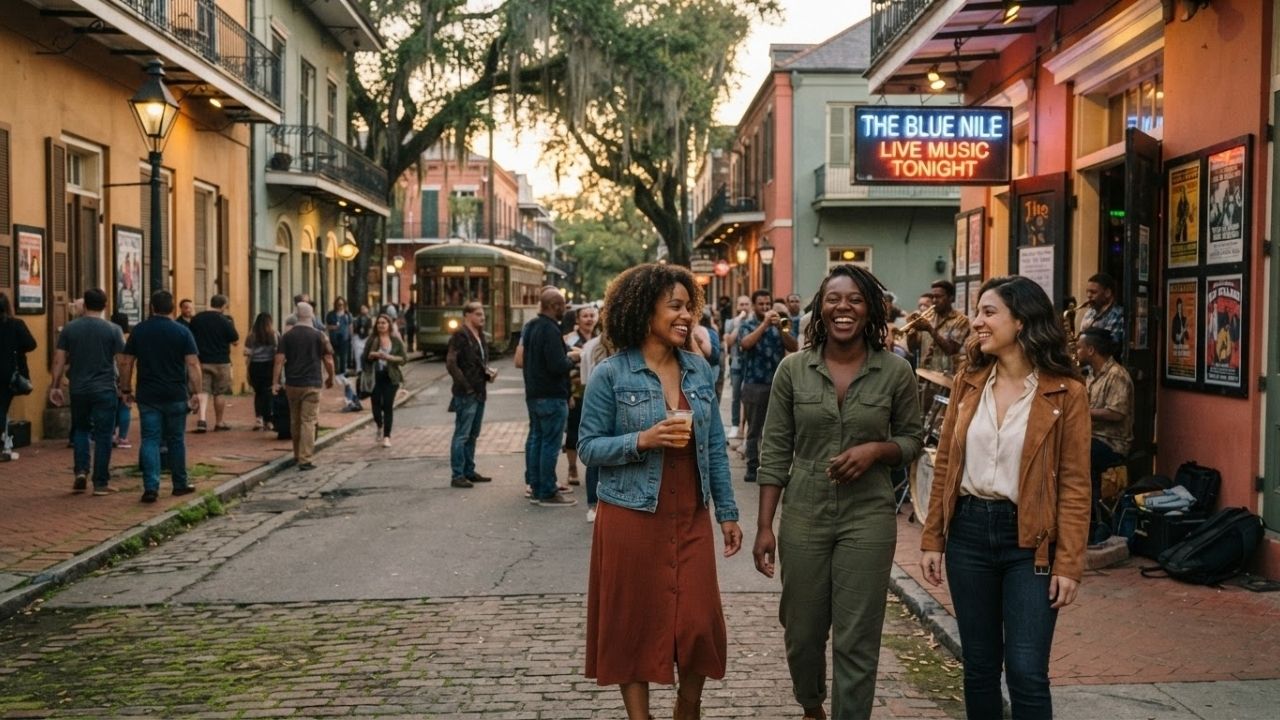
Image generated by AI
New Orleans & Company and independent venue owners have launched the 2026 edition of NOLAxNOLA, activating 35 to 40 historic halls across Orleans Parish from September 24 to October 4. By distributing live music throughout iconic districts like the French Quarter, Tremé, and Uptown, the decentralized showcase elevates autumn hotel occupancy to 72%, drives RevPAR growth by 35%, and directs 85% to 90% of ticket revenue into local culture bearers.
[NEW ORLEANS, Louisiana, Sept. 1, 2026] — Municipal destination leaders at New Orleans & Company alongside independent performance hall proprietors have finalized programming for NOLAxNOLA 2026, scheduled to run from September 24 through October 4. The citywide musical showcase activates between 35 and 40 historic performance venues across iconic municipal corridors including the French Quarter, Tremé, Uptown, Marigny, Bywater, and Mid-City.
Unlike traditional single-site mega-festivals, the decentralized model distributes live performances across established neighborhood clubs such as Tipitina’s, Preservation Hall, and The Maple Leaf Bar. This spatial framework protects grassroots cultural heritage while channeling visitor expenditures directly into local commercial ecosystems during the autumn shoulder season.
Decentralized Municipal Framework Activates 35 to 40 Historic Music Halls
NOLAxNOLA operates as a citywide venue coalition designed to elevate local artists and safeguard independent performance infrastructure. By dispersing multi-genre shows—spanning traditional jazz, brass bands, funk, blues, bounce, hip-hop, R&B, and indie rock—across historic corridors like Frenchmen Street and Magazine Street, municipal organizers avoid single-site congestion while expanding tourist access to authentic culture bearers.
The initiative transforms autumn travel dynamics across Louisiana by turning early fall into a major cultural pilgrimage. Decentralized scheduling ensures that tourism spending supports neighborhood restaurants, bars, retail shops, and lodging providers operating within walking distance of active performance halls.
Emergency 2021 Origins: Relinking Autumn Tourism to Grassroots Venues
The NOLAxNOLA model originated during the public health crisis of Fall 2021, when unexpected cancellations of major outdoor gatherings—including Jazz Fest and Voodoo Fest—threatened independent venues and culture bearers with severe financial losses. In response, New Orleans & Company collaborated with local club owners to construct a decentralized venue network that preserved live entertainment while maintaining public safety protocols.
This emergency coalition established a permanent, resilient blueprint for municipal event management. By substituting temporary mega-stages with permanent, neighborhood-embedded music halls, New Orleans established a reliable economic engine that consistently boosts fall hotel occupancy while sustaining independent venue operations.
Visitor Arrival Multipliers Elevate Hotel Occupancy to 72% and Boost RevPAR
Official tourism tracking data indicates that New Orleans welcomes between 17.94 Million and 19.46 Million annual visitors, generating roughly 53,000 daily arrivals who contribute between $9.0 Billion and $10.05 Billion to the regional economy. During the off-peak early September period, baseline hotel occupancy historically hovers between 45% and 52%.
The strategic execution of NOLAxNOLA elevates autumn hotel occupancy to a robust 65% to 72% average across Orleans Parish. During peak concert weekends, daily room rates across premium quarters—including the French Quarter, Arts/Warehouse District, and Uptown—rise from baseline averages of $160 per night to $230 to $280 per night. Consequently, Revenue Per Available Room (RevPAR) benchmarks increase by 25% to 35%, providing critical financial stability for the region's 80,000 to 100,000 hospitality and cultural workers.
Daytime NOLAxNOLA Talks Advocate for Creator Rights and Nighttime Economy Policies
Beyond evening musical showcases, daytime educational sessions known as NOLAxNOLA Talks provide a platform for policy advocacy at the New Orleans Jazz Museum in Mid-City. These free public panel discussions assemble community musicians, venue operators, urban planners, and journalists to address pressing cultural preservation issues.
More than 10 dedicated panel sessions examine nighttime economy management, commercial zoning protections, creator intellectual property rights, and specialized healthcare initiatives tailored for working artists. Data from the local Venue Sustainability Index indicates that while 83% of local musicians possess over a decade of professional experience, many face cost burdens related to rising housing prices and facility overhead. Integrating policy dialogue alongside live performances builds actionable strategies to protect local cultural infrastructure.
Key Financial & Economic Metrics of NOLAxNOLA 2026
| Economic Indicator / Metric | Baseline Standard | NOLAxNOLA 2026 Impact | Financial & Operational Benefit |
|---|---|---|---|
| Autumn Hotel Occupancy | 45% – 52% (Early Sept baseline) | 65% – 72% average | Stabilizes lodging yields during shoulder season |
| Average Daily Rate (ADR) | $160 / night baseline | $230 – $280 / night | Drives RevPAR growth of 25% to 35% across districts |
| Artist Compensation | $100 – $125 flat gig rate | $350 – $600+ per show | Door-share model quadruples direct musician earnings |
| Local Ticket Revenue Retention | 20% – 40% (National brokers) | 85% – 90% retained | Retains admission capital within local parish businesses |
| Local Auxiliary Multiplier | 1.00x (Standard retail) | 1.69x multiplier effect | $1.00 admission generates $0.69 nearby business spend |
| Nearby Merchant Sales | Standard seasonal baseline | 30% – 45% sales surge | Boosts dining & retail revenue within 3-block radius |
| Daily Visitor Outlays | $545 / day overall spend | 32% – 38% food & beverage | Synchronizes concert foot traffic with dining venues |
Pedestrian Logistics and Neighborhood Business Multiplier Effects
Spreading performance venues across 35 to 40 licensed locations prevents foot-traffic bottlenecks along narrow commercial veins such as Frenchmen Street, Oak Street, and Magazine Street. Economic analyses reveal a 1.69x local multiplier effect, meaning every $1.00 spent on venue admission generates an additional $0.69 in auxiliary spending at neighboring merchants.
Small businesses situated within a three-block radius of active venues—including bistros, late-night eateries, and boutique shops—report immediate sales surges of 30% to 45% throughout the 11-day festival calendar. Furthermore, late-night dining establishments experience sales increases of 40% or more, confirming that decentralized entertainment directly strengthens the broader food service economy.
Municipal Transit Integration and Weather-Resilient Venue Strategy
Executing a multi-neighborhood showcase requires synchronized municipal transit management. The New Orleans Regional Transit Authority (RTA) deploys increased service frequencies along major streetcar lines—including St. Charles, Canal Street, and Rampart-St. Claude—to accommodate 53,000 daily visitors moving between performance hubs.
Special event permits issued by municipal agencies extend operating hours for licensed music halls across the French Quarter and Marigny past standard midnight limits without incurring code penalties. Dedicated rideshare loading zones and sound mitigation protocols are simultaneously implemented to maintain smooth traffic flow and minimize residential disruption.
Furthermore, operating within permanent indoor venues eliminates climate disruption risks. While approximately 41% of outdoor Gulf Coast event operators experience major weather delays or cancellations during peak tropical storm season, NOLAxNOLA’s permanent indoor infrastructure guarantees event continuity without expensive temporary staging or turf protection systems.
Industry Impact Analysis: Rethinking Municipal Festival Architecture
The success of NOLAxNOLA offers a scalable blueprint for cities seeking to balance tourism growth with cultural preservation. By rejecting centralized mega-festival formats in favor of grassroots venue coalitions, New Orleans keeps 85% to 90% of ticket sales revenue within local parish businesses, contrasting sharply with national festival models where out-of-state brokers extract substantial profits.
For destination marketing organizations worldwide, the model demonstrates that distributed, neighborhood-based programming increases hotel RevPAR, protects independent venues from commercial displacement, and ensures fair artist compensation without requiring massive municipal infrastructure investments.
Why This Matters: Essential Takeaways for Music-Focused Travelers
For music enthusiasts planning trips to New Orleans between September 24 and October 4, NOLAxNOLA provides a unique urban travel experience:
- Purchase Club Tickets Early: Popular shows at intimate halls like Preservation Hall, Tipitina’s, and The Maple Leaf Bar sell out quickly—secure advance tickets through official venue portals.
- Utilize Public Streetcars for Transit: Take advantage of expanded RTA streetcar schedules along St. Charles, Canal, and Rampart lines to navigate smoothly between neighborhood venues.
- Attend Free NOLAxNOLA Talks: Join daytime panel sessions at the New Orleans Jazz Museum in Mid-City to engage with local artists and industry experts on cultural policy.
- Dine Local Near Performance Hubs: Explore bistros and late-night eateries within three blocks of active venues on Frenchmen Street and Oak Street to support local culinary businesses.
Frequently Asked Questions
What are the official dates for NOLAxNOLA 2026?
NOLAxNOLA 2026 takes place from September 24 to October 4, 2026, across multiple historic districts in New Orleans, Louisiana.
Where do NOLAxNOLA concerts take place?
Performances occur in 35 to 40 independent venues across the French Quarter, Tremé, Uptown, Marigny, Bywater, and Mid-City, including Tipitina’s, Preservation Hall, and The Maple Leaf Bar.
How does NOLAxNOLA impact local artist compensation?
By utilizing direct door-charge and ticket-share models, NOLAxNOLA increases average artist earnings to $350–$600+ per show, compared to standard flat-rate festival payouts of $100–$125 per player.
What are NOLAxNOLA Talks?
NOLAxNOLA Talks are free daytime public panel forums held at the New Orleans Jazz Museum in Mid-City, featuring discussions on nighttime economy policy, venue sustainability, and creator rights.
Related Travel Guides
Disclaimer
This article is for informational and educational purposes only. It does not constitute legal, financial, or professional advice. While we strive to provide accurate and up-to-date information, travel policies, regulations, and conditions change rapidly. Always verify information with official sources before making travel decisions. Nomad Lawyer makes no representations about the accuracy, reliability, completeness, or suitability of the information provided. Readers should consult qualified professionals for advice specific to their circumstances. The views expressed in this article are those of the author and do not necessarily reflect the views of Nomad Lawyer.
Raushan Kumar
Founder & Lead Developer
Full-stack developer with 11+ years of experience and a passionate traveller. Raushan built Nomad Lawyer from the ground up with a vision to create the best travel and law experience on the web.
Learn more about our team →