
Poland Overhauls Tourist Tax Framework: Legislation Paves Way for Overnight Fees in Kraków by January 2027
Poland enacts major tourism tax reforms, eliminating air-quality restrictions to allow Kraków and other cities to levy up to PLN 5 per night starting January 2027.

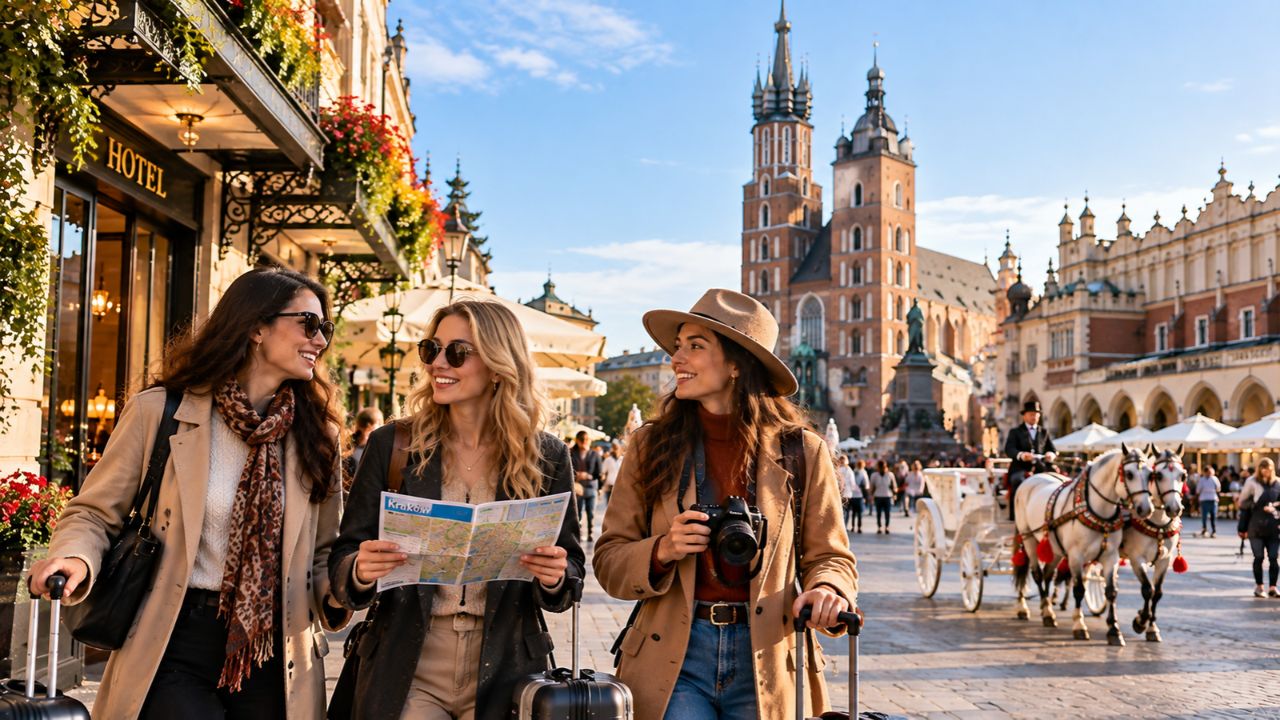
Polish President Karol Nawrocki signed sweeping statutory reforms on October 15, 2026, overhauling the national tourist fee framework and granting municipalities across the country the legal authority to introduce overnight accommodation levies starting January 1, 2027. The landmark legislative reform eliminates decades-old environmental prerequisites that prevented urban centers affected by air pollution from collecting visitor taxes, unlocking an estimated tens of millions of zlotys in municipal revenue for cultural preservation, transit infrastructure, and public maintenance across high-density visitor destinations, led by Kraków.
[WARSAW, Oct 18, 2026] — Municipal administrations across Poland are drafting local taxation ordinances after the Chancellery of the President of the Republic of Poland confirmed executive approval of the amended Act on Local Taxes and Fees. The legal overhaul ends an administrative deadlock that prohibited cities lacking verified clean-air status from imposing a local visitor fee (opłata miejscowa), aligning Poland’s municipal financing mechanisms with established European taxation models in Malta and Italy.
The statutory reform does not impose a mandatory nationwide tax automatically. Instead, it decentralizes fiscal powers, permitting individual municipal councils (rada miasta) to vote independently on whether to introduce the overnight charge and set specific nightly rates up to strict statutory ceilings.
Removing the Environmental Clause: How Legal Reform Unlocks City Levies
For decades, Poland's municipal tax law contained an environmental clause that inadvertently penalized the country's most visited cultural capitals. Under the previous statutory wording, local councils could only levy the opłata miejscowa if the destination met strict combined criteria: favorable climatic qualities, documented scenic landscape value, and suitable accommodation infrastructure.
While intended to protect health tourism and reward rural nature reserves, this climate standard barred major historic cities that contended with regional winter smog or industrial particulates from collecting revenue from the millions of visitors utilizing their streets. Under the legislation signed on October 15, 2026, the restrictive climate condition has been permanently expunged from the statute books. Municipalities need only demonstrate that they offer tourism infrastructure and attract visitor volumes to implement local lodging charges.
Local authorities now gain fiscal flexibility to offset the mounting wear and tear that heavy foot traffic imposes on historic pavements, public sanitation systems, municipal transit networks, and heritage preservation budgets.
Kraków's Decade-Long Campaign to Reinstate Visitor Charges
Among Polish municipalities, Kraków stands as the primary beneficiary and driver of the legal reform. The historic former royal capital previously operated a local visitor fee between 2004 and 2015, generating vital municipal funds. However, tightening environmental oversight and court challenges over air-quality parameters forced the city to suspend collections over a decade ago.
The suspension coincided with an unprecedented boom in foreign and domestic arrivals. Official data published through the City of Kraków Municipal Portal reveals that the city welcomed approximately 16.25 million visitors in 2025 alone, including 8.79 million overnight guests. While this influx injected billions of zlotys into local hotels, craft breweries, and restaurants, it placed immense strain on the historic Old Town (Stare Miasto), the Jewish quarter of Kazimierz, and municipal waste management services.
City officials consistently campaigned for legislative relief, arguing that denying municipalities the power to collect tourist fees left local taxpayers shouldering the full cost of tourism infrastructure. With the statutory barrier removed, the Kraków City Council is preparing to debate a formal municipal resolution. Although the national law permits fee collection beginning 1 January 2027, visitors will only be charged once the municipal council formally ratifies the rate structure and establishes local collection guidelines.
Statutory Ceilings, Collection Mechanics, and Hotel Incentives
The revised legislation establishes clear statutory caps and administrative procedures to prevent excessive municipal taxation and ensure orderly collection through the private lodging sector:
- Standard Municipal Local Fee (Opłata Miejscowa): Capped at a maximum statutory ceiling of PLN 5.00 per person per night (approximately €1.15). Individual councils can set rates below this ceiling.
- Spa Protection Areas: Capped at a maximum of PLN 5.50 per person per night for designated peripheral thermal or rehabilitation zones.
- Certified Health Resorts (Uzdrowiska): Retain a separate spa fee ceiling (opłata uzdrowiskowa) of PLN 6.86 per person per night, governed by distinct health resort regulations.
- Collection Rails: The charge will be collected by all registered lodging providers, including hotels, boutique guesthouses, aparthotels, hostels, campgrounds, and private short-term holiday rentals.
- 10% Administrative Retention Incentive: In an explicit legislative measure to support the hospitality industry, lodging businesses that correctly collect, record, and remit tourist fees on schedule are legally entitled to retain at least 10% of total collected revenues as an administrative commission.
Poland's Tourism Boom Against European Benchmarks
The legislative overhaul reflects Poland's rapid emergence as one of the fastest-growing tourism economies in the European Union. According to data released by Eurostat, nights spent in Polish tourist accommodation surged by 7.0% in 2025 compared with 2024. This performance represented the second-highest growth rate in the entire 27-member bloc, surpassed only by Malta, which registered a 9.9% year-on-year increase.
The following table compares Poland's incoming framework with established European accommodation levies:
| Jurisdiction / Destination | Regulatory Structure | Rate Tiers & Maximum Limits | Mandatory Exemptions & Special Conditions |
|---|---|---|---|
| Poland (Standard Municipalities) | Optional municipal adoption; effective 1 January 2027 | Maximum PLN 5.00 (€1.15) per person / night | Exempt after 29 consecutive nights; school groups & disabled travelers |
| Poland (Spa Protection Zones) | Designated micro-climate buffer areas | Maximum PLN 5.50 (€1.27) per person / night | Full stay exempt once booking reaches 30+ consecutive days |
| Poland (Health Resorts / Uzdrowiska) | Dedicated therapeutic spa resort status | Maximum PLN 6.86 (€1.58) per person / night | Governed by specialized national balneology legislation |
| Malta & Gozo | Nationwide environmental contribution | €1.50 per adult (18+) / night; capped at €22.50 total | Applied across all licensed accommodation; capped at 15 nights |
| Italy (Rome, Florence, Venice) | Decentralized municipal tourist taxes (tassa di soggiorno) | €3.00 to €10.00+ per night depending on star rating | Rates scale based on hotel classification; children frequently exempt |
Budget Impacts and Practical Traveler Calculations
For leisure and corporate travelers planning trips to Poland in 2027, the introduction of municipal charges represents an incremental rather than prohibitive cost increase, although group bookings and extended holidays require careful budgeting.
Under a scenario where a city council enacts the maximum ordinary rate of PLN 5.00 per person per night:
- A couple taking a long-weekend city break of 3 nights would pay a combined PLN 30.00 (roughly €7.00).
- A family of four staying for a 5-night holiday would incur PLN 100.00 (roughly €23.00) in municipal fees.
- A solo business traveler spending 2 nights on a corporate itinerary would pay PLN 10.00 (roughly €2.30).
However, the statute establishes statutory exemptions designed to protect specific vulnerable groups and long-stay visitors. Most notably, any traveler whose continuous stay in a single municipality reaches 30 consecutive nights is granted complete retroactive exemption for the entire duration of the stay. Additional statutory exemptions protect persons with certified disabilities alongside their designated caregivers, as well as organized youth educational trips and school excursions.
Logistical Guidance and Operational Requirements for Hoteliers and Guests
From an operational standpoint, the reform shifts significant administrative responsibilities onto accommodation operators, property management companies, and digital short-term rental hosts across platforms such as Airbnb and Booking.com.
Lodging managers must adapt their property management systems (PMS) to separate municipal tourist taxes from standard accommodation room rates and value-added tax (VAT). Because the opłata miejscowa is classified as a public-law levy rather than commercial turnover, it cannot be subjected to standard 8% hospitality VAT. Accommodation receipts and guest folios must itemize the local charge transparently to prevent consumer disputes during check-in or checkout.
Travelers booking Polish holidays for 2027 should review their reservation confirmations to determine whether local taxes are bundled into the quoted price or listed as a separate on-property fee due at reception. While international online travel platforms often integrate mandatory municipal charges into the upfront payment checkout, smaller boutique hotels and private holiday apartments frequently collect the fee directly upon arrival via credit card terminal or cash.
Frequently Asked Questions: Poland Tourist Tax Overhaul 2027
When do the new tourist fees take effect in Poland?
The amended national legislation takes effect on 1 January 2027, permitting local municipal councils to begin levying approved overnight charges from that date onward.
Will every city in Poland automatically charge a tourist tax?
No. The national law does not create an automatic universal tax. Each municipality must independently decide whether to introduce the fee and pass a local council resolution defining the specific nightly rate up to statutory ceilings.
What is the maximum nightly tourist fee a Polish city can charge?
For standard municipalities, the legal ceiling is set at PLN 5.00 per person per night. Designated spa protection areas can charge up to PLN 5.50, while certified health resort municipalities (uzdrowiska) can charge up to PLN 6.86 per night.
Are digital nomads and long-term visitors exempt from Poland's tourist fee?
Yes. Guests who stay for at least 30 consecutive nights in the same municipality are legally exempt from the tourist fee for their entire stay, with the exemption taking effect after the 29th consecutive night.
By retiring an outdated environmental restriction in favor of local fiscal autonomy, Poland equips its historic cultural capitals with sustainable funding mechanisms to preserve civic heritage while managing record international visitor demand.
Related Travel Guides
- Malta Leads Europe's Tourism Growth: WTTC Members Pledge $2 Billion at Valletta Global Summit 2026
- Australia Issues High-Caution Travel Advisories for Kenya, Indonesia, Albania, and Mexico: Entry Rules and Tourist Levies in Focus
- Canada Christmas Markets 2026 Schedule: Over 325 Vendors Anchor Coast-to-Coast Winter Travel Circuit
Disclaimer
This article is for informational and educational purposes only. It does not constitute legal, financial, or professional advice. While we strive to provide accurate and up-to-date information, travel policies, regulations, and conditions change rapidly. Always verify information with official sources before making travel decisions. Nomad Lawyer makes no representations about the accuracy, reliability, completeness, or suitability of the information provided. Readers should consult qualified professionals for advice specific to their circumstances. The views expressed in this article are those of the author and do not necessarily reflect the views of Nomad Lawyer.
Naina Thakur
Contributor & Travel Specialist
Travel enthusiast and legal writer covering visa regulations, responsible tourism, and cultural journeys across global destinations.
Learn more about our team →