
Trump Administration Proposes Revoking Oil Drilling Ban Near Chaco Culture National Historical Park 2026
The Trump Administration is moving to revoke Public Land Order 7923, potentially opening 330,000 acres of land surrounding New Mexico's Chaco Culture National Historical Park to oil drilling.

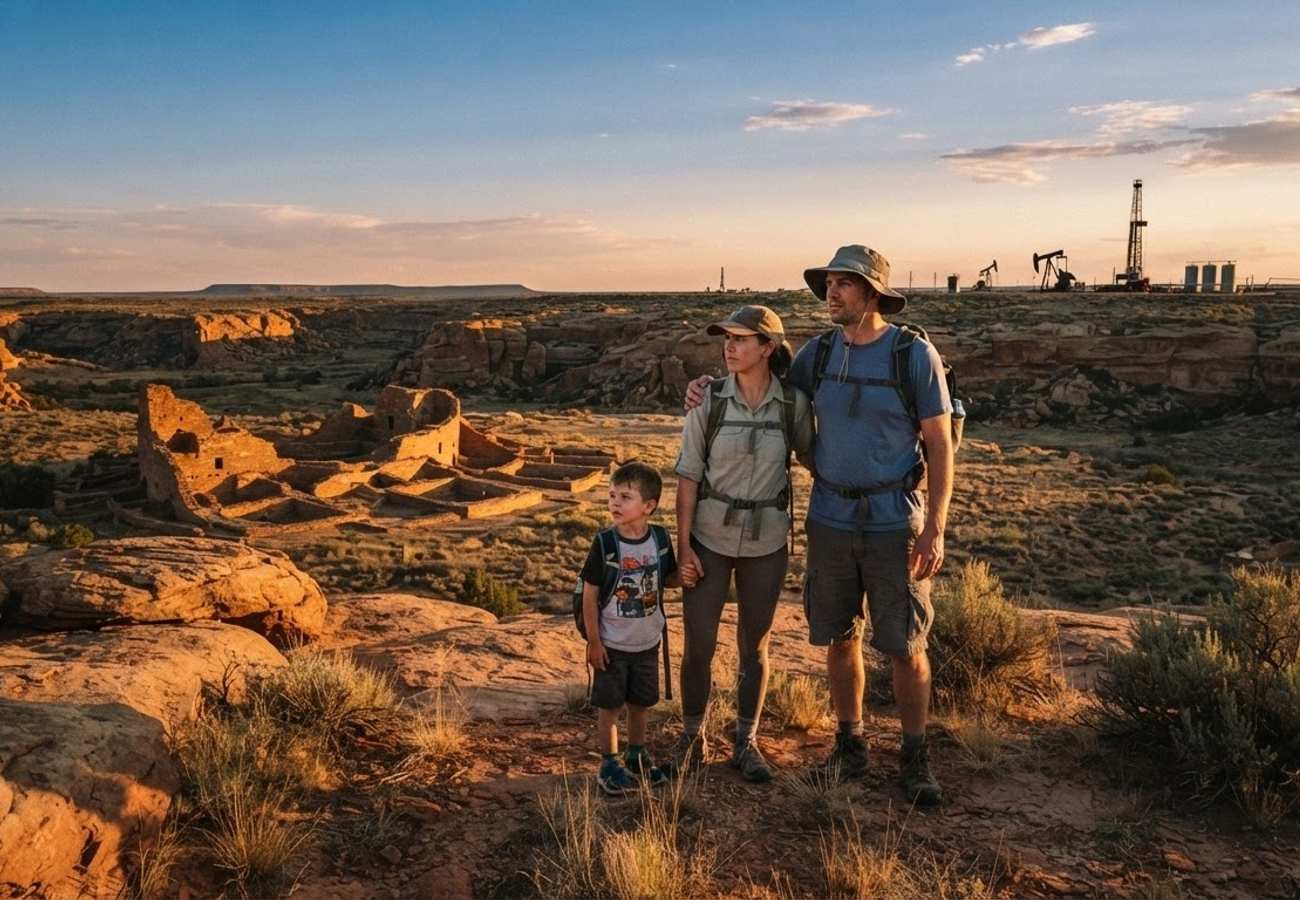
Image generated by AI
The Trump Administration has initiated a process to potentially revoke a critical protective land order surrounding Chaco Culture National Historical Park in New Mexico. This move would expose more than 330,000 acres of land adjacent to the UNESCO World Heritage site to potential oil drilling leases.
The administration has formally contacted local Native American tribes to begin discussions regarding the change in protection status. If the order is lifted, a vast area currently serving as a buffer against industrialization could be sold for energy extraction.
The Significance of the Chaco Buffer Zone
Chaco Culture National Historical Park preserves some of the most sacred and ancient lands of the ancestral Puebloan people. The site, which includes the renowned Pueblo Bonito, once served as the economic and spiritual hub for the Anasazi.
Currently, the park is shielded by a 10-mile buffer zone managed by the Bureau of Land Management (BLM). This protection is codified under Public Land Order 7923, established in June 2023 to prevent mining and drilling from encroaching on the historical site and undiscovered artifacts.
Advocates for the preservation of the land warn that industrial activity would cause irreversible damage. Pojoaque Pueblo Governor Jenelle Roybal has previously highlighted the devastation caused by existing drilling in nearby parcels, noting that the proliferation of roads and heavy machinery permanently alters the ecosystem.
Beyond the physical landscape, tribal groups have raised alarms regarding:
- Water Contamination: The risk of pollution affecting local water sources.
- Public Health: Potential health impacts on Native American communities residing in the affected region.
- Cultural Erasure: The threat to unexcavated archaeological sites.
Navajo Nation Sovereignty and Economic Conflict
While many Pueblo tribes and the Hopi Nation strongly oppose the removal of the protections, the Navajo Nation has taken a different stance. The Navajo Nation has filed a lawsuit against the United States challenging the validity of Public Land Order 7923.
The Navajo Nation argues that the 10-mile buffer zone disproportionately harms Navajo individuals who hold allotments that were previously used for drilling. The tribe contends that the withdrawal of these lands created a significant negative economic impact.
Delegate Danny Simpson of the Navajo Nation Council has testified before Congress, asserting that the Navajo Nation Government is best positioned to determine what serves its people. Central to this argument is the issue of sovereignty, with leadership claiming the U.S. government bypassed tribal cooperation when imposing the buffer zone.
Accelerated Timeline for Land Order Removal
The removal of a Public Land Order is typically a multi-year endeavor involving extensive review. However, evidence suggests the current administration is fast-tracking the process.
The BLM Farmington office, which is overseeing the operation, has notified park experts that the timeline will be significantly compressed. Most notably, the public comment period has been reduced to just 14 days—a duration experts describe as unprecedentedly short.
The projected timeline for the removal of Public Land Order 7923 is as follows:
| Step | Estimated Time to Complete |
|---|---|
| Internal DOI/BLM Review | 1–2 months |
| Tribal Consultation | 3–6 months |
| Public Notice and Comment | 14 days |
Despite the expedited administrative path, the decision may still face significant legal hurdles. Even if the order is successfully revoked, environmental and tribal lawsuits could potentially stall or overturn the removal.
The tension between economic energy interests and the preservation of ancestral heritage continues to define the struggle over New Mexico's public lands.
Related Travel Guides
Disclaimer
This article is for informational and educational purposes only. It does not constitute legal, financial, or professional advice. While we strive to provide accurate and up-to-date information, travel policies, regulations, and conditions change rapidly. Always verify information with official sources before making travel decisions. Nomad Lawyer makes no representations about the accuracy, reliability, completeness, or suitability of the information provided. Readers should consult qualified professionals for advice specific to their circumstances. The views expressed in this article are those of the author and do not necessarily reflect the views of Nomad Lawyer.
Preeti Gunjan
Contributor & Community Manager
A passionate traveller and community builder. Preeti helps grow the Nomad Lawyer community, fostering engagement and bringing the reader experience to life.
Learn more about our team →